How "Drinking and Knowing Things" can be good for your business.
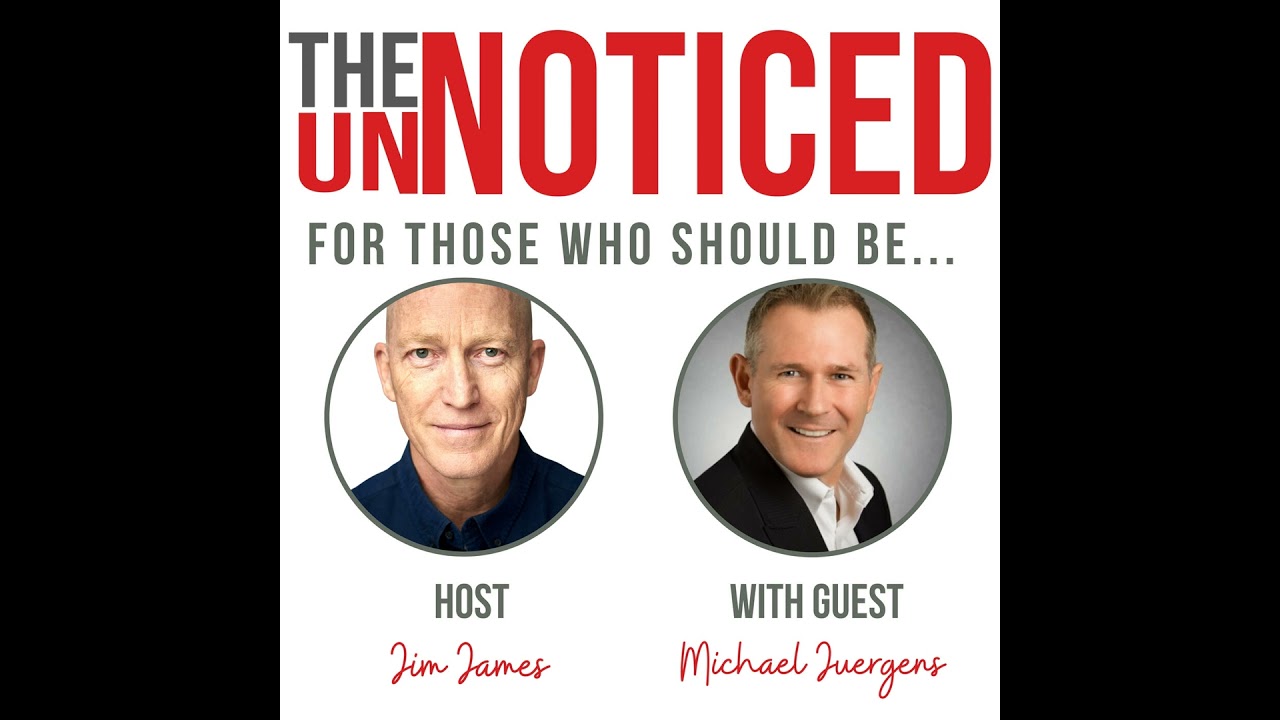
Michael Juergens, a sommelier and founder of Bhutan Wine Company and SoCal Rum, built memorable brands through storytelling rooted in unexpected juxtapositions. He grew an organic email newsletter into a bestselling self-published book without traditional marketing, writing as if to friends and tailoring stories for different audiences.
Chapters
Thank you for joining us on The Unnoticed Show today. I'm delighted to have Michael Juergens, who has joined us from actually today from Pennsylvania. Michael, thanks for joining us.
Thanks for having me, Jim.
Now, Michael, you have written a book called Drinking and Knowing Things. You're also a certified sommelier. You've also got the Bhutan Wine Company. So you're an entrepreneur and a bestselling author. So what I'd love to hear from you today is, how you've gotten noticed with all of these businesses that you've been building. So where do you want to start with that?
Yeah, why don't we maybe start with a bit of a more of a macro view, which is, I don't know if you have read the book Sapiens by Yuval Noah Harari.
Yes, I have actually. Yes.
Okay. So you know how in it he talks about the way that the sapiens really were able to defeat the Neanderthals where they could tell stories, right? Like that was the competitive edge. They were Dumber, smaller, weaker, bad at everything, but they could tell stories. And so what I believe is that somehow neurologically we're pre-wired around this idea of stories and we resonate well with them. So one of the things that I try to do in all of my businesses is tell some sort of a story. It doesn't need to be a long story, but some sort of story. And I think that people Respond to that differently than they might respond to other mechanisms. It's interesting. And then they'll retell the story and those people will retell the story. And all of a sudden now you've got brand ambassadors for you just because you have a cool story.
Yeah. That's a really nice idea actually. Yeah. When you think about it, as you say, they talked in Sapiens about how the storytelling meant that people could galvanize around a goal and the facts could change as time went on, but the The overall mission and the story was the same. So do you want to tell us then one example of how you've built a story around one of your many businesses? Because I know you have lots.
Yeah. I mean, I think maybe the easiest one is if we look at like the Bhutan Wine Company. And so for people that don't know about Bhutan, this idea of here's this hidden Shangri-La in the middle of the Himalayas and we're making wine there. Like, that's cool. For people who do know what Bhutan is, they have this idea in their head of like the happiest place on earth. And, you know, these vistas, these stunning landscapes, and then to sort of wrap, hey, we're going to also put some wine into that. You know, now you've got some imagery around it. So either side of that, the story that I'm telling, even in the name of the company, like the Bhutan Wine Company, we didn't try to come up with a fancy name. Like it's right there. Bhutan Wine Company. Someone hears that and they go, what the hell is that? Or they know what Bhutan is and they go, wait, Bhutan? Wine? What are you doing? And it sparks the interest. And then you can tell as big and as grand a story as you need to for that person. And sometimes I tell the 30-second Bhutan story and sometimes I tell the 2-hour Bhutan story.
How important do you think it is that you've juxtaposed 2 elements that don't immediately seem to be that they should be on the same page, right? Because Bhutan, people don't think of wine. France, Italy, Spain, Australia, if people have even heard of it. Do you think that adds to the story, the frisson of the story?
100%. 100%. If I said, oh, I have a French winery, then the story needs to be, oh, it was like this old vineyard from the 1200s that the monks used to tend and I'm rejuvenating it and blah, blah, blah. Like there, it needs to be more precise. But To your point, when people think of Bhutan, they don't connect it to wine. They either have never heard of it, they don't know what Bhutan is. And frankly, the first time I went there, I thought it was an island in Indonesia. We, I scheduled a trip thinking I was going to Indonesia and my girlfriend said, no, it's in the Himalayas.
Yeah. Because there's Bintan and Batam, both of which are off Singapore, right?
Yeah. Those is where I thought we were going. No, it turns out we're going to the Himalayas. So if people don't know what it is, then it's a sort of, there's a curiosity takes over. But if people do know what it is, then it's even more curiosity because they, in their heads, they have this picture of what Bhutan is. And then you bring it up, no, we're building the wine industry there. And they're like, wait, what?
So you've got this idea of a story and this juxtaposition of kind of the obvious and the completely Non-obvious, which makes this kind of intrigue. But then what do you do with it? Because that sometimes entrepreneurs are great with the, if you like, the headline story, right? How do you then take it out to the people that you need to hear it? Because they're not all the same audience, are they? And they're not necessarily in the same place.
Yeah. So that's a great question. And I think the way that I do it is I have probably 5 or 6 different stories related to Bhutan that I will tell different stories depending on the audience. And I'll give you like high levels of maybe 3 of them. So one is how many countries in the world can organically grow wine that don't do it already? And the answer is not very many, like pretty much everywhere in the world that can grow wine already does and has for thousands of years. So this idea of you get a whole country, build an industry, make it look like whatever you want. That's a fascinating story for an entrepreneur. Or an artist. Here's the biggest palette in the world. Do with it whatever you want. There's another story that says, you know, you have Bhutan is, doesn't measure economic growth. They measure happiness, gross domestic happiness. And that's one of the things they're known for around the world. So then the question becomes like, how does wine fit in with that strategy for a nation? And the idea of wine bringing people together and being this joyous thing and helping build bridges and And helping build communities. And you look at the cultural impact of wine in like places like Champagne or Burgundy. Oh, that's a very different story, but also very telling. And then you have this sort of environmental play, like Bhutan is the only carbon-negative country in the world. It's on track to be the only 100% organic country in the world. So how to bring in some additional plant life for biodiversity and sustainability and agricultural harmony. And so I will tell different stories. about Bhutan depending on my audience. And I probably have, like I said, 6 or 7 ready to go, you know.
So Mike, that's actually really clever. And that's really what PR agencies ask clients to do according to the different media outlet is to look at what the readers or the audience are going to be interested in. So you're doing that intuitively as well. Now you've also got the SoCal company, which is the Rum Company, Southern California, I'm assuming. That stands. How have you built the narrative or the story for a different business? Because is Southern California famous for rum? I don't know that it is. No, it is not.
It's a very different, very different story. But also you have some of the same juxtaposition aspects of it, right? So wait a minute, Southern California, that's not where rum comes from. So for us with the SoCal Rum, we were rated the highest silver rum ever in history from a quality perspective, 95 points. So the story around this is more about the Southern California lifestyle and this kind of captured the essence of beach and fun and Southern California. And, you know, people from all around the world, everyone knows Los Angeles and people vacation there. They save up money for years to go visit Southern California. And I'd say, hey, look, I've got this product. that you could experience some of that in a bottle, you know, and our label has, you know, sunsets and waves on it, but it also happens to be the best in the world. Yeah.
Because otherwise rum is sort of the preserve of somewhere like Jamaica. So there's an association, isn't there, with rum and that kind of lifestyle, but you've cleverly taken it to a different location.
We've said it's not the Caribbean, it's Southern California and it's the Southern California version of that. But it's not, it's not just a gimmick. Right? It's the quality is super, super high and the story. So trying to fuse those 2 elements into everything we do. And if you look at like our marketing, we have a social media person that crafts these clever photos and texts to sort of keep reinforcing this message. So you'll see a guy surfing and a cocktail, like, hey, you could do this.
Well, so what's nice then is you're also taking that message across multiple platforms, right? Using it for the text, using it for the pictures, for the videos. And also, I think you've, you've got a blog, you're an author. Can you just tell us, you know, Mike, how have you done that? Because you've obviously got a storytelling genius there. How are you then taking it off social media and make it into, for example, long-form and short-form content?
So I'm doing what's called the Master of Wine certification. There's about 417 in the world. There's 57 in the United States. It's the highest classification you can get. And I had been pursuing that for a number of years. And to that end, I started just, my friends were bugging me about, hey, tell me what wines I should try. Like, you're the wine guy, let us know. And I'm like, ah, I'm not really responsible for you figuring this out, but okay. So I just started a little email that I sent to like 10 of my friends that said, hey, you should try this wine and here's why I think it's great. And they said, oh, give us more, give us more. And they forwarded that. to their friends and their friends forwarded along. And now I have like thousands of people from around the world, all on my blog, but I never intentionally set out to market it. Frankly, quite the opposite. I never did anything to market it. What I focused on was creating true, authentic, genuine content for my friends. And I think there are many bloggers or whatever who they measure their success in terms of number of subscribers or how much volume they put out there. I took a very contrarian approach to that. I wanted really true authentic content and I wanted it to get in the hands of people who were looking for that. And so I would rather have, you know, 1,000 super engaged people than 100,000 people who are deleting it every time it hits their inbox.
Okay. That's, yeah. So that's really fantastic. You say if you visualize And of course people call it an avatar, but I really actually like the way you visualize it as writing for friends. And that puts your heart in it as well as your spirit, if you don't mind the pun.
Well, and to that end, like, I think one of the, when you look at like the comments on like my Amazon page, like everyone loves the voice. Like it's not snobby. There's a lot of F-bombs, you know, it's literally how I talk to my friends. And I think that because the topic is wine, I think if the topic was like punk rock music, it would be sort of less impactful, but it's, I took this thing that people think is snobby and I talked about it in a way that's not. And that, I think that authenticity allows people to engage with it differently than they would engage with Wine Spectator articles or whatever.
Yeah. And in a way it's another, at the risk of saying it's another juxtaposition, isn't it? You've taken the perception of how wine would be written about and done it differently. So we're building a bit of a recurring theme here.
You know, I never put that together, Jim, but you're kind of right. I have been like just juxtaposing 2 dissimilar things in all those examples. Yeah. Yeah.
Which is very clever and creates this, I don't want to say idiosyncratic view, but makes it very accessible, right? It makes it notable. So in terms of your you're getting subscribers because people are forwarding, which is in a way the sort of the true definition of going viral is, is the cascade effect where people share because they like it and they want other people to read it. What have you done with that content if you've got it? Because you've got a book as well. And you and I were talking before we came online about how you've consolidated and compiled and curated the articles. Do you want to just share with us? Yeah.
So what I did was Yeah. So it became, it became very difficult to manage out of my inbox. So one of the things that I did do is I contracted with a company to build me a website where people could self-subscribe. So you just go to it and you put your email in and there's no like big signup forms or credit cards. It's just, what's your email? You get to get started getting these things. And doing that, I think allowed people to forward it much more easily. And then someone gets it and they're like, oh, this is cool. Like, I'm going to click on this and I want to subscribe. Before they would have to email me and say, hey, I'm so-and-so, could you please add me to your list? And so removing that obstacle, I think allowed me to get a bunch more followers. And then the second thing that happened was people would email me, they would find out about it later and they would say, hey, can you email me all the last issues? And it's like, no, I'm not your librarian. It's like, I'm sorry you came late to the party, but, you know, and so after about the 400th request for all the old articles, I said, okay, I'll make it easy for people. I'll just put 52 of them together and self-publish it on Amazon so that you could just go grab it. And just thinking it would make it easier for people. And then the book became a bestseller, which that was the craziest thing to me in all this is, is I, I never set out to make it a bestseller. I set out to make my life easy by stop emailing me. You want old issues? Here's the first 52. Bam. Bestseller. Okay.
So the bestseller thing, you know, I having launched a book, you know, myself in September, and I've been told, you know, you really need to do the marketing 3 months in advance. You need to get lots of people to do reviews. So what's the secret? What was the secret?
I think the secret was, is that I already had this captive audience that were, that really liked the content that was coming out and were asking me for, hey, can you send me the back issues? So once I made it available, Then I already had a built-in audience. And the second piece of this is that allowed it to be a very good book, very good gift for people that, oh, my friend's a wino. I'm going to send him this book because he's going to think it's hilarious and also entertaining. And so I think that's, and I can even see like in my book sales as Christmas time goes around, they're spiking dramatically. And I know it's people are buying them as stocking stuffers because they're like, It makes them look good. Like, here's a, you can check this out. They're part of this in-club that other people don't know about. And once again, that wasn't, it wasn't a strategy. I literally, I started doing this for fun and I still do it for fun. But the fact that people respond to it is just awesome.
But isn't that perhaps partly the moral of the story that if you're doing it for friends and you're having fun, that people are looking for that, Right now, as opposed to a sort of an intense lead magnet funnel, you know, another piece of something to lead you to buy something bigger, right? Maybe that's part of the moral of the story, is it? Do you think?
Well, I think that like you have entrepreneurs who say, my goal is to make a billion dollars. And so I need to think about, you know, where's a market niche that I can get into? I'm going to build this product to fill this niche and I'm going to do it. And then they end up making An algorithm that connects printers wirelessly to phones and they sell it to Google and they make a billion dollars, right? Nobody in the history of everybody wakes up in the morning passionate about printing algorithms ever, but it works for them and they make a billion dollars. For me, I don't think that life, I don't think you should measure your success in that. And this probably comes from hanging out in Bhutan often. I think that really you should measure your life by how happy you were in it. And the way for me to achieve happiness is to do epic shit with cool people. And so I just focus on doing that. And if the money comes, the money comes, and if it doesn't, it doesn't. But that's what I want to do in the goal of— and ever since I adopted that mindset, all of my businesses have exploded.
Wow. I think we'll get more than one person who's listening to the show reflecting on whether they're really doing great fun work with people that they love and enjoy. I have to ask, how did you then get into Bhutan? It's not strictly speaking in the topic of how you get noticed, but it is in terms of mindset, I think. So how did you get into Bhutan? Just very quickly.
Yeah, my girlfriend had read a book when in high school about a woman who moved to Bhutan and married a Bhutanese person. So she had always talked to me. We've been together for almost 16 years. She's been talking about it the whole time. So an opportunity came up to run a marathon in Bhutan, and we've been running marathons all over the world. And so I signed us up. And as I mentioned, I thought Bhutan was in Indonesia. I didn't even know. I just heard she was excited to go. So I got it for her as a present. And that's how we ended up in Bhutan for the first time. And then once I was there, I was like, wow, this place is amazing. They should have a wine industry. So I built one.
So I am going to come back to the The nature of the content though as well, Mike, because you talk about writing things other people want to read as opposed to things that you want to tell them, right? There's a fundamental difference. We have this often with our PR clients. They're like, I want to tell people I do this so they buy it. And we often say, well, actually we need to ask them what they're interested in and share that with them. Seems like you cracked that code. Can you give us some guidance? Was it a different view of wine? That you took a different perspective, plainly. Yeah.
So when I first started really studying for wine, I went out and bought all the wine books that I could, and they were all very dry and boring. And what I wanted was a wine, like a story that captured my attention and taught me about wine, but not in a dry way. That book didn't exist. So I wrote a story about like the— it's a fictional novel about the secret underground world of high-stakes gambling on wine tasting competitions run by the mafia. Like, that's the story I wanted to read, but it didn't exist. I wrote it just for fun, just like to do it. And then that book had a lot of great success and was like, you should write another one. So I wrote a couple more books that once again, that I wanted to read that didn't exist, figuring like I'd have fun doing it. And if people liked it, cool. And then that sort of led to Hey, send us some wine recommendations, which led to the blog, which led to the next book, which, you know, it's sort of, I have this theory that the universe is kind of like a whitewater rapid and it's going to take you somewhere. And the question is, is how fast can you get there with as little bruising as possible? And if you're in the whitewater rapids and you just follow the flow and you steer and you nudge a little bit, you get to the bottom fast and that's fun. But if you paddle and you try to go sideways, you get banged up and you get exhausted and you're fighting it. And so I kind of maybe 10 years ago said, hey, just go with it. And that's the whole, every book I've written sort of built on the last one. And I just sort of went with it.
Michael Jurgens, that is fantastic. Both life theory, but also you've given some really great insights. And I am always going to remember this juxtaposition of how you're putting the obvious and the not obvious together in many ways. How can people get ahold of you?
Certainly the Bhutan Wine Company, BhutanWine.com or @BhutanWine on Instagram, SoCalRum.com or @SoCalRum, or DrinkingAndKnowingThings.com or @DrinkingAndKnowingThings. That's pretty straightforward. And I encourage you, yeah, if you want to see what's going on with any of that stuff, or send me an email, like I will talk to anybody about any of this stuff all the time. I'm highly accessible and I just think we're doing cool stuff and I'd love talking about it.
Well, Michael, thanks for sharing. I've really enjoyed our conversation. There's a whole nother conversation about how you manage multiple brands as well, but we've only got 20 minutes. So thank you so much for joining me today from the East Coast rather than the West Coast where you normally live. Thank you so much for joining me today on The Unnoticed Show.
Thanks again, Jim.
More from Jim











2 people, infinite agents, 1 billion dollar idea #AIAgents #Startup #Productivity