How much PR is enough for you to get noticed?
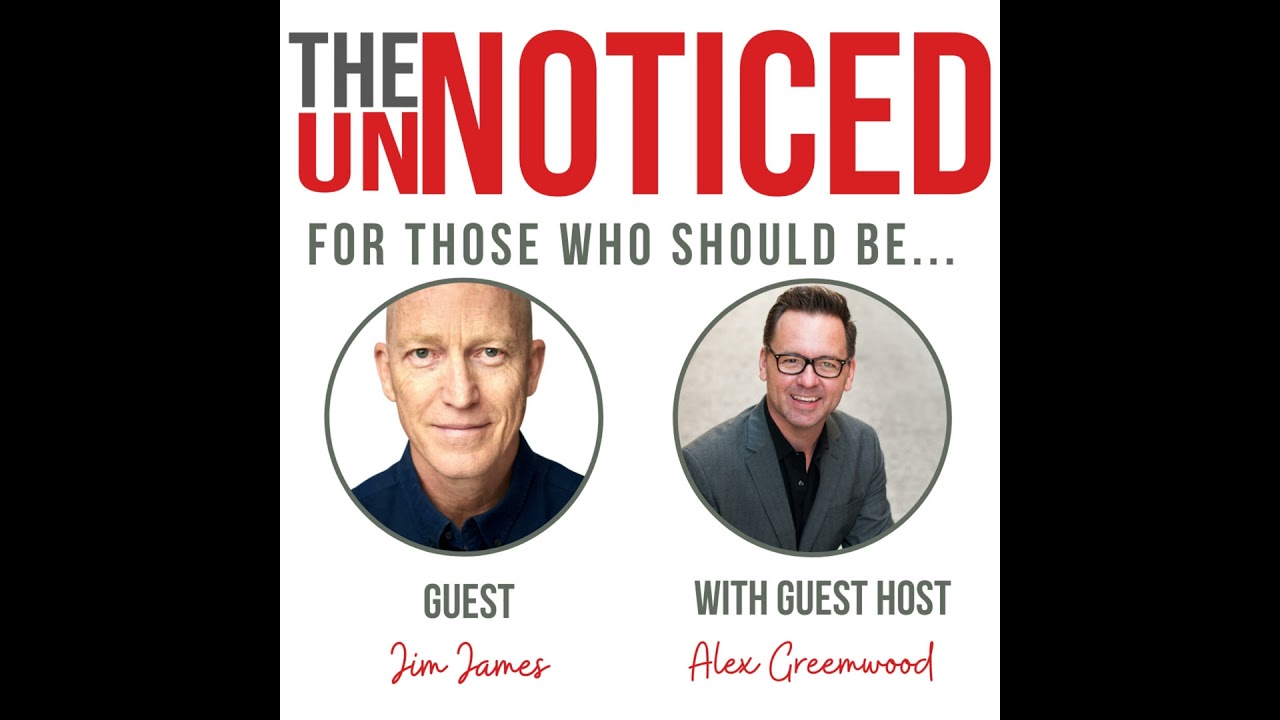
PR entrepreneur Jim James introduces the Active Communications Index, a formula measuring content quality, channel selection, and posting frequency. Most companies burst with content then disappear, damaging trust. The ACI tracks what you control: fresh material, right platforms, consistent timing across time zones.
Chapters
Getting an audience is hard. Sustaining an audience is hard. It demands a consistency of thought, of purpose, and of action over a long period of time. Well, why am I quoting the boss himself, Bruce Springsteen? Because today we're going to talk about consistency in your content and in your PR. And that's one reason why I'm very, very excited to have international PR entrepreneur and host of The Unnoticed Show, which I've appeared on, Jim James. He has spent the last 25 years of his working life running a PR agency and other ventures in China and Singapore. And he's noticed something, that companies are not consistent in their PR activity. So he has devised the ACI, which we're going to explain all of that here, to help business owners plan how much work actually goes into their PR so that the results will be, yep, consistent and effective engagement with their audience. Jim James, welcome to the Virtual Lounge.
Alex, thank you so much for inviting me. I guess it's the transatlantic lounge, isn't it, with me in the UK and you all the way over there in the US?
It is. And I, I am so thrilled because I had such a wonderful time on your show. And you and I talk offline a little bit here and there, and, and it's interesting that we both have some similar projects in the works, and we'll get to that here in your interview. But talking about how we're both podcasters, obviously, and we're both PR people, obviously, and we've both written books about PR and some podcasting subjects. So I'm just really excited to talk to you today. And I know in the limited time we have because of how busy you are, we're gonna talk about this ACI. What is ACI and why should our listeners care?
Well, thanks so much for giving me an opportunity to share with your audience, Alex, which I think fairly is more well-established and larger than The Unnoticed. So I think I'm getting the best the better part of the bargain, really, because you were great on my show, and I hope that I can reciprocate. So the ACI really is what I call the Active Communications Index. And the reason I think this is important is because many companies, you know, clients that I've worked with that I'm sure you've worked with too over the last 25, 30 years, they have these surges of content. Maybe there's a new product, or there's a factory opening, or a showroom for a trade show, and then it goes quiet. And because, as we know, public relations is about building a relationship with our audiences, it's kind of the equivalent to going out, meeting someone, being super, super engaged with that person for a week, and then not calling them again or not returning their phone calls again, right? Just sort of go, well— and, and the audience say, well, I met this person, I like them, And it seemed like great what they were doing, but then they never called me ever again. And then next time you go back, that person is already a little bit wary that you're not reliable and not consistent, right? And especially as in business, people have to trust you. Socially, they've got other friends and a family, so they're not that bothered. But if, if you're out there competing for their attention and for their business, being consistent, showing up consistently with valuable content Is a key and frankly very simple part of a PR plan that I think the ACI can help people to quantify.
Yeah, it's also like being a podcast host because you meet wonderful people. I guess you and I being an exception because I think we're becoming—
Are you saying we're not wonderful people?
I think we are wonderful people. But you know what? You know, that's— oh, you're so good. This is why I had you back. Well played, sir. Well played. No, but the exception because we are becoming transatlantic friends, and I'm going to be on your show again, I hope someday. And but the point being, podcasts, you make these wonderful connections with people. I do as a host. I'm sure you do as well. And they're the guest or other way around. And then it's like you've made this kind of— I call it the podcast love connection. It's obviously, you know, celibate love, whatever you call it. But it's, it's, but it's, it's a great connection, meeting of the minds, and it's wonderful. And then you're like, oh my gosh, it's like I made a new friend. And then you just don't hear from them again because they move on. And that's different than what you're saying, because it's the nature of the beast in media to be a podcaster, to, you know, you move on to the next guest. But in the PR realm, yeah, it's that hit-and-run mentality. I think it's like, oh, we have this trade show, oh my God, we have budget because we've got to make good quarterlies, we've got to do all these things. And they put it all in there and you meet all these people and then your connection with them trickles out.
Well, I think that's right. And I think that we have 2 issues there, really, Alex. One is that The consistency of showing up is important in B2B and B2C because in B2B, you know, industrial selling, we know that it's not just one person who makes the purchase. It can be 5, 6, 7 people in a company who all have to sign off on that purchase, right?
Right.
So it's not just about being consistent over time with one person. It's about being consistent across the entire range of people that a company sells to inside another company or government or organization. So that idea of being consistent over time is important because we need everybody on the other side of the sales equation to come to understand and to trust us. Because often people inside an organization have to sell on our behalf as well.
Right.
I'm sure you've been in a situation where you meet, for example, the marketing director who loves you, as we all do, Alex, and can't imagine why they wouldn't want to work with you. But the marketing director goes to the CFO and the CEO and says, I've got this great guy, I want to work with him. And the CEO, CFO says, well, that's great, but who are they? They maybe look online quickly to do some research. If you as a person or you as a company is turning up only sporadically, then you're not going to reassure and help the person who's helping to make the sale on your behalf. So I think B2B is even more important. So the Active Communications Index, if I may, then there are 3 elements, Alex.
Okay.
3 elements. The first is content, and this is about creating fresh content that's context-sensitive. So it's not about just creating content about you, it's about creating content which is, if you like, a gift for the receiving party. It's something that they can understand and that's relevant to them. The second part is about the channels. So which channels are you sharing that information on. And that's maybe as video, maybe it's as text, maybe it's as audio as we're doing on the podcast. Which kind of content is going to be in the channel that your audience is going to be looking at? So if it's a junior, a younger audience, maybe it's TikTok, although they've just changed the age allowances now recently. Although I have to say, as a parent, I'm not disappointed about that. But yeah, looking at where the audience is determines the channels. And the third element is the frequency. Now, as you mentioned, I've, I've worked and continue to work internationally. So I'm based in the UK, but I have clients and work I'm doing in Southeast Asia and China. And the content that we send out has to go across the different channels at times when it's appropriate for those people that are going to see it. That's one aspect of frequency. So I need to make sure the timing is so that it's in the business day in Asia in the business day in Europe, in the business day in America. But also, I need to look at how often I can repurpose and send that content out in terms of frequency. So if I send content out as a tweet, it lasts— I think the average now is, what, 30 minutes maybe? A YouTube video has a shelf life of about 5 hours apparently now, right? A LinkedIn post, maybe a day. But the, the lead time And the lifespan of digital content, or frankly of all content, has become so short that we have to have the frequency increased. And this is the amplification part. So many companies send out one piece of information on maybe one or 3 channels they're comfortable with, and they send it one time.
Yeah.
So the Active Communications Index is a formula, very simple formula, which helps them to quantify if they're doing enough new content, if they're sending it across enough channels, and they're sending it frequently enough. And at the moment, that doesn't exist because what we have are lots of vanity metrics, Alex. So we've got lots of how many impressions, how much engagement, right? But as we all know, that's out of our control.
Right.
I can post a video. For example, I posted a picture of my upcoming book onto LinkedIn. I had over 4,000 views of that post. It's just 2 versions of a book. Which do you like, A or B? And I got 65 comments.
Yeah.
I can post something that I would think may be equally interesting about the impact of light on children and get 40 or 50. It's not within my control. So the vanity metrics are controlled by the algorithms. The Active Communications Index is what is in your control. And that's really what I want to try and build and share with business owners. is a metric that they can talk with their peers and their agency about and say, hey Alex, what's our ACI this week? What is it next week? What is it the week afterwards? Because you want your, your Active Communications Index to be roughly the same week in, week out.
Right.
And that will avoid these ups and downs that you might get if you take care of what you put in consistently. A bit like fitness, if you work out with a good regime on a regular basis, you will become fit. But if you just worry about fitness but not about how much exercise you do, you'll never get fit. So that's the Active Communications Index. And any questions? But if not, I've got a little diagram I'd like to try and explain to your listeners, but I'll, I'll let you dive in first.
I was just going to say, no, I, I'm totally enthralled with this. I think that's right. But speaking of a diagram, check out your show notes. I'm going to use Jim's diagram as the art for this episode, but I understand some podcast aggregators don't fully show that. So Just go over to prafterhours.com and look for this episode and you'll see it. And Jim can kind of narrate that for you. And don't worry, folks, we'll wait. We'll wait. We'll sit here and wait for you just a second to go get that. I'm just kidding. But anyway, go to prafterhours.com or check your show notes. Jim, take it away.
Okay, lovely. Thanks so much. And obviously, we will make this available. You can email Alex and he will share with me as well. So, I'd like you to just think of a 2 by 2 Matrix. Okay, just like the Ansoff or the BCG matrix, you've just got 2 squares by 2 squares. Now, the basic elements of this are about content and about consistency. So at 12 o'clock, so at the top, we've got the word consistent, and at 6 o'clock, we've got the word inconsistent. And on the right-hand side, what's at 3 o'clock is the word innovative, and at 9 o'clock we've got the word dull. Okay, so I've got consistent, inconsistent, innovative, and dull. Now, in my bottom left quadrant, which is red, I've got the word written unnoticed. Okay, which is the, the subject of my own podcast, The Unnoticed Show, for all those people who should get noticed and just need to know how to do that. So the unnoticed is someone that's producing content that is dull and inconsistent. Okay, so producing content that's not particularly original, not moving the needle, but also they're not putting it out very often. In our top left, which is currently a yellow color, I've got people that are creating dull content, but they are consistently creating dull content. You may ask why that happens, but actually it's amazing how many big companies Have a marketing manager or PR manager who's asked to put out content that's not original, but just to keep sending out press releases weekly to the media. Oh yeah, Alex is nodding his head. I have some time with some clients, and I'm like, "It's not about volume; it's about consistency, which is different to volume." So this company or individual is a follower, Alex. So they're sending out dull information. Consistently. They're filling the airwaves, right? Now, in the bottom right-hand corner, someone that is producing content which is innovative and inconsistently is what I call an opportunist, okay? And that is in green. So that person is currently thinking along the lines of leading an industry. They could be maybe an academic, they could be a scientist, they may be an originator within the company. They come out with great stuff. Maybe it's a speaking opportunity and they've developed a PowerPoint, for example, for the conference. But actually, they're not sending it on very many channels and they're only popping up when there's this event. Or maybe they're seeing someone else post something and they go, oh, I've got something like that. I'll post my article. I've got a great idea. They're being opportunistic. Now, a bit like our conversation earlier, Alex, it's like someone finding out about a good party and going to that one, but not going to any of the other parties that that host is organizing, right? They're just sort of turning up well-dressed one time, but no one knows whether they're coming back again.
Right.
Now, in our top right-hand quadrant, which is really where we all want to be, not just as individuals, Alex, but as companies, we want to be the influencer. And the reason we want to be the influencer, which is the top right quadrant, is because if we're the influencer, we lead the market.
Right.
If we think of the old Sony Betamax conversation, and your listeners may be just about old enough to remember that conversation, or now we're looking at lithium versus hydrogen fuel cells, uh, in the automotive, in the NEV market. The debate now is about which is going to be the core technology to drive, uh, battery-powered cars. In technology industries, it was TDMA, CDMA against GSMA. The American standard versus the European standard for 4G. It was actually a client of mine in Asia to communicate the benefits of the 4G through GSM rather than through TDMA and CDMA. The point is that if we are influencing the industry, we're leading the conversation, and from a commercial point of view, it means that everybody then is going to have to play the same game as we're playing, which means we'll have a commercial benefit, we'll have a commercial advantage. So very simply then, Alex, what we want people to think about is this 2x2 quadrant. Bottom left, unnoticed, dull, inconsistent. Top left, dull but consistently dull. Bottom right, someone who is inconsistent but innovative and opportunist, and where we'd like people to think about being. And I've got some strategies for them, of course, to become an influencer in whichever community they're in, micro or macro community. Being the influencer is the path to success from a business point of view. So that really hopefully is a picture that everyone can visualize. Hopefully hasn't caused any car accidents or people falling off the Pelotons while they're listening to this.
Or worse. You know, I'm trying to peg where I fit in consistently there. And I think I am You're an influencer.
I'm going to save you. I'm going to save you. You must be an influencer, Alex.
I don't know if I am though, Jim. I think I fall— okay, if you're looking at the quadrant and there's the top right being the influencer and the bottom right being the opportunist, I may fall down into opportunism every now and again. I'm just being honest with myself.
Well, then the way to look at this is to look at some of the other criteria. So what we can do is drill down, if you like, Alex. So I think you're being harsh on yourself. Because you've got a book, you've got a podcast. But what I can do then is I just share with you, if I may, where this takes us. Because if we, you know, if we are, uh, realistic, I think— and I think it's about having the honesty, isn't it, really, about what you're doing? And if you're not being honest with yourself, then that's not going to help anybody. So the idea is that if you are unnoticed, your content's dull, you're sporadic in your outreach, but also you're using a limited number of channels, right? If you're a follower, your content is dull, you're consistent in your outreach, but you're using a limited number of channels. If you're an opportunist, your content is innovative, your outreach is sporadic, and you're probably using a limited number of channels because you haven't really thought of it. And if you're an influencer, you're maxing out on all of those. Now what I, what I'd like to do, if I may, is there are some things that you can do. Let's start with If you're unnoticed, if you're unnoticed, it's time to innovate and stop following what everyone else is doing and create some innovative content. And you can do that using AI. You can do that by putting yourself in the shoes of your customer. We talk about, you know, looking at the avatar, what they're doing, and making your, your customer or your member of staff or your partner into the hero. And this actually, I had some breakthrough with some masterclass team where they're consistently producing graphics about their own heavy engineering products. And we said, how about we look at the people that put the engineering products into the mines in Chile? And all of a sudden, they had all this amazing story. In fact, their products were originally used in World War I tanks. And when we moved down that path, it liberated a whole bunch of innovative content for them. channels, I encourage people to have more than just the channels that they're familiar with themselves.
Yeah.
Many of us just use the channels that we're used to, a bit like going shopping and always picking up the same things in the same aisles. There are lots of aisles in that supermarket that we never go down. I love going shopping with my children because they bring back things that I wouldn't have thought of having, right? So, what can we do in terms of new channels? And for many, it can be moving format. So many people are happy with writing a press release. I've just created a video release for a client that has appointed 2 members of staff in America, and we wrote the press release. I said, well, look, why don't you use Lumen5? And I've uploaded the pictures and the text, and Lumen5, very low-cost, uh, video rendering platform.
Love it, love it.
And I bought it so that I can have the brand presets for the client. And I've created a video release which then can go out for the client on their LinkedIn, but also their YouTube. And also the individual members of the staff can send it because it's just a 60-second, you know, video release to show the pictures of the guys. So getting the channels to be ones that we're not necessarily familiar with is often a first step. And then frequency. scheduling that content so that it's going out at the right time for the audience.
Right.
Most people are scheduling content kind of when they've made it. But if we look at, for example, I was talking to, um, one group of people and they sell to, uh, to moms, right? And I said, when do you send their content? They said, well, I get to work at 9 and then I send it when I've made it about 11 o'clock. And I said, So what is your mother doing at that time? Well, you know, they're probably picking up something from shopping, or they're having a cup of coffee with friends because that's the one time they've got, you know. So looking at when we send the content and how many, how many times we can send that to that person using a platform like Buffer or Zoho, um, Hootsuite— there are all these tools, right, that automate your content distribution, right? You can help people to move from being unnoticed to being hopefully not just, uh, kind of dull and not just opportunist, not just a follower, but move them into this top right quadrant. So very simple, all free to do, many great applications out there. There are over 8,000 marketing technology, uh, platforms out there that Scott Brinker calls the second golden age of martech, and they're all cataloged. And I have 100 that I've cataloged in the Technology Application Directory. I'm happy to share. So the idea of the ACI is that if we create a framework and just an approach of looking at your content, looking at your channels and your frequency, you keep doing that in a repeated way, you will build engagement with your audience.
This is fantastic. I like it because in my experience, their clients don't typically have time for or are not interested in really in-depth kind of— and I don't mean this lacks depth, Jim. I just mean they don't have time.
Yeah, I'm gonna, I'm gonna take the being shallow as a compliment.
There you go.
I used to be blonde, so I'm used to those jokes.
Shallow man. Yeah, no, I, I, I, I— but I, I like the idea that I can say, I can, I can meet with a client and, and show this and explain this and put that simply. And because what's ingenious about PR people who are listening, Of course, there's business owners too. But what's ingenious about it, I think though, is nobody wants to be the dull—
We don't want to be accountants and lawyers, do we? Basically. Sorry if there are any listening to that. But you know, more tax advisory, you know, how is that interesting?
Useful? Tell me about it. I had a tax lawyer for a client for a year and it was a struggle. Not because he was a very interesting guy, very colorful, but Tax law isn't. No, but the— that's the point though, is that nobody wants to be there. And I think that that, PR people, helps you if you're— well, of course, if you're serious about it and all that, it helps you to sell your services because ostensibly, as Jim outlined top level, there's got to be strategies to bring with that and say, okay, you are unnoticed and here's why. This is a little dull. Here's why. Here's— but here is, boom, what we can do. Working together to fix that. I love this, Jim. I love this. So please, folks, if you did not look at it, go to prafterhours.com and look at this if it's not showing up in your feed, because again, some podcasts, the photos don't show up. And I'll have a picture of Jim in there too, so you can look at Jim. He's a nice, nice looking fella. So Jim, as we, as we wrap up here though, I just, I just wanted to say, because I think, I think very much you and I are interested in coming back on each other's shows in the near future.
Absolutely. Yeah. You're good for my ratings, Alex.
What can I say?
You're good for my You're good for mine.
So there you go.
I, I—
you have— you've got this book you mentioned. And, uh, by the way, I was one of the people who saw the book covers you were trying to, you know, A/B test on LinkedIn.
Yes, yes, thank you.
You know what, honestly, I liked them both to be—
I just—
so maybe the one that's a little more red.
Well, good. I'm doing— there's going to be a volume 2, so I'm going to do volume 1 in red because each one is— I'm curating these interviews. So the first one is 50 Articles with entrepreneurs and experts like yourself, and then there'll be another 50 coming out in 3 months' time. So, the idea is to make this into volumes.
I love it. I love it. So, you're going to come back when the book is out?
If you'll have me. Yeah, if you'll have me, I'd love to.
Yeah. And I believe, as you alluded to, I might even be quoted in there somewhere, just saying.
Absolutely. There's your interview with me on that. And then you've also got your own book. You're being very modest, but Your book is coming out. So everyone should get a hold of that because that'll be much, much more inspirational.
I think, yeah, The Unnoticed and the podcast option, that is the yin and the yang of what you need for outreach and for you to not be dull or unnoticed. Jim, last thing. I hate to go because this is always such a brilliant conversation. But how do people get a hold of you? We'll put that in the show notes. But give us a quick, how do how they get a hold of you?
Yeah, easiest place is on LinkedIn, just Jim James, Esos Public Relations. Come there and then everything can flow from that. I'd love to catch up with any of your, any of your listeners, and if they've got ideas about the ACI, then that would be great.
Okay, does that include folks who might like to appear on the Unnoticed Show?
Oh, absolutely, absolutely. If anyone has got a story about how they have got noticed that they can share that can be an example to other business owners, I'd love to hear that. And practitioners that have got skills that they could share with other business owners about how those people could get noticed, both groups are more than welcome. Thank you for reaching out like that.
International PR entrepreneur and host of The Unnoticed Show, creator of the ACI, Jim James. Thank you for joining us here in the virtual lounge. Until next time.
Alex, I am now PR After Hours. Thank you so much for having me on your show.
More from Jim











2 people, infinite agents, 1 billion dollar idea #AIAgents #Startup #Productivity