How Story Attracts Attention to the Unnoticed Entrepreneur Part 1
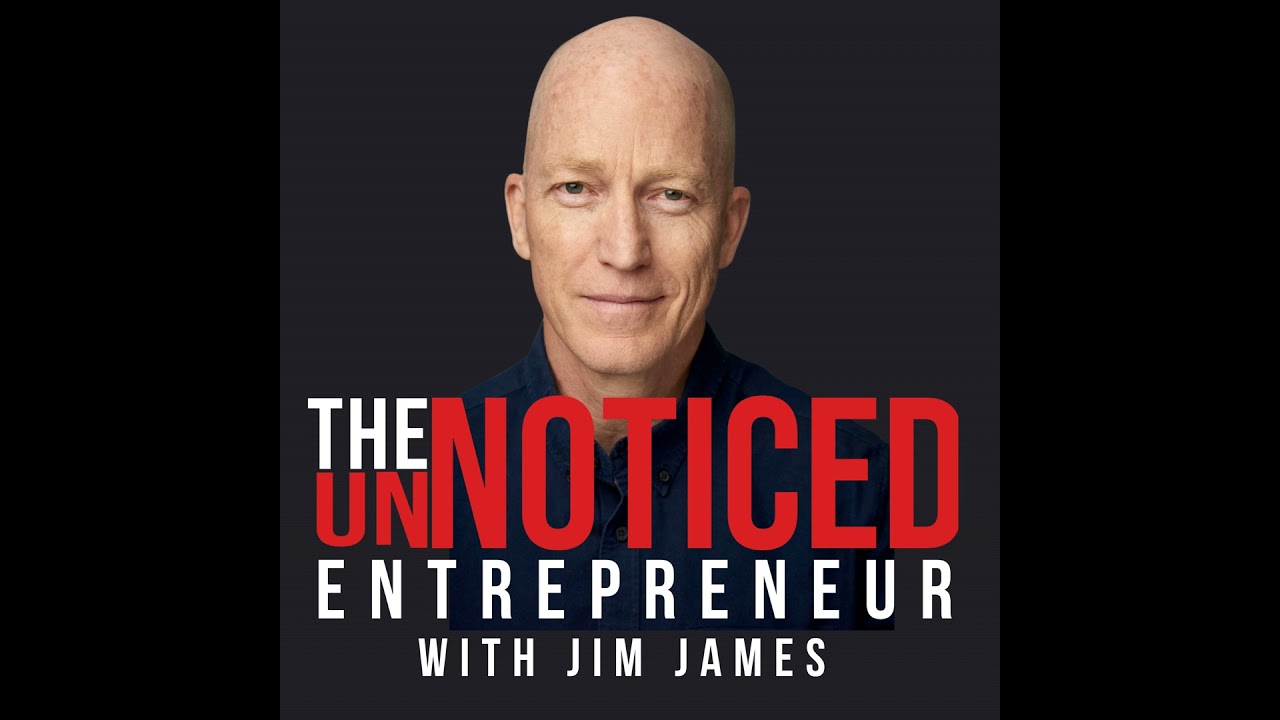
In this episode of The Business of Story, host Park Howell interviews Jim James, founder and chairman of East West Public Relations, about his new book The Unnoticed Entrepreneur and his five‑step Speak PR framework that helps small‑to‑mid‑size entrepreneurs get noticed through storytelling. Jim shares his personal journey—from sky‑diving for sponsorship, to building a PR firm across Asia, to relocating to the Cotswolds—illustrating how his diverse experiences shaped his approach. The conversation walks through each Speak PR step: (1) Storify – crafting a brand story from the audience’s perspective; (2) Personalization – defining the “avatar” (internal staff, external customers, and partner agencies) and mapping their journeys; (3) Engagement – producing simple, new, context‑relevant content; (4) Amplification – leveraging the cascade theory and technology to spread that content; and (5) Consistency – delivering the story at the right frequency and channels. Jim also introduces tools like the Active Communications Index and explains how the book curates insights from 50 entrepreneurs within this framework. The episode blends personal anecdotes, practical PR advice, and promotional highlights of the book and Jim’s podcast, The Unnoticed Show.
Chapters
Hey there, welcome or welcome back to The Business of Story. If this is your first time here, I'm your host, Park Howell, author of Brand Bewitchery: How to Wield the Story Cycle System to Craft Spellbinding Stories for Your Brand, and the new book, which I wrote with my good friend, Dr. Randy Olson, called The Narrative Gym for Business, which will take you on a deep dive into how to craft compelling and, but, and therefore, ABT statements to hook Your audience from the very start. I am so glad you are with us today. So I got a question for you. Have you been burning the midnight oil to build your business and you are producing a ton of fabulous content to capture your ideal customer's attention, but you feel like you're going unnoticed?
Well, if so, we've got just the guest for you today with an intention-grabbing process that You know, very few entrepreneurs either like the communications part of the business or have got the time for it. Worry about cash flow, product development, suppliers, recall. We've all got lots of things to think about, but we need to have a consistency of approach, Park. So knowing how often and where you're sending your information is the 5th part of Speak PR.
Man, oh man, I am the entrepreneur Jim James is talking about right there. So, I'm going to tell you a story. So involved, so busy building the business. Sometimes it's just really hard to focus on your content and story marketing. Well, today he shared with you the 5th step of his speaker PR process. And throughout the show, you are going to learn about the other 4. Jim is the founder and chairman of East West Public Relations Group. He has over 25 years of marketing experience in both business and consumer-facing industries in Asia. His clients have included Sony Asia, Roche Vitamins Asia, Nortel Networks, AT&T, Philips Consumer Electronics, and Microsoft. Also included within his business experience in Asia, he was the managing director of Morgan Cars China, CEO of Lotus Cars China, investor and chairman of Eggplant Digital, founder of the British Business Awards in China, and in 2015, the British Motorsport Festival in Beijing, which he also helped found. Despite all that, he was also the Vice Chairman of the British Chamber of Commerce in China.
You guessed it.
How does he do it all? Well, he captures that in his new book called The Unnoticed Entrepreneur: 50 Ideas for Your Company to Stand Out. Now, I am absolutely honored to be featured toward the beginning of Jim's new book as he reveals his 5-step Speak PR process that begins with the development of your story he calls storification. You'll also learn about how to trigger the cascade theory of people sharing your story. Plus, you can just see how well you're doing overall in Jim's Active Communications Index. All that and more right here on The Business of Story for You with Jim James. Jim, the Nut in the Hut. James, welcome to The Business of Story.
Park, Hal, thank you so much for inviting me. Yeah, I'm here in the UK countryside. As you know, squirrels live around here and they all gather up nice things. But a friend of mine knows that I work from the garden shed and he just called me the Nut in the Hut. So I think that's gonna stick, I'm afraid.
No, it's not.
Thank you for having me, Park.
It's not such a garden shed. It's a beautiful little cottage in what I can only picture as a picturesque You've got a picturesque English garden out there. Can you describe it for us?
Yeah, we live about 5 miles south of Bath in an area called the Cotswolds, which is an area of outstanding natural beauty. And Bath is also on the UNESCO Heritage List. So we are about 75 miles west of London and it is really idyllic. We've got some, literally a river down at the bottom of the road. I've got a forest I go walking in with the dog. The only downside part is that the guinea pigs got taken by the fox. So being in the countryside has many upsides, but not if you're a small rodent that lives outside.
So apparently not. And the fox comes up and swipes the guinea pig. There seems like there should be a fairy tale there somewhere.
There's certainly a moral, uh, which the girls learn. And the moral of the story, as I know you like to tell stories, the moral of the story is bring your guinea pigs in before dinner. That was the moral of the story.
Or they will be dinner. Is that right?
They were someone else's dinner. Exactly. So, yeah. So like you, we like to teach stories and we let the girls discover what would happen if they didn't look after the guinea pigs. So being in the countryside, it's beautiful. And when the lockdown happened, Park, the children were off school. So I decided to move out here and electrify the garden outhouse and decorate it. It's very comfortable. Very comfortable. And as you can see, we've got all the audio equipment and Wi-Fi and so on.
Well, and you're doing great with that. We were talking before the recording that you and I are both in very remote locations and you are stuck with boosted Wi-Fi, which I worked with for about 6 months here. And it was, it was kind of a nightmare. I was never quite sure when it was going to boost or not boost. And we finally got CenturyLink to hook us up with DSL. So that's the, you know, we don't have fiber, but we have DSL and seems to be working pretty good.
So the question is, Park, does having DSL make you talk or think quicker? That seems to be the thing, because I'm looking for the solution to actually being smarter, not just being more connected.
The solution to that is your new book, which we will talk about in a minute. But Jim, you run East West Public Relations. Tell us a little bit about your background and how did you get into the PR world and a little bit about how you use storytelling to help grow your clients.
Thanks, Park. Yes, well, I'm originally British, but I've lived overseas in America and Africa throughout my childhood. And one of the things I needed to do when I got to 18 was to raise some money to go on an expedition to Australia. And what I did was I jumped out of an airplane in order to raise some money. And what I found was in that afternoon of jumping out of an airplane, was I could make more money by getting sponsored and turning up to speak for these people who were willing to watch a young guy jump out of an airplane in return for money about building a brand and about publicity. So that was my first taste really where I did something for money and it paid off. And then I went to Australia on an expedition. But fast forward to university where I then went to Chapel Hill, actually, so I'm a Tar Heel. Went to Chapel Hill to study as undergraduate. And after I graduated, I went to Asia to start EastWest Public Relations all the way back in 1995, Park. So—
And why Asia?
Some of your listeners may be old enough to remember. Well, at the time, back in the mid-'90s, Asia was, as it still is, full of opportunity. It was beginning to digitalize the music and television industries. The one I was working in. And there was no one in Asia doing public relations in the music and broadcast industry. So I would go out there as a marketing manager representing a hardware company and meet the media, and there were no journalists, uh, sorry, rather no PR people in the region because too niche. And I thought, well, I can do that. I'm 27, uh, I don't have any wife and children. Why don't I go and have an entrepreneurial journey. So I started there, and then in 2004 went to China to study Mandarin, and then 2006 started my East West Public Relations in China, uh, and then in 2010 we opened in India as well. So then I've moved back to the UK 2019, um, after 25 years in Asia and run a number of different companies. But as far as the PR firm is concerned, it's still, still operating and serving B2B clients.
And why then did you write your latest book?
Well, you say latest, really kind of that my debut, I think, is probably a fairer way to put it. But thank you for that. My debut book, it's called The Unnoticed Entrepreneur. And the reason is because I wanted to help all those business owners, entrepreneurs that are friends that I'm sure you are really familiar with in your listener group as well that can get noticed with a little bit of help, but they don't need or can't afford an agency like mine. So agencies tend to serve larger companies, but most businesses are in the sort of million to $2, $3 million mark, and they're the ones that actually need the most help getting across the chasm, getting their brand big enough that they can get business that's beyond the social network of the founder. So I wanted to really do what I could for those people that were suffering from COVID And I decided to start the podcast, The Unnoticed Show, which you've kindly been on and shared massive amounts of value with us. And now a year later, I've got 340+ episodes of the show and I've interviewed some 80 entrepreneurs, experts, technologists like yourself. And I thought, why don't I make that into an accessible format? And so the Unnoticed Entrepreneur book was born. And it's a curation really, Park. So rather than claiming credit for it, what I've done is to curate the thoughts of 50 people, but within a framework that I developed called Speak PR. So I've built over, you know, 25 years of serving over 600 companies across the world, really an approach to public relations. And I, and I know that works. And I thought if I structure the book and all these articles within this framework— and if I may, I'll share with you that framework part— but the, the book has just come out, uh, out on the 2nd of September, uh, on Amazon and Barnes& Noble. And you're in it along with 49 other people. I won't mention the names because this is your show and you are in the book.
That's fine. You could go ahead and mention their name. You start off with John Lee Dumas. So you've got some major names in there, me not being one of them, but I was so kind, so kind of you to have me on your show.
Absolutely. Because, you know, you say John Lee Dumas kindly came on the show because he just launched his book, The Common Path to Uncommon Success. He talks about the need to identify your avatar and focus. But then we move into the 5 stages. And just briefly, Storify, which is the S in SPEAK, is about helping to identify for your clients or your staff or your partners what journey they're going to be going on with you. And I think you are one of the great proponents, Park, that actually the story is not about me. It's not about me, the founder. And there's a big movement out there to sort of talk about yourself as the founder, but actually, The whole point of Storify, unless I've got it completely wrong, what you're talking about is that our role as business owners is not to be the story. It's to facilitate the journey of the people that work with us. Is that right?
I couldn't agree more. And yet, you still have to tell that founder story, your origin story. And you have to talk about yourself and your company. But I think where the mistake is made is people get to such navel-gazing that it's all about them and they're not actually thinking about How that story is landing with their customers. So my argument would be, Jim, for you, you know, for me, for anybody, say you're telling your story, East West Public Relations, you no doubt are thinking about that audience and you're going to tell it a little bit differently depending on who the audience is, but you're going to tell your story from their perspective. That makes sense.
Absolutely. Absolutely. A big part of what we talk about with the Speak PR program then is around storification. And the second is about personalization, which is about what you're talking about, Pat, which is about being clear about who you want to be working with, who you are facilitating. So we absolutely have to do the founder story because that sets the context and allows other people to identify whether we are the right person or the right company to work with, right? So if we don't express anything about ourselves and our story, then they have no point of reference, whether we're the right mentor, as it were, for them. So under personalization, that's about then identifying the avatar and identifying the avatar's journey. And we talk about not only where they're at with their business, for example, but also in their day, where are they in their career, where are they? And that's important because the next part is engage, which is around engaging content.
And, you know, so And before we go to engage, before we go to engage, Jim, let's talk a little bit more about that avatar. I think there's some confusion around that, what, what that means. So when you are saying avatar, are you talking about the personality of the brand and the personality of the owner, or are you talking about the personality of the customer, or is it a combination thereof?
It's the personality of the, of the person that you're serving. And one of the things that I like to think about, Park, is that there's not just the customer, there are actually 3 audiences that we need to serve. So I call them the internal, the external, and the partners. So the internal are the people that you pay to help make things happen. Okay? So those people have, let's call it an avatar or a profile. And when you're doing recruitment, obviously that's really key to understand what kind of personalities, for example.
Yeah.
The second then is what most people think about, which is the customers. So most people sort of drive straight into, let's talk about our customers. But actually, the third category are all those organizations that facilitate your business to work. Now, one of the sources of revenue for me as a PR business is other agencies. And so I need to have a communication piece, a dialogue around what I can do for partner agencies. If, for example, when in China I was importing cars park as one of my ventures, and one of the key audiences that I had to share information with were the regulators, were the government. So when we— when it comes to avatars, I think it's really important not to get fixated on it just being customers, because we need other people to help deliver to those customers, and we have to bring them— we have to make them almost like a social group that they'd all fit in. So you need to make sure that the social group of the people you hire for your team or engage on a short term are going to be the right social or chemistry fit for your customers. Okay, so for me, that's avatar. I think as soon as we can talk about the customer and the people that make the business grow, the company actually starts to grow of its own volition.
Yeah. So you start with storification because you really got to understand your story and your brand and where's it going and the origin story and so forth, but also know that it needs to be told from your audience's perspective so that they can kind of live vicariously through you. And it's a connection story, essentially. It's like, I like you, Jim. Yeah. I think you can handle my business. You really understand where I'm coming from. I like your background, but you are inviting them into, into your story. You only really get that In step 2, in personalization, really understanding the customer persona, the colleague persona, these avatars that you're talking about. And then you were saying, and I cut you off, let's jump into number 3, and that's engagement, right?
Yeah, engagement is around content. Okay, so it's about creating compelling content. And a big part of what we talk about under the Speak PR program is that content needs to be 2 things in order to stick and to be shared. It needs to be simple for people to understand, and it needs to be new enough for them to be interested in it. So what, what's happening is a lot of people are creating content, but it's content about them, and it's often a rehash. And then they're wondering why they don't get likes or shares and so on. But if we look at content, part of it is the quality of the content, and the other is the context of the content. So we have the creative element, and does it land in terms of is it affecting what is answering questions in the minds of our avatars? But the other is how are we delivering it? What context are we placing that information in? So obviously with, with COVID everyone's paradigm has changed really, Park, where, you know, you can't have a— you can't talk about anything without some kind of COVID relationship, right? So if it's to do with a new car in China, they were promoting air purification in the car more than anything else because of the COVID right? So engaging content isn't just about doing nice things with infographics. It's about making content that's simple and new and that it's context sensitive. So That's the engage part. There's a little bit more behind that, but I'll share with you under amplification about the cascade theory and about the impact of content which is engaging for amplification. But that's engage. And I think the only thing I'd say about engage, Park, is that many, many clients, especially the older ones, are still stuck in what I call a one-format content type. So many people are still doing text because it's Easy and most people can write. And a big part of what we love to do now is to get people to use video. And there are many parts of the Speak PR program, but under amplification, which I'll share about in a minute, we talk about the impact of technology. So yeah. So engage is about creating content not for you, but for your avatar. What would they understand? What would they like to hear? And when do they need it? Do they need it in a mobile phone format or do they need it for a desktop or do they need it in signage? Do they need it on the badge when you go to the doctor?
Right.
So making content context relevant is really important.
So you've got engagement, both quality and context, context relevant. Now, number 4 in your 5-step process.
This is amplification, Park. So there is no point in saying something really smart and having it at home or in my shed, having the best thing ever if no one knows about it, right?
Well, thanks, Jim. And thank you all for listening to this edition. And when I'll have another amazing story artist right here for you like Jim. And until then, remember that the most potent story you'll ever tell is a story you tell yourself. So make it a great one. Thanks so much for listening.
More from Jim











2 people, infinite agents, 1 billion dollar idea #AIAgents #Startup #Productivity