How to build 1 million subscribers by providing a customer centric video creation platform.
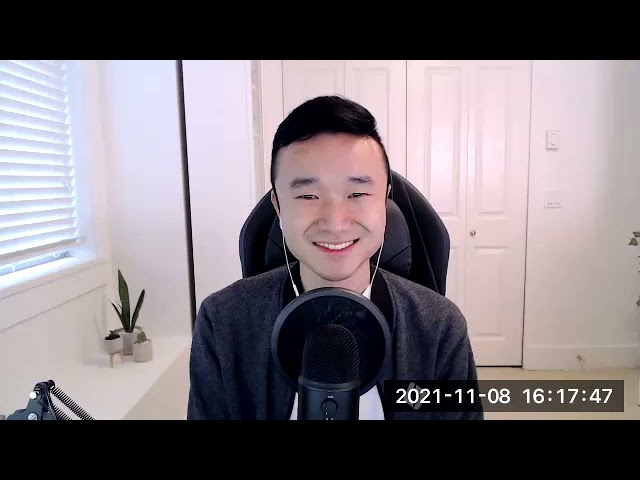
Michael Cheng, CEO of Lumen5, built a video creation platform to over one million users by letting anyone turn blog posts into videos in under ten minutes. The drag-and-drop editor uses smart defaults and AI voiceovers, while a free tier with a watermark spread virally across social media. Early growth came from Reddit and Facebook communities, not paid ads.
Chapters
Welcome to this episode of The Unnoticed Show. Michael Cheng, who is one of 3 founders for the amazing Lumen5, joining us from Vancouver, I believe. Michael, welcome.
That's right. We're here on the rainy West Coast. Thank you so much for having me on the show, Jim.
Well, we've got more in common than just the weather and new kittens then, Michael, because, you know, I'm a massive fan of Lumen5, but just for those people that haven't heard of Lumen5, Can you just explain what is Lumen5 and how does it help entrepreneurs to get noticed? Absolutely. Yeah.
So video is one of those things that everyone wants to get into right now. Everyone wants to watch videos, but not everyone knows how to create videos. And if you think about video, depending on what kind of path you walked in life, for most people, video production is very daunting. It seems like a complicated thing. And what Lumen5 is, it's an online platform An analogy I like to use is it's PowerPoint for video. So if you think about how easy it is to make a presentation slide by slide, point and click, drag and drop, that's the user experience we've created for video so that anyone without experience can still create really engaging video content for their brand.
And how did that start? Was it something that as a background you came from the video background or were you the software side? Because how did it get started?
I think a lot of the best origin stories are co-founders coming together with a diverse background. In our case, it was 3 of us. So Chris, Nigel, and I. Chris and Nigel are both from software and the world of engineering and building digital products. For me, I come from more of a multimedia interactive design background. So I studied things like video design and video editing and video production in school, among other things like 3D modeling and all of which were very complicated. You know, when it comes to creative tools, I think Adobe has largely defined that software industry. For the past 10, 15 years, but many of those tools, including Adobe After Effects and Adobe Premiere, were really made for video professionals. And we saw that there, there was missing this link. What about for everyone else? And it wasn't really relevant until I would say around 5 years ago where video really took off. You've got formats like Instagram Stories. You post a video, disappears after 24 hours. No longer made sense to go out there and hire an agency. To produce something that goes away after a day.
So just take us through then, how does someone make a video without After Effects, Adobe? Frankly, iMovie is still a bit of a mystery to me, although I've had it on my machines for ages. Can you just take us through how simple is it, Michael? Can anybody create a video? How long does it take? Do you need any skills?
Great. So, so very, very basic skills. You know, if you know how to use Microsoft Word or PowerPoint, point and click typing text, that's really all all you need. I'll give you an example of a typical user on a typical, typical day. Generally, they'll come into Lumen5, and we have a very nifty feature that allows you to turn blog posts into videos. And for busy marketers, for busy entrepreneurs who are on the go, that's what they love to use. They copy and paste a link from their blog, maybe their favorite post or a new post, drop it straight into the Lumen5 system, and the Lumen5 system lays out the storyboard for them. They can pick and choose sentences directly built within to the platform itself. We have a stock media library, and what that means is you don't have to go and capture footage. You don't need a camera, you don't need a microphone. We've partnered with Shutterstock and Storyblocks, so you can just search the topic. If you're making a video about coffee, you search coffee and you'll get beans, you get cups of coffee, you get baristas and everything that you need. You just drag and drop into your video. So that takes care of the visual component. And generally, the average user completes a video that they're happy with in under 10 minutes. And I find that first-time users, even if they are still poking around, they'll get that done in under 20 minutes. Every video you create, you get a bit faster as you become a power user and familiarize yourself with all the different tools Lumen5 has to offer.
Yeah. So it's taken 5 to 10 minutes to make a video from a blog, which sounds fantastic, especially if you're, for example, in PR and you've got articles that you then want to repurpose. What about the elements of, for example, music and also things like fonts and also brand identity? Because especially if you're working with a client that has brand guidelines, you have to retain those. Can you just take us through how do you control the content that Lumen5 creates for you?
Yeah, that's a fascinating topic. So for entrepreneurs who are a little further along or businesses that are a little further along that are listening, we do a lot of work with Fortune 500 brands as well. And as you can imagine, Fortune 500 brand users have brand requirements and Lumen5 and most of our work is divided into these 2 major categories, the creative side, how do you create enticing and engaging video and make it really easy? And then the other side is all brand. And Within Lumen5, you can upload your own fonts, whether it's a font from our library or a proprietary font, as long as you have the font file. All of the colors are customizable to ensure that every video appears as your brand meant to be. We have a number of different themes and templates for you to choose from, whether your brand is round or hard edges or transitions that are smooth or quick. All of those options are out there available as well. Lumen5 makes consistency really easy in that way. And that's how teams come to collaborate. So a lot of the value proposition we bring in a larger brand setting is if you've got 20, 30, 50 different people creating videos, well, they can tap into these same settings, these same brand settings, use the same font, use the same template to be able to produce similar looking videos together or localize them for a given geographical location as well.
Well, yeah, let's just talk about that, Michael. What about if you've got a multi-country campaign and you've put in English language text? How does, say, a marketing manager or an entrepreneur localize? For, for language, for example?
Yeah, I've seen this done in 2 ways. And, uh, because Luminate 5, uh, is designed to be somewhat like a text editor, it's really easy to backspace, get rid of this text, type new text. And in that sense, it's very different than using something like After Effects where you have to navigate a timeline and then find the precise point in time. And as I always go back to the analogy of PowerPoint, because it really does feel like that, it was a big inspiration for us to design something simple. I've seen localization done in one of two ways. Number one, maybe someone at headquarters, they produce the original version that's English, it's distributed to localized teams or a different individual who knows that location better, knows that geodemographics better, and they would simply edit out the text with their own language, their own tone. Sometimes if certain colors need to be localized, they can just tweak the settings to make sure that the colors reflect what the The geodemographics require. Another thing I've seen, which is more of a Canadian thing because we are a bilingual country, and I'll see people use these 2 tiers of text where they've got English and then French. And so, you know, there's localization built in by producing a bilingual video.
And that's really nice. So you can, I think what you can also do is clone the video, aren't you? So you can have one video and then clone it multiple times so that you could localize without sort of interrupting the original version, right? That's fantastic. And what about the music? Because this whole idea of sonic branding where, especially obviously radio doesn't impact video, but you wanna create a memorable tune. McDonald's does that, for example. Can you just take us through that? Can I add my own, you know, audio tracks or do I get the audio tracks from the archive as you've done with the graphics, for example?
That's a great question. We support audio in one of 4 ways, actually, and we'll touch on each of them. Number one, we do have a music library for all of you out there who are stressed at the thought of music production. Maybe you're not quite ready for it. Similar to stock media, we partner with Storyblocks, and we have thousands of audio tracks that are available built right into the system. You can search it using mood, you know, happy, bright, dark, ominous, whatever it is. Keyword search will allow you to find the music that you're looking for. For those of you who do have your own tune or jingle, we do support audio uploads. You can upload your own music file. It could be an MP3 file, for example. It could be a jingle that's tied specifically to maybe an intro or outro, in which case you can include that and only play at the beginning or only play at the end. And then the latter 2 ways we support audio is you can record voiceover on your videos as well. So you can hit that voice button, kind of read your video out loud to give your audience that audio angle. And And then the last piece, which is still in a bit of a beta form, is AI voiceover. So with Google Home and Alexa, I'm sure we're all familiar with AI voices, and that's something that we're experimenting with as well. Right now, there is one voice that we make available, all auto-generated, and then over time, we plan to add more different voices.
And are you doing that with someone like Talkia, or are you using the Amazon voice? Are you creating that yourselves?
Yeah, we're not, we're not creating it ourselves because creating AI voices is a business in and of itself. There isn't one that we've committed to right now. We experiment with different voices, different APIs to see which one's going to work better for our users. It's still in beta, but once it's an official release, I think I'll have more information.
Yeah. Nice. And then someone's managed to create a video and I think you can choose the duration of the video, can't you, as well? So frames, you can control the length of the frames to make it easier to decide if it's a long or Or shorter video. What about the exporting? Because we all need to repurpose. And one of the nuisances, of course, you know, Instagram needs a different size, Facebook needs a different size, and LinkedIn needs a different size. Help us, Michael. What happens once I've made that video in terms of making different letterbox sizes, as I think they're called?
Yeah. And so Lumen5 has been around for about 5 years. So much of our time has been invested in solving problems like those. How do we make it easy for the average marketer, the average entrepreneur to be able to do this repetitive daily tasks. As you've mentioned, when you create a video, landscape for your desktop viewers, you also want a square for the social feed. Maybe you want a vertical video for Instagram Stories, Snapchat, or TikTok, and mobile audiences in general. And what you'll find in Lumen5 is there's just a little tab on your left when you're creating your video. When you're done creating your video, it's one-click aspect ratio switch. And that's a very important but unique value proposition that we bring, where if you were to use something like Adobe After Effects, iMovie, or Premiere, it's not quite going to be that simple. You're going to have to change the entirety of the video, shuffle everything around. And one of the benefits of the way we approach video creation, which is more of a structured approach and everything using templates and building blocks, is when you switch aspect ratios, everything adapts to the aspect ratio. So all of the images, all of the text, they resize, they move, they shuffle around to make it fit the new aspect ratio that you're looking for. And that all happens with a single click with no change necessary. So what would effectively happen is I would hit publish, I would download my video in, let's say, landscape for my users. If I want to create a square version, I can republish that video, or I can, as you suggested earlier, duplicate that video, change the aspect ratio to a square, duplicate it again, change the aspect ratio to vertical. Now I've got 3 project files, each unique to each different platform. If I want to adjust the length for some of those to adapt it to the local channels, maybe I want a bit of a longer video for YouTube and I want that horizontal. I want a shorter video, 15 seconds for the vertical videos. Then some simple editing will allow you to do that.
Wow. So you've really taken the workload. And as you say, the skill sets, it sounds actually simpler than PowerPoint, which these days has so much automation in it. Michael, are there any other features that you think that people are really holding onto? I've gone through with you some of the basic creation, but any other aspects of Lumen5 that you think are really separating this out for entrepreneurs?
Yeah, I think it's kind of baked into how we make it easy. But we've always believed that the best design is invisible. The best technology is invisible. You can go through the entire video creation process and not know what happened. And I always enjoy talking about some of them. For example, earlier you talked about the scene length. Yes, the user has control over how long each scene is, but it's actually automatically calculated. And our design philosophy is great defaults. And so if we create great defaults, users are not going to feel the need to tweak those things. And scene length, is such a great example where as you compile your story with a bit of text, we calibrate all of that with average reading speed. And where the magic really comes in is obviously words per minute differ from language to language. But using our approach to design, if you were creating a video in Chinese or creating a video in Japanese or creating a video in English, you would all get a very different words per minute default. But you would all feel like it's natural and not feel the need to change the scene length. So it's things like that. Another great example is scene composition. Scene composition is something that you might study in photography school, but we automatically position things in such a way that they look good. So you'll notice that if you drag a photo as a background with a person, with a human face, and you have some text on it, the text would never be placed on top of the human face because the system recognizes that the human face is the visual subject, the text is the content subject, and they will place them on somewhat opposing ends of the scene to make sure they complement one another. But of course, when you drag it over, you don't think much of it. You look at it, you go, hey, that looks fine. Next scene. And that's what we mean by the best technology is invisible.
Wow, Michael. Yeah, that's a lot of work going on in the background that one can appreciate but never necessarily know is taking place. But just appreciating you as an entrepreneur as well, Michael. I mean, you and your co-founders have built an amazing team. I think you've got a lot of subscribers worldwide now. How have you done that? Can you share with us the way you've got Lumen5 noticed? Obviously, Podcasts like mine, ambassadors like me who are evangelists, right? Who love what you do, but how have you got the word out? Because it wasn't always this way. You started from somewhere.
Yeah, it's a great question. We started the company 5 years ago and today, or this week, I guess we're just celebrating the threshold of a million new users. And that's really exciting. And of course, back in the day, it used to be zero users. You know, it was just me poking around the beta version. And one thing that we've always been really passionate in as a product team, but also a design team is to be customers first. So for the first 2 years, I would say we didn't really think at all about how to get a lot of users. Our emphasis was how do we make 5 people really happy? How do we make 10 people really happy? 15 people? And in the early days, I really tapped into communities. You know, I went into Reddit, I went into Facebook groups of entrepreneurs and founders who were just starting their projects and had these conversations around, hey, you know, you're working on your Kickstarter campaign, how are you going to get that off the ground? I'm working on this video thing. And for the first 6 months, it's was creating videos myself using Lumen5 almost as like an unpaid contractor. And the conversations were very simple. Hey, let me use my tool to make videos for you for free and see if you like the videos. And, you know, before you know it, you've got 50, 100 people that I'm making videos for. They start to ask, how are you doing this in 10 minutes? I just asked you for this video 10 minutes ago and you sent it back. How are you doing this? And the conversations shifted from me creating videos to saying, well, here's how I did it. Here's an account, you know, go ahead, check out Lumen5. And That customer centricity has created a lot of advocacy over the years. A lot of our growth does just come from folks like yourself who enjoy and appreciate the platform and tell their friends and family about it. And that's just how we like to grow is to be customer-centric.
Yeah, that's really an amazing story. So really getting communities to, you know, to try, as you say, but to do it for them first. Any particular PR strategy now that you've got to a million? Because you conceivably can't be making videos for a million people to show them how it works now.
Yeah, I, I think when, when companies reach a certain stage, you can start to think about, well, how do you build on what you have previously? And one of the things that we do is we deploy a freemium pricing model, which just allows us to hit 2 birds with one stone. Number one, a freemium model allows us to offer Lumen5 for free. Anyone can create videos for free without a credit card, without paying anything. And then the, the trade-off is that when you create a free video, it has a Lumen5 watermark on it at the end video, it says video created using lumen5.com. And that's become not— perhaps you can call it a PR strategy, but it's our viral growth strategy for sure. And of all of the free users who create videos, they post it and share it with their thousands of followers. If their followers watch the video, they'll also see that they made the video using Lumen5. And undoubtedly one of those thousands of followers will go, oh, how do I make a video for my business just like that one? And that's how we've virally grown through every user we acquire. They bring in more users through the watermark exposure.
Yeah, that's a wonderfully elegant and simple and also unobtrusive way of getting people to know about the product, isn't it? Any ideas of how many of your users are creating how many videos? Can you give us some idea of the scale now of content that Lumen5 has been responsible for?
Yeah, it's the— sometimes it's hard to keep track because there's unique videos and then there's repurposed videos to different aspect ratios, but our estimate would be in the 7 million range and I often get asked, how many videos do companies create? How many videos should I create? And to which I usually answer one of two things. Number one, every audience is different. You really have to know your audience. How often are they spending on social? How much content do they consume? And then the other is you have to know yourself. Don't burn yourself out. Don't commit to creating 10 videos a day if that's not— you're not going to have time for it. You're going to burn yourself out. And in the end, the best strategy is the one that's consistent over time. As a brand voice, you want to be consistent. You want to be persistent. You want to be able to do what you do, deliver value, and you're not going to be able to do that if you overcommit with less resources than you need to actually deliver on those promises.
Yeah, Michael, that's really wonderful guidance for everybody because there's a lot of anxiety about how much, right? And actually you just have to produce what you can produce, don't you? And what about pricing? Because on this show, we also like to talk about, you know, things being affordable. You've mentioned the free sort of early version for people. What about if they want to upgrade? Mike, would you want to just tell people how affordable this is?
Yeah. So, uh, as you kind of nailed it there, first and foremost, our free plan is by far the most popular. And we do that because we have a lot of confidence in the product. And we believe that if you try it for free, you see for yourself, you know, we're not trying to deceive anyone. We give the whole platform almost away for free. And then we have 3 different plans after that, the Creator, the Premium, and the Business. And they're designed for individual creators and then premiums for professional video storytellers. And for business, that's more of brands that are probably running a team. The Creator starts at just $15 per month and it removes the Lumen5 branding. So it's a very simple upgrade. You love creating videos, maybe you wanna take a bit more control of your brand and you don't want the createdusinglumen5.com at the end, $15 a month to remove that. And then at the $79 per month, that's our premium plan that gets into a lot of the premium stock media. You'll get the premium library from our Shutterstock partnership. You'll get a lot more control over colors and styles, and you'll be able to start to store what we call brand kits. So if you're an agency producing videos for multiple clients, you're gonna want to save multiple brand kits for different brand guidelines, and that unlocks at $79. Then the business package is really designed for teams. That's $199 per month, and that goes into a lot of the more enterprisey features, the ability to add multiple team members, the ability to have workspaces, permissions, editors, admins. So it's more collaboration-focused. And that's the, that, that's, we have custom offers that we do for larger Fortune 500 enterprises, but for self-serve, that's what we have.
It's an amazingly broad range of offering really with the same amazing suite. Michael, we've only got 20 minutes and I could talk with you about this for much, much longer, but in the interest of your time as CEO of Lumen5, I know how busy you must be serving all these customers. Thank you so much for joining me today from Vancouver.
Yeah. Thank you so much for having me.
Michael, you built a product that has liberated me and a number of other entrepreneurs, and I look forward to sharing your story with the Unnoticed Entrepreneur community. Thank you so much again for joining me.
More from Jim











2 people, infinite agents, 1 billion dollar idea #AIAgents #Startup #Productivity