How to build a global SaaS business in the membership organization industry.
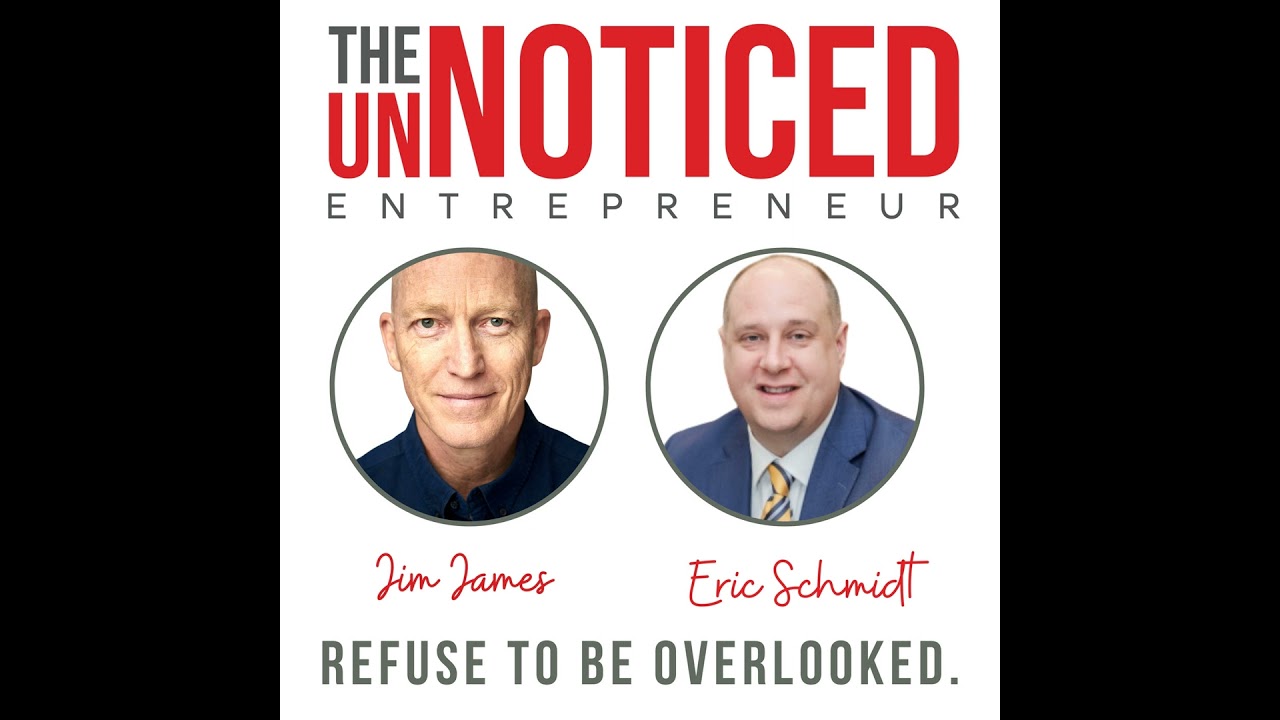
Eric Schmidt, CEO of GlueUp, built a SaaS platform for membership organizations like chambers of commerce across a ten-year journey from Beijing to global offices. The platform automates renewals, events, and email marketing for understaffed organizations. Schmidt shares lessons from rebranding EventBank to GlueUp, adapting for mobile-first Asia versus web-centric Western markets, and learning that LinkedIn marketing flopped.
Chapters
Welcome to this episode of The Unnoticed Entrepreneur. Today it's a really special pleasure because we're celebrating the 10th anniversary of a company called GlueUp, founded by Eric Schmidt and his partner, uh, actually in Beijing. And I met Eric when he ran a company called China Entrepreneurs back in Beijing, all the way back in 2008, 2009. Eric, so welcome to the show.
Thank you. Thanks for having me, Jim. It's so great to see you again.
Well, it's wonderful. And you and I luckily have touched base, you know, in between. I've been tracking you because, you know, you started EventBank, as it was called then, and now it's called GlueUp. You've grown it from what was really a husband and wife team, uh, in Beijing to now a worldwide operation with 110 people. You've got 12 offices, you've got over 1,200 clients. So we're going to talk about how you've really managed this transition amazingly, moving as well the business into America and into these other countries around Southeast Asia and Africa, and really about online events and how you've managed to help organizations, chambers of commerce and companies to make the most out of their events and their memberships. Eric, tell us about GlueUp first and let us hear the story.
Well, first of all, again, thank you. Thank you for having me, Jim. It's always a pleasure and certainly so awesome to see what you've done with this podcast and the books. And I hope everybody's reading everything you've written and will write in the future here.
Well, thanks, buddy. Yeah. Well, they will because you're on the show. So now people are bound to read it. You get your wisdom.
So, GlueUp, you know, is what we consider a community engagement CRM solution. We provide a full suite of what we call all-in-one solution to our customers, mostly in the chamber of commerce and association space. Business executive organizations, and some corporates as well. The core being a CRM, and then layered on top of that is our membership management tools, our event management tools, email marketing, and of course, our community platform that we launched a couple of years ago. And really, our goal was to enable, you know, organizations who were doing awesome things around the world to really help and make it easier for them to manage their memberships and their events and help them grow. And that's what we've been doing for now 10 years and hopefully be doing it for at least another 10.
Yeah, congratulations on making it through the last decade. Not easy, especially when you've gone through, you know, immigration or for you going back to America and then also surviving COVID as well. Eric, let's just first of all look at What an organization like a Chamber of Commerce should want to find in a platform when they're managing their membership. Let's go to that first because not everyone will be familiar with what platforms like yours provide and also the opportunity that they provide to transcend geography.
Absolutely. So I think any member-based organization, you know, they're dealing with a couple different challenges. Generally, they're underfunded. And understaffed, so they're they're dealing with that first layer of you know they're already starting off on on the wrong disadvantage. So when we come into the equation is how do we help them get an advantage? Help them automate. Help them make sure that their organization is really trying to look forward with technology so that they can focus on the things that are important. So if we take an example of memberships globally, you know memberships is you know it's an annual membership that people purchase. And it needs to be renewed again. Well, that membership manager, whoever is in charge, generally needs to send out invoices. They need to make sure they're sending out renewal notices. They need to make sure that people are renewing and hopefully at the same time providing value so that they do come back. And so we take that and we automate it and we make sure that it's done from the platform. At the same time, you know, those folks who are engaged with a chamber of commerce or an association, They want, like I said, value from that. And that generally comes from the events that they're attending, from content that they're reading, but also from the interactions that they have with other members. And so by us building our community tools and really the communication element of what we have is to really bring that whole group of people together. Now, you know, when we look at any of these sectors, it could be somebody who's focused on, you know, manufacturing computers. Because again, in most parts, many parts of the world, there's an association for everything. Especially here in the US. And because there are so many, people need to know, you know, again, who is the right association for me and how do I fit into that? And then of course, how do I participate? And again, we can provide all the technology to help that organization run, at least from a software perspective.
Yeah, Eric, that's wonderful. Yeah. And having been involved with the British Chamber of Commerce in Beijing, you know, on the board, Membership was a remarkably painful process, in fact, of sending out paper invoices and checking. But also you're able to add a huge amount of value. You've expanded out of China. Just tell us from a marketing point of view how you accomplished that, because you stayed vertical in terms of doing memberships rather than growing the software to serve the existing customers in China with more functions. So you decided to On, you know, the Ansoff thing to go, you know, new market, same product. How did you overcome the challenges of going global from a marketing perspective?
Yeah, so I guess part of what's important there is we always knew that when we were building a global business, China just happened to be where we were. Of course, anybody that's read the paper in the last, you know, 5 years knows that You know, China and associations, you know, there's there's not that many associations that are doing what they are in the rest of the world, or business organizations. Obviously, we were all involved in chambers of commerce, you know, within within China. But at the same time, you know, for us, it was how do we go out and how do we make sure we have a product that we can take to the rest of the world at the right time? Because the needs of somebody in Asia is different than somebody in their needs in. In Africa and very different than generally than those needs of somebody in the United States. And so that transition took some time, but it was really having the right product that could then be sold in those markets. And that's what took us the most time was having the right product. You know, we, as we sort of transition from being, you know, I would say, you know, having a basic product into a more advanced product, again, it takes time to build anything. And anybody who builds software knows that software is never done. There's always something another customer would like to see, and there's always a wish list that, again, a product person like myself always wants to build on top of everything else.
So, Eric, how did you find that different markets, you know, Asia, Europe, America, and Africa, manage events differently? Because you've highlighted, you know, the challenges cultural changes, for example, were there any things that really have stood out to you where one market required this and another required something else?
Yeah, I would say from the perspective of technology in general, events are, you can sort of bring and manage events similarly almost anywhere in the world. The difference is to sort of, to your previous question, which is when it comes to marketing, How am I marketing my event to get an audience to come to attend? And that's really a key thing that we realized. They need different tools to be able to do that. Some have bigger audiences, some have smaller audiences, but is it email? Is it phone call? You know, way back in the day when we were running events in Asia ourselves, you often had to call people directly to make sure that people felt that it was an invitation that they were receiving personally from you. that they were important and you were making that special, you know, invitation to them. We've gotten a little bit beyond that now, I think, in most parts of the world where social media has changed how people promote events. But at the same time, the email invitations that are going to people with inside the community who are the members of that organization is the most common way. But again, as we saw even in Asia and especially in Africa, mobile technology and how people use their mobile phones really made a big difference. And something that we had to learn early on was how to really make sure that we could build for mobile, but then also be able to build for web. And especially, of course, that changed during COVID because everybody was at their computer at their home all the time. And so we had to switch back even thinking about the web platform come 2020.
So interesting. Do you find that Asia was more advanced with mobile than Europe and the States, for example?
Absolutely. Absolutely. I think we're probably seeing almost on par right now with many things. But back to pre-COVID, we definitely saw Asia was very far ahead of where certainly the US and Europe was in terms of mobile adoption. but also how they use the phone. And, you know, a good example of that is we had built onto our mobile application for our customers the ability for them to manage their members directly from the mobile device. And that was because if somebody's in Bangalore or somebody's in Jakarta or somebody's in Manila and they're sitting for 2 hours in traffic each way to the office, they have a lot of time on their hands because they're not really moving very far, but they're sitting in the car. And they actually had time to do simple tasks while they're sitting in traffic. And so, we had developed a way for them to manage their members while sitting in traffic. And, you know, at that point, people thought that was crazy because, like, why would you spend time developing that? But for our customers, that was important because they needed to make sure that their time was productive, you know, while they were sitting there.
Right.
And, you know, fast forward to today, I had a client here in the United States, you know, about 2 months ago call me and say, hey, I was sitting in traffic, you know, in my city, and I actually started using it. And so that was cool to see that, you know, we've now caught up here in the United States to where, you know, where we were and why we had developed it, you know, back a while back. But hopefully they were driving safe and they weren't, you know, obviously doing anything on their phone while they were driving.
Yeah, and I think that's another thing that in Asia a lot of people were driven, were they, you know, managers had drivers if they were, and business owners have drivers or people in taxis, whereas in America and Europe, people tend to be driving themselves, don't they? So there's another sort of slight difference unless they're going autonomous, of course. Eric, tell us one thing. When you came back to America and you were marketing a software that was built ostensibly in China. Did you have resistance to you being sort of an Asian software? And if so, how did you deal with that? I know you're American yourself, but was there any sort of, sort of, well, you couldn't be as good as some of the Ticketmasters and some of the big American companies?
Yeah, I would say this. I mean, first, you know, we had already expanded by that point to having our technology being built, you know, in probably 4 different countries. So it wasn't specifically China. You know, which again, in the world of politics that you know have existed for the last five years, you know that would definitely be a very big challenge for any company who was coming specifically from China to the United States. But the good thing was is because we had diversified, we sort of saw what was happening politically prior to that. We were able to diversify ourselves into other markets. The Same time, you know, we knew that every company and every technology has a path of development. And at what point is it going to be able to satisfy the needs of the customers? Back to 2018 and, you know, a little bit into '19, you know, that was its own challenge as it relates to we had some features that we didn't develop, you know, that we needed to. And, you know, we knew that. And so we were building them in order to prepare ourselves for, you know, an eventual push into the US market. Now, what we didn't know was obviously COVID was coming. You know, if anybody could have predicted that, you know, we would have obviously, you know, been better positioned and better prepared for what was coming. But nonetheless, we were already preparing some of the features.
Yeah.
like our community product that was therefore ready to be launched into the markets worldwide.
So, you're already sort of multinational. Now, you started off, Eric, as a business called EventBank, you know, as I knew you and Olivia back in the day. Now, it's called Glop. Just take us through the naming and why you changed the business name and the impact that's had.
Yeah. So, as with any name, you always think of something you thought sounded cool and then you realize later on maybe it wasn't as good as you thought. And, when we had come up with the name of VetBank way back in 2013, I was like, oh, this is great. The domain name is available and we're ready to roll. A few years later, 2 things happened. One, people were confused that The word bank, you know, you go to an event in Hong Kong and people ask, what kind of bank are you? Same thing would happen in New York. The good thing is, is, you know, we sort of had some foresight of we were thinking about changing, but, you know, as the platform expanded to build our new features and CRM and membership and all these other things that we built over, over the years, it was limiting our ability to convince people that We weren't just about events. And, you know, having those tools is one thing, letting people know what you do is another. And that's obviously the challenge of marketing anything is making sure people can easily tell what you do. And so, as we sort of move forward and COVID had hit, that's where we got to a point where the name was already sort of keeping us back from where we could be.
Yeah.
We were about to launch our community platform and we knew we needed to make a change. And that was actually in a marketing meeting. We realized that we were bringing people together through our technology and our name was not conveying that message. And therefore, I think it was just blurted out, GlueUp. We should glue people together, sort of came from that. And therefore, that became the name.
Okay.
We went through a process, a little bit longer process of making sure, you know, of all the names you could think of, plus what domain names were available. But eventually, we got back to GlueUp was it. And August 2020, we rolled with it.
Nice. And the new branding and so on is really fantastic. And as you say, you're bringing people together. And you've also developed some new products, I think, for example, one called Speed Networking. So you've also started to iterate. What's been the theme behind that?
Yeah, so again, during COVID we realized that our customers weren't necessarily going and creating big conferences. They needed tools to really bring their community together in other new ways. And so our speed networking tool was really built from some of those events that we were all attending. Whether it was a happy hour or, you know, just a gathering of people at a restaurant. And with that, it meant that, hey, we need to think of ways that we can do that online. What we didn't realize, of course, that COVID would push people, you know, again, being at their home and people wouldn't be going back to their offices. And so now, actually, what we've realized, and certainly our customers have, you know, realized that this is perfect for those distributed workforces. Because when people are not in the office together, they're not building their team, they're not building their culture, they don't really understand that much about each other personally outside of, you know, what used to happen at a water cooler. This was a perfect tool for them to be able to have those impromptu conversations, structured, of course, but in a new way. And teams love it. Our team did it this morning for our 10-year anniversary. And the cool thing was our team members, you know, in here in the United States were meeting people in, you know, in Hong Kong. Our team members in the Philippines were meeting folks in South Africa. And, you know, really just building those relationships across the organization is obviously a necessity for any business that's growing. And, you know, we sort of one step forward with achieving that.
Eric, I love the way that you have managed to grow this business out of China, make it global. Tell us, there must be maybe one thing that you've done that hasn't gone quite according to plan from a marketing point of view. I mean, you've accomplished a great deal, but is there one thing that you think you wouldn't want anyone else to do that?
I think there's always many things that we wish we hadn't done. You know, those are expensive lessons along the way. I think, you know, as it relates to software, there's always tools that you want to be able to build that, you know, end up not working out. But from a marketing standpoint, if there's one thing that we probably should have done better was actually our LinkedIn marketing. We did not do a very good job with that. And we spent a lot of money on LinkedIn marketing, which is very expensive compared to other platforms. And we just did not, you know, see the ROI from it. I think the good thing now as we look to today, Events are back in person, and those personal relationships that people want to build can take place again. And so, we can look at a very long list of mistakes that we've made over the past 10 years, and there are many, as I said. But when it comes to building any software, it's always a challenge, but it's never done.
Yeah. Okay, fantastic. So, overinvesting in LinkedIn, maybe because you weren't getting the The sales leads, was it just a matter of spending too much money on that or the strategy or just the wrong platform?
I think it was a combination of all the above. I think, you know, using it more in a limited scope ended up helping later on. But, you know, when we were initially trying it, I think we just, A, didn't have the experience with really, you know, how we needed to use it, but also at the same time, you know, the best way to to find our customers, right? And marketing is all about finding your customers and really what's the cheapest way to reach them that's going to drive value. And, you know, we experimented with many things over the years and some things worked, some things didn't. But, you know, us understanding where our customers were and, you know, where they were spending time, that became obviously the core. And again, back to today, you know, we realized that our customers, Many of them go to various events, and there's a couple events on the calendar. You know, we hosting our own thought leadership programs that we try to run on a regular basis. And you know that that's been more important than anything because our market is special in a certain way because they everybody's running their own events. But at the same time, you know, there's always more to learn for any professional in any industry. And how do you How do you speak to them in the right way?
And so that takes us onto my final question, Eric. The one thing from a marketing perspective that you think really does move the needle, you've kind of alluded maybe to that a little bit about focus and finding where your customers are, but anything else overreaching, overarching idea that has really moved the needle for GlueUp?
Yeah, good question. Obviously we're in the B2B space. Everybody in the B2B world is gonna tell you it's not sexy. You know, people who want the exciting marketing careers are going to go into the B2C world where you always do some cool events, a new video, you know, a new launch. But in B2B, I think it's really about consistency. And over time, you know, that consistency then builds the brand, then builds, you know, your customer base to be able to look at you in a different way. And then, of course, those customer testimonials that are going to bring, let's say, good things about what you have been doing, over time, you know, really helps build the brand, like I said, the brand, but also making sure that, you know, it is something that's continuous. I don't think anybody in the, you know, in the B2B world wants to work with a business that, you know, is inconsistent because are they really continuing to invest in their product, but are they going to be around next year? And that's always, I think, the challenge when you're in the B2B space.
Yeah, that's a really good point that as you buy something as a company, you're integrating into another business system, aren't you? So you don't want to be chopping and changing once you've made that decision. It's integrated into every other dimension of your company, and, and you really want that vendor to be plugged in and growing as you're growing too, right?
Absolutely. And I think as an early entrepreneur in the B2B space, you're like, well, why aren't they buying? They should buy. This is a great product. They need to buy it. And then you realize, you know, as you're more experienced entrepreneur that, well, we probably were not the right fit at that point because we actually were too young for that business to trust us and what we were doing. And now I think, again, here we are 10 years later, I think we've built that trust, but we still have a long way to go and obviously trying to achieve our mission and really empowering these organizations worldwide.
Well, in a decade that I've seen you doing it, you've made a massive, massive impact. And certainly when we installed GlueUp, or EventBank as it was then, into the British Chamber of Commerce in Beijing, it made it just— transformed the operation wonderfully efficient and engaging. Eric, if you want to find out more about you and GlueUp, where can they come?
Yeah, of course. Obviously, our website is glueup.com. People can get in touch with me at eric@glueup.com. And of course, any of our social media sites or We're always there, we're active, and always trying to think of new ways and new, better ways to do things. So, of course, as we continue to grow.
Eric Schmidt, longtime friend, a much-admired entrepreneur. Thank you for joining me today.
Thank you. I truly appreciate it.
Well, I appreciate it. And watching Eric build his business with his lifelong partner is amazing. And I believe she's back in China, isn't she, Eric?
She is at the moment. That's right.
So we're sending her our best. But, um, Eric's going to steal the limelight for today. And if you've enjoyed this, please do share it with a fellow unnoticed entrepreneur and rate it. A takeaway from today for me is that if you're in B2B, it really is about trust and consistently showing up over time and building and building and building and learning and, and growing, but staying in the long game. So thanks to Eric for sharing that with us today. Thanks so much for listening.
More from Jim











2 people, infinite agents, 1 billion dollar idea #AIAgents #Startup #Productivity