How to deliver customer service action which exceeds the adverts, and generates positive publicity.
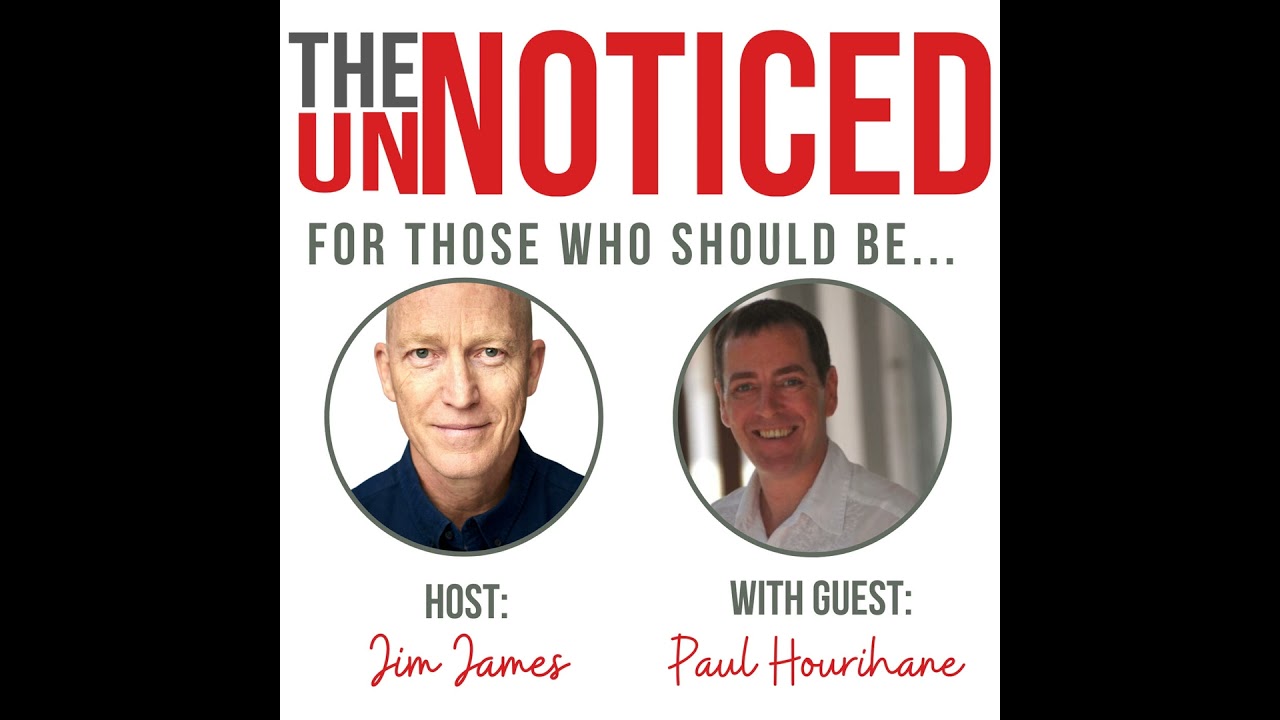
In this Speak PR podcast episode, host Jim James interviews Paul Horrohan, founder and Managing Director of Remark Asia Pacific, about the CX Academy – a training and enablement program designed to elevate customer experience (CX) across organisations. Paul explains the distinction between customer service (the operational act) and customer experience (the emotional outcome), outlining six key CX drivers: trust, knowing the customer, ease, empathy, fixing issues, and a seventh minor driver. He describes how the Academy delivers scalable certificate (≈€500) and diploma (≈€2,800) courses, endorsed by trade bodies and a university, aimed at upskilling staff at all levels. The discussion covers pricing, accessibility for SMEs, government subsidies, and the importance of embedding CX initiatives into core business strategy to ensure adoption. Paul details ROI metrics such as customer retention, acquisition cost reduction, staff churn, cost‑to‑serve, and margin improvement, and notes the program’s relevance across sectors (airlines, hospitality, finance, telcos, utilities, government). For marketing the Academy, he highlights reputation, LinkedIn, webinars, and word‑of‑mouth as effective PR tools. The conversation underscores that exceptional CX creates “remarkable experiences” that fuel organic publicity, aligning with the core premise of the Speak PR framework.
Chapters
Hello and welcome to this episode of Speak PR. This is the podcast for business owners that want to unlock the value in their business with effective communications. And today I'm joined by Paul Horrohan, who is in Singapore and who is the founder and MD of Remark Asia Pacific. Hi, Paul.
Hey, Jim, how are you? Pleasure to be here. Good to see you.
So, Paul, share with us what you're doing with Remark Asia Pacific.
We bring best of the solutions that we can find and have trust in from other parts of the world into Asia and point them at parts of the business that need them the most. And the first of the brands that we brought to market 6 or 8 months ago was a business out of Ireland called the CX Academy, which is an enablement and training product to really help businesses up their act in terms of customer experience excellence and driving better outcomes for the interactions they have with their customers on a day-to-day basis. That's what that is.
How do you think customer experience impacts public relations?
So I think if you step back a step and understand what customer experience really is, and this is the opportunity I think in terms of where businesses can improve and be more competitive, there's very often a confusion between customer service and customer experience. So customer service is what you do, how you do it, how quickly you do it, how effective it is, and all of that stuff. It's measured quantitatively. Customer experience is all about the emotional outtake from all of that. So how do I feel after I've had a series or any interaction with your company? Airlines are a great example. So people don't tend to talk about the check-in was a disaster and, you know, the air hostess wasn't very nice and I got delayed and all this stuff. They tend to talk about the entire experience and say, oh no, it was awful, or yes, it was wonderful, or it met my expectation. So it's all about people expecting stuff and then meeting those expectations, which results in an emotional outcome. And the most positive result of that, to answer your question about the effectiveness of how it integrates with PR, is a very good one, is what we might call a remarkable experience people will then talk about. And I think one of the key objectives of PR is to get people to talk about you. If you generate good ones, they talk about you and that multiplies and has a very positive effect on your brand and your business. So that's kind of the most obvious cross-section between the two.
And when you talk about the customer experience, how are you helping companies to kind of evaluate where they're at now and to look to improve? Because there's often a difference between what So the advert has said, the PR has said, and then the actual experience through the entire sales process.
Yeah, it's kind of funny you should hit on that so quickly. One of the sayings is it's about actions, not ads, and very often the overpromising done by the marketing folks that you and I used to know so well is a hard thing, a hard act for the actual business to deliver and meet those expectations. So part of what we try to do is to get them to align that But also what we help them with is determining what emotional outcomes that the business is trying to drive and having to deal with on a daily basis. So some of them are sort of more quantitative, some of them are qualitative. So there are only 6 outcomes that any business is going to drive to. So trust, of course, is the first and most important, and it's sort of— what do they say? It's the hardest. It arrives like a tortoise and leaves like a Ferrari. So it's the one that's hardest to earn and easiest to lose. A second— we call them drivers of excellence— and the second one is that you know me. So the word that everybody wants to hear most often in the world is their own name. So getting my name right and knowing me and my business situation or my purchase situation or my emotional situation or my financial is important, meaning knowing me. Making it easy is another, meaning is it easy for me to transact or get what I want or complete my business with you in the time that I want to? Empathy then, of course, is understanding my situation and what it's like for me to be doing business with you if I'm stressed or in a hurry or disappointed or— For example, casinos, I've got a very interesting empathy play. Gambling is a very stressful business. People are happy, sad, excited, stressed, all of that. It's a very empathetic business. Then there's a really important thing, which— or important driver, which is called you fix things. And that's the sort of— if someone bothers to complain and say they've got a problem, means they care about you 8 or 9 times more than someone that doesn't. And if you fix it, and if you fix it heroically, you'll get rewarded with an enormous amount of positive energy and emotional outcome and remarkable remarks to other people and those kinds of things. So they're the drivers. And yeah, that's trying to add— there was another one, but it's small. They're the key ones that really matter.
So with the CX Academy then, Paul, taking these 6, can you just walk us through what would a company do if it was to come to the Academy? How would you help them?
So it's called the Academy for a reason. So what we do is we educate them and their staff at scale, and the big thing about this is scale. So we've got courses that they buy which are certificate and diploma courses which are endorsed by trade associations and a university. And the whole point here is to give them a management measurement framework of the outcomes that they're driving to as a business, and then give them an ability to enable their people, sort of senior, middle, and front end, to really execute and drive those kinds of outcomes. The COVID thing's been interesting actually. And it's changed this business and the focus quite a bit. Frontline staff are kind of— have become from lambs to lions. So talking to brands about investing in their frontline staff has become a very different conversation than it might have been a year and a half or 2 years ago. They now are appreciative and people are telling them how wonderful their people are when they're in difficult situations, how good they are in looking after them, investment in that sort of level of staff has become quite a priority for good, well-run businesses. So that's what they get from us and who it's for. They are sort of 6-week-long and 14-week-long courses to the same structure, to the same measurement, delivered by experts in the field and professional educators, all done online. So it's quite COVID-friendly in how it's executed. And it's been done in a very kind of visually rewarding way. It's a very beautiful experience. So that's what we, that's what we kind of try to give to them and add value to. And there's a lot of businesses taking it up, and the timing for this, given our atmosphere, is interesting to say the least.
Yeah, that sounds fantastic. And in terms of the sort of investment that companies are needing to make, it sounds like quite a holistic approach. and requires almost the entire organization to go through it, as opposed to be sort of a tactical one or two people within the organization. Is this something that's accessible to SMEs, or really only MNCs able to afford this? What sort of prices are we looking at?
Yeah, great question. I think that the operative word we have here is scale. So there are not many things that— many products like this in the market. So a certificate from us is €500. It's about 17 hours learning, 6 weeks time duration. And the diploma is about €2,800. So these are not enormous sums of money. And it's a very kind of sensitive and hot and competitive topic that it's around. So absolutely, it's available to small, medium businesses. at that kind of scale, it's not outrageously expensive. Um, it's, you know, in hundreds and small thousands of euros per, per person trained and executed.
Well, and presumably, um, there are government incentives around paying for services like yours in terms of it being a skills upgrade.
Yes.
Tax deductible, or even, uh, in Singapore, there are all manner of grants for skills upgrading.
Yes. We've qualified for that in Ireland and Singapore and Malaysia and Hong Kong. So yes, there are. But what I say to people is if you don't think it's worth the money, don't go and look for the government subsidy. This is the value it is, and that's how you should really look at it. If you get a government subsidy, that's great, and that's your relationship with them. But we deliver this kind of value for you. That's really how it should be, the currency it should be looked at in.
And what about adoption, Paul? Because You know, as we all know, a lot of programs, whether it's, you know, CRM programs or productivity initiatives within companies, get trained but fail to get implemented. What about the success rate once people have done the course? How do you ensure that there's follow-through?
Well, we do There are 3 kind of levels of that. There's some continuous training programs that go after the formal training is finished, which keeps the skill levels up. Secondly, we usually manage to stitch this into an HR approach to make sure that the skill levels are kept up, meaning if people are tried and other people join, that they go through the same level of enablement to a CX objective. Thirdly, you can't really do this— there's no point in doing this if it's not taken seriously. It has to be baked into a fundamental strategy for the business, otherwise it just simply won't work. So sometimes we say to larger businesses, you know, there's no point in taking 2 or 3 people to do this and expect a material difference. You have to take a whole department of, or, you know, region of, or whatever it is to show it, to demonstrate that it works. So once it's piloted with a degree of success, the retention rates go up very dramatically in terms of it as a strategy. People sort of mess with it and just kick the tires, it tends to just go away. So I think the answer is it depends on how serious the business is strategically about its customers, and what sort of competitive edge they want to build. And it's a young business, we've been doing this about a year and a half, so there is some statistics on that. There's a lot of research on CX, In terms of CX project failures and stuff, there is some— there are numbers, but we've seen more of them complete than fail, that's for sure.
Well, it seems such a logical thing to do when it's, I think, 7 times more expensive to acquire a customer than to retain one, isn't it? Something like that.
Yeah, so a question we get asked a lot is, how do I measure the ROI or the return on investment from this kind of program or expenditure. And to your point, it retains customers, it makes customers cheaper to acquire because people talk about you and people come to you at a lower cost. It retains— it reduces staff churn or attrition, in other words, increases staff retention. It decreases the cost to serve as people become more self-enabled and happier to deal with you. It can increase margin with people paying a little bit more money for easier access, things like that, for things they want. These sort of 5 or 6 or 7 key measures are all kind of boardroom-level measures of what's important to small, medium, large businesses.
And is this working for just FMCG, for a consumer, or is it also working for business-to-business organizations? Or governments as well, for example?
Yeah, yeah, it really works for businesses that have a number of people serving— so a few people serving many people, or a lot of people serving very many people. That's when it kind of really comes into its own, and you can do these things at a scale that's appropriate to the business. Right, so can you give us some examples?
You know, you mentioned airlines, but would it be Restaurants or hotels?
It's any business really that has to serve a number of clients or customers at a fair count who are sort of in commoditized areas. So all airlines have got a Boeing, all airlines got, you know, nice-looking staff, all airlines fly to the same airports around the same times, and you'll pay very different based on what you expect to receive from them. Financial services companies, telcos, utilities, transport, government, where service and the outcomes of making people happy and satisfying their needs are important, that's really the sweet spot for this. And it comes down to smaller chains of restaurants, absolutely. We've got many customers who run 3 or 4 hotels. those kinds of things, employ 100 people, 200 people, where they can really use this to make the personalization of their business world-class. So yeah, it goes down to that sort of size of business typically. So from really big ones to kind of your people dealing with a lot of people effectively.
And is there sort of one tool or tip that you've learned from the— sorry, I'm going to just do that one again. Because I thought I'd turn this thing off. Is there one sort of tool or thought within the CX program that you've noticed to be particularly effective? One sort of favorite tip that you found?
The answer to that is kind of yes, the whole thing. So you can't take the 6 drivers and say, you know what, I'm going to learn everybody's name and I'm done. Or, you know what, I'm going to empathize like crazy with people, it's all done. Because people take the whole experience and judge and compare you with themselves and others on that basis. So it's not a cheatable thing. You've got to do it all.
Okay. And what do you find is working for you and for your business? This is your own business, Paul. You've been an entrepreneur for 25 years, as long as I've known you. So what would you say is the best sort of PR tool or activity that you've been using to build the brand of the CX Academy?
I would say there's kind of one very obvious and to be expected answer to that, and then one that's not. So your reputation is very important. This is the strongest marketing tool of them all in almost any business. But what I have to say is, in particular with this business, which is in my case less than a year old, We've been using social media and LinkedIn heavily, and we found that has helped sort of get our profile up and get us into conversations we may not have been in quite a lot faster than perhaps some of the more traditional methods of marketing. So word of mouth and well-run business-to-business social has worked really quite well so far for us, those 2 things.
Okay, great. And you're also, you're very active on webinars, I see.
Yes, and we've done a lot of the webinars— sorry, you're right— where we get together with partners, where we can get into each other's audiences. I think I've done 9 of them in 8 weeks.
Managing Director of Remark Asia Pacific. Where would people find out about you?
Just go to remarkapac.com and it's all there.
Great, and I'll also put it in the show notes. So Paul, thank you so much for sharing and being on, if what I guess will be your 10th digital recording in the last 2 months, and sharing some thoughts with the SpeakPR community about how to get noticed using effective communications and customer service.
Pleasure, Jim, lovely to see you, thank you very much.
So that was Paul Houraghan of Remark Asia Pacific, and key there for me is the importance really of having great customer experiences because as we know through amplification, which is the A in our Speak PR program, that a happy customer will share and amplify their appreciation of your brand. And this is the best form of PR that's available to us all. So thank you for listening to this episode of Speak PR. This is the podcast for business owners to unlock the value in their business with me, Jim James. And so until we're together again, I wish you the best of health, a profitable business, and that you keep on taking great care of your customers.
More from Jim











2 people, infinite agents, 1 billion dollar idea #AIAgents #Startup #Productivity