How to get clients to "know, like and trust" your brand forever with podcasting, with Jeremy Slate
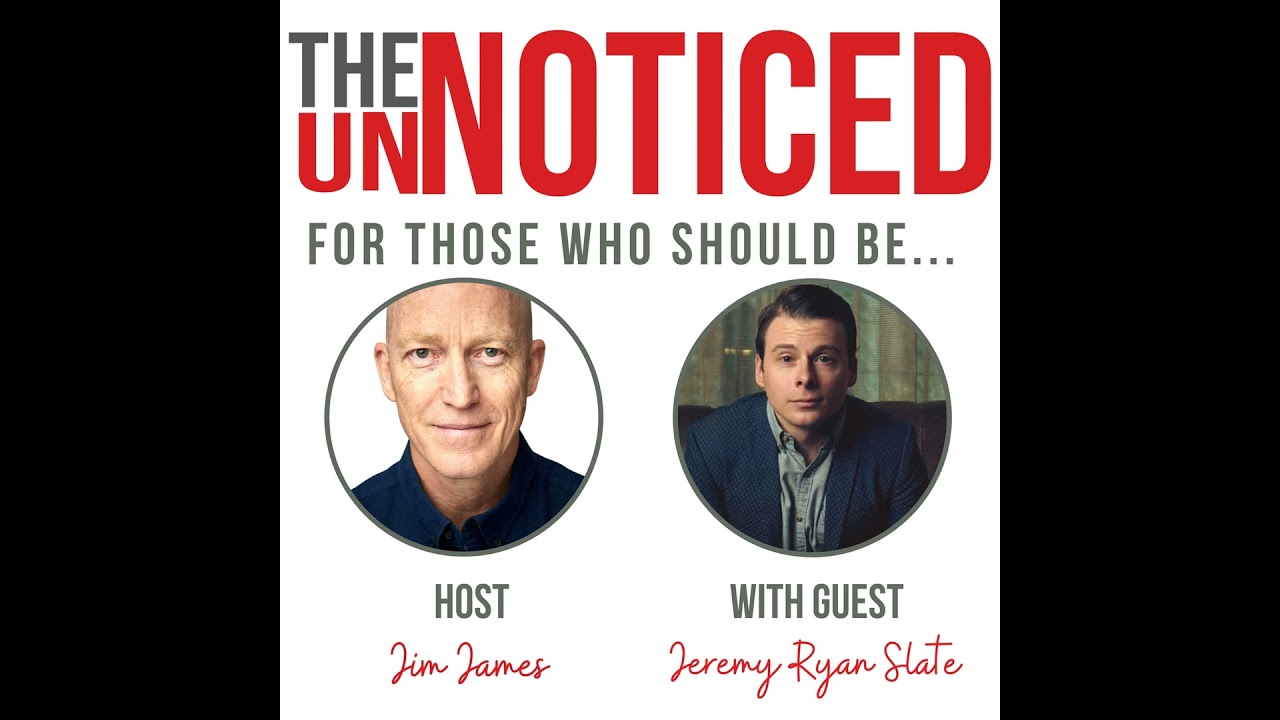
Jeremy Ryan Slate, CEO of Command Your Brand, explains how podcasting builds lasting brand trust through long-form conversations. He recommends starting as a guest to learn the medium, then launching your own show with a clear message and specific audience. Churchill and FDR shaped public opinion through audio; modern podcasts do the same by helping audiences know, like, and trust you.
Chapters
Hello and welcome to this episode of The Unnoticed Entrepreneur. Today I'm delighted to have Jeremy Ryan Slate joining me from New Zealand, and Jeremy is the CEO and founder of Command Your Own Brand. Jeremy, welcome to the show.
Hey, thank you so much for having me, man. I'm stoked to be here and hanging out.
Well, look, I am very, very honored because you are already a host of a massively successful podcast. You've had your own agency, you're writing a book. Tell us, how do you think entrepreneurs can get noticed, especially with podcasting as an opportunity for them?
So to me, it really comes out around defining your message, knowing your public, and really differentiating. Because I think far too often people make this, and you've probably seen this with all the people you've spoken to, they make the mistake of thinking that their public is everyone. And because of that, their message resounds with no one. So to me, whether it's a podcast, whether it's in an article or a TV place, whatever it may be, it comes down to really defining who you help, really defining how you talk to them, And then really defining like what your brand story is, because I think far too often, you know, we just rely on these rote understandings of what people have of what we do. And we find that they know nothing about what we do. So you have to get the right people to know you, the right people to like you, and the right people to trust you.
So how do you think people can do that? Because you're absolutely right, defining who you really talk to is key. And once you've done that, Jeremy, then how do you help a client or a company to then communicate that value?
So, you know, for myself, I've been in the podcast space since 2015 when I And then I started my own show. So since 2016, we've been helping people to really get down their message, how they teach people, and really helping them find the right podcast. Because I think right now podcasts are kind of the best vehicle to do that because you get these long-form conversations that you don't get in any other type of media where you really get to know someone. And when you look at it historically, some of the biggest and most important messages have come in audio. And I think that's what we really have here. Winston Churchill, we'll fight them in the land, in the air, in the sea. Or if you have, you know, like December 7th, 1941, a day that will live in infamy of FDR, those messages have come through audio. And I think audio has an incredible way to really create that relationship and build that. And I think we're really benefiting from that in the podcast world right now.
Well, you're absolutely right. And of course, the sound of a voice—
That was probably the worst Churchill impression ever, by the way.
It was fantastic. Of course, you're at university here. in the UK. So bona fide points for that accent. And you're absolutely right. So audio is great. And I know that you also studied about influence in, I think, Roman times, Jeremy, didn't you? So you understand about influence. Was there a quick takeaway from your dissertation on how the Roman emperors influenced people?
It's interesting because when you look at it now, what we're seeing now is actually very similar to what we saw then, but how we're seeing it is different. Because what the Roman emperor did— and when I'm looking at Roman emperor, I'm looking at the very first one, which is Caesar Augustus, previously known as Octavian. And what he did is he actually looked at what his adopted father Julius Caesar did, and then what Pompey the Great did. Pompey the Great positioned himself with Alexander the Great. That's why he calls himself Pompey Magnus or Pompey the Great. And then you look at Julius Caesar positioned himself with the goddess Venus. So what he was— what they were doing was positioning themselves with people that are already perceived as divine. So that's how he was able to convince people he was divine. Now, if you look at that now in the model that we see, What people are doing is they're looking at people that are perceived as high-level celebrities, right? So you're looking at Kardashians, you're looking at people that seem untouchable. And what people are trying to do is figure out how they can position themselves with people like that, because these people in some ways are modern version of the divine, you know, people that are untouchable and that are seen in a certain way. So people are taking the exact same blueprint now. It's just, you know, kind of how we view that has changed.
Wow. So very interesting. So sort of influence has really been going back to ancient times. But coming back to podcasting, Jeremy, you know, you talked about audio and being such a good medium. Do you think this applies for businesses, business CEOs, or just in the consumer space? And is podcasting really just entertainment?
So I think, frankly, it's one of the best ways to connect with the people that need to hear you. And it's the best way to, you know, really get the message of a CEO out, right? Because if you look at Other mediums, it's a CEO says something and it's a one-minute clip, and then somebody else's opinion comes out on it. Or you look at it, the same thing happens in an article. What actually happens is a CEO can speak directly to the people that need to hear them, and it's a pretty incredible concept to look at that way. But I think at the same time, people have to have the right expectations when they come into the podcast world because a lot of them have the wrong expectations. They think it's going to be something they start it, they make a whole bunch of advertising money, and it becomes this additional You know, revenue stream for their brand, but what it actually is, is a way to position your company the right way by communicating to the right people and getting them to know you, like you, and trust you, because this is a huge education platform. And if you can be the one seen as educating your public, that's really what's gonna help your brand to grow and really help people to trust you. So now when they're seeing a marketing message, it's a much easier decision because they already say, okay, I recognize that person. I've actually learned from that person. I'm ready to make a buying decision with this company. So that's to me, when you see that as a brand, that's the best way to fit in.
So are you seeing podcasting as part of, if you like, PR then, Jeremy, or as part of marketing? Where do you put the budget allocation?
So it can be a little bit of both, but I think it really falls more into the PR world. And the reason I say that is because you can also see some direct response marketing, you know, with the way people do calls to action and things on podcasts. But really it's a public relations action. And when you're looking— so what is public relations? A public is the type of audience you need to have understand you. In relations, it's how they relate to you, understand you, know you, like you, and trust you. So what you're really getting people to do is take that first step to know who you are, like you, and trust you, and actually understand your brand so that number one, your marketing's gonna work a little bit better, but it also creates pieces you can market, right? Because marketing can be paid and unpaid, but it's the action of actually promoting where public relations is, you're just reaching out to your public, you're communicating to them and getting them to know you, like you, and trust you.
So let's just think then about the practicalities of podcasting, Jeremy. You have an agency that helps people to produce podcasts and also to be guests. Which one is best? Should a company, an entrepreneur, have their own podcast or should they host? What's your view on that?
So I think they should do both, but I'm gonna kind of go about this in an interesting way because I think to be a good host, it's actually really important to have been a guest first. Because you kind of understand the other side of the mic, how somebody's feeling, why they're maybe using so many filler words, why they're not using so many filler words, how to ask a better question and how to answer a better question. So like being a guest for a few shows first, I think is really important because it helps you get that viewpoint and then you can start your own show from there. But now here's the thing I will say to that. There's too many podcasts out there doing the exact same thing. So unless you can figure out how to really differentiate yourself from your competition and really show how you're different and kind of become an only one in a space, then it may be a good time to wait a little bit before you start a podcast because there's too many shows out there that are doing the exact same thing. So if you can figure out how to differentiate, you know, after you've done some other shows, and then once you have a podcast, it's a good idea to go on some other podcasts, promote the show you already have. So it's a cyclical thing, if that makes sense. But to me, you want to have a podcast because you want to benefit off kind of, you know, the brand positioning you can have by the people you interview. But at the same time, going on some other shows first Also helps you to kind of understand the other side of the mic so you're a better host.
And Jeremy, you're the host of a very successful podcast. Can you just tell us a little bit about that show and what do you think makes a really good successful podcast? Because you talk about differentiation. Can you share with us, you know, how have you differentiated your podcast and give a guide to people that are thinking about having a podcast but are unsure of how to make it unique?
Well, the thing I'll say about that too is I think one of the issues people have when they start a podcast is they think the show that they start today Has to be the show that they have a year from now or 5 years from now or whatever it may be. And you have to understand, like, the purpose of your show can change and grow and whatever it may be as you change and grow and whatever it may be. Like how I've communicated things have changed so much through all the conversations I've had. So I think that's kind of the one caveat you have to have there to the whole thing.
Mm-hmm.
But when you look at it, I think part of it comes down to, you know, really just getting out there enough because I think when people start a show, they have this idea that they're just gonna get found. But you really have to be willing to get it out there. When I started my podcast back in 2015, there were only 240,000 shows out there. There's about 3 million now. So there was a lot less, but I still took a lot of action to get it out there. I sent hundreds of emails asking people to subscribe. I was texting friends asking them to subscribe, grabbing people's phones, doing the same thing. So you have to be willing to take that action upfront to get noticed. But the other part of it is really good content. Day one, was I a great host? No, absolutely not. I, you know, I was not somebody that was used to talking in front of people or doing things like that, but the more conversations I had, the better I got at it. But at the same time, the caliber of the people you're speaking to is really important. So when I started, I made a list of the top 100 people I most admired and reached out to those people. I got a lot of nos, but I got enough yeses to kind of get me going. And you find that as you can kind of collect more of those names, it gets easier because of the, the social proof to grab more of those names. So to me, it's having good guests, continually working on your interviewing chops, but also taking enough action upfront to actually get people to notice it.
Okay, those are really good points there. And I also particularly like the point that it's dynamic, it's evolving, unlike a book where you've written it and finished it, put it away.
People like put it on a pedestal, right? They're like, okay, this is the show, this is the show title, this is how it is. And it's like, but if it's that way, it never has the ability to grow and mature. And if you look, if you look at some of your favorite artists, right, and you look at, you know, maybe their first album, it was good and you enjoyed it. But as they grow, they do something a little bit more experimental, you know what I mean? Like, You know, I'm a huge Pink Floyd fan. So you look at all their albums over the years and how they changed and how they experimented. And, you know, the band was different and it grew and you liked it in different ways, but it's not the band it was day one. And it's the same thing with the podcast.
So Jeremy, I think let's just look at one of the key bottlenecks for people is the production side. Let's say somebody, an entrepreneur, wants to build their own personal brand. So they've got the company brand, but they've got the personal brand. Tell us, how can a business owner go about outsourcing all the bits that are not really within their purview, within their skill set?
Well, so I think the thing that's, that's really important is realizing kind of the economy we're in now. It is very much an influencer-driven economy. And people want to connect more people by just by the nature of we're on social media a lot more. So I think that's kind of the first thing to consider there. So people know you, like you, and trust you, and thus know your brand, like your brand, and trust your brand. So that's kind of a really vital thing to understand first. But at the same time, I think there's some really bad advice out there as well. And this also depends on what level your business is at. If you're brand new, if you've been doing this for a while, if you've got a team, if you don't have a team, there's this advice out there that you don't wanna do things that you don't like to do. Just focus on the things you're good at. And I think upfront you have to do a lot of things you don't like to do so that number one, you understand them so you can't be the adverse effect of them and that so you can properly get someone else to do it for you. So for me, my first 2, 3 years, I did all my editing myself, all my graphic design myself, all my interview prep myself. And then once I found that I had it where I really liked it, I found somebody else, hired them, and I was like, this is how I want it done. And because of that, we were able to kind of get better production later on. But at the same time, if something goes wrong, I know how to jump in and handle it. So I think it's really important to understand all the aspects of your business, especially when you're producing things. Because then if something goes wrong, you can figure it out and fix it, and you won't get taken for a ride. But it also makes sure that as a founder, as the person wearing the CEO hat, things are exactly the way you want them. It's a roundabout way of saying it, but I hope I kind of hit what you were looking for there.
Yeah, no, I think you're right. I think, Jeremy, learning the craft yourself, but if you're the CEO of a big company, you could also, if you'd like, delegate that to somebody inside the organization first, couldn't you? So that You're not doing all the work yourself, but the organization gets to understand the process. I think it's really important. There are great companies like your own that help with people. And what about outsourcing getting onto shows, Jeremy? Because that is a skill and that's something you've been doing for people for a long time. Can you just take us through why someone might consider hiring an agency like your own to get them onto shows?
Well, I would say because, you know, number one, like we've been doing this a long time, so we've connected with a lot of podcasts and know what they want. And that's one part of it. Now I will say that doesn't mean we have a Rolodex and we just say, okay, you know, it's, you know, we still have to work for each booking and make sure it's a great positioning for a host and also for a guest. But it also comes down to being able to focus to what you're good at. And, you know, we've been helping people tell their stories the right way for a long time. So we've really got a technology on how to tell a story the right way. So that's one part of it and it's actually a huge part of it. And that's even looking aside from podcasts. The other thing is we're able to really locate the right shows for you, which are actually gonna help brand positioning. And then the bigger thing is running your calendar and all the prep and everything. Like, you don't have to think with that. A lot of times you're running a company, you don't need to be doing all these other things. If there's somebody that's already kind of got the hat for it, then, you know, they should be doing it for you. And that's how we look at it.
Okay, so really, in, in the same way that you put podcasting into the PR, if you like, grouping, some of the functionality of the agency is like a PR firm with getting an interview with a journalist, but in this case, with a podcast host. Jeremy, you've got your podcast, you've been winning a number of accolades. I think it used to be under 30, you said now you've got sort of CIO, top podcast host, and so on. Plainly, you've been very successful at PR for yourself. What are some of the ways that you've been getting your own business noticed?
Well, I'll be honest with you, I haven't had as much time to do this in the last few years, but one of the things I was doing early on when we didn't have budget, I didn't have a team and things like that, Is I was actually writing for a ton of publications. I had figured out how to get myself in as contributorships. And early on when you've got the time to write and you don't have the funds to do a lot of things, that was a really good way to get positioning. I've always went on other podcasts as a guest because it does just help people to, you know, I've been in the podcast world, so it should just be something I'm doing. That's a big part of it as well. The other thing is really creating content around my personal brand because as we kind of mentioned earlier, Brands have become much more personal and people trust your company because they know what a personal brand is. So for me, even I have a book coming out on June 21st called Unremarkable to Extraordinary, and that's been a big part of it. 'Cause I'm looking at it, I'm like, well, I could write the podcast book, I could write the PR book, but it's like it's been done so many times. The thing that's actually going to transcend is writing something on really big concepts so that people know me more, like me more, trust me more, and by virtue of that, actually trust my company more. So to me, there's a lot of different ways you can go about it. But early on, if you've got the time, you know, find some publications you can write for in your niche, because that is going to help you kind of get more established and look at the podcasts you can go on.
Okay, so, so you say content contribution is a really key part then, Jeremy, of thought leadership. So do you see there as being a sea change then that in the past people bought like a GM car, and you didn't even know unless there was a Lee Iacocca of Chrysler, who's a celebrity CEO, or Jack Welch. These are early CEO celebrities. Do you see there being a sea change now that entrepreneurs, CEOs need to have a personal brand in addition to the company brand? That's really now a given in any marketing activity for a company.
Well, and here's something to think about, because there's kind of 2 different ways to look at it, right? There's how it helps the company, which is important. And, you know, once again, people know and trust people more. And I think that's important. But the other part about it is, like, as a CEO and founder, you're also building an asset. So let's say you wanna launch a new product, you could then put that asset behind that, or you wanna move into a new vertical, you can now put that asset behind that. Or let's say one day you leave that company, you now have an asset you could put behind whatever you do in the future. So just as even your own personal protection as a CEO, like you need to build your personal brand, but also to get people to know, like, and trust your company more because we're on Twitter, we're on Instagram, we're on all these different places where people deal with people. It's just so much more important to get people to see you that way. Like you and I were talking before we started recording here about like, you know, Elon Musk and the brands he's worked with, you know, before he came in, Tesla wasn't doing that great. I think it was 2 guys that had bought things from Fisker and a few other things that were, had kind of started that company. He didn't do anything vastly different other than put his name behind it. And I think that's what you have to look at is the power of that when you can kind of put that marketing engine behind anything you're doing.
Okay, yes, that's really interesting. And now on your podcast, you've been interviewing, you mentioned these top 100 people, which is a great strategy, by the way, I think, for getting content. Is your book drawn from those interviews or from somewhere else? Just tell us a little bit about the book.
Yeah, so it's pulled from a lot of the conversations I've had. We're going to hit 1,000 episodes of the podcast actually in July of this year. And, you know, I've gotten to talk to people like a former CIA director, NFL and NBA Hall of Famers, platinum recording artists, And I've just learned that so much of the information we get about success is just, it's really bad. You know, like find something you love and never work a day in your life. Well, sorry, you gotta actually work to find something you love. So there's a lot of these things that I wanna show from people's real-world experience because I think that success is available to any of us. And, you know, we're all initially born unremarkable, but it's the things we do that make us extraordinary. So I wanted to pull a lot of those things out to show people how they can find their version of extraordinary, cuz It's different for any of us, right? Like, we're different people. But I think when you're looking at things in the right viewpoint, you can find what extraordinary is for you.
That's really interesting. And I love the way as well that you've also highlighted the fact that those people that are great at what they do, when you listen to them, actually they work every day at it as well. They're passionate about it, but actually they work really hard at it as well. And then, Jeremy, what's next for you then in terms of the book, the podcasting, the consulting? What's next for Jeremy?
You know, this year has really just been about— our big theme has been education, because we're kind of realizing brands that really want to go to the next level need to educate. And that's kind of something I've been hammering in our staff meetings, I've been hammering in all the content we create. So for me, it's really realizing in 2022, to go to the next level that I want our company to go to, it's about us, you know, being an agency, but also becoming an education company. And I think it's something that the companies that are really doing well are starting to realize, like you have to become a huge education company if you want to kind of go to that next level. So for me, that's been our kind of our mantra all year this year, and we're going to continue doing that.
Jeremy, that's wonderful. Of course, that was Steve Jobs's legacy, wasn't it, to invest finally in the Apple University? I think that idea of education and contribution. Jeremy Slate from Command Your Brand, how can people find out about you if they want to get in touch?
Yeah, if they want to check us out, we're over at commandyourbrand.com. I'm @JeremyRyanSlate on all platforms. And As I mentioned, the book is coming out on June 21st. So, if they want to grab that, that's over at getextraordinarybook.com. And when they order and come back with their order number, we'll give them a free version of the audiobook as well as our guide of 30 Days to Extraordinary. So, that's over at getextraordinarybook.com.
Jeremy Slate joining me from New Jersey. Thanks so much for sharing. We've got a lot in 20 minutes. So, I know you have so much more you could be sharing, but also put a link to you and to your podcast in the show notes. Thanks so much for joining me on the Unnoticed Entrepreneur.
Hey, thanks so much for having me, man. I talk fast, so hopefully we fit a lot in.
Let's hope no one tries to play it on 1.5x speed because then it'll be so quick. Thank you so much for joining me, Jim James, on this episode of The Unnoticed Entrepreneur with Jeremy Ryan Slate over there in New Jersey, America. Thank you so much for listening.
More from Jim











2 people, infinite agents, 1 billion dollar idea #AIAgents #Startup #Productivity