How to quickly turn your content into private podcasts your audience can listen to on-the-go with...
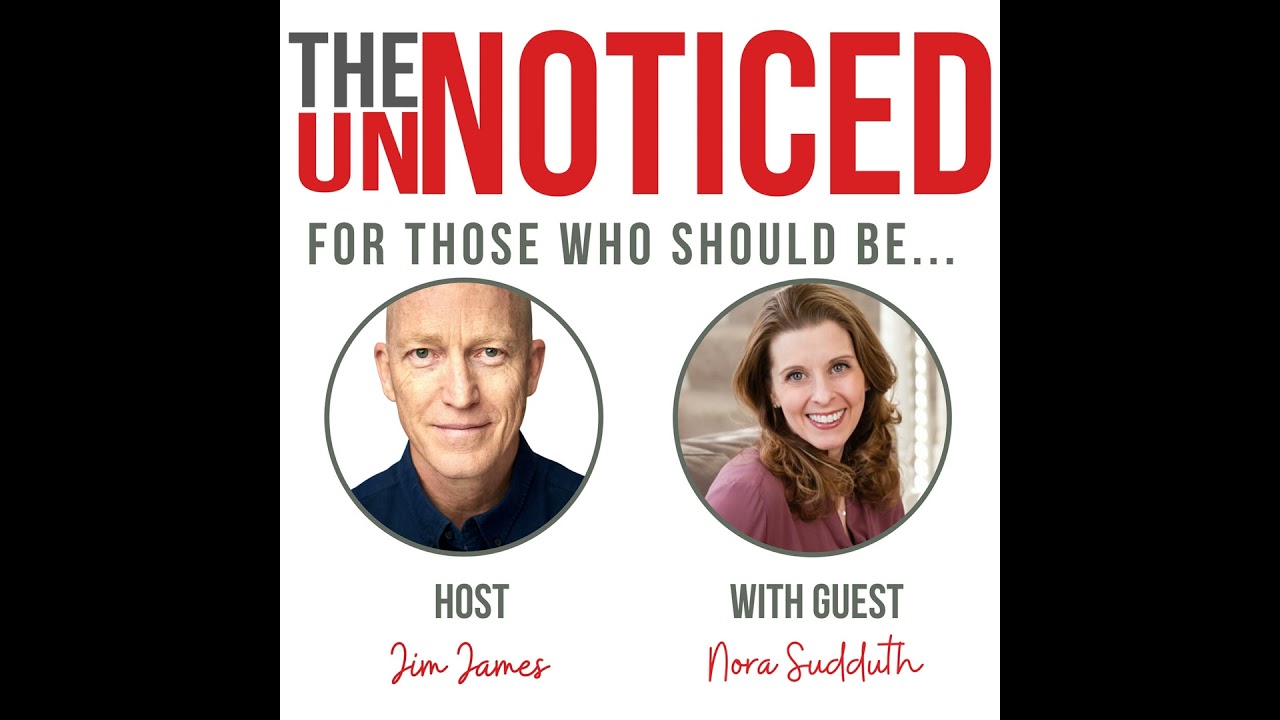
Nora Suddath, co-founder of Hello Audio, explains how to turn webinars, courses, and newsletters into private podcasts that listeners access via email-gated RSS feeds. Private podcasts let creators control who listens and for how long, with pricing from $17 to $100+ per month. She's sold over half a billion dollars in online products and stresses that funnels work best when they deliver a mapped customer conversation, not just push content.
Chapters
Hello and welcome to this episode of The Unnoticed Entrepreneur. Today we're going all the way to Indianapolis where the 500 takes place, where Nora Suddath is joining us. Nora, how are you doing?
I'm great. Thank you so much for having me. I'm excited to chat.
Nora, tell us about private podcasts and how you help entrepreneurs to get noticed.
Absolutely. So there's a difference. Most people are familiar with public podcasts. So obviously if you're listening to this episode, you know that this is an amazing public podcast. It's out there. Anyone can subscribe and it's open for anyone in the whole world to consume. This information. Private podcasts operate, they look, they feel, they play in the same podcast apps that you're used to, your favorite podcast apps. But the biggest difference is between a public and a private podcast is that with a private podcast, you get to control who has access to that podcast and for how long they get access to it. It's so fascinating because with public podcasts, you're pushing data and you're, you're pushing that content. Everyone gets the same content at the same time. With private podcasts, you can actually control how that content gets delivered and it can be listener-specific. So with private podcasts, your access links are actually tied to a specific listener email address, which allows you to put premium gated content into a private podcast. So you can now podcast all sorts of stuff. You don't just have to have a show, right? In public podcasts, people are used to interviews and shows and news shows. With private podcasts, you can podcast all sorts of content from your course to your webinar to your email newsletters. And it can be so easy to be able to see who's listening and for how long. There's so many use cases. excited to talk about this because private podcasts aren't well known, but they're so useful for getting noticed.
Well, Nora, I didn't know. I just before thought that they were all public. So tell us more who uses this and you've touched on a couple of applications, but take us through a couple of case studies and also then let's talk about how different it is in terms of production. But let's first of all talk about use cases.
Absolutely. Use cases. Oh my goodness. So I like to bucket this into 3 different categories. So a lot of times we have folks that use private podcasts for their marketing content. So we all know, we all operate. I don't know whoever you are, whatever business, whatever you sell to, we operate in a digital noisy world. A lot of folks, I don't know anyone whose customers aren't busy, right? So getting their attention and unlocking all of that attention can be challenging. And so with marketing, whether you have a webinar, your show-up rates might be a little bit lower. Not all your registrants can come to a specific time or a specific day. So we create all this amazing marketing content and then we're kind of like, hey, is anyone consuming this information? So we can use private podcasts as a way to make it easier for people to consume. So with respect to your webinars, with your product launch, if you're doing product launch, like a video series, even if you're doing emails, all of that launch content or all of your content marketing, it might be blogs, all of the content that you're putting out there to attract your ideal customers. If it's not being read, putting it into an audio form, especially a private podcast, which is so convenient and easy to listen to on the go, you're now unlocking all of the hours of the day where people are not sitting at their screens, which allows you to expand your ability to reach your ideal audience. So marketing is kind of that first bucket that we see a lot of folks use private podcasts. The cool thing about the marketing use cases is obviously with launch content and with marketing content, the whole intention is to have people consume it because it moves them. It shifts them from maybe awareness, like being unaware to being more aware. It helps combat objections or common questions. And if they don't consume that information, they're not going to buy. So now we're making consumption easier and that ultimately increases conversions. So marketing is a massive use case when it comes to private podcasts. The second use case that we see, which is probably the second most common, is fulfillment and delivery. So if you're a teacher, if you have online courses, if you have a coaching program, we're making it easier for our students and our customers, our clients to consume that information. And what happens when they consume the information? They're consuming the information they need to get the results that they want. So now we see customer success just skyrocket. And obviously, what does that do when you have more customer success? Well, success sells. Customer success can then be fed back into your marketing as well, which is kind of another win-win. So delivery and fulfillment is another major opportunity for private podcasts. And then I would say the third that is maybe not as big, but it is absolutely catching on, are all these internal or operational uses. So think about employee onboarding. Think about having an internal podcast for your organization instead of another all-hands Zoom meeting, which no one really wants to go to anyway. Think about onboarding if you're an agency. We have folks at our agencies, whether they're face-to-face Facebook, an ad agency, you can onboard your clients with audio because none of them really wanna log into a member site and none of them really wanna read all your terms and conditions and your processes and all that stuff. But putting it into audio actually gets it consumed. So all of these different types of use cases, at the end of the day, what we're doing is we're making it easier and more convenient for people to consume your content. And when they consume that content, they're a lot more likely to take that action that you want them to take.
Wow. Yeah, I can completely understand those use cases, especially I particularly like the idea of internal communications as well, because we used to do newsletters, which have now gone and email round robins, you know, just get lost. So the ability for a CEO, for example, to share the vision of the company as a private podcast is absolutely so powerful, Nora. As you said it, people don't want to read all the messaging and so on, but also if they're a distributed workforce or they're a mobile workforce, this enables them to fill the gaps of the time, doesn't it? Nora, from a practical point of view, let's say someone's produced content that really needs to be just guided to, as you say, a course taker or a member of the staff, for example. Where do you put these private podcasts? Because you plainly don't put them on open networks. So how does it work?
Correct. So there are a lot of podcast hosting companies that not only do public podcasts, but they also offer private. Now I'm a little bit biased because I'm a co-founder of Hello Audio, and I think we obviously specialize in private podcasts. We do offer public podcasts as well, but private podcasts are where we really shine because we've built it for creators. We built it for them. This purpose. And so it's actually, it operates very similarly to what you do for your public podcast. You can drag and drop your content, your media files. At Hello Audio, we strip out the audio for you automatically. So if you have video courses, you can just drag and drop and we'll strip that audio for you. So no more going to those shady sites to get your audio if that's what, you know, if that's what you do. And that way you're able to just be able to put it in there and add your listeners. And because at Hello Audio, we also integrate with Zapier and we have a few other direct integrations with amazing course platforms like Thinkific, MemberVault, you can actually have your students added automatically and you're taking all of that off your plate. So it can be streamlined in terms of your processes as well.
Okay. What about costs, Nora? Because you've made it sound like just uploading, as you say, your content to, for example, Buzzsprout. What about costs? Does it cost a lot of money to host? Is it charged by hour or by storage?
It does depend on the podcast platform. At HelloAudio, we actually operate as more of a SaaS pricing model. So depending on the tier, you might need a certain number of feeds. For our Powerhouse plan that has kind of unlimited feeds. You could do, especially if you're doing one-on-one consulting and you want to have a private feed for each of your clients, you can do it that way. If you're a therapist or a life coach, we have folks that do that when they're kind of working with one-on-one, or if you're just a starter and you want to just kind of try it out, you're looking as little as $17 a month or maybe $100 a month. And really where our costs come from as a company is the bandwidth. So obviously if you have a lot more bandwidth, that might increase your price, but you'd be surprised. Everyone thinks that that's very prohibitive, but it's not. And it's actually a lot easier than I think people realize.
Well, and I think something that you've touched on, which is key to this, is that this can be revenue generating, whereas, you know, public podcasts by and large are struggling unless you use Patreon and sponsorship. So Nora, what about payment gateways? How could you have, for example, what is in effect gated audio content available, for example, absolutely members or third parties? How would someone take payment, for example, on Hello Audio?
That's a great question. So we actually at Hello Audio, we don't have a cart yet at the time of this recording, but it is something that we're working on. So most of our users would typically use whatever payment processor they have in their business. That might be they take payment for like in a Stripe or with ClickFunnels or with ThriveCart. So a lot of our folks have different types of tech stacks, but no matter what they use, they're able to, they don't necessarily have to take payment if they don't want to. It could just be an opt-in form that they're giving access to like their freebie, their list building freebie, because we all know we've had a lot of folks move from that download PDF that ends up in the graveyard of PDFs, which a lot of us have. I think I have multiple PDF graveyards, but they're turning that content into an audiobook or an audio form. And where they're watching consumption goes up, they're watching their opt-in rates go up. So conversion rates are going up because everyone that is opting in kind of knows they're probably not gonna read that PDF. So no matter what tech stack you use, you're able to integrate on the backend and have automatic access be delivered to that subscriber or that paying customer.
Okay, great. So if I'm using, for example, Spotify or Apple Podcasts, I would get the private feed, if you like, blended into that player or, you know, podcaster or podchaser. Is that how that would work?
Hello Audio is one of, at the time of this recording, one of a few partners that we've actually been able to get in with Spotify. You have to be approved. It's a whole process. They're amazing. But the folks that host their private podcast on Hello Audio are able to be played at Spotify. That was kind of a new change within the last year that they started opening up to specific partners. And we are one of them, but it, it will. It's— we send access, that is the access link we send to your listener is actually tied to their specific email address, which means it's unique to them. And you can set it so that access link can expire as soon as they load it in their favorite podcast player of choice. And I would say most podcast players accept private podcasts, especially if they're accepting RSS feeds, they're able to play those private podcasts. And you can set it so that link dies When they put it in their private podcast, so it's not shareable. So now your content is protected, which I think really people care about, especially for that gated premium content that people paid for or that they opted in for, which is a really great thing.
Yeah, that's great. And also it means that A, there's no sharing, as you say, which I think Netflix has been suffering with, but also time-sensitive content, an event, for example, could literally expire if it's not taken up. So it sounds really powerful, Nora. So it's easy as a content producer, and then it's equally easy for the consumer to access it by downloading it, paying for it, or being given a code or a coupon, right? So it becomes just like my own private feed of free or paid-for premium content. Is that right?
That's right. And I think the great part about looking at private podcasts is you can do so much more. It's a great communication vehicle. If we look at first and foremost, there are millions of people across the globe listening to audio content in their favorite podcast app, right? Millions. I mean, especially now after Netflix has kind of gone backwards, but it rivals the hours that people are listening to content in their podcast apps, it rivals the number of hours that people are watching Netflix content. So why are we not meeting them where they're already at? This is an amazing communication vehicle to reach your audience and to get noticed. And that's first and foremost, that's a great opportunity. Then you take just the medium of private podcasts itself. It's different in terms of how you can deliver. So I mentioned in public podcasts, everyone gets the same content at the same time. It's date-driven. And you can do that with private podcasts as well. But the cool part about private podcasts is you can actually have evergreen drip So the day I subscribe to your audio newsletter or to your private podcast, my day 1 might be today. So I get dripped out on a specific schedule and then you join that private podcast. Your day 1 might be next Tuesday and we're getting the same content. It's the same feed, but now our schedules are a little bit different. And you can also set expiration dates based on time as well. So from a marketing standpoint, you have built-in urgency. Hey, we've got a pop-up podcast. We're doing a launch. We're doing this thing. This is a challenge. You only get access for 7 days. Make sure you're consuming this. The content. And you can't do that listener-specific access with the public podcast, but you can with private. And that's what makes that so powerful. And I will say one more thing that makes it even more powerful. So this is kind of more into audio CRM. If we're kind of talking about martech, the cool thing, what we've done at Hello Audio is we have allowed you to tag your listeners. So just like you would in ActiveCampaign or all of your other email marketing systems and tools, you can tag listeners with specific values. So maybe it's a buyer versus non-buyer or other ways that you segment your lists. And you can now flip in full episodes, or you can use pre-roll or post-roll that is dependent on the tag. So we can all be subscribed to the same feed, but if you have buyers might get a certain episode like a bonus, and non-buyers might get a promotion. And so you can— now it's not just about reach, which I think is— audio is amazing. We talked about unlocking all of those hours and reaching your customers where they're at. But now with these types of technologies, you're increasing the relevance of that content as well. And that takes everything to a Yeah.
So really this whole concept of personalization, Nora, is being enabled with a different content type using Hello Audio, right? That sounds awesome. You sound as though you've got a little bit of background in funnels. You have a little bit of background, I think. Tell us a little bit about how you think funnels can be successful and play a role in getting noticed.
Absolutely. So this is where I get really passionate around martech and why I get passionate about selling these private podcasts or access to these things, or even opt-ins. I have at this point in my career looked at thousands of marketing campaigns. So I've helped sell over half a billion dollars of stuff online. And so I know a little, a thing or two about creating a successful marketing campaign. And I'll say it really goes back, if we're talking about audio, it goes back to the customer conversation. So I think one of the biggest things I can, if anyone's listening to this and you're like, hey, I want to craft a winning marketing campaign, or I have a marketing campaign that isn't quite, you know, where I want it to be in terms of conversions. Everyone talks about, oh, it's the funnel. And the funnel delivers the conversation to your customer. The funnel is the delivery vehicle, that funnel, whether it's an ebook, whether it's a private podcast, whether it's a webinar, whatever your funnel looks like. But I want you to take a step back and look at the customer conversation. If you can map out from beginning to end, how am I starting this conversation? What are my hooks? To use some marketing language, what are my— the angles I'm approaching this conversation starter? Who am I talking to? So this goes back to that customer journey. Who am I speaking to? What's relevant to them? How do I start this conversation? And then I'm bringing them along. So I'm creating belief shifts. I may have to rebuild some beliefs. I may have to demonstrate some things for them in order to get them pre-framed or in a state of mind to take the next action that I want them to take, whether that's opt-in, whether that's purchase, whatever your funnel might look like. But the cool part about having a funnel that actually converts— yes, the funnel itself makes a difference, but at the end of the day, if you take the funnel away, you have to map out that customer conversation first, then use the funnel as the delivery mechanism for that conversation. That's really the key. And so most people start with the funnel and they're like, oh, it's the funnel. This is the step-by-step. I have to use this cookie cutter approach. And that funnels work. They absolutely work, but they don't work as effectively without first mapping out that customer conversation that that funnel is going to deliver.
Right. And you have obviously experienced at ClickFunnels, I think building up this amazing affiliate programs. And you've got the CD on the wall there. I think the Double Comma Club to prove it, right, Nora?
Oh yes. Yeah. So I was blessed and so fortunate to be able to partner with Russell to recreate his initial certified partner program. I also created one of their coaching programs that did really well for them. And it's so amazing to work with organizations like that. And through my time with ClickFunnels and, and working with Russell and working with the team, that's where I was exposed to so many of these marketing campaigns. And obviously when you work with someone like Russell Brunson and someone who's as brilliant of sales and marketing genius as Russell is, you learn a lot.
Yeah.
And so I'm, I'm absolutely grateful for my time with them. And I really do owe a lot of that marketing experience and all of those marketing campaign reviews to my time there, for sure.
Well, but you're playing a very, very smart lady in your own right, Nora. So just as an entrepreneur, which you are now, having already built business for other people and now you're building one for yourself, what's working for you to get noticed?
You know, this is a fantastic question because historically I have not done a great job of putting myself, and I'll be the first one to admit it, of putting myself out there and getting noticed. And I just, you know, whether it's because I'm more introverted, I know a lot of folks listening to this, I've heard the struggle before just of putting yourself out. Very comfortable being the wizard behind the curtain. That's a very comfortable role for me. And as I have gone through and helped so many people sell things online and we've generated multiple millions of dollars and I've gone in and helped folks create programs and courses and all of those things, I've realized how important it is and what a missed opportunity it's been, especially with Hello Audio, how important it is to get noticed and to get your name out there. And obviously with Hello Audio, we've been doing a lot more with private podcasts and with audio because we found just like we've talked about, we walk our walk and, and with audio, it actually does help us reach more of our ideal audience cuz they're all busy business owners. You know, they're all busy. They don't necessarily have a lot of time to sit at their computer and watch hours of video, but we can put that information in a private podcast and, and now we're getting more exposure and more notice that way. So private podcasts have been a, a really big opportunity and obviously podcasts like this has been an opportunity as well. And for me personally, what I'd like to do, I love to I love to write and just blocking off time. And this sounds super silly, but just being intentional about blocking off time to create and not just have ideas, but to document those ideas, to get those ideas out of your head and really put them— if it's an audio, if that's easier for you, it's easier for me to speak and record content that way. That helps me with rapid content creation versus if I sat down and tried to create a video, that's probably never going to happen. Or writing those things. I think for me, I've been very, a lot more intentional about creating in that way. And that's That's really helped along the way as well.
Nora, you've been very intentional today and the sharing and introducing a whole new world for me, private podcasts. I really appreciate it. If people want to find out about Hello Audio, where can they go?
Absolutely. So you can go to helloaudio.fm. That is our website. And like I said, we walk our talk. So you can sign up for a free trial. There's absolutely no credit card required. We're one of those SaaS companies that we're like, hey, we're easy to use and we're willing to prove it to you. So no credit card required if you want to check that out. And if you want to connect with me, I'm at norasaddath.com.
Nora Saddath, I thank you for guiding me again. I want to make sure I get your surname pronounced correctly. Nora Sadath joining us from Halo Audio all the way in Indianapolis. So thank you so much for joining me today on the Unnoticed Podcast Show.
Thanks for having me. It's been a great, great talk.
Great. And you'll be listening to Nora, and I don't need to pronounce her surname a 3rd time because you've got it twice. I will of course put links to her and Halo Audio in the show notes. Thank you for listening to this episode with me, Jim James, on the Unnoticed Entrepreneur Show.
More from Jim











2 people, infinite agents, 1 billion dollar idea #AIAgents #Startup #Productivity