If you are entrepreneur who doesn't like to sell, this company provides your solution.
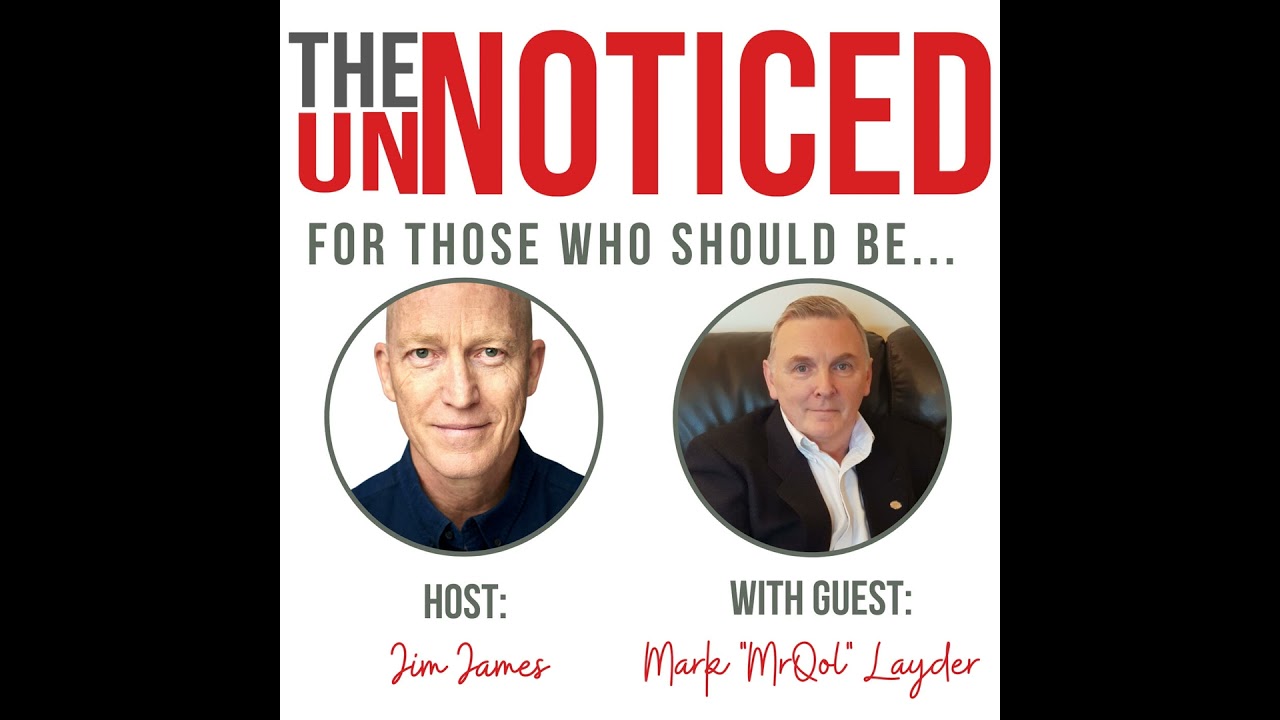
In this Unnoticed Show interview, host Jim James talks with entrepreneur Mark Lader about his newly coined profession of "business connectors" – an outsourced business development service aimed at entrepreneurs who lack sales and marketing expertise. Lader cites a statistic that over 80% of founders in developed markets come from technical backgrounds and dislike front‑end business development. The Business Connectors model uses a free diagnostic questionnaire, a commission‑based, risk‑sharing arrangement, and a network of trained connectors who act as 24/7 sales resources for clients. The service targets two audiences: (1) business owners needing development support and (2) individuals who want to be trained as business connectors. Lader explains the global scope of the operation (UK, US, Africa) and how they acquire connectors through chambers of commerce, LinkedIn, referrals, and a "council of experience" of trusted suppliers. Marketing relies heavily on community trust, referrals, newsletters, and a simple website (bizconnectors.org). The system is relationship‑first, with optional digital tools, and avoids forcing clients to use specific suppliers, allowing connectors to build their own networks. A case study is shared where a connector earned commissions on a currency‑trade service while traveling. The interview concludes with practical details on how entrepreneurs can engage the service.
Chapters
Telford, home of the Industrial Revolution, now home of the Collaboration Revolution.
Welcome to the Unnoticed Show. Mark Lader, who's joining me from Telford, the home of the Industrial Revolution, now the Collaboration Revolution, as he says. Mark, tell us about what you're doing as an entrepreneur and how you're helping fellow entrepreneurs to get noticed.
Jim, we're creating a new profession called business connectors because there's all this networking out there in the world and all these jobs for business owners to do, and they certainly don't particularly like networking or Those that do it, it's not connected to their strategy. So over a period of many years, this role of business connecting, as we've called it grandiosely, a new profession has emerged where we can help an awful lot of particularly non-sales and marketing background business owners and entrepreneurs to really leverage their businesses. So it chose us. We didn't necessarily choose it.
When you say choose it. Mark, just walk us through for, let's say, a business founder who is so busy building the product that they forget to do the business development and the marketing. How does Business Connectors work for them?
The headline again, I do like the occasional stat because it's not me saying it, then it's a third party, but it's over 80% of business owners in pretty much the developed sort of world or the first world type countries that will, the owners will say that they're not from a sales and marketing background. what they typically are is technical business owners. They've been taught to be that. We were taught to go and get our degrees and our qualifications. So, you know, 4 out of 5, 8 out of 10-ish of our business owner base like to make cakes, like to build software, like to cut hair. They like the stuff of their business, but they don't like necessarily that front-end business development stuff, and nor do they like the system stuff. So increasingly, because of our first generation of coaches, 25, 30 years ago, they didn't like that as well. So we started to provide the systems and the business development stuff that actually meant most business owners could spend a lot more of their time doing the bits that they loved. So it seemed pretty natural to me.
Yeah, that's absolutely true. So many people have something they can build, but the selling isn't why they started it. So from a practical point of view, if one is an entrepreneur, Mark, And are you in effect creating sort of a business development external function support role?
In simple terms, Jim, yes. The old line about, I think Bill Gates was laughed at when he said he wanted to put a PC in those days on every desk. And people said, don't be ridiculous. And now here we are, I think in this house-cum-office, I think we've got 40 devices. in one house, so not even a traditional office. So he massively underpromised or under-targeted. So in our case, we just started to say we want to put a 24/7 sales business development capability in every business in the world, and we can do that for any entrepreneur and get this starting for free because there's ways that we can get them started that then they can reach out for support when they're getting a return. So they haven't got to stump up with the traditional 2 grand, 5 grand, they take all the risk. We had to do this in a way that people could share the risk to get the trust and get it going from there. So hopefully it's a solution that works for everybody.
Mark, so is that then working for the entrepreneur on a commission basis then?
There's a company in British history called Allied Dunbar, and they were there, they revolutionized the, what's now the IFA, the financial advisor market. By introducing 2 things primarily to what was a very small market at the time. And one was a questionnaire, which made the process into a 2-step. And the other one was 4,000 young guys and gals in their blue suits and white socks for some reason in those days, fashion, I suppose. But they went out to clients and they did a free diagnostic and it was a long process, hour and a half. And then they'd go back to people like my boss in the past, who he was the salesperson. So he had all these legs and tentacles that went out. But the key was this questionnaire. So when we started going to business owners with a little mini questionnaire and we had to find a short one online because they're not going to do an hour and all those details, but effectively it's the same thing at the point of contact. It costs the business owner nothing because our job is to help them find out how they see things first and then start coming up with solutions that can help them and challenge that a bit. Because once they get some wins and they start to come up with their simple plan, Then actually they go from being that, I've tried all this before, business owner, to at last I've found a relationship that I can trust. So it's no different to in old terms, that commission approach, but it's very new in terms of it being an outsourced business resource to business owners that want that increased business development capability.
So Mark, that sounds absolutely logical. Are you focusing on a particular sector or industry? Because the old issue for most business owners is that expression, no one understands my business like I do.
Remember, I'm a blend of a coach and a sort of business background. So I was the one as a young guy that I didn't want or need to know the details of people's businesses to be a pure coach, which was just to ask them questions that challenged their thinking. They came up with their answers that they then went and worked on. If you take that process and put that with the whole world of business development. It's not us that needs to be experts on their business. They're already the experts, but what they're not necessarily the experts on is this whole area of the growth side of it. So by us starting again with diagnostic little questionnaires to come back with building their plan, then we're using their skills and their kind of perspective on the business to develop something that when we recommend This, let me introduce you to George. These are people we've known for years. Then pretty much it's a guaranteed thing that they'll do because they trust the process. And because we're starting from their problems first, not trying to sell them the box of goodies that we think they need, which is pretty much what everybody else is trying to do.
So it's, if you like, sector agnostic because it's a skillset and approach. What about geography, Mark? Are you really helping the unnoticed entrepreneur in the UK find other customers in the UK or globally? Just share with us about that.
It's global because a lot of my background, a lot of my contact base is with the US and because of my strange sort of set of circumstances, a lot of contacts into African continent through some of the financial strategy, capital strategy raises that we do. So it's global now. And even We're getting people that want to be trained as Business Connectors, where even through the system can quickly be turned into something that they can use in their home market. So the world is global today. We have to be.
Okay, that's fantastic. Presumably this is now becoming, if you like, a business in its own right, as you mentioned, people in other countries. Mark, can you share with us as an entrepreneur how you're getting the Business Connector Association and business noticed? Because I can see how you're doing that for your clients. I'd love to know how you're doing it for your own business.
That one becomes a challenge, doesn't it? I've got business contacts, one of which particularly is from a very high-end business opportunity background. He typically sells things that people, they want to make 5 grand by Friday. It's very short-term marketing. But I said to him that there was people in his list. And so we've done list sharing type deals. that were looking for much more long-term opportunities. And because the process, once we worked out what the profile of the business connector, the people that wants to be trained, was promoter, they like sharing new things with people, but they also like to go back. They're not like the old direct sales guys that just weren't that interested in long-term relationships. Once we realized that they, they became known as hunters that farm, they like that newness. But they also like farming the relationships because they can go back and help people over time. There's lots of people, and COVID has stimulated American terms of people looking for things beyond the job that used to be called secure, that hasn't been for years, but definitely isn't now. So that whole business opportunity market, we just then, we talked to franchise people and we've just got further and further into talking to people and not trying to push them into our box. There's definitely different ways, different levels people can be trained as a Biz Connector. Because if again, we just force them into doing it one way, we're doing the opposite of what we teach them to do with their clients. So we had to give people a level that they were comfortable with, that they could grow into and scale up, scale down to suit their goals and needs.
What about the, if you like, the public face, Mark? Are you promoting the Biz Connector Online? Is this through LinkedIn? Is it through Facebook, through chambers of commerce? Because it sounds like you're getting close to who your avatar is in terms of selling to the business. But what about your biz connectors? How are you reaching those guys? You've got 2 audiences in a way.
There's no question there's 2 audiences. And you just mentioned the chambers of commerce, that one of the big networking groups happened to say to me, one of the groups that you only have one person per chair or like profession in the areas. And Not a system I'm a fan of, but it's their method and that's up to them. But he happened to say to me, there's nobody called a business connector in our chapter. So you could put one of these in every one of the groups, every one of the chapters, particularly because the existing members don't want to do the connecting and networking. So there is a whole kind of corporate market where corporates started saying to us, how could we work with a business connector, which is back to my roots of really providing more corporate services, and this model works It works perfectly. So there's the independent person who wants to be trained, but there's also the corporate guy who's now coming and saying, hey, we'd like to— they start by saying hire, but they don't need to hire them. There are different ways that can be done as a detail. So the market's expanding because the need for the role is pretty much ubiquitous when we have the conversation.
So how do you do that from a positioning point of view? Because as we say, we've got 2 different audiences really, haven't you? You've got your customer and then you've got your service, if you like, delivery team.
Yes.
How are you doing that, Mark? Because presumably they both need to trust you.
Absolutely.
Yeah. But they're both getting slightly different messages. How are you doing that for yourself as a business? Is it through having a website and are you doing YouTube? You mentioned the Chambers of Commerce as being one nice direct channel, but what about building If you like, the brand as well as your direct links.
Behind the business connectors are what we call a council of experience, which are experienced people we've known for years who are our suppliers and experts. They often have the same problem that we're talking about now that our end users have, which is they're typically great at what they do, but they don't want to spend all their time selling and marketing and systems and everything else. So we can represent them. And connect them with the Biz Connector. So we're practicing what we preach. And that means whether it's things like LinkedIn and marketing we've got going on that. And we've also then got obviously the complete newsletter process that the guy we work with who's into, he's the funnel building guy, because he's so good at what he does, we can also make him one of our experts and take him to market. The beauty of that for the end users is. We're not just promoting people because they give us good commissions. We're working with people because we, 98% of the time, already have worked with them or our partners have. So it means it's a community first that's very high on know, like, and trust. So recommendations become easier. So the classic easiest person to sell to is through referrals, and everybody acknowledges that, but nobody systemizes it. So we Very heavily, nicely have ways to systemize that and obviously use that in our own marketing and we'll do the same thing for our end user clients.
Can we just talk a little bit about the system that you've built? Because building a way to lock in your clients seems to also be important because if you have engaged a connector on their behalf, there's always that danger, isn't there, where an agent cuts out the middleman, which Biz Connector could be seen as. How are you building in, if you like, the glue so that the client that needs your BD support is really connected to Biz Connectors rather than to the agent or the business developer?
My old semi wasn't really my boss, but he ran the company when we were based in the States for a couple of years and we were there on contract. He used to call it a program of attraction because we don't insist the business at the Biz Connectors. Use our suppliers because we found that was a problem. And that was a problem from the insurance stuff that we'd learned in the past. If you happen to have— you're a great example. If somebody knew you as a great PR guy and we said, you've got to use our PR people, then that's an instant point of friction in the system. So we realized that we would say, oh, introduce us to Jim, because if he's good, maybe we can promote him too. So we had to make it where— Each business connector can build their own supply if they want. Then the relationship with us is we add value or we don't eat. So it keeps it very honest because we're not then charging them monthly fees or you've got to use us. There's no, you must, it's got to be, you choose to, and then they can continue with the support if it's of value. If it isn't, they can go on their own.
That's absolutely the modern way. You've got to continue to add value or move out of the way. What about in terms of the sort of infrastructure that you're offering clients? How important do you think it is that they can, for example, log into a dashboard and connect that way? Or are you doing it much more from a relationship perspective?
We started from a very relationship point of view, and it was men of a certain age who even said things like they wanted to get out the house and they didn't want to spend all day on a computer. Now, the web has meant that people can build their business from a computer, which is great, but actually that desire to go out and be the local connecting point is very alive and well, and particularly with men. Some of the women had roles that they wanted to build around lifestyle, so they did a bit of that, but it was a particular need that we saw from the men. So that relationship build has led us increasingly into just looking at ways to make that more available to different parts of the market. So people, it could be face-to-face, or I could be having a conversation with somebody in Singapore through the web tomorrow on that basis. So it really fits with the different personalities and the different styles of the people in the process. Okay.
So it sounds like it's quite an organic model as well. It's picking up on what I was calling the silver fox entrepreneurs, those people later on in life who still got some—
That's where it started from, the silver fox entrepreneurs, where it started.
So there's still some run, some bushy tails out there later on in life, which is fantastic. In terms of things like managing people's contracts and pricing, are you then getting involved with sort of contract negotiation or is it really very much a, I've introduced this person to this person, there's our commission, you get on with each other?
This is the bit where the relationship of the business connector becomes important. Because the world's a busy place and there's 27 channels and nobody's on any of them. So putting the bookie's runner, as we sometimes call them, of the business connector into that process between the PR guy and the final user, it means that there's a third-party vested interest that has only got to gain if business is done between them. So they've got very active reasons to maintain relationships with both sides. So what they've got is the security of knowing that certainly the relationships we bring to the party, we know them, we've worked with them, they've got long track records. And if they also bring their own people in, typically they're from their network. So it's got lots of checks and balances, but often having a third wheel, if you like, in the relationship, the business connector being that bookie's runner between the market and the suppliers means that the final end user client can get on doing their business. And then when the business connector turns up, one of the first lines ever said as a kid, you're just the man I wanted to talk to. And we knew we were touching on something about— we weren't seen as somebody there to plug something. We were seen there as somebody that could genuinely solve their problem. And that's what the Biz Connector could be. And they supply that extra vested interest, which means everybody carries on doing what they do because the Biz Connector does all that messy stuff that nobody else really wants to do.
I can really see that. And do you have an example, Mark, of Biz Connector in action? Are you allowed to, obviously without betraying any confidences?
Yeah. One of the early stages before we even called it Business Connectors, there was, it just showed the flexibility. There was a young guy and he specialized on currency. He just, of the range of things, he just happened to focus in this area where people were spending too much money when they were doing letters of trade overseas. So he just happened into this little niche and he just really worked it. He pretty much just taught that one area. to open it to other things. He was studying as well. So this was only part-time. So he then went off traveling to Colombia with his friend, 3 months away. And the commission he was making by the time he got back, not only had it made money when he was away, he'd also paid for 3 months away just from one of the products. So it really became one of the apocryphal stories, which is why I'm telling it to you now.
Yeah.
As to the power of those relationships and Particularly some of the products and services that people find complicated to deal with. But if you've got somebody that's sorting that out for you, then you can get on doing whatever you do. And in his case, he made a lot of money while he was still traveling.
Malcolm Gladwell talks in Tipping Point about the people that are mavens and the connectors and the salespeople. So really you are at the salespeople end, right? Going from network across to network, which is where Gladwell saw those people. He saw the connectors being within a community and the mavens being the people that kind of researched, invented, and you need those people that go across the different networks to build the business, right? So that's where Biz Connectors can come in.
Absolutely.
So Mark, if people want to find out more about you in Telford, where can they find you?
There's a little interim website up there, bizconnectors, which is bizconnectors.org. that they can just have a look around and there's little things that they can play with. They can look at the little interactive mini questionnaire if they want to and start the process that way, but just to get a feel for what we're doing. And they can check me out at Mark Lader at Qualiwood on LinkedIn, and they will find all kinds of strange things that I've done over the years.
That's wonderful. And I will put Mark's details, of course, in the show notes. Mark Lader, thank you so much for joining and sharing really how an unorganized entrepreneur can use Biz Connector service. To build the sales leads while they build the business. Thank you so much.
Pleasure and lovely. Hope I can help some people out there.
I'm sure that you can. Thank you so much for listening to this episode of The Unnoticed Show with me, Jim James. In the meantime, until we, uh, are together again, I wish you the best of health and the best of business.
More from Jim











2 people, infinite agents, 1 billion dollar idea #AIAgents #Startup #Productivity