Matthew Rochford on the importance of mindset
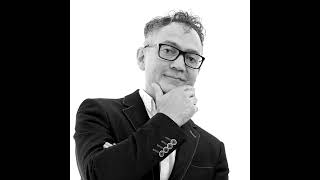
YouTube episode (Silver Fox Entrepreneurs Podcast) in which host Jim James interviews executive/mindset coach Matthew Rochford about mindset and coaching for 'maturepreneurs' (older entrepreneurs). Rochford outlines how personal narratives limit people, explains that confidence and flow are natural states that emerge when we 'get out of our own way', and describes coaching methods: listening, challenging, helping clients notice and reposition their narratives, using short meaningful reminder statements (affirmations) and mindfulness to sustain change. He also gives background (born in Scotland, BA in history and politics from Newcastle, marketing and health-organization experience, mentorship links) and provides contact info (matthewrochford.co.uk).
Questions this video answers
matthewrochford.co.uk
Chapters
Welcome to the Silver Fox Entrepreneurs Podcast, a series of interviews to inform, inspire and support men later on in life who want to start their own enterprise for profit and for pleasure. My name is Jim James and I've run my own businesses since the age of 27 in Asia and in Europe. I've also set up peer groups for younger entrepreneurs and I think it's time to have one dedicated to the issues of maturepreneurs. Today I'm interviewing Matthew Rochford. Matthew is a life coach based in England, but he was born in Scotland to English and Anglo Indian parents and went to Newcastle University where he gained a BA in history and politics. He had a successful marketing career and he trained also in martial arts and meditation, setting up and running successful health related organizations. Matthew now works closely with Dale Lockett, the integral master coach, and is being mentored by executive coach Martin Palethorpe, who's a quality mastermind specialist and runs to Pragma Group. He joins us to talk today about mindset and about the importance of having the right mindset when you're about to start your own business and also the importance of coaching as you have your own business. And narratives come back to haunt us that mean that the mindset we have originally for success sometimes goes off path.
Matthew, thank you very much for joining us this week on Silver Fox Entrepreneurs Podcast. Perhaps you could just share a little bit about yourself, why you're here and why you think being a maturepreneur is a great idea.
That's brilliant. Thanks, Jim. So, yeah, my name is Matthew Rochford and I am an executive coach. And why do I think being a mature, more mature entrepreneur is a great idea? I think it comes down to one thing and that is sharing wisdom and experience. And there are lots of, I think lots of benefits that cascade from that.
Okay, and you mentioned lots of benefits you'd like to share. What maybe two or three benefits that you can see and how also then you've come to be running your own business as well as a coach.
I think that as we mature, then we become more reflective and we're less likely to be reactive in the face of the challenges of running any enterprise. So I think there's a sense of being more measured, calm and pragmatic and also hopefully with that, a sense of openness, openness to new ideas, openness to new insights, openness to leadership coming from unexpected places. And I think with that maturity in terms of our, if you like, worldly wisdom, I think that having an overview is something that is really important in business. So yeah, I think those are the principal benefits. And I think that ability, perhaps as we get older, then there's more ability to empathize with others. I think that's very important. And certainly with the clients that I have who would fall into this silver fox bracket, if you like, I think that's very clear, that they are insightful and they offer a huge amount of value.
And you talk there about your own coaching. Could you share with us? You're a mindset coach, so perhaps you could just share with us what is a mindset coach and what kind of work do you do with your clients?
Well, it comes down to bringing an understanding of how the human mind works into business. That's what I mean by mindset. So it's not just about attitudes, approach and beliefs. It's more about understanding the nature of our own thinking processes and how we can understand that fundamentally the human mind is set up for success. All we need to do is allow it align with that and we can become highly effective. So yeah, bringing an understanding of the human mind into business, that's really what my coaching's about.
Great. And that's almost counterintuitive because one would almost think that we're trained into some thinking that we can only accomplish so much and education and society sort of trains us to be good at certain things and not not necessarily accomplish more. To what extent do you see mindset as sort of a disabler and what work do you tend to find you need to do to get people to take on the challenges of being, of being self employed?
I think challenging existing thinking is a major part of it. So if you consider that your thinking creates a narrative through which you experience much of your life, it creates an immersive narrative that is very hard to see beyond. But that narrative is full of limitations, it's full of untruths, it's full of our own prejudices and ways in which we don't do ourselves service. Within that narrative as well, there's a whole lot of good stuff, there's no denying that. But generally speaking, it's a mixture of things and that can be very inhibitive. So really what I do with my coaching is I help my clients to see the nature of that narrative narrative, to see that that narrative is really much more malleable. It's much more fluid than they think it is. It's not as concrete as they think it is.
Yeah, because isn't that a main problem for people is that they can see what they want to be, but they don't believe that they can be that person if they've already got a regular job or if they've been unemployed, for example. What work can you do then to get them to, if you like, reconfigure the narrative or rewrite the narrative that they've got about themselves?
I think one of the things is to establish that the qualities that they and we're all looking for are actually just naturally in us. So the ability to see things with deeper insight, the ability to be more effective and focused, the ability to be fully confident, all of those things occur when we get out of our own way, when we're almost least expecting it. So it's why we, I don't know, have our best insights when we're walking the dog or in the shower or we, we feel a wave of confidence when we're not really thinking about confidence.
So what is that for those of us that played sport? For example, if you play tennis, it's often the match point that you play your worst tennis at. What is it that is this disabler there? What is it that kicks in that stops people being able to be in flow when they need to be in that state of flow?
Well, you could say that it is the narrative kicking in very quickly without us really noticing it. And before we realize what's happened, we are feeling a lack of confidence. So there's a high pressure situation. The thought processes are fast and we end up feeling the end result of those thought processes. And that can be very disabling and needs to be appreciated and acknowledged. So for example, your sport example is a good one. Here's another example. So say someone's been working in the corporate sector for their whole career. They want to start an enterprise. They have some good ideas, but they may be experiencing a strong amount of self doubt and a lack of confidence primarily because they're believing that narrative. And okay, there's no doubt. We need to learn, we need to understand things and we need to develop new competencies. But accepting a narrative where doubt is the self, doubt is the strongest message, is merely a creation of our own thinking. It's not even a realistic version of the truth.
And so when we talk about these narratives, where does that come from? Is it from a childhood? Who are the most important people then setting that? Is it a childhood teacher? Is it a parent? Is it a spouse? Is it a sibling? You know, is it a dog in the park? What, where does it come from? Because presumably we've been laid over by influences that get in the way of our Better self.
We make certain decisions when we have certain experiences as we're growing up and as we're, you know, whatever stage we're at in life. But the understanding that's really useful there is that we've decided that we've responded and reacted to that external trigger in that way. Not to discount the experience, which may be difficult for that individual, but actually we have got the power to see things in new ways. We have the power to welcome new thinking and new insights. So all of that. How should I put it personal? The way that our personality is developed is. Is a response and a reaction to external triggers and our own tendencies that we have.
And why do some people seem sort of naturally positive and brilliant and able to overcome all manner of problems even within the same family, then other siblings have taken the same background and so on and same schooling, and yet behave so differently as a result of those environments?
Because the thinking. The thinking is different and the relationship to thought is different.
Why do some people behave so differently even from the same family or the same work environment? Some seem to be positive and push through it, and some people are negative and pessimistic and can't. What's the base reason why we respond to the same triggers in different ways?
It gets quite subtle, this. But one aspect to this is that if we have a whole bunch of thoughts, 70, 80,000 thoughts a day, one person may tune in to the negative thoughts and create a version of reality based on those negative thoughts, those thoughts that aren't so helpful. And another person may just ignore a lot of those thoughts as just being thoughts, and decide that every challenge is transformable and their thinking aligns with that. Who they are aligns with that. So primarily it's the thinking that's different and our approach to the thinking that's different.
And does that lead us. That's right. And does that lead us nicely into. I saw on your blog you written about sort of five reasons to have a coach. All great sporting athletes have coaches. We don't really talk so much about having coaches in life. That's a new area. Could you maybe sort of talk us through how you help people to address the issues of how they're taking those triggers? How does your coaching work through with people?
Well, a lot of what I do is listening, and some of what I do is challenging. And some of what I do is helping. Helping my clients uncover the approach to their goals that is absolutely spot on for them. And then to use those goals as a vehicle to develop personally and I guess to kind of use those goals in that way so that the goal isn't the master, it's more a catalyst for helping, helping them to see things in a new and fresh way, to tap into competencies that they didn't think that they had.
So if we, if we took and if we talk about competencies, what's your experience in finding people sort of burying those competencies? We're talking to people who maybe think about starting their own enterprise, which is a competence, of course. Do you find most people are kind of aware that they're really good at something but don't do it on a day to day basis or is kind of a hidden secret amongst a lot of people.
So I've worked with clients who think that they won't be very good at presenting. So they have an enterprise which may involve them going to meet people, pitching, running presentations, that kind of thing. They may have a thought or belief that actually they're not. They're the type of person that isn't any good at presenting. There's usually an incident or examples in that person's life of when they have presented really well. So knowing that means that the narrative is kind of provably just made up. It's not the truth, it's just a narrative. And they may feel strongly that they are not good, any good at presenting yet they may well have experiences of having presented well and confidently. So you kind of get this kind of in between state where the evidence is presented, their evidence is presented to themselves. And then they have to reconfigure that. They have to rethink that and welcome new insights, welcome new thinking around that. And that same process can be applied to any competency. Say for example, somebody thinks that they are not very good at developing rapport.
With others.
That they can only feel confident one to one. They can never feel confident with groups, all of those things. But we know, we all know that when we're in the flow, when we're feeling super confident, when we're feeling really able, and when we've essentially got out of our own way, then those competencies are there for us.
And how do you do that? Because you're listening to them, you've got a narrative from them and then presumably you're helping to reconstruct the narrative they have around themselves.
Well, to a certain degree, but I don't really, I don't necessarily help them reconstruct the narrative. I help them to see the nature of the narrative. The narrative is kind of their creation. They've made, we were all making Art.
Right.
Once you get that, you can put your in a position of power with that narrative.
Okay. And then, and how do you, how do you. So if that's the sort of investigation side and they've started to explore that from a next step perspective, if someone's for example, either has lost a job and their narrative maybe about how they weren't, they weren't good enough, that's why they were let go, for example, they've understood that. Then how do you get people to reconstitute? So they've understood that former story being a construct. But how do you get people to sort of, if you like, re armor themselves, retool themselves so they start to feel confident for those situations where otherwise they'd have had some fear.
I think it's essentially down to having faith in their own confidence as being a natural part of who they are. It doesn't require a lot of thinking, it doesn't require a lot of reprogramming. It just requires a simple acknowledgement of a truth. And the truth is confidence is just a natural state. We've created this kind of whole narrative around what confidence is and what confidence isn't. But actually the truth is when human beings are in a balanced state, they feel confident. It's like it's not an issue that makes sense because what a lot of my clients are moving towards is being highly effective. And to be highly effective, you need to be kind of in the zone. And the zone is just something that happens when we get out of our own way. You can't think yourself into the zone. And you can't think yourself confident either. Not really. I mean, maybe there's something thinking there, but there's not. There's not like a whole load of thoughts about confidence that's going to make you feel more confident. When you fundamentally believe through your own experience verified that you're confident. Naturally, when your thinking isn't telling you otherwise, when you're not tripping yourself up with lots of thoughts, then it becomes incredibly natural and you can align yourself to that. Do you understand what I'm saying?
Yeah, I do. I'm just trying to understand that if you're in a situation where you've got a negativity and maybe the surroundings are not great and you may or may not have the support infrastructure. How, how can people, once they've understood that, how can they be in a place where that can be a consistent part of their life, a kind of a daily practice? Because we've all made resolutions at Christmas and New Year. And then it's the. How you keep them up. So how do people continue with that journey?
Yeah, I think. I think it's about remembering. So it's part of my job as a coach is to remind my clients what. What they have previously understood, what they know to be true, and to keep them on track with that. So that's a form of mindfulness, actually, is to remember clearly what has been previously understood. Because we get lost in thought again. We get lost in our narrative all the time. It's just what we do. And that happens kind of surreptitiously. And then we go in and out of kind of flow states and feeling confident and feeling highly effective, focused, all of those things. But then our thinking, our narrative, can lead us astray. When you spot that your narrative is just thought, that's all it is, you can kind of stop it in its tracks. You can ignore all the thoughts that you consider to be completely meaningless.
Right. But that takes me, for most of us, for example, with the children, I think I'm doing fine. And then something comes from left field and I'm, you know, dad, dad, can you do this? And I'm all of a sudden trying to fix something somewhere else. So when you're coaching, what sort of tools or sort of wisdom do you share with them so they can retain this sort of mindfulness and awareness? Because in an everyday world, we've got email, phone calls, family members, friends. From a practical point of view, is there something you can share with people, what they can do to retain that calm?
Absolutely. So normally the form that that takes is that I help the client to create a very meaningful statement for them. And it could be one word, it could be a sentence, no more than that. And then to keep that as the focus. So whatever situation they're in, say it's a challenging situation with starting a new business and scaling up that business, even that they know that in the past, they have reacted and responded in a very stressed way and have found it overwhelming or extremely challenging or very hard to be effective in that situation. So to remember in that state. Sorry, in that situation, to remember that thing that's very meaningful to them. So it's almost like an affirmation, but it's their affirmation, and it's meaningful to them. It's not created by anyone else, and that keeps them on track.
Could you share with us maybe a key learning that you've had from taking a passion and making it into a profession?
Yeah, I think a big part of it is recognizing your value your own value to others. And it's not in an egocentric way, but more in terms of one's own ability to offer something of value to the world. And I saw that I had something that could be of value to others. And I wanted to. I wanted to bring all my experience and understanding into a role that enabled me to help other people. That's the bottom line. And when, by the time I got to 47, I felt I was beginning to have the maturity to do that. And I'd say Now that I'm 50, I would say that most of the time I have the maturity to offer something of value. And certainly I just go by what my clients say, really, and what the results are. And the results are, I would say transform. Have been transformative for my clients and what I've learned. And I didn't invent any of these principles that I work with, but I've learned everything from other people. So what these principles help other people with is it helps them to transform their approach, not only to their businesses, but to their life in general and simultaneously helping them to be more effective. So that means better results with a lot less stress. Because I don't believe that going at things hammer and tongs is always the best approach. And as we get more mature, it's not about competing, it's about knowing where your value lies and understanding your niche. I think that's very important.
Matthew, that sounds fantastic. And it sounds like you've become a really mature entrepreneur and coach for people aspiring. So that's fantastic. And then if people would like to know more about you, where can they find you and what could you maybe offer for anyone that contacts you from the Silver Fox community, I have a.
Website, matthewrochford.co.uk and people are very free to contact me. I'm very happy to have a conversation with anyone that's interested in coaching or finding out if I'm the right coach for them or not. Then I'm very open to conversation with, with people considering that.
Great.
Thank you very much indeed. So, Matthew, thank you for sharing with us about the coaching and the power of the narrative. Do subscribe or leave a rating and for more information, please visit SilverfoxEntrepreneurs Life and drop me an email. I'd love to hear from you and maybe we can get you on the podcast and share what you know or let me know what you'd like to know. Thank you once again.
Have a great day.
More from Jim











2 people, infinite agents, 1 billion dollar idea #AIAgents #Startup #Productivity