Michelle Griffin shares the 5C's of personal branding, and only one of them is content.
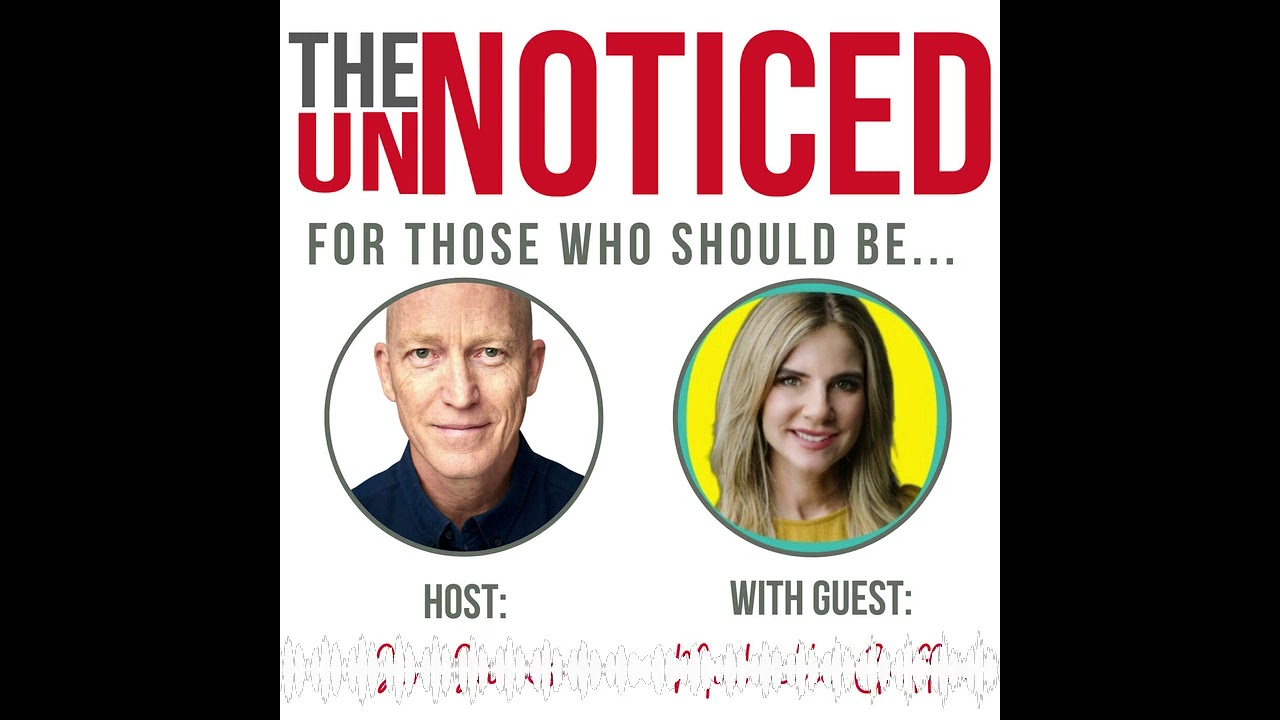
In this episode of The Unnoticed Show, host Jim James interviews personal branding strategist Michelle Griffin. Griffin shares her proprietary 5 C framework for building a recognizable personal brand: Confidence (adopting a service‑oriented mindset), Clarity (defining one’s identity, audience, values, and platform focus), Content (creating pillar topics that act as fuel for the brand, using tools like Canva, Grammarly, AI writers, and repurposing platforms), Consistency (maintaining a long‑term publishing rhythm, exemplified by her 365‑day LinkedIn challenge), and Community (cultivating reciprocal relationships, commenting, collaborating, and treating followers as a community rather than an audience). For each C she identifies a common obstacle—self‑doubt, lack of strategic focus, creative block, premature quitting, and isolation—and explains concrete tactics to overcome them. She also recommends practical tech (Canva, Lumen5, Repurpose.io, Grammarly, Hemingway, AI copy generators) and emphasizes the importance of measuring engagement versus vanity metrics. The conversation ends with calls to action: daily LinkedIn posts, a forthcoming “Business of You” podcast, and her website michellegriffinmedia.com.
Chapters
We can't just be a one-and-done thing. We have to be in it for the long haul. We can't operate alone. We are here to solve for people, to serve them, and building a community around your brand. So whatever is best for you and for them, the content will be your fuel for your brand and your business.
So welcome to this episode of The Unnoticed. I'm delighted to have Michelle Griffin joining us all the way from Pensacola, Florida. Michelle, welcome.
Thank you so much. It's great to be here. How are you today?
I'm really well and also really excited to hear about what you've got because you've been helping individuals and entrepreneurs to brand themselves. So can you share with us your methodology for helping the unnoticed to get noticed?
Exactly. Yes. Well, it's a subject near and dear to my heart because, um, like many of your listeners, I jumped into entrepreneurship in January 2020. And even though marketing, branding are my, my thing and my skillset, when I help people do, it's ultra hard. It's super hard to know, how do you stand out? How do you get noticed when you're an entrepreneur, small business owner, or just anyone? It could be anyone, right? Well, I was a little unsure myself until I put together these 5 steps, 5 easy steps. And I'm gonna break those down today. So let me know when you want me to dive in.
I think now. Yeah, I think, Michelle, now, because as we only have a 20-minute show, so let's get all 5 of those into the 20. The clock is starting.
I'm going to give an overview then, because I want to give just an overview. And like you said, people can come back and learn more. Okay. So the first thing, and this is huge, you'll probably agree, and you've noticed that with your clients and your collaborators, is confidence, right? And that to me is mindset because so many of us don't step out Because we're uncertain, we're unsure, we think, what experience do I have? What don't— who will listen to me? What am I going to say? There's so many things. And the minute you realize, if I don't step out to help others, no one will ever know me. So you can't be helped, you can't help people unless they know you. So you got to wrap that mindset. And that's what stalls so many people. I call it— and these are all 5, start with letter C. So there are 5 C's. So number 1 is confidence. And that's almost a daily battle. But when you really dive deep, and that's what I help my clients, we devote a whole section on confidence and why this This is so important. So number 2 is clarity, right? Okay, that's the name of the game. This may be the most important. If you're not clear on who you are, your values, your missions, your beliefs, your perspectives, all that and how you do business and help people, that's huge. So you have to get clarity on you internally first. And then we do the external clarity and like who you serve, your audience and demographics, what are their challenges, desires, all that stuff is Super important in branding marketing, and also how do you want to be known? What are you going to be showing up and being known for? All that matters. The power of one, getting clear on all that, and even so much as like where my clients are, my ideal clients, and what platform am I going to start showing up on? That's huge because you know what I tell my clients: You don't need to do all the things in all the places to start getting traction. I'd rather them start small and very focused, and then build out from there. So we have to get really clear on. All the things. Now you're wondering what could be number 3. Well, it's called content. Kind of what we're doing here now, making content conversation. You can't be known. Well, yeah, you can be known, right? You can be known, I guess. But the fastest way to attract more people and let them know who you are, how you help them, is with content. Okay? So we dive deep and you realize based on the who you are, what am I best at? What do I enjoy more? And what do my audience enjoy more? So you may be a writer. Maybe you like to do podcasts like you do. Maybe you like to do blogging or just get up on LinkedIn and write stuff. There's so many ways to get your thought leadership and your brand noticed. Notice. That's what we're here for. It's by content. That's the fuel, right? That's the fuel of our brands, our identity online. People come to learn from you, to solve problems. All that's super important. And that never goes away, by the way. Once you realize the content, one of the things I help my clients do, we get what we call pillars or topics or themes Because that goes with the confidence and the clarity. You want to be known for one thing. And so when you stay in the lane of these areas, any 3 to 5 topics, it helps you with clarity and confidence and all that. So that's number 3, right? And I'll give you a little thing. I wasn't stepping out consistently with content. That was where I was really struggling. And so when I really dialed in number 3, it's kind of in the middle because I realized it's the heart of it. I was able to really stand out and help my clients do so as well. Now you wonder, so far I'm confident, right? It's a daily thing. I have absolute clarity on who I am, who I serve, and what I'm supposed to be known for. And now I know where I'm going to preach my leadership and excellence is with my content. But how do I do that? Well, here's the simple answer to that. It's as simple as being consistent. In entrepreneurship and business in general, so many people fail because they give up too soon. They're not consistent. Consistency wins the game. It wins the game for content, for personal brand building, for business. You gotta keep going for the long haul. It's a marathon, right? It's not just a one and done. So consistency, and little known thing for me, earlier this year, I started something called the 365 Challenge on LinkedIn. And there's probably like several hundred of us now that we're posting daily because consistency wins the game, consistently taking action. So that's one of the things that really propels people is when they start showing up that way.
Yeah.
And then number 5 is the most important thing to me because it's all about people. It's community. All right. When you start looking at your audience like they're your community, that could be your clients, your collaborators, your friends, your partners. They're all in this community together that you're helping support one another. It's just going to be a ripple effect, a snowball effect. The more you grow and connect and help people, it's just going to just grow.
So those 5 quick overviews are how I am learning and how I teach my clients So Michelle, just summarize those 5 for us, for those of us that struggle to keep up because there are 5 and they're all great ones and I completely agree.
Yeah, yeah. And we're going to put those in the show notes. Confidence, it's all about the mindset. You are— you have a message and a mission to share and expertise, so you need to be out there. People need your help. Number 2 is clarity. If you don't have clarity on who you are, who you serve, what do you want to be known for, your why, all those important, important things, it's going to be a struggle to get yourself out there and to make sense of it all and others to make sense of you. Number 3 is content. Your content is your way of helping your people, right? So whatever is best for you and for them, the content will be what you do, your fuel for your brand and your business. Number 4 is consistency. We can't just be a one-and-done thing. We have to be in it for the long haul. And by doing all these things that actually, they just coincide, but consistency will win the game. And number 5 is community. We can't operate alone. We are here to solve for people, to serve them. And building a community around your brand, your business, will be one of the best ways to attract more opportunities. So does that all make sense? Did you get that? We can put it in the show notes as well.
I will do, Michelle. And this idea that you have confidence, clarity, content, and consistency, and community, it really makes sense because it's a virtuous circle as well, isn't it? If you have confidence, and then you're clear about what you're saying and you're saying that with quality content, then it's consistently shared. Your community then will feed back to you positive reinforcement, right, about what you're saying, presumably.
Exactly. I guess you could call the 5 C's circle. It's a big circle. It all works around, it never ends. And that's how I view helping your customers is it's not a one and done. It should be an endless thing of just constantly evolving and, you know, growing a bigger circle is really what you wanna do, but That's what it is, keeping them with you.
Michelle, that's wonderful. Now, from an obstacles point of view, of those 5 that you've got there, let's just go through and one at a time, just pick one obstacle for each of those and how you help people to overcome those. So with confidence, what would be the number one problem that people have with confidence and how do you help them get past that?
Yeah.
Okay.
So there are a couple of ways. They don't think they have, they don't, they think their work's speaks for themselves. People just find them. So they're like, I don't need to get out there. Or who am I to put myself out there? Why would people listen to me? What do I have to say? I help them. I have these questions and we just give a real just importance when I spin things around about, it's not about you. None of this brand building is about you. Yes, it's of you, but it's putting you as the product in service to others, authentically you to help others. So when you flip it around, it's you're going to step out, but it's not a, no No one's gonna care about you. Honestly, it's about them. And when you come with the mindset that I'm here to help others, then it takes that burden off and you realize I can do this. I'm here to help others. So that's how I flip it with my clients. And that seems to be the magic way when it's about others, because I seem to attract these type of clients anyway. They're in it to help others and make a profit too. But that's what they lead with.
Okay, that's wonderful. So confidence, let's see that we're helping others and then It's not about us, it's about them. And what about clarity? Because for many people deciding what to deliver or what will be of value to others is sometimes an issue. How do you solve that problem?
Well, yeah, because I see so many things, especially as being a StoryBrand guide, Donald Miller and the whole, if you confuse, you lose thing, it's huge, right? Not just for personal brands, for everyone, for businesses, for entrepreneurs, small business owners. So many people just jump into social media, jump into writing their website and all the things and not really taking the important deep dive work into the clarity of— this is in the context of personal brands. Who am I? What am I best at? What do I want to do? Because some people just jump in things and realize that is not aligned with who I am. And people can sense that. So I dive— a huge part of my framework is diving deep into the internal stuff and then the external. So you're completely confident with how you want to show up. And then we're completely deep dived into your person you help. It sounds like— I actually think it's the best part. And I see the most transformation with my clients when they finally say, oh my goodness, I've been doing this all wrong or thinking about it the wrong way. I now can understand. They give it— it gives them that confidence too, really. Clarity gives you confidence. And then we go from there because when you jump ahead and don't realize that, it stalls the whole process. So clarity in so many things and even the social media. How many of us just show up on all the platforms because people say we should, right? So we get clarity and, hey, does this even make sense for you? Is your audience even there? I've had clients, I'm like, please, you don't need to be on Instagram. Your audience is on LinkedIn and vice versa. So I help them get clients and that saves so much time and money. I cannot tell you. That's a benefit of clarity. It all— see, these all just go hand in hand. They're not super clear on how they want to stand out. And so they're doing— They're just piecemealing their content. They don't have a strategy. At the end of the day, content is a strategic thing to build your business. And so I work with them to get sure strategy based on their goals, what they want to achieve, and then getting dialed into these pillar topics, content topics, either 3 to 5 based on who they are, what they do, and what their audience's problems are. It's all about problem solving. And then we rotate it. We keep it fresh so we're not boring. We don't want to bore people. But we all still are professional and we want our content to attract ideal customers. So there's a fine mix. I have a whole like format and sequence of things that I work with clients with and help them organize it. Another thing is they're not organized and they need to think it out. So when you organize it and you know exactly what you're gonna say, but here's another thing, content, a lot of people just throw out content with schedulers, but content is also like on LinkedIn, for example, It's commenting, is getting to know people in the comments and engaging. You have to have content that engages. So you're always wanting to get a pulse of what people like and what they resonate with. So it's also tracking it, right? And testing it to making sure it's, it's still relevant. And so there's a lot to break down in content and it's like the engine, I said the fuel, but that's, those are some overviews of where I see content succeeding or not.
Challenges I think a lot of people have is being creative when it comes to content. A lot of people say, well, I'm not good at writing. Or I'm not good with artwork. How do you help them get over the, the actual process of just creating infographics or text?
Yeah, it is. And you wanna have a mixture of sometimes video if you can, or live video or graphic or something that mixes it up. I say just head to canva.com. It's the best thing ever to give you some advice. If they're solopreneurs, if they have a team, even their team, there's so many people use Canva, but you wanna see what's relevant for your industry, for you. Again, shiny objects and what the other people are doing gets everyone derailed. They see this person over here just killing it with memes and it's, I want to do that. Well, that's maybe not you or your avatar or whatever. So we work really hard to stay in the lane we're supposed to. That's my advice for that.
That's a really good point about staying in your lane, that just because other people create content that looks appealing may not be right for your particular audience. So you have to do that. And I think the other thing is There are lots of tools now like Canva, but also there's one called— we use Lumen5, which just can take a blog post and make a video for you. For example, there's AI Writer, which you put a sentence in, it'll create an 800-word article for you. There's a lot of technology now as well, isn't there, that can help the person that feels a bit hamstrung? Plus, of course, all the freelancers that are out there. So that really shouldn't be an obstacle anymore.
Exactly. Well, I'll give you a few more. You probably already know these. I use— I have Grammarly hooked up to everything, even my social media stuff. You and I have discussed repurpose.io. It's fantastic. You're right. There's like copy submit. There's so many AI-generated copy software now. It's just even going to be more of a thing in the next couple of years. It doesn't take away you, but it does help. It helps some of the monotony of all this. And like something like the Hemingway app, it really tracks to say, hey, you're talking at a 12th grade level here. We need to be down to 5th grade. So there's so much out there. So there's no need to be scared because there's tech on our side.
I think that's a really great point, Michelle, that tech really enables the solopreneur entrepreneur to create content that's really compelling and consistent over time. So let's just look at that issue, consistency. What would you say is the number one problem that entrepreneurs face When it comes to creating content consistently?
They give up too soon or they're enamored by the likes when it's not. I always tell my clients, do you want likes or do you want leads? Because I know, for instance, there are people just amazing on like Instagram or LinkedIn. They're just getting all these likes, followers, comments, but then they're, you know, not getting the clients. So sometimes your posts might be really popular because you're appealing to a lot of people. But then you want your content to appeal to your target audience and they see how you can solve their problem. I also know people who don't have a lot of followers, but they're killing it in revenue and clients coming to them inbound. So that's important. Don't give up and don't be enamored by likes because if you're talking to your audience, they're going to see you're the problem solver. And then don't give up because sometimes this is a long game. Content usually doesn't happen overnight. The strategy around it, the output by it, you got to keep giving it. Some days you're not going to hit it big and some days you are. But here's the thing. And also you think no one's seeing you? LinkedIn, they say anywhere now between 1 to 3% of the people actually post comment. So that's 97 to 99% of the people there lurk. So don't give up. They're seeing you. I've talked to a lot of clients And they're like, oh, got in touch with me and they said they've been following my content for weeks and months. I never knew. That's happened to me too. So don't give up. People are seeing you and you're making a difference for sure.
Yeah, that's wonderful encouragement as well, Michelle. Now what about community? What's the number one issue that you find your clients face when building or participating in a community? Because they don't have to build their own, right? They could participate in existing communities.
Yeah, that's a perfect way to put it. There's a twofold way. Start small. It's basically showing up and show people you care. One of the best ways to do LinkedIn is you give what you get. So go and just start commenting other people's stuff, being a helpful person. They're going to start recognizing you very fast. So it's a give-give. When you start showing up to serve and help others, you're going to expedite your, your community. People are going to have known you, and then consistently do that. So you're building your community, but also start collaborating, connecting and collaborating with others and do some work together, whatever. That's going to be the ripple effect I was talking about. And that's happened to me when I got consistent on LinkedIn. I started getting connected with people and we collaborate here and there and Clubhouses and Zoom and live events and whatever. But it's just when you start putting yourself out, that's the magic word, just putting yourself out there and staying out there. And it just happens consistently.
So I guess a bit like if you were actually working in a company, you would need to keep showing up every day and you'd need to continue to contribute to your team or contribute to the company in some way proactively. Just now we have to show that in a more public way than we might've been seen to be doing it inside of a traditional workplace.
Exactly. And for instance, on LinkedIn, you can do it by commenting, reaching out, connecting people. But you can always reach out to people like when you connect with them or just following up and just say, hey, I just wanna say you're doing a great job in your content. Or if you ever need my help, obviously we're not gonna be hammers or salesy, but just a genuine reach out and just say, I like your stuff. If you ever wanna— I'm not a fan of the, hey, let's connect and jump on a Zoom call. I don't like that because to me that feels like you're selling. And I know some people do that genuinely, but if you just kind of give people a little pat on the back, either externally, internally, And just build that relationship. It's all about networking and building relationships because we're all people here and we want to know and like the like-minded people. And I'm a people person. So community is huge to me. I call my clients and all my people community, not an audience or a list. So when you treat it that way, I think it makes a huge difference.
Michelle, you've made a huge difference with your 5 C's today. If you want to reach out to you and join your community, how can they get hold of you?
Wonderful. Yes. 2 ways. Well, every single day I'm putting daily content on LinkedIn. So I'd love for you to have your listeners— I'm very open, approachable on LinkedIn. I'm Michelle Griffin. You'll see my branding's yellow and everything. So Michelle Griffin. Also be launching my podcast at the end of the month called Business of You Podcast and LinkedIn Live Show. And my website is michellegriffinmedia.com.
Michelle Griffin, thank you so much for sharing with us today all the way from sunny Pensacola, all about personal branding. Appreciate it.
Thank you so much. It's always a pleasure to talk to you. I appreciate your time.
Thank you for listening to this episode of The Unnoticed Show. We've had Michelle Griffin joining us to talk about personal branding and the 5 C's: confidence, clarity, content, consistency, and building a community. Thank you so much for listening to this episode of The Unnoticed Show. Thank you for joining me, Jim James, on The Unnoticed Show, and I hope that you found it useful. I'm on a mission to help business owners to unlock the value in their businesses. Through communications and getting noticed. If you've enjoyed this show, do please share it with other business owners. Rate it on iTunes or on other players as well. For articles written about each podcast and other topics to do with getting noticed, just come to my website, eastwestpr.com. Subscribe to the free weekly newsletter. Keep on communicating and let me know how you're getting on.
More from Jim











2 people, infinite agents, 1 billion dollar idea #AIAgents #Startup #Productivity