Jim James presents a data analysis of public reaction to Dominic Cummings' parliamentary testimony using the Significance Systems platform. The findings show widespread disgust, poor image control, and a narrative that backfired without damaging Boris Johnson. Media outlets like the BBC and major UK newspapers shaped the debate more than Cummings' own site.
Chapters
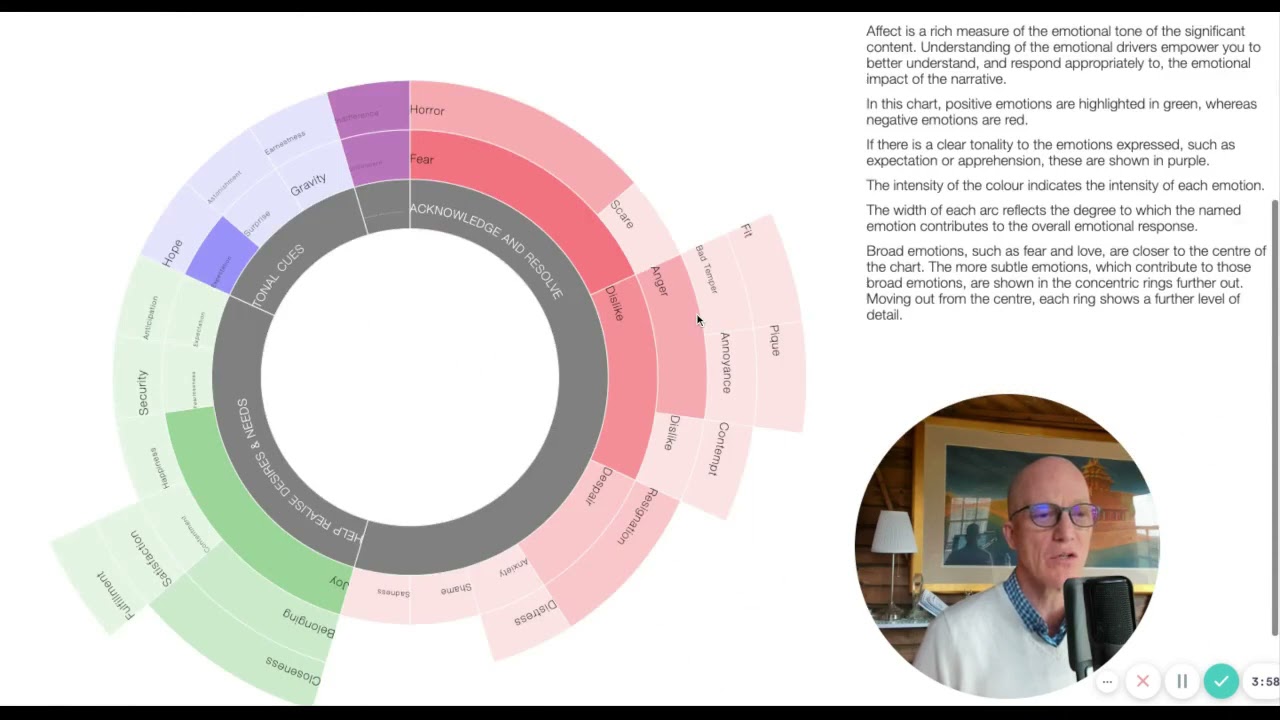
Now, last week I wrote an article called Et Tu, Dominic? And it was all about how Dominic Cummings had appeared in front of the parliamentary committee to investigate what had been happening with his time in Number 10 as a special consultant. And I'd looked at social mention to get some clues. Now, Dr. John Ricketts has kindly run this for me through his Significance Systems platform to see a little bit more depth and detail about what people thought about Dominic Cummings. Now, this isn't about Dominic Cummings, but this is just about how technology can help us to understand what people are thinking by what they're writing. It's important because what we found from the social mention is that what people are writing in the paid-for media isn't necessarily the same as what's being written about on social media. So we need to start to understand what's being said so that we can take preventative action. Now, if we look here, first of all, the narrative on significance systems, you'll see here there are 2 different tabs, Outlook and Narrative. And I'm going to look first of all here on the Outlook here for the engagement classification. Basically, the content that was being talked about was timeless. So what Dominic was talking about— governments and inactivity and incompetence— was not transformational, nor was it transient, nor was it tribal. It's content that is perceived to be content that will always take place. Now, the content in terms of the efficiency was quite weak. In other words, there wasn't anything delivered that was making really much of a statement. If we then look at the orientation here, what we can see which is interesting is that people were writing, content was being written that demonstrated an active disgust about Dominic Cummings. Okay, so not depressed, not dormant, but just disgust. So this is a really key diagram for me because it's showing orientation of the audience. So in other words, Dominic Cummings has not done himself really any favors by appearing. Now, if we look at here, one of my favorite charts that comes out of the significance systems is the emotional response. And we can see here on the right-hand side, anything to do with red, these are terms, adjectives that describe how people were feeling their acknowledgement and their resolve, horror, fear, Scare, dislike, a fit of pique, contempt. Okay. And these on the left-hand side are the realization of the desires and the needs that people might have had through listening to content. So fulfillment, satisfaction that maybe they've heard information they didn't know before, some security. And also here, some tonal clues, some degree of hope here. Astonishment, earnestness, surprise, but also some expectation. So these are the tonal clues, but you can see here a number of people also were indifferent. So we have quite a lot of impact around peak annoyance, contempt, which mirrors what we saw in terms of how people had felt some degree of disgust about what was being said. If we look at the media, what's interesting here is that Dominic Cummings' own website was driving the majority of the force of the content. Wikipedia, where he has his own page. YouGov, the polling. The New European UK. Now, The Telegraph here and the BBC and The Independent, The Guardian. What's important about this is that These main media channels had the most media power when it came to discussing what Dominic Cummings was saying. So if we were to be undertaking our own crisis management, we would want to be thinking about getting into these mainstream media. You can see some of these lower down, for example, like BuzzFeed. Interestingly enough, Channel 4 is even below YouTube and the Irish Times, and MSN gives quite a strong play, although still, look, 0.01 in terms of the index. Now it says here the index is showing their power to lead debate. In other words, what conversations happen as a result of the content on them. It's not showing necessarily great influence. Now if we look at the content here, we can see content power. This means the headlines which were generating the most activity. And you can see Dominic Cummings says PM had no plan to protect the vulnerable. Dominic Cummings says there was chaos. Ask me anything. But then you can see later on we have Boris Johnson, and if I click on that, we can see that came from The Independent. So we can see basically then that this content featured very strongly. So we can see the power of the content coming back quite quickly, and the Barnard Castle, for example. So quite quickly we can see that the content starts to balance out quite quickly because the date here was the 25th for Dominic Cummings and the 29th we had power coming. So we can see here that the content power kind of peaked and then later on dropped off. So it kind of had its moment really quite early on. If we then look at the sort of content, we can see here that Dominic Cummings' picture was never really that managed, not very flattering pictures by and large. And so he plainly didn't manage the media content When it comes to his own photographs. Now here we can see the the topics and the themes. They're quite small, and I'll include a link so you can see this. But what's interesting here is that the red are for negative associations. So through his commentary, there was negative sentiment towards number ten. Interestingly enough, also towards coronavirus lockdown, also negative. The pandemic actually had neutral feelings, and here towards the media, actually some positive views about the media. But we can see here the Prime Minister here in red. So Dominic Cummings did manage to spread some dirt and give some negative impressions of Boris Johnson. But overall, as we see here, he's done himself some favors, come out with some blue and some green. For Mr. Cummings, but Dominic Cummings himself comes out fairly much with the red, with just a couple of green there. But that's actually for government and the media. So overall, did Dominic Cummings do himself any favors by going live? A lot of people felt disgust. A lot of people felt it was negative. But it— the desire to make Boris Johnson look bad doesn't seem to have really landed any significant blow. So this is an analysis so that we can see how technology can help us to understand the narrative. In this case, the Significance Systems platform has given us a wonderful breakdown so that we can see what is being said literally by people online. About an event like the disclosures by Dominic Cummings.