Navigating Generational Success: Planning the Future of Your Family Business | Planning the Future
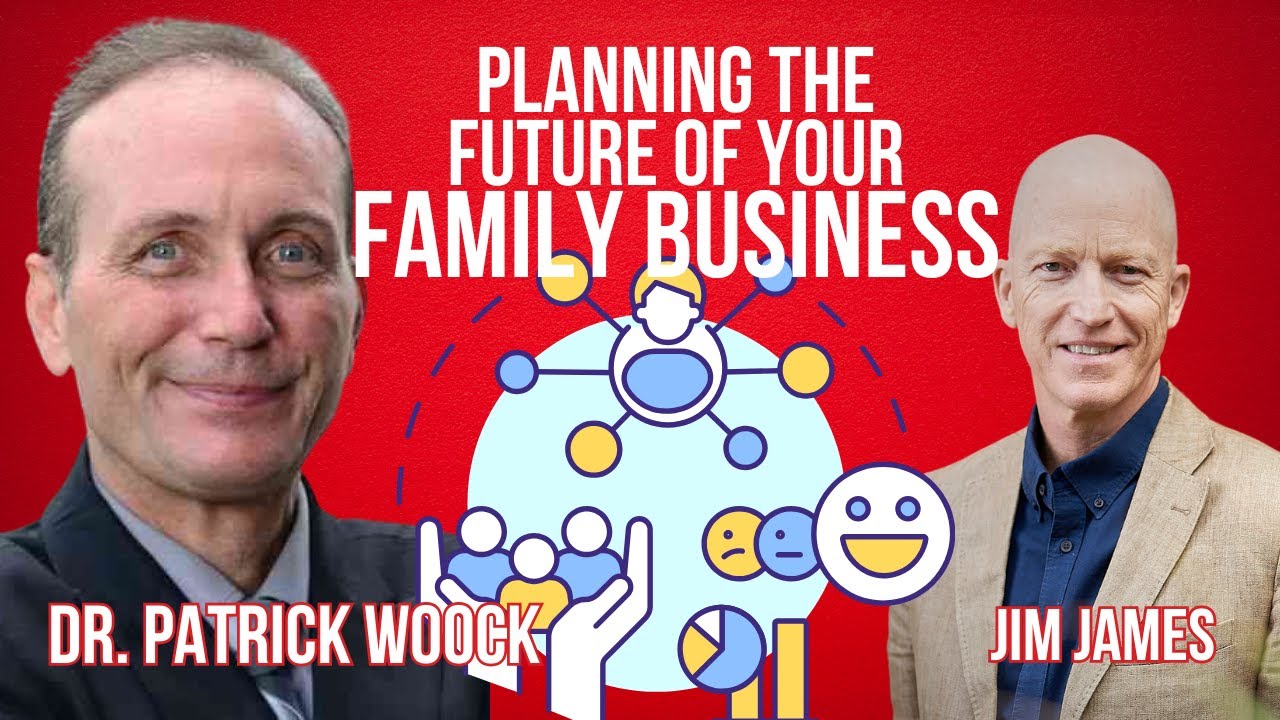
Dr. Patrick Woock explains why only 33% of family businesses have succession plans, and why most fail because they ignore family dynamics. His four-step framework starts with clearing the air about fears and expectations, and realistic transitions take 1-3 years with clear milestones.
Chapters
Welcome to this episode of The Unnoticed Entrepreneur. Did you know that 90% of the wealth in America is actually tied up in family businesses? That's an amazing, an amazing statistic. And over 5 million companies in America are family-owned. And in the UK, it's a similar percentage. And these companies are generating a huge amount of value. But what happens when the founders want to retire. Who's going to take over the companies? What if the next generation don't want to take over the company? Maybe that's what you're facing yourself. I've got the answers for you today. Dr. Patrick Wook is joining us from Savannah, Georgia. Patrick, welcome.
Jim, thank you very much. Very honored to be on the show. And the The topic of succession is very near and dear to my heart and one that I've been working on over the last 8 years. And as a small business owner, when I took over my first business at age of 25 and turned that around and eventually sold it, it's something that not only did I write on and have done extensive research, talked to over 100 different businesses, but something that's something I've personally experienced. So thank you very much, Jim, for letting me onto the show and talk.
No, well, it's a pleasure because Patrick— Patrick Woke, sorry, I pronounce that really going all over the place. But Patrick's also written a book which we're going to talk about today, uh, with a lady called Susie Ginsburg. Actually, they both had some health issues, right? One of you had a heart attack, one of you had a stroke, and it kind of prompted a life of expertise that you've got, Patrick, of running and selling businesses with a desire to help companies and the founders to move on. So let's talk about Succession, the book that you've written. Explain the book and some of the key concepts that our listeners should really take note of if they're looking at succession planning.
And thank you, Jim, for pointing that out. I think one of the biggest challenges too is when we go through life struggles, you can really go like one or two ways. One, you can ask yourself, well, why does this happen to me, right? Or two, you can take it and say, what can I do with this? How can by falling down, and I myself had a stroke, how can I have by falling down make my life better? How can make the world better?
Right?
And I really was very blessed in meeting Susie at the same time. Susie was going through and had a recent heart attack. In fact, I was going to be on her show like I am today with you, and she had to call it off at the last moment because of the heart attack. And so months went by. We kind of didn't get in touch. We kind of— I did reach out to her, make sure she was okay. And then we came to a point one day and was like, we're talking about this. How can we turn these challenging situations, these challenging issues, heart attack, stroke, things that happen later in life, into something that could benefit other people, benefit ourselves, benefit the world? And so we created this Book of Succession, which I had been working on for a period of time, but without the energy and dynamicism. I mean, Susie is just, you know, she's a force in the world. And without her support, it would never— it would still be on a digital shelf somewhere. So very, very lucky to have her in my life. Very, very lucky to have her contribution to this book. And her DNA is wrapped in this book. As well. And going back to what you're talking about in regard to family members and transition of businesses and succession, a lot of the time, as you were pointing out earlier on in the beginning of the show, or the beginning of the introduction of the show, is a lot of time we don't really engage in the issue of succession until there's a heart attack, until there's a stroke, maybe even, and unfortunately to say this, a death. And so having this grow out of that issue, having the growth of something that's traumatic that happened to me, it allows us to provide, for lack of a better word, the medicine. It provides us the solution, provide the pathway. And I see ourselves more as guides than authors to help people through that transition, through that difficult time. Like we went through. So, this book is in many ways written with our own struggles to help other entrepreneurs who are going through their struggles with their families and through those transitions. And that's why I really love this. It's really— and that's why we made the title Navigating Generational Success, because we are helping generations, not just the older generation who may be going through challenges, but the newer generation.
Yeah, Patrick. And, you know, just for full disclosure, Patrick and I met each other when we were both living in Beijing. So Patrick's got an international expatriate career as well. So he has his base now in America, but has international experience, which is why what you are sharing in the book will apply not just to America, but to entrepreneurs all over the world. Patrick, let's start with perhaps the first question on people's mind, maybe, which is that Why do people not have a succession plan in place? Because it seems as though, you know, it would— you know, we must recognize we're getting older. We sometimes get fatigued. A lot of companies just kind of fizzle, fizzle out, don't they, if the founder doesn't find a successor. In your research, why do founders not have a plan?
That's a great question. And I think there's many different types of research out there. But I think one of the numbers that a lot of them agree is only 33% of family-run businesses have a plan. That means somewhere from 60%, like 67% don't. And the thing that when we looked at these companies that I was advising, when we looked at the plans that they had that were in place, these are the ones that have plans, that 33% that have plans. They have structural plans. They have financial plans. But when I asked them, how are you dealing with the family dynamics? How are you dealing with the behavioral issues? Almost, I would say all of them came back and just looked at me and said, we don't. And that's where this book, that's where our research, that's where our focus really differentiates itself. Is it— it looks at what is the successful process on a behavioral side, working with your family member, getting over those issues, getting over those— understanding the differences between the different generations.
Should we just talk about that? Because often when we talk about handover, we talk about equity transfer, roles and responsibilities, and then trying to get the founder to let go is often a big one, isn't it? When you say behavioral, Patrick, What do you mean? The behavior of the founder or the behavior of the people taking over or the staff, for example, that have kind of got to be kind of almost spectators but also participants, haven't they, in what could be quite a stressful transfer of power from one generation to the next? Absolutely.
And you hit it right on the head is where do you really start? Because there are so many different aspects and where you can look, right? And so we took us, we kind of took a 10,000-foot or meter, no matter where you're at, step back and say, what were the themes that we noticed for businesses that were successful? And was there an overall process? that they were going through, the ones that were successful. And we identified 4 steps that— and we don't, unfortunately, we don't have time today to go through all of them, but we identified 4 steps that really helped firms on a behavioral side be transition business successful. And the first one really was clearing the air. Getting everyone to understand each other's point of view, and getting them to understand the fears, the challenges, the hopes that they have, and so that the two parties start communicating on an understanding level that they can understand the you know why why am I having problems? Handing the reins over? And why am I having problems understanding what you want? You know, really those 2 sides, how do we bring them together and clearing the air so they can start communicating in a way that moves the succession forward?
One of the challenges I've noticed for a lot of people, Patrick, is that entrepreneurs have put their heart and soul into the business and life without the business can be a bit daunting. I mean, it can feel like almost like a divorce, really, or witnessing a death. To what degree is that lack of, of a plan for after the business and the role in the business an issue in succession planning?
Oh, Jim, you're really like reading my mind. It's right on the, right on the head of what So many businesses go through, so many issues they go through, is you may have on one side an heir who's very, you know, very interested, engaged in the business, and you may even find on the other side a person wanting to transition. And, you know, it's like that one time you get 80%, but they keep becoming an issue, they keep becoming a problem, and I just can't hand it over to you yet.
Right.
And it's not the fact that there's, there keep problems popping up. It's, as you pointed out, and we've seen time and time in the entrepreneurs, the business owners, they identify so much with their business of who they are, of what, what they are, that we almost have to work with them and say, Let's start thinking about who the next person is going to be. And those are very challenging conversations because in the beginning, when we start saying, who's the next person going to be? It always ties back to the business they're doing now. And what we try to do is really have those hard conversations with the person who's selling the business to let go.
What do they—
how could they create new groundwork in their own life and their own identity? So it's just really brilliant. I'm really happy you pointed that out because it's just, it's such a very difficult and important thing to help people through.
Well, it is. And Patrick Woke, your book Succession: Navigating Generational Success is available on Amazon. So I'll put a link to that in the show notes. But, you know, it does seem as though many people have defined themselves by the work that they've done. We've talked a little bit about the need for that person to reinvent themselves, right? Sort of life after the company in that role. What about for the young people coming in for whom maybe they're interested in doing something entirely different? How do you get them to want to take over the family firm? Maybe they're not interested in catering equipment or, you know, running a manufacturing industry when their first love is maybe in art or in medicine. How do you help the next generation to be inspired by the opportunity that lies within the family company?
And I think that's a brilliant— that's another really exciting topic and something I recently was talking with some business owners who had their son in the business. And I don't think, you know, I had a conversation with him in front of one of the owners and I said, you know, there's a great book called The Alchemist. And I always love one of the key tenets of the book is sometimes the goal, the real goal is sitting underneath your feet and you just can't see it because you just can't Dig underneath the ground right in front of you. And I explained to him, I says, you know, running this business, jumping into this, the lessons that you learn, the challenges, the identity you identify that you engage and create for yourself, those skills that you learn running this business. You can use anywhere in the world. You can use in anything you use from this point. You have the greatest opportunity to learn one of the greatest lessons of your life right here. And you don't have to go to New York or San Francisco or, you know, like you and I went to Beijing or Shanghai. On the flip side, all the lessons you learn here in this small town, because we're in a small town, All the lessons you learn in this enterprise, and those lessons are the same that I learned in my hometown, Lockport, Illinois. I used those lessons, that knowledge, that ability in Shanghai, in Beijing, in Dalian—the exact same abilities. I said, "You can live unbounded if you put the time in." Commit yourself to making this happen. Make the family firm work. And then somewhere along the line, 10 years from now, if you decide to go anywhere else, you have the ability to live anything and do anything you want from this point on.
Yeah, it's a very interesting point that the skills and the life learnings are, in effect, the same no matter where you live, right? You change the geography, but not the person. I think Paul Coelho, wasn't it, who wrote The Alchemist? Um, so you've got the existing maybe founder, or maybe it's the scion of an original founder. Maybe this is the 3rd generation of transfer of wealth, especially in a country like America or, or Europe, for example. Um, what about the issue then of dealing with the team in the company? Because we've talked about, you know, the founder has to decide to go and do something else, whether it's a sport, for example, or something they've always wanted to maybe make a contribution, have a foundation of some kind, and the, the next generation come in and run it. But there is also an implication for the team who signed up to work with the founder, for example, maybe work with them for 10, 20 years. There are people who are going to be passed over, aren't there? For example, for leadership, because the heir comes in. Patrick, what about the organizational challenges when there is this transfer?
Okay. So one of the things that we noticed, and one of the chapters deal with Getting to know your people, right? Getting to understand your people. And a good friend of mine, Justin, he can help contribute to that topic. And one of the things that I was really, really honored is really to understand is he has a tree, like a graphic tree that he puts in his office, and on it he has all of the members of his team, pictures of them, and family background, all the— and, and if they have children, their pictures as well. And he says this tree cannot exist with all the rest of the, the branches, right? And he sees— that's in front of his desk every day. He sees it every day and remind him the importance of that. The other thing too that he does is he goes out and meets and talks and learns about everyone in his organization. And he hasn't taken over the organization yet. This— he did that at the beginning to really understand all of these people, their families, their challenges, their backgrounds. So by doing that, by putting that That background not only understands the people on an individual basis, but he understands that if there's a shipment missing, or maybe the counting is off, or maybe, you know, someone's really doing very well, he understands maybe some of the social backgrounds, some of the family backgrounds behind it. So what he's done is by including the family As a part of who he is, he's eliminated a lot of the problems in regard to transition, how people see their own position, and he's made them feel like they're a part of something bigger, right? Something more beautiful, like a tree. And I think there are— we saw this in another organization I work with, Juan. They run a family restaurant. And every— I think it's every 2 weeks now— they invite everyone in the organization to dinner. And the entire organization takes up the whole restaurant. They all sit together, and the father who founded the business sits at the head of the table, and they all share, they all talk, and they all have dinner together. I think a lot of the issues we have in regard to non-family members come with the fact that we don't— I mean, this is my 2 cents— is we don't take time to get to know people. We don't take time to have a meal. We're always in such a rush to accomplish activities, to accomplish goals, to accomplish the next thing, instead of realizing that maybe having a meal, maybe having a chat, maybe have a coffee. can give us insights into how to better understand those around us and our organization.
Wise words, Patrick. And sometimes slow— as I heard the other day in motor racing, going slow is faster because, you know, we get a better line and we're not rushing. But Patrick, Patrick, well, we're talking about your book Succession. What happens when the heir to the founder is not very good? What if they're not talented, but they've got a bloodline, but they don't have necessarily a good skill set? How do you deal with that? Because it is possible that the next generation are lacking the entrepreneurial ability. They are lacking the people skills. They are lacking the commitment. to the industry. What happens then?
Well, I think that's one of the reasons that we hope that the first part of our process, clearing the air, is where the founder or, you know, other people can come in, mostly the founder and him, can have those honest conversations.
Right.
And we believe at that time it's really good to, even if you bring myself in or if we bring in another guide to come in, And say, okay, there are some legitimate points here that the current founder has in regard to your skill sets or your understanding ability, or maybe even your want. So let's work for you to build a team. What's to build an organization around this individual to help fill those holes where there may be, for lack of a better word, lacking. Or where there could be some ability to educate and train, right? So I think it once again, it always goes back to that beginning. We really need to clear the air, right? We really need to be honest with each other. And I think the biggest challenge, if you don't clear the air at the beginning of the relationship, the later steps that we go through, there's a three four step process. The later steps. They become more difficult. You know, we've noticed if you don't really clear that air at the beginning, the later steps don't really have the impact or the follow-through that they should. So then, then we say, hey, maybe we need to revise this and go back, and maybe there's some issues that are missing, right? But I think it's a great thing. I should probably get that glass of water you had. But the— I think the reality is there's In the beginning, there's always going to be lacking, especially from someone who has been in a business for a very long time.
Yeah, there's bound to be big shoes to fill, aren't there, Patrick? And that's part of the job to fill that. And what about a transition time, Patrick, from a practical point of view? Have you noticed sort of an optimal amount of time between one person handing over and the next person taking over? Is there They stay too long, overstay their welcome, or they rush out the back door too quickly?
I think the optimal— I've seen the optimal time is typically a business owner will come to you and say, oh, I want to retire now and I'll give you a year. Right? And the year will turn into 2 years, into 3 years. Right. So it's it's good to sit down and define a time frame because I unfortunately, and a lot of it is because of my own lack of experience, but I had to eventually fire my father from my company because there was a period of time where. My leadership was being challenged by him because people would just go back to him.
Okay.
So, I think you hit on a great point. There needs to be a defined period of time. If you make it too short, there could be problems. But if it's, you know, if you're worried, if you're concerned about the timeframe because someone may be like, I just want to get out of here. I'm done with this business. Then building that team to support the person and help educate and train them after you leave can be really essential, right?
Yeah, maybe having some timelines as well and some milestones where you've all agreed when this is happening, it's time, and maybe letting go of maybe product first and marketing and then People always cling on to finance until the end, or maybe a few key clients, don't they? So succession planning takes a lot of, as you say, conversations and some maturity, but also both parties have to be sort of committed to the process if they're going to get this transition taking place. They both have to be willing to follow through, even through the uncomfortable parts. If people want to find out about you and connect to the Succession book, where can they go?
Well, you can just contact me at my email. We're going— I'm going old school on you now. And my name is Patrick, P-A-T-R-I-C-K period W-O-O-C-K at gmail.com. I've been told that we need to have the webpage, but I don't have a personal webpage. So, the email will work just fine. And, and I, I was talking a little bit earlier before, if anyone from this podcast or anyone, um, from the Unnoticed group wants to reach out to me at any time, I'm more than happy to offer a 45-minute consultation, talk to you, learn about your business, uh, as a, as a, uh, consideration for, uh, you know, my friend Jim here and, and for the people out there who really want to turn their business around to us. You know, we're guides. Our situation is we really want to see that generational wealth. We want to see those businesses continue. We want to see those communities continue to grow. And if we can be a small part of that continuation, we will feel that we've accomplished a lifetime worth of achievement.
Patrick Woke, sorry. Now you and I are both suffering from the same thing. 2 old men. Well, actually, just as an aside, you said the average age of the owned business in America is 58. So for anyone listening to this podcast episode, you know, as we get to our late 50s and early 60s, we really need to be thinking about succession. Patrick, you know, had that brush there with his bad health. I've been very blessed with mine. But as we get older, we do need to plan for succession because Otherwise, succession may take place without a plan. Patrick, thank you so much for coming on the show today.
Thank you, Jim. I'm very honored to be here.
Well, we're honored that you've also raised such an important issue because we're always talking about building and getting noticed. And actually, we need to get noticed so that the next generation can preserve the wealth because the business really is there to sustain the family, isn't it? And to sustain wealth for future generations. So we have to plan for that. Thank you to Patrick Wook. That's W-O-O-C-K, uh, and Dr. Patrick Wook. And I will of course include all of his details in the show notes. So if you've enjoyed this show, please do share it with a fellow unnoticed entrepreneur and do reach out to Patrick because if you've got a business and you're approaching a time when you think 2 or 3 years you'd like to be leaving it to the next generation, start today. And my name's Jim James. Thank you so much for joining me on this episode of The Unnoticed Entrepreneur. Until we meet again, I just encourage you to keep on communicating.
More from Jim











2 people, infinite agents, 1 billion dollar idea #AIAgents #Startup #Productivity