New SaaS unlocks Private Family Office Wealth for Entrepreneurs today.
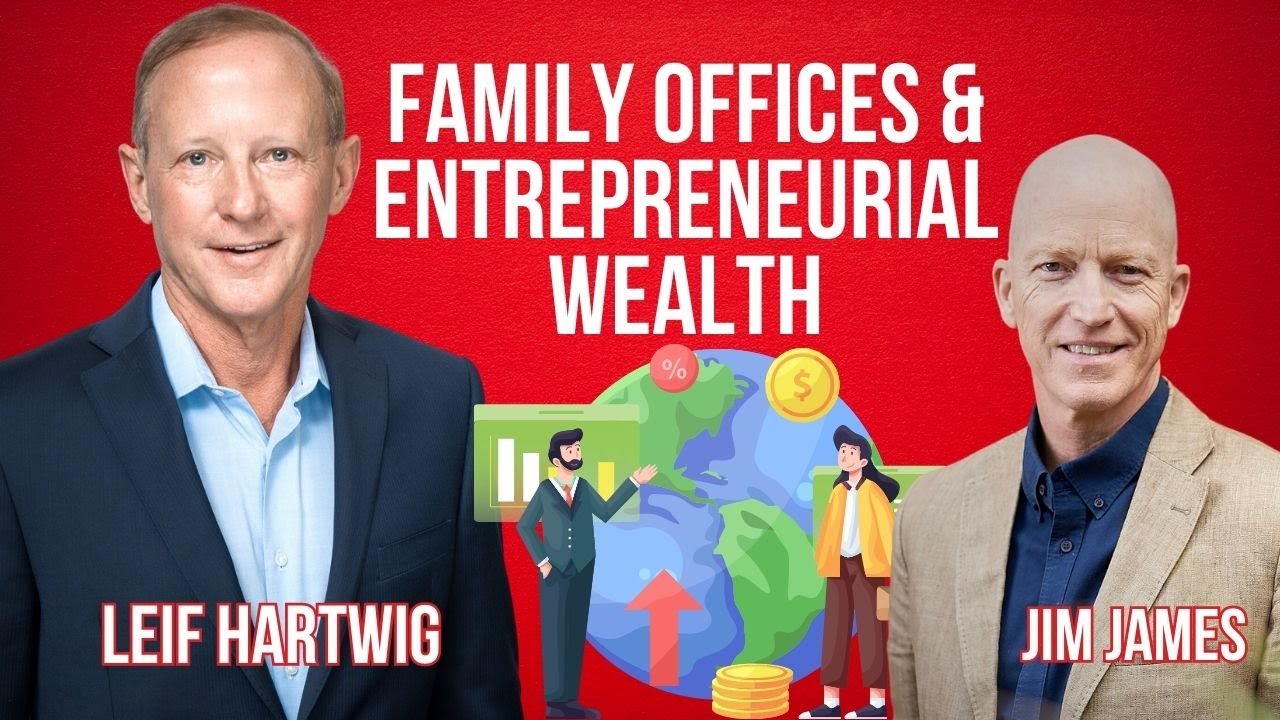
In this episode of The Unnoticed Entrepreneur, host Jim James interviews Leif Hartwig, founder and CEO of Wealth VP, a SaaS marketplace that connects growth‑stage startups and middle‑market companies with ultra‑high‑net‑worth individuals and family offices. Leif explains how the traditional, word‑of‑mouth funding ecosystem is massive yet undigitized, and how Wealth VP acts like a “Match.com meets Shark Tank” with a human‑concierge layer. He describes the origins of the company name, the decision to prioritize investors over startups to achieve marketplace balance, and the go‑to‑market strategy that leverages integrated alliances with RIAs, industry events, and a small, scalable sales team. The conversation also covers pricing experiments, rejecting a freemium model in favor of a premium subscription that signals quality, and the importance of aligning the business with values such as integrity, family, and leaving a positive impact. Leif shares metrics (e.g., 1,000 US VCs vs. 80,000 UHNWI, 75% VC fund failure rate, target $100 M ARR from 5,000–7,000 subscribers) and lessons learned about pricing, brand building, and the tightrope between profit and purpose. The interview ends with contact information for Wealth VP and a call to listeners to share the episode.
Chapters
And welcome to this episode of The Unnoticed Entrepreneur. Today we're going to the sunny climes of Scottsdale, Arizona. We're going to meet Leif Hartwig. Leif, welcome to the show.
Jim James, thanks for having me on. This is great.
Hey, it's wonderful to have you on the show because you're building Wealth VP, which is a platform that's helping entrepreneurs and business owners, but slightly more advanced business owners, to meet funding from especially family offices. So you're really solving this problem where the need for money has actually outstripped the number of VCs that are available. And you've also built an amazing SaaS business. So we're gonna talk about how you've built the business that helps entrepreneurs, but also how you're building your own SaaS, which you're saying is gonna be over $100 million in the next 4 years. So plenty of things for us to talk about.
So Leif, tell us first of all about Well, I'm real excited about Wealth VP, and thank you for having me on the show because the purpose of this is really to help your listeners have an opportunity to meet their dreams, to grow their companies. And what I found about 3 years ago as I was helping a few companies raise money, that this is the big blocker. Right? For companies, if you want to go to the next level. And the marketplace is enormous. It's a multi-trillion-dollar marketplace. But interestingly enough, it's all word of mouth and networking. Can you believe that? You know, I'm old enough to remember 8-track tapes.
Me too.
You know, and the marketplace is still the same way working that it was when we were listening to 8-track tapes. So, So to digitize that process, we developed a software platform that matches really great startups and middle market companies with investors that have the means to fund them in a meaningful way. And in a way, it's like Match.com meets Shark Tank. I don't know if every country out there has a Shark Tank, but also we've done that kind of on steroids because We've recognized that most founders don't know how to put together pitch decks and get other, you know, things, the collateral that they need to make that happen. And, you know, not just matching them with any investor, but investors that have the means to get them to that point where they can actually grow the company. And as you probably know, 90% of all startups go under because of lack of capital.
You know, they go out of fashion and sort of choose a product or service that people don't want to fund. But you're also tackling a source of funds that traditionally entrepreneurs don't get to, you know, private offices, family offices, because most go to, you know, friend and family, or then they go to the angels, and then they go down the VC route. And the VC route is often really very cut and dried. Why have you gone for the family offices? Oh, and also maybe you should explain what family offices are for people that are not so familiar with them.
Do you know what's so amazing is in the US, there's about 1,000 venture capital companies. Only 1,000 for about a million people chasing money. In the US, there's 80,000 ultra-high net worth individuals. That means starting at $30 million of assets under management, Probably closer to half a million worldwide. So truly, who is funding this marketplace? It's ultra-high-net-worth individuals. Now, what is a family office? It's a term that a lot of people use loosely, but it's, let's say that you've exited your big company for $100 million. Now, what are you going to do with your money? Okay?
Yeah.
Well, you build a business around that, right? $100 million is a lot of money. And so a family will put together objectives of what they want to do. They'll invest their money in a portfolio of different investments. One of those slivers, or sometimes a bigger part of that pie chart, is private companies. The thing is that unlike venture companies that get hundreds, maybe 1,000 different solicitations a month, families get nothing. Yet they're the main funders. So how do they get their information? It's from a cousin or a—
Yeah.
CPA or somebody else that does that. So we increase the deal flow to family offices with quality deal flow, and we can talk about that a little later, but that allows them to expand their networks across the whole globe.
That's really fascinating. And how did you discover this, Leif? Because I've met a few people that run family offices when I was in China, I met them that were in Hong Kong, for example. You know, 10, 14 staff managing the money that their grandparents had made, you know, at the turn of the century. Incredible. How did you find this community?
Well, my background's pretty deep. I've been in financial services for 30-plus years. I started as an investment advisor and was in the top 5 people of a national firm here in the United States and, you know, was managing over $200 million myself. And a lot of those people were in the family office type business. So I found that, but here's the other thing is I worked with venture capital companies and I apologize ahead of time for any VCs that are listening, but they're arrogant and they have all the deal flow in the world and they're just interested mostly in money versus trying to leave the world in a better place than we are. And families, family offices and ultra-high net worth people, they want 2 things. They want to make money, but they want to leave the world in a better place. And so not only is there a lot more of those that do more deals and fund more companies, but they have an interest in values and character. And, you know, those are the kind of things that my company is grounded in. And so when you make the comparison, and then more families want to go direct because If you know what, there's something called a 2 and 20 people don't know in venture funds. That means that they take 2% per year of anything that they raise and they take a 20% backside of deals, which is called a carry. So over 10 years, that's a 40% haircut to companies, right? And also another fact, 75% of venture funds don't return capital to investors. 75%. Wow.
That's an astounding number.
So we saw this whole marketplace that is in trillions of dollars that has not been digitized. And so we put the digitization in the platform and then we add a wonderful human element of people that work for me that are kind of like concierge, as we call them, relationship managers that can help connect people both on the platform and off but also give them other things that they might need. Okay, so that's Wealth VP.
Okay, that's one. Now, people might get confused about the name Wealth VP. I personally thought it might stand for vice president or it would be sort of a personal wealth platform. Just briefly, could you give us the origins of the name?
Yes. First of all, the longer name of the company that we shortened is called Wealth Venture Partners. And my daughter, who's a brilliant marketer, helped me. We spent weeks on this and we looked at each one of those names and we love the word wealth because it's a substantial name and it's really in the area that we deal with. And then we looked at the middle name. We're not private equity that kind of has people invest in in companies that have been around 20 years. It's really the venture market of companies that are in the growth phases of their business. And then the last name is the one that we really spent a lot of time on. And we looked at Wealth Venture Advisors. We looked at a number of other different last names and we came up with Partners because it was our ideal that we wanted to work together with companies, with these families, with our vendors that come in and we can match as partners, not just outside consultants or advisors. So we actually integrate with these families and with the companies, and we give so much more than just the matching. And I think that value orientation helped us kind of be malleable when the marketplace told us, hey, we like this, but it's, you know, You need to kind of move in this direction a little more. And so as partners, of course, you listen. As advisors, you think you know it all. So that's— so we shortened it to Wealth VP just because of the internet and other things, easier to remember.
Okay, Leif, I love that and the way that you've worked with your daughter as well. I ask my daughter her opinion as well. So the whole generation of young women growing up guiding their fathers on.
Exactly.
It's a SaaS, and we all know that the challenge, or one of the challenges with building a SaaS marketplace, is you have to have buyers and sellers kind of an equal number, right? I mean, otherwise you end up with too many buyers and no sellers, or too many sellers and no buyers. How did you overcome that challenge, and who did you get on first, for example, or what did you offer them?
That's one of the best questions you could ask because I think because I've done other businesses in the past, you need to go in and say you can hit the target, but at the beginning you probably don't hit the center of the bullseye. And so what we did is we first thought that our main clients were going to be the startups, the entrepreneurs, that we could have a million of those because like on a dating service, you know, if you pay $50 a month for a date, Would you pay $50 a month to meet an investor? Of course, yes is the answer. But then we went back to our value system and said, is that a false promise? If we had a million people, can we get them funded? And the answer was no, we couldn't. But who could we get funded? And that was companies that had gone through maybe the friends and family thing already and had gotten to a level where they started revenues. And so we actually flipped our model that the investors, we put them first, which by the way, puts the companies on our platform first, right? Because now we've got a good match. So how do we do that balance? So we flipped from wanting a million companies to now maybe having a 5-to-1 investors versus companies because we want Even though our promises to match, and we get over a 90, 95% match. So everybody gets matched, then they've got to do their thing because we don't share in the backside. We're a SaaS company, you know? So that's really valuable to both sides 'cause we're non-biased. Our goal is to get them funded. Okay. So with that in mind, that our end goal, but we want to stay out of the SEC rules of being a broker-dealer. So even though we work hard to get you funded, that's our relationship. Okay? It's now to get those people in our first year, we were pretty stealth, but we grew by word of mouth. And then I hired, now we're just scaling the heck out of it. I hired a head of marketing who ran 3 lines of product for Sage in their biggest division in the United States and worked with the biggest brands in the world. And so she's my— marketing person doing all of those things of LinkedIn campaigns and blogging and articles and all of those things that SaaS companies need to do on that side. But that's a different marketplace to attract those people because it's a lower price and the pain point is so high in the world right now. When we talk to people, how can I get on? I need money. I need to do it. That's not— we can do that digitally, okay? And because our price is lower, we must. On the family side, it's a relationship sale. So we've decided that we're going to go to entities that have multiple people in our target market. So RIAs, registered investment advisors. I was in London and spoke on stage at Presto& Partner. They had 160 people there. Many of those were high net worth investors. They liked what we're doing. Also Footprints, you know, run by Karen Gould over there. And I did another presentation there and they had a similar group. And so we're forming relationships because what we found with families, there's an old saying, if you know one family office, you know one family office. Okay. 'Cause they're all different. But what are they like? They like privacy and trust. Okay, so I should probably do this. Trust. So, as a new company, we recognized that it would take us years to develop trust. So, but to develop an integrated alliance with an organization that has already had that trust and they believe in us, then the sales cycle was shortened. Did that make sense?
Yep. Yep.
Okay. So, the two-sided marketplace, we actually have kind of a firewall in between because we don't want Our company's bombarding them with, you know, stuff every day, but it's a true connection. And so we've, we developed through listening to the marketplace our go-to-market strategy. Now we also have salespeople too, and those salespeople are, you know, are on the phone going out to relationships in the target markets using pitchbook and other techniques for the families that we can also do that. So at first, You don't know exactly what's gonna work best, so you use multiple channels to do that. However, we're having great success with these integrated alliances, and now we're scaling that up. We have only 2 or 3 salespeople now. We'll go to 100, you know, probably by the end of next year if we can scale quickly.
Well, yes, Leif, you've mentioned that the goal is to get up to over $100 million worth, and that's a, of fees from family offices, isn't it? Predominantly.
Well, it's both sides. So we charge, we think, I always say free is a great price, but it really isn't because it doesn't denote quality. And especially in this market, a lot of the families aren't used to paying. They get lots of free stuff. But truly at $25,000 a year for a family, if they had to form what we can give them, Hire a deal person, a networking person, find software, go to local events. It's a lot of time and effort, but it would be $200,000 to $300,000 minimum as a do-it-yourselfer to do that. And so on the company side, who's going to go over your pitch decks? Who's going to introduce you individually to people? And so with, with that marketplace, you know, we can do the monthly recurring revenue for both sides. And as you know, in a normal market, not today, it's about 10 times top-line revenues that we get value. So that would be at $100 million, which is only 5,000 to 7,000 subscribers worldwide out of half a million. So we think that we can get there and perhaps much more.
So the idea that you're going through existing trusted relationships is a great one. Leif, is there something that you've tried with Wealth VP from a marketing perspective that hasn't worked quite? You know, I never try to embarrass guests, but it's always useful to, you know, share our learnings, call them learnings, maybe not mistakes, from a sort of a marketing perspective.
Yeah, you know, I always like to tell groups like this, the reason I can Maybe be in front of you as I've made more mistakes than all of you put together. And so there's an old saying in Silicon Valley, fail often and fail fast. Okay, so we try a lot of stuff and see what works. One of the things that didn't work, believe it or not, is having this for free. So when we charged companies at first to come on just to get populated, we thought we'd do a freemium model and get them on. And you know what? They didn't value it.
Oh, interesting. Yeah.
And, you know, maybe we didn't value ourselves so much. So I like to say you want to come from abundance, not from scarcity. And so it's always hard to change prices or raise prices, but it's the right thing to do many times. And it puts you in a position of power that you say, well, if you don't want it, you don't have to be on. We want to help you in this, but we can't afford to do it Because we give you a lot of value for what we're doing. So one thing that didn't work was the freemium model. That was, we were devalued in that. And since we believe that we have quality companies and quality investors, it's gotta be reflected in the price. So almost every one of the free people went off, all the paid people stayed on, and we've risen. We've raised, like right now, For our companies, for instance, you can choose $300, it's $299 a month, and you can get our software, or you can pay $1,000 a month and get pitch events, pitch deck review, personal service. Nobody has chosen since we've done that, the $299 a month. So, that's got to tell you something. And I think though that because I've owned a business coaching company all over the US and Canada with thousands of people going through, that the hardest thing for people to do as beginning entrepreneurs is set a price that is equal to the value of what you're doing. So that was a mistake.
Yeah, very interesting that you've found that there's more traction with a premium price. Of course, then you can provide more service as well, can't you? Otherwise, you're trying to save money all the time rather than invest back into the customer. Leif, is there something that you feel as an entrepreneur, you know, who's also had a long corporate life, you know, so you've had an illustrious career on both sides of the fence, building Wealth VP and also with your coaching business, is there one thing that you could say you would recommend entrepreneurs do to get noticed? One thing that you feel has really moved the needle?
Well, gosh, you know, that is also another great question because as we know, getting noticed is complex. And in this world, I think you have to do more than one thing, right? I mean, being on a podcast like this is one of the things that we do. And I think our objective of getting noticed isn't so much from our ego standpoint. I mean, I used to like to get a lot of awards. We used to like to have a lot of press releases. And, you know, we got noticed, but did it really drive revenues? Because that's the end result, isn't it? I mean, at the end of my life, I'd like, you know, to have grown these great businesses, but no one know me because we want to make a whole difference in the world. So, the objective of getting noticed is to drive revenues to the company and to create your brand. And so, what we do is we try a lot of things and say, How— what is the most effective way that we can get noticed but also drives investors or drives subscribers in revenues and has the shortest time duration while doing that? Because duration of your close from start to finish is important to create greater volume. Okay, so getting noticed Is, um, and creating your brand and your brand— and this is really important to me— your brand should somehow project your internal values. We started before the how you do things or the why you do things, we started with what are your values and how is that gonna be projected into your mission of leaving the world in a better place? Okay. So, character, integrity, family, faith, hard work, all of these things that are important to us. And I think then that is a better way to get noticed. And you know, you attract the kind of people that you think about all day. And so, it's attracting great people, it's attracting getting noticed in the right ways. And then that great brand that all of you out there are building that people will see through that. And then you're going to get noticed in a way that will help you build your business into something greater than just the revenues, but something that, you know, you're proud of.
Leif Hardwick, what a considered and insightful response. Thank you for that.
You're welcome. Thanks. It's a great question. I preach every week to our employees and they all get that. Yesterday, I sent a little thing in our HubSpot and it was always believe that something wonderful is about to happen. Okay? And that helps people come from abundance, not scarcity, because everybody out there that's listening, I know how hard this is. It is the hardest thing in the world to be an entrepreneur. You get beat up, you get depressed, you don't know where the money's coming from. You know, failure's right around the corner all the time. And many times we can get down, and when you do, your team and your potential customers can see right through that. So, you know, I think it's really important that we keep this positive attitude. And I know it sounds like, you know, Miss Mary Sunshine, but it's not. It's necessary. And anybody that's ever made it at the highest level will tell you that.
Leif Hartwig, you know, it's been wonderful to hear that coming from you with such a wealth of experience and building such a wonderful platform on so many levels from a sort of seeing an opportunity perspective as an entrepreneur. I really respect what you've found there with the matching of the community of family offices with entrepreneurs that otherwise they could never have met before. So that's fantastic. And also that, you know, leading with values and actually you're quite happy to be the The Unnoticed Entrepreneur, because you want the brand to be sustainable rather than it being an ego-driven project. It's really a value-driven project. And that is really what I'm hoping for this show to find because there are wonderful people like yourself doing great work who are not doing it for themselves, but doing it for the mission. And that I think is so worthy of being on the show.
Well, thank you. But I do want to say that, and you were so kind to say those things, that I like the expression that we love Mother Teresa, but we don't want to be the Mother Teresa business. That selfishly, I want to grow the business and continue to grow my wealth too. So it's a difficult place to walk that tightrope, isn't it? That we want to create value, but we also want to make money. But I think if you create the value, the money is the way that people are showing you you have value. So the more that that your business makes, the higher value. And of course, the Elon Musks of the world and all that, the reason they've made so much money is they've created so much value that they're getting compensated for that. So, I do have a selfish interest too, but it's really our main focus is leaving the world in a better place and through entrepreneurs that can not only help themselves, But give the world their great products that can make our lives better.
Leif Hardwick, founder, CEO of WealthVP. You've left my show in a better place. Thank you so much. If you want to find you, where can they do that?
Well, you can— people can get a hold of me directly if they want. It's leif@wealthvp.com, or just go to wealthvp.com and you'll see a place that you can seek out some of our people that can in contact with you. Jim James, thank you for having me. This was so much fun.
It's been amazing. Thank you so much for coming on the show, Leif. It's been an unexpected pleasure just because I'm glad that you're willing to talk about the bigger purpose and not just about money because the money is the end result. But what we're doing is something bigger than that. And so I'm really delighted that you've been willing to go down this path with me. Thank you so much today.
Well, thank you. Thank you. I love being on here.
Great. Well, what a great opportunity we've had to listen to such an experienced and wise entrepreneur who's doing so many things for so many people for the right reasons. If you've enjoyed this, do please share it with a fellow unnoticed entrepreneur. And if you've got the time to rate it on the player, that would also really help. Lets the players know that we're doing the right things over here. And until we meet again, I just encourage you to keep on communicating. Thanks for listening.
More from Jim











2 people, infinite agents, 1 billion dollar idea #AIAgents #Startup #Productivity