Passion project frames new clients for Mumbai photographer.
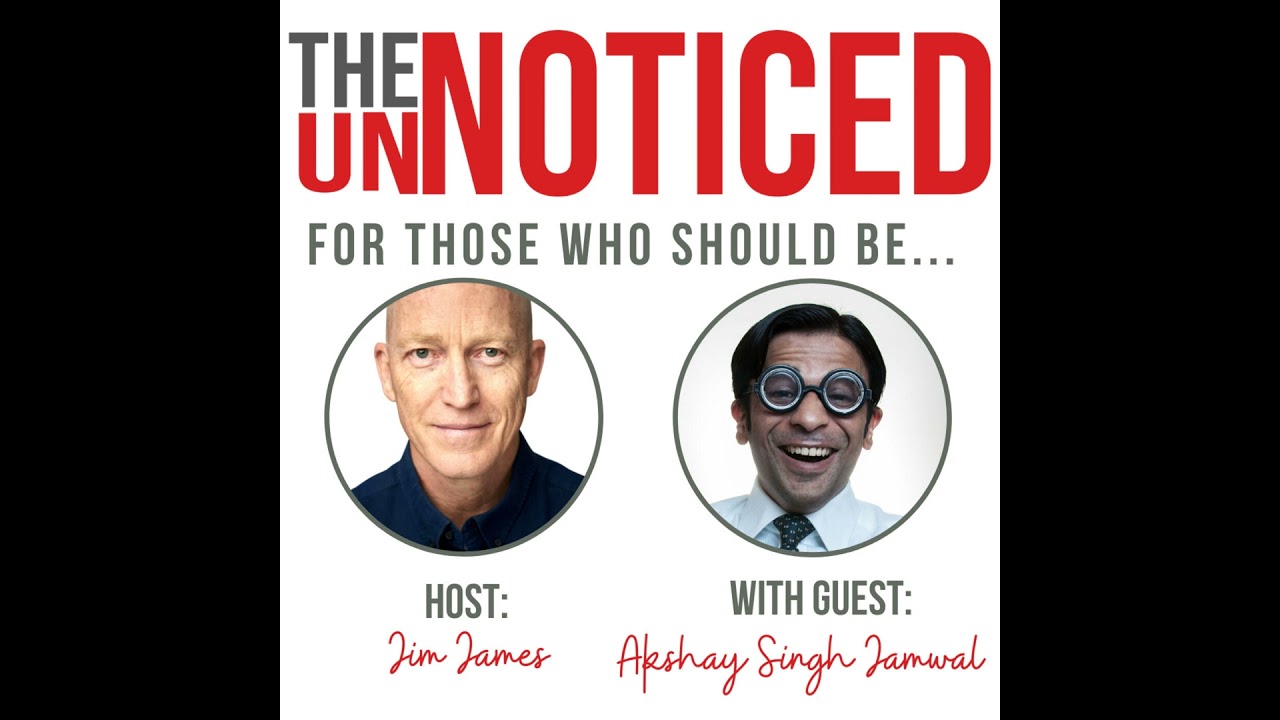
Mumbai photographer Akshay Singh Jamwal started a daily self-portrait project in 2012 after a breakup and kept it going for a decade. Ad agencies noticed his work and started hiring him. He says personal projects attract clients because they show who you actually are, and he's one of India's few dedicated headshot photographers.
Chapters
A lot of creative professionals and entrepreneurs will probably think that their personal work is unimportant or that passion projects are not that important, but they are what differentiate you from everyone else in the market, in my opinion. And that's what clients typically notice instead of the kind of things that we fire away at our clients, the kind of content that we think our clients will want to see.
Welcome to this episode of The Unnoticed Show. And today I've got a really special guest joining me all the way from Mumbai. Who pioneered a series of self-portraits all the way back in 2013 that are still getting him business today. Akshay Singh Jamwal joining me from Mumbai. Hello.
Hi, Jim. Thanks for having me.
You are more than welcome. And I've loved the photography that I've seen on your website at akshayjamwal.com. Share with us, if you can, what you've been doing to get noticed, both as a professional photographer, but also for your clients. Tell us about this self-portrait series that you did that 10 years later is still getting you business.
Well, okay, so it has a bit of a backstory in that I hadn't originally planned on doing these self-portraits as a means of marketing or differentiating myself from other people. But oddly enough, that's what they turned out to be. In 2012, I was in a deep, dark place after coming out of a really long relationship. And there was a business that I had set up with my then partner, which I was stuck with, and my photography business had taken a bit of a beating as a result. So the whole self-portrait project was just a way of me to get my creative juices flowing again and to just exercise creative muscle, so to speak. The idea was to take one self-portrait for every single day and to do something different on each day. Originally, I hadn't thought much of it. It was just something fun to do. But as the days, weeks, and months progressed, it started getting more and more traction in that more people started noticing it. There were a couple of photographs that were used by ad agencies and businesses.
Yeah, well, let's just step back a second there, Akshay, because I've seen the photographs. I've got them in front of me. They're absolutely stunning. Couple of things there. One is that this became a passion project, which is great as a message to everybody out there that just leveraging on your— on what you love and what you do actually can be both cathartic but also be productive. You took these photographs, but did you share them every day? Because you don't just take them, keep them, if you like, in the camera and people start to use them. You must have started to share them. So perhaps you just take us through how you, if you like, exposed, if you pardon the pun, the pictures.
Yeah, so I had just shared them on my Facebook page. And at the time, and even now, my Facebook page doesn't have that many followers. But I think it's a testament to good content or content that gets you noticed. If, even if you have a really small follower base, if you put out content that remains in people's minds after they log off, you are effectively going to remain in their minds. So even today, people ask me what I'm doing, whether I'm doing self— still doing self-portraits. And this is like eight, nine years later. A lot of creative professionals and entrepreneurs will probably think that their personal work is unimportant or that passion projects are are not that important. But they are what differentiate you from everyone else in the market, in my opinion. And that's what clients typically notice instead of the kind of things that we fired away at our clients, the kind of content that we think our clients will want.
So Akshay, looking at the photographs that you've got, which are amazing, they are all very different. Some are humorous, some are serious, some are moody. You talk about sharing the authentic self. How do you encourage people to do that when there are so many different facets to the individual? And are there some that you shouldn't show potential clients?
I don't think that there are too many facets that you shouldn't show to potential clients, to be honest. Unless you're being a jerk. Short of being a jerk, I don't think there is a limitation of any sort. But you touch on a good point. I think people are— if you look at LinkedIn, for example, 90% of people on LinkedIn are lurkers. They don't really do anything. They just scroll past the feed. They won't even— they won't comment. They won't like, but they're there. They could just— I think a lot of people are Really scared about people, other people judging them, and it's a baseless kind of fear. Nobody is out there to judge you. Okay, sure, some people might judge you, but the world at large, I think, will want to see what you have to say as an individual. And as those photos prove, it's the it's that diversity that people were interested in. It's like you said, some were humorous, ostentatious. It's all of the people are interested in. They're not interested in any one thing. They're not interested only in the humor or only in the ostentatious.
What's interesting about your passion project is that coming from a place of some, if you like, a low point, that you use this creativity in a very brave way to share about your personality, because other people might have not done that. So that's to be applauded. But Akshay, what about static pictures versus moving pictures? We all know about the picture superiority effect and also about the video effect. Do you think that pictures can do enough, or do you think people really need to spend their time also creating video?
You probably need to create a mix, and I think what percentage of content should be video, what percentage of it should be photos or text, it comes down to your individual strengths, if you ask me. So if you could ask a photographer, obviously most photographers are going to tell you they You should probably share more photos. If you are looking at— if you're speaking to a videographer, they're going to probably say that video is the best way. And if you're speaking to a writer, they're going to say that text is best. Personally, I found that it's a mix of all of them that gets people to listen. At the end of the day, it's just more than anything else, it's just visibility. If you continually show up, consistently show up on social media, or even if you're just updating your website and you have RSS subscribers, for instance, it will get you noticed.
Okay, that's really interesting. And I see also on your website that you've got, for example, the Pollinator Project about bees, and you've got a travel essay. So are you— both what you do for clients and for yourself— is that really just a considered strategy? Because most people just say, this is my client portfolio. their personal stuff kind of offline?
Oh, I definitely wouldn't keep it offline. Some of that stuff is mostly ignored by certain types of clients. I don't think any of the corporate portrait clients are interested in the Pollinator Project, for instance, but it does get me some attention from— so for example, a while back there was someone who was writing for The Ecologist who wanted to use one of the photos and did eventually use one of the photos from the Pollinator Project. He was a writer and one of those photos is now in a magazine.
So maybe also you're touching on an interesting point there about What you do and don't stand for. In terms of, say, to their team photographs on— how do you do that? Because many companies have maybe the founder and the CEO and all these photographs are on the website. Are you a fan of that, or do you think it should just be one person's photograph? What's your advice from a photographer's point of view and for someone also with a view on social media?
I don't think there's a one-size-fits-all answer to that question. It depends on the company, what kind of site design is involved. Some companies don't even really need photographs, and it's probably strange to hear that from a photographer, but most of my clients would probably benefit from having individual photos of their team members on, say, an About page or something like that. I would say that if you are an entrepreneur especially, or if you are someone who is maybe starting a business, then it's important to have professionally taken photograph of you on your website, and one that is natural and makes you look like your normal self, if that makes sense.
Yeah, okay. And now, interesting you say one size doesn't fit all, but you are in an interesting place. You're in India, so it'd be remiss of me not to venture into what's different. Obviously, you're in the home of Bollywood and all things glamorous in India. Have you got any particular trends or insights about the Indian market and how photography is used that may be different to how it's used in other markets?
India is a bit of a strange kind of country. It's a dichotomy in so many ways. There are certain markets which are really hyper-developed, and then there are markets which don't have any kind of visibility at all and hardly any people in it. So for example, The fashion space and the commercial photography space is, is probably what most people think of as photography. And the only other industry in photography industry in India, which is active is wedding photography, which has boomed in the last 15 years. But everything else is up for grabs. I am one of the very few headshot photographers in India. I know that's a strange thing to say, but if you search for headshot photographer, India, I'll be on the first page of Google, for instance, with hardly any other competitors. Most of the other competitors are also doing 10 other things. They'll typically be like a wedding photographer who also does headshots, or a commercial photographer who also might be— might have headshots in his portfolio just because it might also sell occasionally. But if you were a specialist of any sort, then India is strange. It depends on what your specialty is.
And is that because there are not that many people that understand the value of the headshot yet in India, or commercial? And I know weddings, as you say, have grown. Why do you think it is in India that there are not that many people specializing?
Absolutely. When I first started doing headshots in India, people would ask me, what is that? Is that a passport photo? And this is not all that far back. This is just like 2012, 2013, around the same time that I started doing my self-portrait project is when I also started advertising myself as a headshot photographer. And back then people didn't know, didn't even know what headshots were. Now I get people saying that I need a headshot for LinkedIn. So part of it, I think it's just because the world, the internet has made the world a village. So people know what, people will probably look at their colleagues in say maybe the USA or the UK, and then realize that there is value to having a professional headshot on say their LinkedIn profile.
So it's becoming globally competitive, isn't it? And I suppose a lot of companies that have outsourced and offshored into India will have executives there. I know some of my clients like Tech Data have got offices in, in India, and they want to have parity across all the personnel in terms of their online presence. Are there any aspects of photographing Indian clients that you found particularly different or unique to photography outside of India?
The only thing that I can think of is that Indians tend to be just a little more conscious of themselves. So I have— my work is usually a little more cut out for me when it is someone who's in India who's maybe doing it, because a lot of Indians are getting their headshots done professionally for the first time when they call me. That's a little different from people, from Indians who have either worked abroad, stay abroad, or are going abroad and are returning or returning from the UK or whatever. A lot of Indians who call me are first-timers saying that, okay, I've never done this before, you're going to have to really work, which is what I love to hear that because it's a wonderful process. I love seeing a person transform from a nervous wreck into something that's conducive to a LinkedIn profile photograph.
So really, you've been a pioneer, Akshay, in India on several fronts, right? One, your personal portrait series and now helping more and more Indians become, if you like, profile shot ready for the international market. That's fantastic.
Well, okay, I'll take that.
And absolutely, absolutely you should do. And if there's a trend now in India, do you see anything happening in the next 4 to 5 years that you think will change the course of Indian photography?
So I think people will definitely be using more photography and video as part of their marketing message. People are realizing, companies are realizing the power of photographs and video. And a lot of it is, a lot of the content that companies are putting out is like a shot in the dark at this point. One of the things to remember about India is that it is a very price-conscious market. So it's a little different from other markets, like even Singapore, for example, quality is more important than price. In India, price kind of rules all.
Right.
And so with that in mind, a lot of companies will probably make the mistake. And I've had some of my clients make this mistake as well, of thinking that they have a really— of having a really tight budget for photography or videography, and then creating content that actually devalues them. And they're calling me 3 or 4 months later when they realize that it's not doing anything for them. And this might just be, this might be a photograph or even a video or some of some sort. So that is slowly changing in India. People, companies are realizing the value of photography and video as a marketing vehicle. So far it's been mostly unprofessional for— I shouldn't say unprofessional— photographs that haven't been taken by a professional or videos that haven't been done professionally. Let's say that, like I said, that devalues your brand. Right.
Okay, Akshay, sounds like you're the man to go to if people want to professionalize their image or even have a series of self-portraits over 365 days. How do people find you if they want to talk to you and have photography done by you in India?
People can find me on my website, akshayjamwal.com, or they can email me at akshay@akshayjamwal.com.
And I'll also put that in the show notes for anyone that didn't catch that. Akshay, thank you so much for joining. We've had a lot of fun today.
Thank you, Jim. It was It's fun for me too.
So you've been listening to Akshal Singh Jamwal, who is based in Mumbai, one of India's leading portrait photographers. He really pioneered the portraits, but also led with a 2013 passion project where he photographed himself for 365 days. And that led to him getting more and more work and really becoming a man of great reputation in the Indian market. So thank you to him for joining. And thank you to you for joining me on The Unnoticed Show. Thank you. And until we meet again, I wish you the best of health, a profitable business, and that if you're going to get a photograph done, spend the money and have a professional to help you because it will be your brand. Thank you for listening.
More from Jim











2 people, infinite agents, 1 billion dollar idea #AIAgents #Startup #Productivity