Personal branding is for everyone, and according to this professional photographer it's all in th...
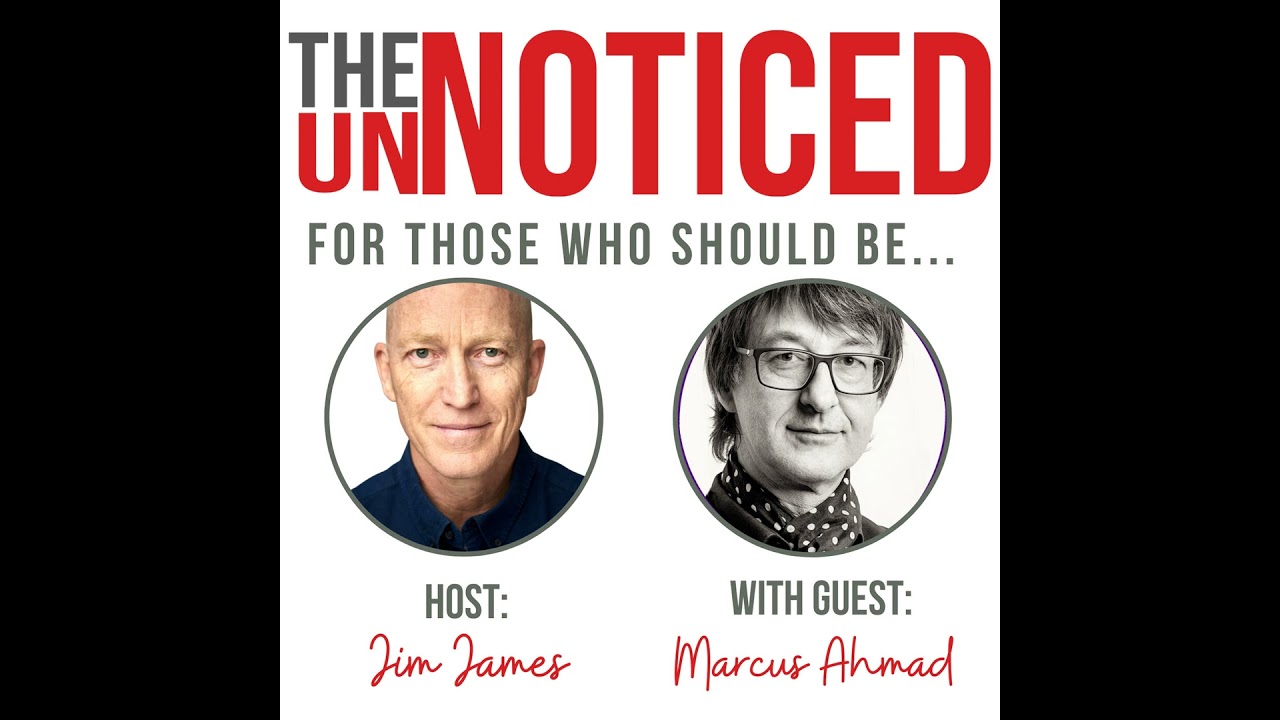
Professional photographer Marcus Ahmad breaks down personal branding into three essential photos: a headshot, a hero image showing you in action, and a services shot. He walks through DIY tips using your phone, from natural lighting and tripod setup to minimal editing, and stresses that authenticity matters more than perfection.
Chapters
Marcus Ahmed, welcome to the Speak PR Podcast. As you know, this is a show for business owners, entrepreneurs, anyone running an organization that wants to get noticed but doesn't have a big budget, but does have a big story to tell. Tell us a little bit about your story and what you think people need to do to get their personal branding right.
Well, Jim, first of all, thank you so much for having me on the show. Um, I feel really privileged to share my story with you. Um, yeah, personal branding, uh, is, is photography, it's a relatively new thing. Um, my background in photography was, as I started off as a, well, as an assistant first of all, as an advertising assistant, uh, and then I got into commercial photography, in particular fashion photography. Um, I was lucky enough to be able to be working, uh, in my studio was in London, and I was working in America, in New York, LA, Paris, all that kind of thing, flying around having a great old time. Um, and then that evolved later on into, um, becoming a senior lecturer at, uh, University of South Wales here in, uh, here down in the south of England, or in Wales I should say, um, lecturing in fashion and advertising photography. Uh, so that Now with personal branding photography, I'm bringing those 2 elements together— fashion, you know, all about making people look good, and advertising photography, which is all about selling a product, you know, with one image sometimes— and focusing that with— on my business clients.
And is it possible then to sort of make yourself look good, or do you have to be a person who already is kind of beautiful or handsome Or can anybody have a good personal brand?
Yeah, that's a great question, Jim. And, um, I obviously met you initially when I photographed you, and you're an easy person to photograph because you are very good looking.
Right, the show's over. Thanks, everybody.
The real buzzword going around now, and I think it's got a lot of value to it, is authentic. It's all about being authentic, and that means being real, being— showing people who you are. You know, there's a saying now that people buy from people. And when I look at websites of businesses, in particular the field that I work in, which is tech, the tech industry, I see a lot of very anonymous-looking websites with no personality to them. And so what I focus on in my— when I work with my clients is bringing— using their personality to attract more customers.
And, you know, you did a great, a great shoot with me and also with Nick Hemm. And I've really loved the shots. I've got a lot of compliments on them as well. You talk about authentic. I think that's absolutely right, Marcus. How does someone, if you like, get the link between their authentic self and their company brand? Because they're not always the same thing. Or do you believe they are the same?
I think they are the same, Jim. You know, you really want the values of your company to match your personality, and you could argue that if your values don't match the person— if your personality doesn't match the values of that company, maybe that company is the right person for you. But it's about just getting across who you are and what you do in a photograph, I think.
So Marcus, for those of us that are out there listening, is there like a blueprint that they can follow to get a great shot, let's say without a professional photographer, not least of which because of COVID people can't even get to somebody? There must be some simple tools and tips that you can recommend.
You can get a great shot on these, on your, on your camera phone. You just gotta first of all go for somewhere where it hasn't got a distracting background. You know, you don't want to be in a, you know, on a beach or in a town centre. A plain wall works brilliantly, you know, and even if you can find it, a wall that has got the same brand colours as you have, you know, it doesn't need to be white. If you find a blue wall, that's gonna be perfect. And then try and get your head to fill about 3 quarters of the Frame size, as it were. So, you know, it's not too far, not too close up, not too far back. And then a few different expressions— smiling, being serious— just try different things out. And really, it's a matter of quantity and just getting the right one. The human face is incredible, the way the emotions can change in an instant. And well, we all know that, of course. So Shooting a lot of, a lot of shots, which is really going to help. So let's just go over that again. Background plain, fairly close in, shoot lots of shots.
And then should someone do a handheld or should they use a tripod, for example? Um, because lots of pictures are sort of at an arm's length and that's kind of an awkward distance as well.
A tripod or some kind of mechanism to hold the camera would be ideal. For sure, yeah, it would be for sure. But another thing we can add to that list, and obviously it's going to go longer. I'm trying to keep down to three. But another thing you can add is light. Light is really important for any photograph. The kind of light that works really well on portraits, believe it or not, is not a sunny day. Nice diffused light is the best. Window light inside, outside when it's a cloudy day works best. Here, here in Bristol today, it's really what we call flat, the light outside. So it's not many shadows, um, or highlights, white bits. That is really good for photography as well. So yeah, a tripod would be ideal, but lighting is going to be your friend there.
And should you look into the light or away from the light or kind of have it to one side? Because that, you know, if you look into the light, you get less wrinkles, but then you have to squint maybe a little bit. If you look away, then the camera seems to struggle with the depth on the face. What about that?
Great question. And obviously, being a fashion photographer, I deal with light all the time, and it's really, really important. And there's a, you know, it's a long answer to that. So to keep it succinct, you know, I, I, a little— if it's coming 3 quarters to you, so you've got a bit of a shadow down one side and it's a bit brighter, that will give what we call good modeling, which is like shadows or highlights. So yeah, that would be ideal. But if you go for a diffused day when the light— when we've got a light cloud, you don't really need to worry too much about it. The light is good coming from all directions. In fact, in the old-fashioned days of painting, Renaissance, etc., all the paintings you'd see would be done what we call north light, which is the light from at the back of the house. So there's no direct light. The north light is good.
And then what about, um, you talk about direction, what about sort of leaning forward, leaning backwards, head to the side, head up? I mean, I see on LinkedIn some, especially Americans, kind of do this sort of lean-in earnest look, and some people lean back with their arms crossed. Any guidance on, on those kind of postures?
It depends what you're looking for is the answer to that. And but I have my style, funnily enough, is people leaning into the camera because I found what that does, it gives you an immediacy and a presence to your portraits, your headshots, or your profiles. You know, when we see them, especially on LinkedIn, you know, they're really, really tiny, that little circle is really tiny. So you have to really maximize that space, and it's all about the eye contact. So what I do with my sub— with my people that I work with and photograph is get them to lean into the camera, and it really makes— exaggerates the eyes. And so you get that eye contact, you maximize the eye contact. So yeah, you know, that's a very subtle thing that I do, and I like that style. You know, it's the opposite really of leaning back, and then when you're leaning back, you're sort of showing that you're a little bit scared of the camera. It's Getting right in there, really.
What about what people could wear? Does that make a difference? Because I guess you want— if you're giving a relaxed attitude, wearing a suit kind of doesn't match. Any insights on that as well, Marcus?
Yeah, Jim, you hit the nail exactly on the head there. You know, the clothing is very important, but it depends what you're doing. It's got to match, isn't it, really? You know, um, lady— for women, I, I would say avoid a scoop neck, especially I've talked about going in close, and if you want to crop it later, especially like the circle, sometimes you've got a scoop neck on, it can be a little bit too revealing, or not just— I think just give you— doesn't give you a border, an edge to the photograph. And with guys, you know, um, I, I do notice when I take a lot— I do, I do do a lot of business portraits is that if somebody doesn't wear a suit normally and they put it on for the photograph, it never looks right. There's something about the clothes we wear is what we feel comfortable in, you know. And you mentioned a shoot I did earlier with Nick Helms, who's a branding stylist, and he looks fantastic in a suit and he's used to wearing a suit. So when he put his suit on, he looked brilliant in it. But, you know, somebody like me, for example, who doesn't wear a suit a lot, you know, you can always tell they never look really comfortable. So don't try and be something you're not with what you're wearing. Color-wise, yeah, I would always try and— what I prefer is neutral colors: black, gray, navy blue for guys, and not white. And then for women, you know, not too much pattern. And again, maybe pick out a colour in an earring, or eye colour is very nice, a monotonal look.
And so really, as I say, you're getting a focus, are you, in your case, on the eyes? Do you think that's the central element, then all the other items would be a distraction, is what perhaps reading between the lines?
Yeah, that's exactly what I think. You know, it's a bit of a cliché that the eyes are the window to the soul, but it is. It's all about your eyes. And in fact, when I, I have— you can see behind me in my studio— oh, you can't see behind me. In my studio, I have a, a backdrop which I actually— if somebody comes in, they've got blue eyes, I'll put a blue backdrop onto it. So it gives you this very monotonal look where it, the, it really— the background really accents if you've got blue eyes. So I've got a green background if you've got green eyes, etc. And that's a look that I really like. It works really well. It's a bit of I used to do in fashion and hair and beauty.
And then in terms of— that's the shot itself. Any preference for morning or afternoon? I mean, some of us have puffy eyes in the morning, some look a bit sleepy in the afternoon, men need a shave sometimes later in the afternoon. Is there an optimal time of day, Marcus, to shoot?
I think it depends on the person, Jim. I think, you know, if you're a night person, you're going to look awful in the morning, aren't you? If you're a morning person, you're not going to Look at— no, you know, really, if you can be using natural light and you're talking about taking a photograph of yourself, I would base it around there. You know, there's a certain— midday is not a good time when the sun is overhead for using natural light portraits. When I'm shooting, I use flash, flash all the time, so I can shoot any time of the day and always looks the same. But, you know, maybe, you know, it's not We talked a lot about the profile photograph and the headshot. It's— there's a little bit more to it than that. There are, in, in my strategy, there's 3 photographs that are really— will define your brand. The headshot, as we've discussed, being a great way to start. The, the other 2 photographs that I really try and encourage my clients to use, um, are for their websites, are the, the first image you come to on the website, the is a real crucial part of real estate as far as photography goes. And in that image, you really want to get across a really nice portrait of you doing, like, maybe like a 3/4 length or half length, but with hands in there as well, making some gesture, or maybe a little prop that suggests what kind of business you're in. If you're into, like, um, you know, computers, you might hold a computer or whatever. That's a Great analogy, but that picture that is on your first page of website should really show you doing something, you know, engaging with the audience. And a little suggestion there. And the third picture that is crucial to your website or your promotion is the, um, your services photograph, and that should show somebody using your product or service. Now obviously if you've got a product it's quite easy, somebody enjoying using your product, that's quite easy to photograph. If you've got a service it's a bit more challenging, so it might be a photograph of you having a one-to-one with somebody if you're again like a finance, or if you're a chiropractor, you working on somebody. So there's 3 photographs there, we've got the profile shot, the photograph for your banner which is you and your What you do with your, you in your company. And the third shot is the services that you offer and you've shown you do those. Those 3 photographs I think are crucial to define your personal brand.
Okay, that's wonderful. What about, should you be wearing the same clothes, for example, in each of them, or should there be a link, for example, with the colorway of each of those 3 photographs, or does that not matter?
No, what you wear in the 3 photographs doesn't need to be the same. In fact, in some ways there might be more value in wearing different outfits because then it shows they've been done on different days and you've gone to the trouble and expense of getting a photo, you know, a photographer in or whatever on different times. So you've— so, but, um, what color does come in key is where color is key is your branding colors. So if, you know, if a color— I'm just doing some work with a client, a hairdresser, and she's really keen on orange and gray. So we're really getting those colors incorporated between all the different photo shoots we're doing. So that's really key. You know, that color is a really quick metaphor of getting across your brand.
You mentioned sort of Photoshop there just briefly. What about after the shoot? Can you recommend any tools for people to you know, modify the pictures, or do you think if it's a good picture they should leave well alone and just put it up as the camera took it?
I do. I really believe in, you know, getting it right in the camera and then putting it out there, you know. It's again going back to what we're saying about being authentic, you know. And I'm not saying warts and all, it's got to be, you know, but it's about getting— it's about the truthfulness for me. And, you know, that's an honesty. And that's about being authentic, yes.
Okay, so, so no sort of touch-ups, no, uh, trying to remove, uh, blemishes, just as you say, be authentic in the picture?
Yeah, a little bit maybe, a little bit maybe, but you can do it with lighting, camera angle, you know, just— but not that— people are very, very, uh, aware of Photoshop these days. And that, you know, it's got a very bad name to it, obvious reasons, you know. And I really would— I mean, in my career as a photographer, I did— I mean, I was a hair and beauty photographer. I've never— I, I've always used Photoshop, but I've always used it to enhance what's already there, or to maybe— I've never used it to make people look skinnier or anything like that. I really think that's not a good thing to do.
Speaking of skinnier, you know, I've got a beagle, um, and you've got a lovely whippet. who's thinner than my beagle. What about photographs with animals and children, spouses? Is that something people should think about on their websites or on their social media, or do you think that's a no-no?
Oh no, do you know what, I've just been reading a quote by Donald Miller, who's a really famous marketing guru from America and somebody I really admire his work. And he was talking about building up your personality and the way that you can use different photographs for your website of you, and that of you maybe formal ones doing with a client, like with ones we've already discussed, but also photographs of you with your family or with your dog, with your beagle, just because that what that does, it builds up trust within people because they feel they get to know you. And before you even made that sales call or before you made that connection, people feel they know you, and I think that is the great power of photography. You can do that. I mean, as you know, Jim, I was a university lecturer, so I can get a little bit academic sometimes, I know, but I might just leave you or give you this idea about the power of a photograph and why a photograph is so much more powerful, in my opinion, than a video or moving image. And that is because a photograph, you can— will tell you information in a second, even less than half a second. You can make a judgment and you can get something from that photograph. But on top of that as well, a photograph is open to bringing your own personalities to it, your own readings to it, and your own stories. So you can interpret in lots of different ways. So that means a photograph is very quite a powerful document. Where arguably I might think of a video as being a bit more descriptive. It tells the story, it's already there, you don't need to bring anything to it. It's got a beginning and an end and you're immersed in it still, but with a photograph you can— there's more resonance, I would argue.
And Marcus, if people want to argue with you, how would they find you?
Please, if you want to come and argue with me, you can find me at www.marcusarmad.com. That's MarcusAhmad.com. And you can also find me a lot hanging out on LinkedIn as well, which is the same name. There's no deal. There's no other Marcus Ahmad on LinkedIn that I'm aware of.
Marcus, and nor should there be. You're unique. Thank you for joining me and everybody on Speak PR.
So thank you, Jim.
For those of you that have been listening, I'm sure you've enjoyed hearing Marcus's insights into personal brand photography. And if you like this, then do please subscribe, share it, And until we meet again, I wish you the best of health, a profitable business, that if you're getting photography done, do look at getting a professional. It can really make a difference. But in the meantime, use some of the tools and tips that Marcus had suggested, 'cause those will make even the best start for you. Thank you so much for listening.
More from Jim











2 people, infinite agents, 1 billion dollar idea #AIAgents #Startup #Productivity