Sebastian Rusk
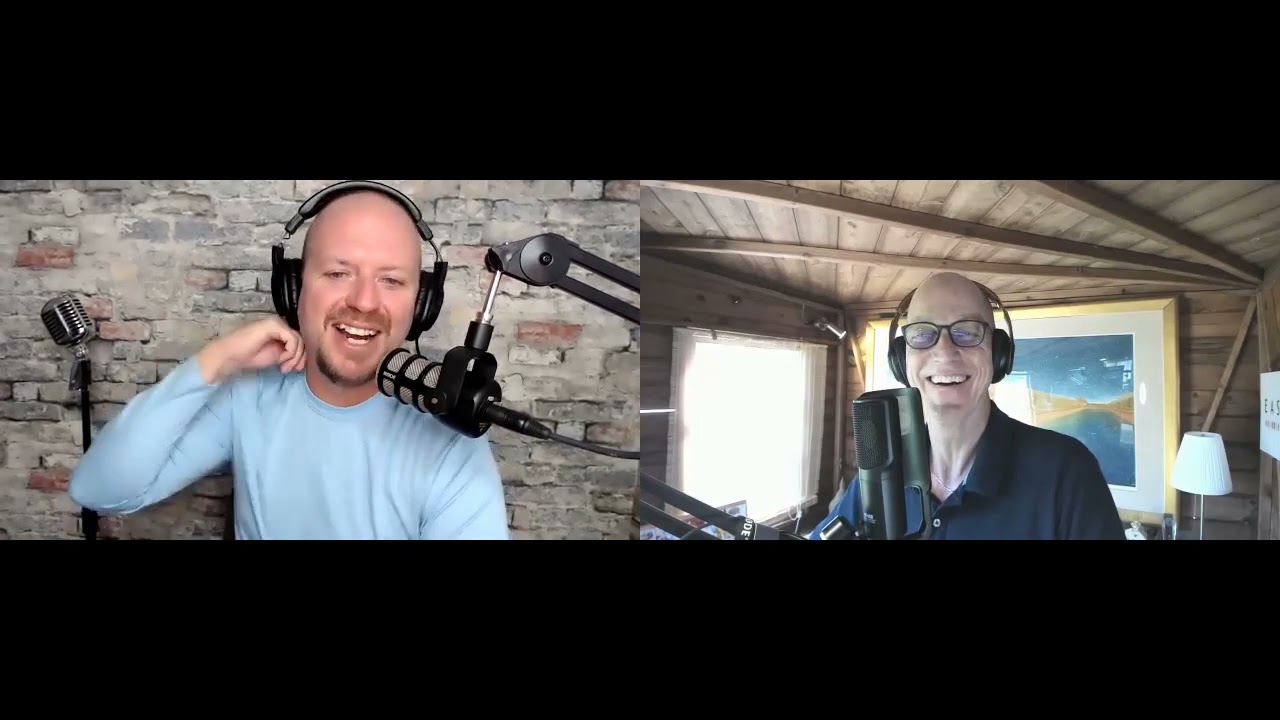
Sebastian Rusk explains how to launch and sustain a podcast by starting with a clear personal why, using interviews to reduce your workload, and monetizing early by positioning yourself as a connector. He shares how to land high-profile guests through persistence and how to repurpose clips strategically on YouTube rather than just uploading full episodes.
Chapters
Hello and welcome to this episode of The Unnoticed Show. Today I've got Sebastian Rusk joining me all the way from sunny Florida. Sebastian, hi, welcome.
What's happening, Jim? Thanks for having me, buddy.
Well, anywhere that has got a football team owned by a former British player should be on the show, but you're on the show not only because proximity to David Beckham, but also because you're a podcast specialist and have been for a long time. So tell us, Sebastian, 5,000 new podcasts have been registered with Buzzsprout in the last month. You're an expert. How do people start a podcast and more importantly, keep one going?
It comes down, number one, to why you're starting a podcast. Once you get clear with your why, as with a lot of things in life, business decisions, life decisions, what's the why behind actually doing something? I think when you find a true authentic space of your why, which is, I've got a story to tell, I've got value to bring to the world. I know that if I'm able to communicate X, Y, and Z or A, B, and C, it's going to inevitably impact the listener for the better. It's going to allow me to do fill in the blank. Getting clear on why you want to start a podcast is first and foremost. I think the next thing in line is making sure that you're in line with your own level of commitment. Are you willing to do the work that needs to be done in order to launch the show, Continue to produce the show and continue to grow the show. All 3 components have to work simultaneously or you're inevitably going to be headed to the podcast graveyard. So 5,600 new podcasts registered on Buzzsprout. Excellent. Talk to me about the end of the— talk to me at the end of the month or talk to me at the end of next month because statistics will still tell us that the average show doesn't make it past, say, 7 to 9 episodes. So last year, by the end of the year, we had roughly I don't know, a million podcasts in Apple iTunes or Apple Podcasts, whatever they're calling it this week. And by the end of the year, there was around 850,000. So there was a 150,000-show drop-off that went into pod fade, if you will, just based on shows that did not continue. I see it all the time. I'm in the business of helping people get to the finish line to start a podcast. Our biggest challenge for the past 5 years has been figuring out how to get somebody to continue and stay committed to what they originally did. So we're very careful when we're identifying shows we want to potentially launch, making sure that they understand not only the micro work that's involved, but the macro.
Well, and you've got a background as an MC, and also you shared that your, your father was a DJ as well on radio for 30 years. So you've got a background in, in audio and entertainment. How important do you think it is that people that want to start a podcast not only have a why, but have a personality that's suited for podcasting? Is there a type of person that should be doing it and a type of person who should stick to writing or other forms of marketing, do you think?
I think if you made a decision that this is something that you want to give a shot to, that you should definitely do it. You shouldn't let anybody stand in the way of being able to do that. I think it's important to understand that I did grow up in a radio station, but that's because my dad would drag me there on weekends, cut tracks for the ads that he would go sell to local businesses. And when it was relevant to a kid cut the track, I would do it in exchange for a Happy Meal at McDonald's. I was never excited about it, and I never had any desire to follow in his footsteps by any stretch of the imagination at all. However, like a buddy told me on the golf course a few months back as I shared this story with him, man, Sebastian, our genes sure are powerful, aren't they? So sometimes what we don't even see as part of our upbringing or what we're exposed to Ends up being a component to where we ended up. I wanted to find my place in the digital world of social media. 5 years in, I decided to pivot while staying in the digital marketing, digital space, and do it with podcasting. Just so happened I grew up in a radio station, but I knew, like I did when I started my first company in 2010, that I knew more about social media than the average bear.
Right.
And it, that in my book, I had no idea how I was going to make money when I first started in 2010. But the first advantage that I had was knowing more than the average person knows about Facebook or that Twitter thing or what's going on YouTube. And I was able to successfully turn that into a business based on bridging the gap in between, I don't know, to, I know a guy that does know and he's taught me and now I do know.
Now with your business, which is Podcast Launch Lab, you help people to get their own podcast up and running. But most of us, podcasting is not a full-time gig, right? It's something that we do as a complement to the rest of our lives, right? How do you help people to embed podcasting as one part of an overall promotion or organizational strategy as opposed to going all in? Because that's the temptation, is it, is to throw yourself 100% to podcasting, find you're not getting the listenership, you're not getting the revenue, you lose heart, right, quite quickly maybe. How do you help people to kind of scale over time, Sebastian, their ambitions for their podcast and the role it can play in their overall life?
I really just encourage them to focus on what's possible on the other side of actually getting the show launched and sticking with it. I always say, if you start a podcast today, this time next year, you're gonna be so glad that you did. But if you look at it as number one, you're becoming a media company as a brand, starting a podcast, starting a YouTube channel, you are creating content on a platform that you control. If I called you 20 years ago and said, listen, I've got a spot on a local radio station where you can come in and talk for an hour about your business on Tuesday mornings. Do you want it? You wouldn't think about it. You wouldn't sleep about it. You wouldn't talk to a friend about it. You wouldn't procrastinate. You'd say, heck yes. And you jump off the cliff and you figure out a parachute on the way down. Well, nothing has changed in 20 years except the fact that it's easier to produce audio content. You don't have to go anywhere. You don't need anybody's permission. You make up the rules. You're creating the content and you can talk about anything you want. Is it about your business? Does it complement your business? Whatever the case is, you can figure out a way to justify having this additional platform that's not just content. 'Cause we think podcast, well, what happens with the replay of the podcast and the video replay of the podcast? And how are we able to chop that up and dissect that into micro content to not only create more content for our community, but also promote and advertise the episodes and the show? So I just think there's never been an easier time to start a podcast. There's never been an easier time to, to become a media company. And that sounds crazy to have an insurance office have a podcast studio in it where it has created a platform where it interviews people that are doing really cool things and it ends up converting to business, not necessarily from that guest, but based on the content that's being created and the people that are actually consuming it. And to think that you can actually monetize that platform, the podcast, your content efforts can pay for themselves and then some. It's just another thought to sit with and go, wait a second, what else is possible with this whole podcasting digital landscape that we're currently experiencing. And it's only 2021. And we're only just getting started with technology that's, you know, less than 20 years old.
Yeah, really exciting. And it reminds me in the past, we used to create in-house newsletters, you know, for clients, and we used to self-publish newsletters and sell ads to suppliers and take those out. And podcasting is kind of the digital equivalent in a way. Now you talk about a couple of things there. One is about getting the content and getting the audience and monetizing. Do you want to just share maybe some basic elements of good content? Content, because it also seems a bit like having a blank piece of paper. One of the challenges is, you know, what do you start to say? How do you plan content out, Sebastian? Because for many people, past the first 2 or 3 episodes, there can be a bit of a vacuum.
Well, that's why you don't want to go at it alone. You, you sitting there trying to kill dead air by yourself because you think you're an expert is, is a bad strategy out of the gates. You can sprinkle in micro episodes of 5 or 10 or 7 minutes long of something you're very And feel important that fits within the context of the content you're creating. But a majority of your episodes should be interview-based, and you should be connecting with people that are smarter than you, cooler than you, have done more things than you, are more successful than you, where you can actually serve those people by putting them at the, you know, putting the spotlight on them. And then you're benefiting because you're the one hosting the conversation and creating the content. I never ever go What am I going to talk about on this podcast episode? Why? Because I'm going to be talking about whatever the guest does and how cool they are and how they got to where they're currently at. There is no lack of information on a complete stranger that I don't know, or somebody that I do know that I want to know more about. You know what I mean? Now, if I have to sit here and twiddle my thumbs on what I talk about next, I mean, if you ask me about my YouTube channel, I mean, that's a less than pleasurable experience. The reward is worth it to be able to sit down and be able to create content and know that YouTube is compensating you every time you put a new piece of content on your website. Eventually, you have to get there. I worked on it for 16 months. I finally got into the creator program. I built the channel. And now, every piece of content that I do put up is being monetized. So then now, I can really, in addition to people calling and saying, hey, I've watched your video and I need help starting a podcast. So, both of those components are information or enough information for me To say this is well worth my time to invest, even though I hate it. I don't hate it, but that's a strong word. But it's again, less than pleasurable to go in. What's not less than pleasurable? Getting a check from YouTube and having a phone call from some— a complete stranger that said, I just binge-watched most of your channel, still confused about starting a podcast, and I want to hire you. So that makes it all worth it.
Yeah. So I guess that idea of interviewing people more interesting than— well, I find that very interesting and very easy because everyone's Had a more interesting life than me, right? So I'm always finding people who are experts now. But how, Sebastian, does one entice an A-lister, if you like, onto a startup show? Is that important or can it just be anybody? Because if you've got a show with almost no audience, how do you get someone on the show with you that other people want to listen to?
I think there's a little bit of luck and persistence involved with that process. But it's just a matter of when I— if I'm connected with somebody of notoriety and I've met them or connected with them at an event or whatever it might be, I've I've got a little bit of rapport built with them, and I've usually got a point of contact in order to get the conversation initiated to be able to get the person on. Now, it is a significant— it does take a significant amount of time. Every time I've sat down with Gary Vee, it's taken a little bit to be able to get him on the calendar and get him situated. And thankfully, I've done it several times before. It's been through different interactions. The first time was one of his books came out. He did a book signing locally. That's the first time we met back in 2011. I had a chance to sit down with him for like an hour, which I thought was going to be a short little hallway interview. The second time, I was at events. I'm in the green room. He's the keynote speaker. I'm the emcee for the event. And then one of the last times was a couple years back, he hosted his own event here in Miami. And I had the opportunity to spend the whole day with him and his team. So that relationship grew, but it was a lot of tweets, a lot of emails, a lot of connecting with his assistants, people that was on his team being able to— and back 2011, it wasn't really the Gary Vee days. Same thing, Marie Forleo, another total just rockstar in the marketing space. She was 3 hotel rooms down from me at an event that I was the emcee for and she was attending. And we were— she was leaving that morning. I was on my way to a production meeting and we met in the elevator and she's like, doing a great job up there. And I'm like, can we finally get you on the podcast? And then 2 months later, finally got her on. We had to reschedule it again because she had a— she was ill. So I— those are just some examples of some note— you know, notable individuals within the digital space that aren't easily accessible, but you've gotta, you've gotta work the angle as you get it. I don't know that continually asking and emailing is the way to go because you gotta understand, These people get requests upon requests. And when you're reaching out to an A-lister, B-lister, whatever it might be, someone of notoriety, you need to figure out what's in it for them to take the time to be on your show. Forget about what's in it for you. We already know that. And if you think they're gonna go share the episode and the content and you're gonna be insta-famous, it's just not gonna happen. You gotta remember, it's going to be a very one-sided situation and there's gonna be a lot of asking and a lot of falling on deaf ears before something actually happens. But I believe a, a mix of luck and persistence. Jim, is what gets you people of notoriety on your show. And then also being in places like Clubhouse, being on Twitter, finding other ankles— angles, ankles, angles, connecting, connecting with— yeah, yeah, connect. Yeah, connecting. Yeah, Kenny, exactly. Connecting. Yeah, Kenny, exactly. Connecting with people on LinkedIn, connecting with first, second, third generations. Who knows these individuals? Who do you know that knows these individuals? Who do they know, et cetera? So, Do this, except do this. It's just not— it's a great mix of luck and persistence.
Well, and charm as well. And I guess ultimately, like, like any sport or any activity, there's a filter, isn't it? If you don't have those qualities of persistence and charm and a bit of luck, then your show will fall by the wayside, right? And that is what the audience are listening for— those hosts that really want it to work and are willing to hustle hard enough to get those people on the show. Now, you did mention as well, Sebastian, that you're able to monetize your show. That's a long way away from most people's expectation. How do you get to that stage? What would you say is a minimum viable audience that a show host might need in order to start getting more than perhaps a cup of coffee?
Well, I don't depend on my audience to monetize my show. So if you start right out of the gate, you can monetize your show right out of the gates because I don't care who's tuning in and who's listening. Of course, it's great to have people download your show and to continue to grow the community. That is a goal of the show. The goal of being able to monetize the podcast is being able to have interesting conversations with interesting people that are doing really cool stuff, that are creating content but do not have a podcast. Because guess what? Before or after the interview, I'm gonna say, hey Jim, when are you starting a podcast? And if you've even had it remotely close to the chalkboard or on your list of to-dos, I'm your guy.
Right. Okay. So are you then interviewing people that are potential customers, right? That's part of the strategy, right? Okay. That's a great idea. And I was talking to a guy called, uh, Stefan Thiempoint over here, also talking about if you're hosting a podcast, interview your potential customers and ask them questions. And it's the chat on and off.
That's a great strategy. I wrote a whole chapter about that in my book, about being able to identify your ideal client. And a lot of the shows that we launch are sales reps, insurance reps, people that have a book of business that they're continuing to grow, and they want to be able to be not only recognized within their existing community, but they want to connect with You people, if you're trying to sell employee benefits to a company, you're trying to get a hold of CEO and you're cold calling this person every day, the gatekeeper has not lost their ability to do their job. In fact, the gatekeeper, I believe they firmly take a tremendous amount of pride in making sure that you never reach that CEO. However, if your approach is, hi, Mr. Gatekeeper, hi, Mrs. Gatekeeper, whatever the case is, I'd like to interview Mr. or Mrs. CEO. That's a whole different conversation because now we're talking about an ego, we're talking about edification, we're talking about publicity, we're talking about additional exposure. And if you're smart about that and understand the ability to be able to embrace social selling through content, that's a winner chicken dinner all day long.
I love that winner chicken dinner. I haven't heard of that expression before, Sebastian. That's wonderful. But I think that's a, that's an Unspoken about aspect of podcasting is that actually podcasting can actually be a really good business development tool that, you know, we may not become Gary Vee or John Lee Dumas and have, you know, $20,000, $30,000 worth of sponsorship from a software company per podcast episode, but you can sell your services by building your personal reputation and relationship, right?
You can also productively prospect. So you're going after those CEOs you want to sell stuff to. Well, you're going after them to get them on your show and help them, interview them about their biggest struggles that they have pertaining to your solution, answer questions in real time, provide value to them, have them go, well, this was different. He talked about me, made me sound awesome, and he helped me and solve some issues. When you're done with that, it's like, listen, Jim, I'd love to have a conversation about what we— that was a great dialogue we got into there. I'd love to expand that conversation. We've got a few solutions that I think may be a fit for exactly what you've got going. And if you're open to a conversation— Oh, absolutely. Let me patch you right back back through to what's it called so we can get it scheduled.
Yeah, so you're putting that person at the center of the conversation rather than if you ring up about sales, you're putting your own company at the center of the conversation, aren't you really, Sebastian?
Correct.
So you talked as well about, uh, YouTube. Are you in favor of having a sort of a podcast as audio and then having that on YouTube as a straight audiogram, or should you do 2 different ones? What's your view on that? Because it can be double the work because they're quite different mediums, aren't Hey, you nailed it right there.
No, I don't suggest it at all. And I know that I'm the— it's the less than favorable opinion, and that's okay. There is enough work with starting and continuing a podcast that when you throw a video component in, you are doubling the amount of work you have. If you think for a minute that you're gonna take your archived video of your podcast on Zoom and just post and pray on YouTube, you're being grossly negligent to the reality of how YouTube actually works. YouTube works People come to YouTube for 2 reasons, to be entertained, to get questions answered. You can nail both of those, well, you're really doing a great job, but it's usually one or the other. Are you a resource channel? Do you answer questions or do you entertain people? Those are the 2 components that you look at. So if you just post a podcast episode onto YouTube with no strategy behind it, strategy meaning, okay, first of all, it's a 45-minute interview. I mean, YouTube's long form, but 45 minutes is an eternity. Most YouTube videos are between, I would say, 5 and 20 minutes max. I mean, I've had a few videos that are like 18 minutes, people are like, whoa, it was a little long there. So it is long form, but not that long. I would think that it— I will say, if you have a video team and a video editor and all the resources ready to rock and roll, by all means, go nuts. Get that video team, uh, making sure that all hands are on deck capturing the video component of your podcast. Have them go to work, figure out a strategic title that's SEO-friendly that people actually search for on YouTube. There's other content around it. Have them create A thumbnail that pertains to the topic, making sure every component, all the checklist of YouTube production is being done with that actual video component of the podcast. So if you're not going in there, not throwing an intro of some sort on there, introducing the topic, having something that people actually search for, it's just a post and pray strategy that doesn't work. Nobody's got Justin Bieber's luck. Okay? And Justin probably didn't even know he had that luck either. That video just got uploaded one day of him playing the guitar and the rest is history. But I just don't think that's— And a lot of people look at Joe Rogan and, you know, any, any people of notoriety or celebrities that start a podcast. Of course they have a video component. They probably have a studio and they've got an entire team to produce everything. Their job is to show up and be the talent of it. That's not the average person. Focus on getting really good at creating and recording podcast episodes, interviewing people. And then if you wanna introduce a video component, take the archive video and chop it up into small bits of micro content, micro videos that are 30 seconds to 60 seconds long with 2 2 or 3 keywords as a title that really pique people's interest. So number one, it becomes a piece of content, but number two, it's also a call to action to listen to the actual episode. You can create 2, 3, 4, 5 pieces of those out of a 20 or 30-minute episode and post those throughout the week until the next episode drops. That's a great way to introduce a video. If you're gonna use YouTube and you really are adamant about it, I'd look at YouTube Shorts, not the new feature they just opened up that's 15 seconds, but actually creating a Short that's 1 to 2 minutes long. But very impactful that you can post and you can do SEO research on, etc.
So Sebastian Rusk, I think we'll stick to podcasting, to the audio. I think that's more within my skill set and my timeframe. That's obviously within your skill set. If people want to find out more about you than we've had the chance to talk about just on the Onoda Show today, how can they find you, Sebastian?
I'd love to connect with you on LinkedIn. That's where I spend a majority of my time. Just look for me by name, Sebastian Rusk. Also Instagram, I'm Podcast Launch Guy. And if you're listening to this and you're thinking, I want to start a podcast, I just don't know where to start, or I have a pod, And it's just not going the direction that I thought it would. I'd love to have a conversation with you, and you can schedule a call with me by going to podcastlaunchlabnow.com. I'm sure Jim will include that in the show notes, so don't worry about writing it down right now.
Yeah, I will put all of those in the show notes. Sebastian Rusk joining me all the way from Florida. Thank you so much for sharing your passion and your wisdom about podcasting today with us all today.
Thank you, Jim, for the opportunity. I really appreciate it.
Great. You've been listening to Sebastian Rusk all the way over in Florida. Thanks again for listening to this episode of The Unknow Show. Do remember to subscribe. And also, if you like the show, please do share it and rate it on your player. Thank you so much for listening to this episode of The Unnoticed Show. I wish you well.
More from Jim











2 people, infinite agents, 1 billion dollar idea #AIAgents #Startup #Productivity