Silent influencers are playing with your mind, explains Rob Ashton of Emphasis
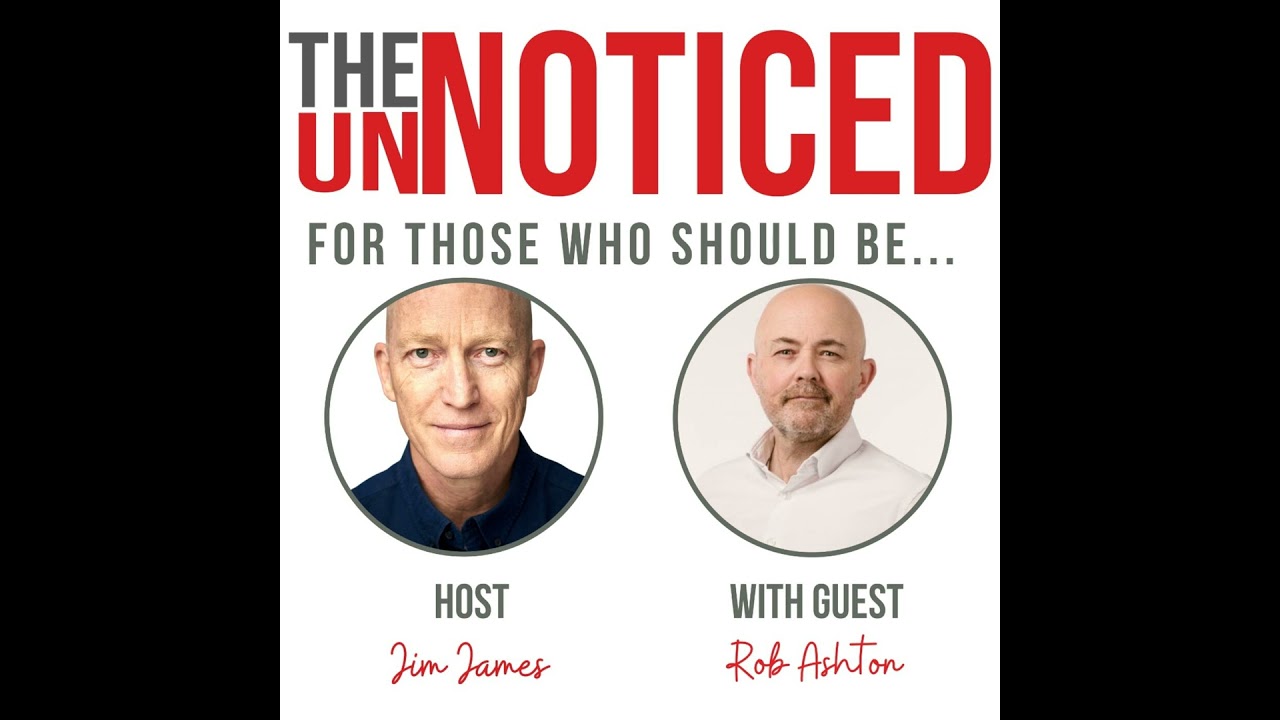
Rob Ashton explains how brain science shapes writing and pitches. Use negativity bias and surprise to make news stick, keep language simple so people actually read it, and follow his WHAT formula: What happened, How, Amplify, Tie up loose ends. His Emphasis blog pulls 1.2 million visitors yearly with long-tail articles.
Chapters
Hello and welcome to this episode of The Unnoticed Entrepreneur. Today we're going all the way down to sunny Brighton to meet Rob Ashton, who's going to tell us all about how brain science can impact getting noticed. Rob, welcome to the show.
Hi, Jim. Thanks for having me. It's great to be here.
It's great. And you are an entrepreneur of over 25 years. You've run your own business, which you've now just stepped down and become chairman, but it's all to do with Brain science and writing and how people get noticed. Tell us, what does brain science have to do with getting noticed?
The phrase getting noticed is, if you think about it, that implies making it all about you. It's you or your listeners, you know, who want to get noticed. If you're listening to this, you want to get noticed. But paradoxically, the way to get noticed is to make it not about you, but to make it about the person that you want to take notice because we all live our lives thinking about ourselves. We're wired to be fairly selfish. You know, we have a self-preservation streak, but we all run the same software. We all have the same brain model and we have the same psychology. And so you can use brain science to tap into that and to really connect with people. In fact, I'd argue that it's the best way to do it. If you ignore it, you might succeed. You probably won't, but you give yourself a really good advantage if you can tap into that brain science.
So give us some definitions and some sort of practical information. Then when you talk about brain science, do you mean psychology or being wired in some way? Take us into that, can you please?
Well, it's a handy term that covers a whole range of academic disciplines. And not that I'm an academic, but it's when you dig into this, it's quite a task because you're talking about neuroscience, which could be cognitive neuroscience, for instance, which is neuroscience of how we think. It could be social psychology. cognitive psychology, behavioral economics, and neuroeconomics, which is about how we make decisions and the neuroscience of how we make decisions and the psychology of how we make decisions. So it covers a whole multitude of subjects. And yeah, what I try to do is to dig into that, to look at the real science, not the pseudoscience, because there's a lot of that out there, and to use that to work out how best to connect with people, generally through how you write and how to influence the decisions they make and therefore how to get noticed.
So Rob, you've mentioned all those sort of the panoply of technical terms. From a practical point of view, and you talk about writing, I know you've got an international top-rated training course for writing. And I think you mentioned over 80,000 people have gone through that course. How can an entrepreneur, the unnoticed entrepreneur, use brain science in its simplest form? To be writing so that they are projecting what their audience are feeling and wanting to hear?
It's in many ways. So, you know, if you take it at its most basic, if you think about what we do most of the day, for most of us, it's writing. It's either reading or writing. Zoom gets the headlines, but what else are we doing? Well, we're communicating through instant messaging, through email. We might be writing proposals to get work. We use live chat for customer service. You know, that's all writing. So the first thing is to understand how we read and how we write, but on a, on a more proactive level, if you want to get noticed, you have to position yourself. And there are 2 main ways you can do that. 2 good ways. One is to attract the attention of the media. And the other is to write thought leadership pieces, guest articles on other people's websites generally. And when you're doing that, you can use the psychology of how people read and how people make decisions to notice you. Now, on a practical level, if you think about getting the media's attention, people who work in the media are generally trained the same way. They have news antennae and they know what makes news. And it's almost like a gut instinct for them. It's become a gut instinct. They didn't start out that way. They've been trained to do it. But what they may not know is that those news values and what makes news and what makes them sit up and take notice of you and give you some coverage is based on this idea of what was based on brain science. You know, you can, or at least it's underpinned by brain science. You can explain it that way. So for instance, there's an old adage in news, which is if it bleeds, it leads. It's a horrible phrase, but it means that If there's something awful has happened, then a news site is going to lead with that. That's going to be their main story. So you can think about that as negative news, that journalists are wired for negativity. Now, when we're trying to get noticed, we want to say something positive, don't we? You know, we want to say, look at us, we're great. We've done this. We've launched a new widget. We've just hired a new marketing director. It may sound brutal, but they don't care. So the way to use it is to think, what are they looking for? And they'll be looking for things like surprise. So, you know, do you have something surprising to say? And not surprising because you've hired someone, but surprising because of your insights. What have you noticed about your industry? What have you noticed about your customers or your clients that they are doing, for instance, that people might not realize? And, you know, what advice do you have for them? You know, what do you think they should be doing that people misunderstand? So you can use surprise that way. There are things that always make news. So these are so-called elite issues. So things like health, money, children, unfortunately negative news, fear, these kinds of things that they always make news. So you have these news values. Scale. If something's really big, that taps into the emotion because we're drawn to things that are really big. You know, it's not, if you've got something big that's happening, if you've, You see, in that case, if you've say signed a huge contract or you're announcing a big merger and it will say make you the biggest organization in your space, that is potentially newsworthy, especially if it's surprising. And that's how you can really rack up the news value by combining these things. You know, if you've got something that's surprising that involves money that maybe is negative, then you can use all of those to tap into the emotions of the journalists and get them to take notice. It's also important though to write things, to write that press release in a way that's not going to send the journalists to sleep. As I said, they don't really care about you and you need to hook them at the beginning with that news angle. You know, what's happened? What's the news? You know, the news first and then the background. And then to write it in clear, simple language. This is more difficult than it sounds because when we're surrounded by jargon, when we're surrounded by complex sentences, maybe we're reading manuals or journals that are very technical, then we get to like that. It's called the mere exposure effect. The more we see it, the more we like it. That's more brain science there. And therefore we don't even notice that we're writing like that. So it takes quite an effort and a bit of practice to write in a clear, simple way. But there's another bias that everybody has, which is that if something is easy to understand, We believe it. We tend to believe it. If it's easy to process, it's called the fluency heuristic. The easier something is to read and to process, the more likely it is to just bypass all of our filters and just go straight into our brains. So there are a lot of practical things you can do there.
Yeah, no, so it's very interesting, this idea as well. I suppose if it's simple and big enough for people to understand, then people will want to sort of buy into that and maybe overcome their other prejudices. I do have a question for you, Rob, about writing, because most people are not natural writers. Most entrepreneurs didn't start off as, you know, English majors. Can I ask you, what do you think about some of the tools that are available, some of the AI writing tools? Do you think those are a, you know, a valuable resource, or do you think entrepreneurs need to try and write themselves, or can they find copywriters? What's a practical solution for people that don't have the time or the skillset to write?
It's a great question. It's when the hardest part of writing is getting started. And I think it's really interesting, these AI tools that are becoming available now, because what they can do is produce a first draft for you and then you can edit it. So I definitely think they have a place and they're getting better all the time. You know, somebody listening to this in a couple of years' time will have more options, many more options probably than even are available to us now. It's Working with other writers can be great. It's, again, it's a great way to get something down and then you can edit it. We do write more than we think we do. You know, I think that one of the things that can really hold people back is a fear of getting the grammar wrong, for instance, whereas it's rarely about the grammar. If you speak, if you're writing in your native language, then you will have started to get the grammar rules by the age of 4 or 5, possibly earlier than that. So it's, Probably earlier than that, but that can undermine confidence and it can make you quite hesitant. So if you're trying to write it yourself, just use a simple structure. I call it the WHAT formula, W-H-A-T, which is simply what happened, how it happened, amplify, and tie up loose ends. And by amplify, you just expand on what you've said in the first 2 bits. Nothing wrong with using somebody else. I would say that if you are doing that, use them, use their expertise. So if they tell you something that's, if they give you advice and they say, Look, don't make this all about you, or no journalist cares about how wonderful you are as a CEO, and don't put that quote in that makes it look like it's been written by a robot or a marketing committee, then listen to them. If you're paying them to do that, then really take their advice. And that's a mistake that a lot of people do. For instance, when they work with PR agencies or when they work with writers, they kind of try and yank the tiller and say, no, write it like this. If you are using somebody else, then take their advice. To use a slightly ugly phrase, you know, there's no point in keeping a dog and barking yourself.
Rob, I have a question for you. You've mentioned here that, you know, if it bleeds, it leads, right? And the power of negative news and the brain science that you're alluding to suggests that the person who's reading or watching what the entrepreneur is putting out there is actually looking maybe for the negative. I mean, a lot of people are reading and watching about, you know, horrific events and then maybe feeling better in their own circumstance as a result by comparison. What's your view then on a company using negative news? Because the logical extension of what you said is that to be getting coverage, a company should almost be putting out negative news. I mean, it's what the politicians do, of course, isn't it? To get voters to be afraid of the alternative to their solution. How can companies manage with that?
I don't want to overplay this and say you should always be negative. And I certainly wouldn't be putting out, just to be clear, I wouldn't be putting out negative news about yourself. We're talking about negative news about the world, about your industry, about the plight of your clients. We have a negativity bias. This is another brain science thing. We are wired to look for negative things. And it's not so much because it makes us feel better. It's the negative things that kill you. Okay. So evolution has selected for people who look for negative stuff. You know, something that's positive, if you notice it, well, it's positive, you miss it. There might be something positive tomorrow or positive the day after. Something that's negative, something that could harm you only has to be negative once. Something only has to kill you once. So that's why we look for negative stuff. So you're tapping into that. But what you do is you can point out something. So you could say you've noticed something about the industry. You've noticed, you know, it could be a piece of negative financial news. It could be something that people are getting wrong. It could be a danger of a company that produces cybersecurity software. You know, a good negative angle for them would be to raise awareness of threats. And if they found that threats were on the increase, Then that's negative. Now, the flip side of that is what can you do to protect yourself? So you go in with the negative and then you say, so what you should be doing is this. And if you are producing cybersecurity software, you have the solution. Now, where this really comes into its own is not just with getting media attention, but if you want to, if you're writing, if you're writing guest posts, for instance, on industry, well, not industry websites, but the kind of websites that your clients read. And a lot of these are very niche and are desperate for content. So if you contact them, you can say, can I write a piece for your audience about this issue to help them with it? And when you're doing that, people will look when they're reading it, they'll say, okay, so this is an issue I wasn't aware of. I need to know about this. And pretty quickly, they're going to look down to the bio at the bottom and say, who wrote this?
Oh, wow.
Well, look, they've told me all this stuff. They clearly know all about this. It sounds like a bit of hard work to do that myself. I don't have the expertise. Clearly they do. So by going negative and raising awareness of a problem, then implicit in that is that you have the solution. There's a scene in the, in the play, in the film Glengarry Glen Ross about competing salesmen. And one of them says, always be closing. Always be trying to close that sale. And I would say always be helping because if you don't hold back, don't just give them half the information in the hope that they will contact you. If you imagine they found you through searching on Google, they found your article, they're in Google. If they read your article and you leave them wanting more and thinking, I don't know what to do, you've told me about something, I've got nothing practical to do here. They're still in Google. They're going to Google somebody else and they're going to forget about you. So. Be generous with your information. And if you want to generate leads directly, then create something like a, like a helpful guide, a download, which means they have to then go on your website, give over their email address. And that way, you know, you can get direct leads or at least you can build up your mailing list and they raise awareness. In other words, get yourself noticed. You know, it's another very good way to do it.
Yes. So that's a really nice way of putting it rather than being too about negativity, just about issues that the industry is facing and probable solutions, right? As opposed to seeing it as negative. Now, Rob, you've been the founder and CEO of a company called Emphasis, and I know you've just stepped down and become chairman of that. As an entrepreneur in your own right, how have you been getting your own business noticed? Because, you know, I love to find out how fellow entrepreneurs are solving the problem for their own business.
Well, I eat my own dog food, to use another canine metaphor. You know, I try to help, or people in Emphasis, in my company, try to help. So on that website is probably the biggest resource for improving written communication. We've been blogging there since 2008. And, you know, there are hundreds and hundreds of articles on there addressing sometimes very niche topics. So. We know that when people are searching for those things, they're probably going to find us. And that could be, you know, how to complete a prequalification questionnaire, for instance, if you're tendering. It could be how to write a maternity leave policy, or it could be how to write a press release. So as well as how to write a technical report, you know, and every angle there. So, you know, you don't just cover one thing, you cover the different elements of it. And some of those articles. Are almost like mini books in themselves. And we just give that stuff away. It's great for the search engines, but it's great for positioning. That site gets 1.2 million visitors a year at the moment. All of those people have the problems that we're addressing because that's how they found us. So we don't really do that much advertising. What we do is we optimize for what are called long-tail searches. So those very specific things that people search for. You know, it might not be a huge volume with each search term, but if you add them all together, it does amount to a huge amount of traffic. Plus, if people are looking for something specific and you can offer them something specific, then you are going to get noticed. And the other thing is, you know, now I'm raising awareness of the issues. So acting as an ambassador, not just for the company, but what I tend to talk about is the topic, why we should take written communication more seriously to do things like this, to speak on podcasts, but to be as helpful as I can be and really make sure that I don't put anything out there that's not useful. So in that way, it flips this attention thing on its head. It uses this bias that we all have to our own, to solving our own problems. And yeah, hopefully people realize that I might have the solution. And in fact, that, you know, there are things on my website that do just that. So, you know, free resources, which I can tell you about later, but it's, you know, it's the same thing that you get an email address, you build awareness.
Wonderful, Rob. And, you know, if people do want to find out more about you, Rob Ashton, and brain science, you've mentioned Nemesis, but where else can they come and find you? Because you've obviously got so much knowledge to share about this.
The best place to find me is just on my personal website, which is simply robashton.com. If they go there, they can find a free course called Silent Influence, which is how to harness some of this stuff in order to influence decisions. If they want to go straight to that one, it's robashton.com/influence. But robashton.com will do it. And there's a link there to Emphasis, the consulting firm. So that's the only one you really need to remember.
Rob Ashton joining me from sunny Brighton. Thank you so much for sharing all your wisdom with me and all the other unnoticed entrepreneurs listening to the show today.
Thanks again, Jim. It's been an absolute pleasure. Thank you for having me.
Wonderful. And once again, we've been treated to another expert, 25 years plus of experience shared there by Rob in just 20 minutes. So thank you for listening to this episode of The Unnoticed Entrepreneur. If you've enjoyed it, do share it. If you can rate it, there's a link in the show notes as well. And until we meet again, I just encourage you to keep on communicating. As Rob would have it, keep on writing.
More from Jim











2 people, infinite agents, 1 billion dollar idea #AIAgents #Startup #Productivity