Sprinkle any kind of your content with a little more flavor with Pepper Content and get noticed.
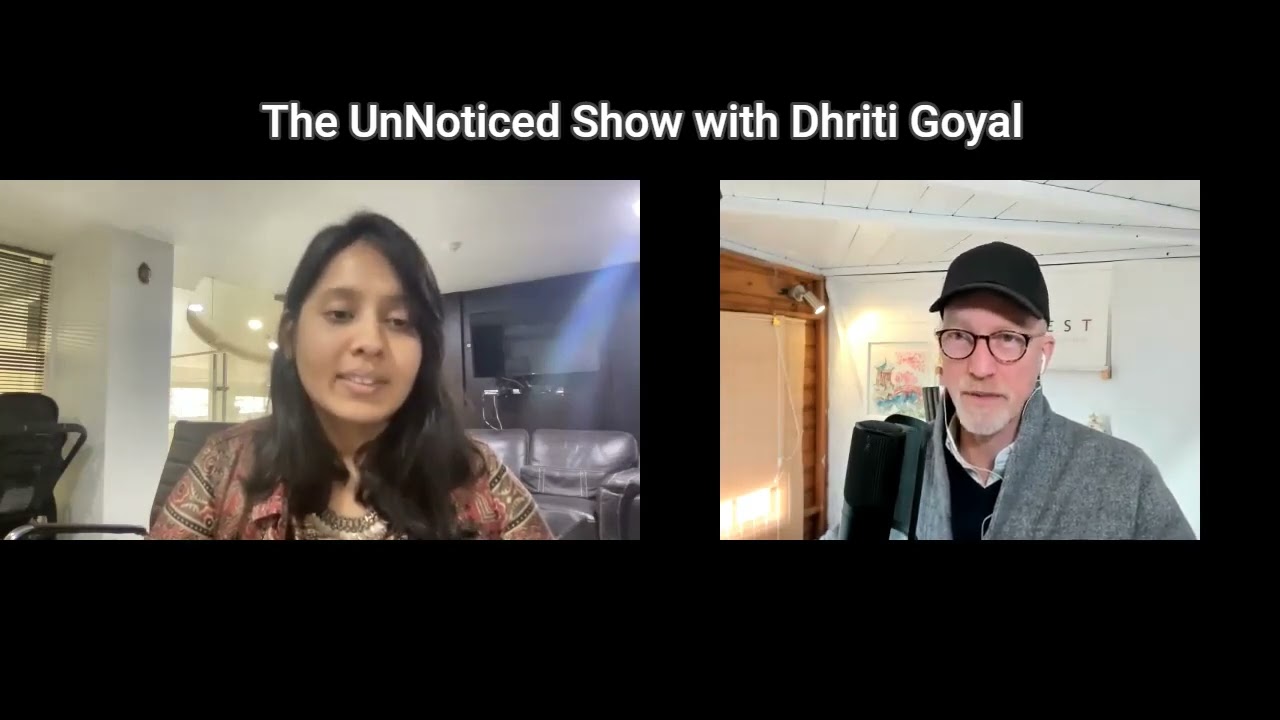
In this episode of The Unnoticed Entrepreneur, host Jim James interviews Druthi Goyal of Pepper Content about the company’s creator marketplace and how it helps entrepreneurs get noticed. Pepper Content positions itself as a one‑stop platform for all content needs—written articles, designs, infographics, videos, and translations—by connecting businesses with a vetted pool of over 60,000 creators across more than 100 industry verticals. The conversation covers the company’s quality‑control mechanisms (creator testing, domain‑expertise cohorts), service models (self‑serve vs enterprise with dedicated account managers), pricing structures (tiered by creator level, projects starting at $20), and the integration of AI tools such as PepperType (a GPT‑3‑based writing assistant) and an AI‑powered recommender and content‑audit engine. Druthi walks through the end‑to‑end workflow on the Pepper platform, from brief creation, AI‑driven creator matching, editorial review, versioned collaboration in the Pepper Editor, to real‑time project status tracking. The interview also highlights market trends (high demand for bulk SEO blogs, B2B content, and tech‑startup narratives) and the company’s philosophy of human‑AI augmentation, recommending a mix of AI for routine tasks and human writers for quality and scale. Contact information and a call‑to‑action conclude the discussion.
Chapters
Hello and welcome to this episode of The Unnoticed Entrepreneur. Today I'm delighted to have Druthi Goyal joining me all the way from India. Druthi, welcome.
Thanks, Jim, for having me on the show.
You're more than welcome. You're talking to us, I think, from Mumbai, from a company called Pepper Content. Tell us, how do you help entrepreneurs get noticed?
Well, Pepper Content is, you know, helping businesses democratizing content. Like content creation is one part of the whole running business that it is required, but most of the time with bandwidth crunch and having the lean marketing team, content creation becomes a little difficult and little tricky. So that is where PepperContent is helping. So we are basically enabling creators and businesses to help each other to create content. And with the help of our technology, this is more like getting them together and you get one-stop destination for content creation. Okay.
There's a lot of, a lot of things in there, but I love the idea that it's one place to get all your content needs done. Let's sort of go through that. Do you want to just tell us first of all, what kind of content? We talk about written content, we talk about infographics, we talk about video. Take us through which kind of content.
So the good part about Pepper Content is that you can get any sort of content done from us, like be it any written content, be it any design, be it any translation project, or we are also coming up with video projects. So any infographic you want to get it created, you can get it written from our creator. You can get it designed from our creators. And if you want to get it translated in different languages, can be done.
Okay. Right. So really is a one-stop shop. Now, many people would go to the other platforms, Upwork, Fiverr, maybe a PR portal. Why would they come to PepperContent, Drishti, instead of going to one of those established? main international platforms?
Well, really good point. So there, the thing is with Upwork, Fiverr, they do have a good pool of creators, but it's up to you to choose. And really there is no standardization of the quality or the kind of service they'll provide. Here we are vetting our creators. They are giving us a series of tests and we are putting them in different cohorts based on your requirement. We assign the creator to the project. And that is how we make sure that you get the quality in the content and also the right creator for you.
Great. So you've got a level of quality control in there that's saving— I know when I've gone on to Upwork, you put out the bid and you check what they've done before, but you haven't necessarily got a standard metric. So do you then at Pepper Content give a client a sort of account manager in that, in that way to help navigate? The content creation?
So there are 2 models in which Pepper Content is working right now. There is a self-serve model where you can simply sign up and do it on the, you know, per requirement basis. If you have a bulk project, then we do assign an account manager to you. And also the billing happens once, you know, monthly basis or quarterly basis, depends on the contract.
Okay. Well, we'll talk about pricing a bit later on, but I'd like to first of all talk more about the The issues, for example, of domain expertise, because one of the main challenges for people looking for writers is, do they know the subject matter already? How do you overcome that problem, Drishti?
So whenever we onboard a creator, they give a series of tests, as I said. So in those tests, we evaluate them on the basis of different parameters. So one is like grammar or their style of writing. Industry or domain expertise is also one of the aspects we evaluate them on basis of. So when they, you know, when they get onboarded, there are industry expertise and content genres assigned to them so that we know that, you know, for which requirement they are fit.
Okay, Drissy, then let's just talk about language for a moment. Is this all content creators based in India and all writing in English?
For now, we have majority of our creators, our creator pool is from India. We are looking for creators from all over the world. As we are expanding our operations in US and other APAC countries as well. So yeah, and the primary language in which translation project we, the primary languages we take for English content and then we translate in different languages.
Okay. And that would be what, like Mandarin or Japanese or Russian, any international language? How big is Pepper content then, Druthi? Let's just look at the resources you've got available.
Pepper Content has a network of 60,000+ creators, like in various, you know, content genres and different fields. So we have good, like, and also if I have to talk about data, we have, you know, served more than 100 industry verticals. So industry is no bar. We have creators from almost all the industries. Wow.
Okay. 60,000. That's an amazing number of potential sort of creators at one's disposal. What about then if people want to do some of their own writing? As you know, I've been experimenting with some AI tools. Are you involved in anything like that as well to let people sort of co-create?
Yes, we do have our own AI content writing assistant tool called PepperType, which is being used like all over the globe. We have a lot many like users. It's not just sticking to India. And most of our users are creators and writers and even content managers and stuff. So, and there are a lot of, so the thing is that this tool helps you write as per your use case. So if you're writing for an Amazon product description, it gives you different content. If you're writing for social media posts, it gives you different content. Really interesting piece to try.
That is interesting. So Pepper content then is, or Pepper type, I should say. is another, another tool that you've got available. Is that based on GPT-3 or is that your own native AI?
It's based on GPT-3.
Right. Yeah. 'Cause I think there's sort of different schools of approach on that, aren't there?
Right.
Tricia, do you want to just take us through sort of a customer journey from someone having a need and coming to Pepper Content and getting their needs fulfilled? Can you just take us through the process?
Sure. So we have enabled this exercise through a platform. So a person has to sign up on a Pepper Contents account. And once they sign up, they can create a project. So there is a structured or guided brief process or flow where they can add their requirements. And it asks you very smallest of the details, which is required to be given in a brief, like tone of voice, structure of the article, everything. So all the related details you'll add on the project flow. Once you submit it, we give you a deadline, like how many days it will take. And in case of self-serve, you have to do the payment that time. In case of enterprise model, we can do the payment later. Once the project comes to us, our recommender engine, so we have AI-powered recommender engine, which works at the backend. It sees that what all creators are available and are fit for the assignment, then it gets assigned to the particular creative and the project is then given to them. Once they write it, design it, and submit it, there is a layer of quality check. So we have our editors who check these content, and we also have our own curated content audit system, which is an automated AI-powered content audit system, which checks the readability, grammar, language correctness, everything. And then it goes for submission for the client. Once it is submitted, the client gets a notification. They can either approve it, reject it, or send it for rework. So sending it for rework, we allow up to 2 to 3 free reworks. In case they did not like it at all, then it can get rejected and we will assign a different creator and then the process can start again. Also, let's say there is a bulk assignment, like you have 100 blogs to be done in 10 days. So in that case, the once when you give us the deadline that in how many days do you need assignment? So then we give this project to different set of creators. Then it won't go to only one creator. It'll go to different creators so that we stick to the deadline. So that is how we, you can say that with Pepper, you will never miss a deadline. Okay.
That's nice. So you're processing in parallel rather than in series that way. And if there is a job, you've mentioned that your AI engine selects who's the best author and sends it to them. Are you asking those writers to bid against each other or it just goes to one and that's the first option and— Yeah.
Yeah. So they don't have to bid. It's like, it's on the basis of the priority. Like this is the first preferred writer as per the recommender engine. If they don't accept it, let's say they have something else or they don't want to do it, then it can go to next. And if they also reject it, then goes to next. So it's purely based on, you know, your own priority.
Well, and that raises an interesting question about pricing then, doesn't it, Drusilla? And maybe that's the time to talk about it because in Upwork or Fiverr, they bid and they have different prices either by per hour, for example, or by per project fixed costs. How is it working then with Pepper Content? Because are you saying that your writers are all kind of almost a fixed price? arrangement, so we're not in that sort of bidding war that frankly can be quite irksome in Upwork because you don't know what you're going to be spending to get the quality. There's always that indecision to face.
Well, our pricing is quite standard. So when the creator gets onboarded, there's a pricing discussed with them or finalized with them. That is one thing. And also while creating the project, we ask the client that what level of creator they are looking for. Are they looking for a basic level, advanced, or experienced? Based on that, then it is assigned to a creator so that the pricing is done according to the level of expertise.
Do you want to give us some idea? Can you give us some sort of ballpark ideas? Obviously, we've got different forms of content. We've got technical articles that may be 1,800 words. You've got a blog post at 400 to 450 words that may be a general industry piece. You've maybe got a LinkedIn post, for example. Could you give us some guidance, Drishy? What, what would people be expecting to pay?
Well, the pricing. So I currently, we are doing mostly in India. For US, we have not yet started it on the self-serve part of it. So we, the person can, you know, come actually and start with a project with maybe a $20 project also. Like it's like the thing with the currently which companies face that whenever they are hiring a freelancer or someone, there is a basic or a minimum amount of money involved. And before that, nobody would like to start. With Pepper, the thing is that you can start with the smallest of the amount and you don't have to have that contract or something with us before we start. So I would say you can start with $20. I would actually suggest you guys to go and check it out on the platform yourself. It's cheap. It's, I wouldn't say cheap. It's just, it's affordable for any sort of business and individuals.
That's wonderful, Tricia. Yeah. So for an entrepreneur taking What is a risk at the beginning, isn't it, to create content? It's a very low barrier to entry, isn't it? Okay. And are there some trends that you're seeing, Drishti, in terms of content creation at the company? Are you seeing a move to more just SEO-laden text or more personal narrative? Any sort of guides that you can give our listener on what's working? What really is compelling?
I can talk to you about what kind of trends I'm seeing in terms of the orders we are getting. So most of the people are coming to us for blogs. It's mostly the SEO blogs. Like we are actually getting orders of 100 blogs at a time to be completed in 10 days, 15 days. And we have done that scale for brands. And it is not just in B2C, like most of the people might think that, okay, this must be requirement for B2C, but even B2B companies. They are also coming with such requirements. In fact, a lot of requirements on website content and designing ebooks or white papers and translating, you know, edtech companies are coming for translation in different languages. One of the things which was very curious, like I found it very interesting, was that a lot of new age tech companies are coming to us for content and the primary reason is that they think the thing which they are building is very new, and that is why they need more content to be created and pushed out so that people are aware. And they want not experts to write it, but general writers, because they think that if they are able to understand and write it, then it will be easy to consume for others. So these are some things which I found out while I was studying the data, and it was really interesting how people are also trying content in different ways.
That's a really good point because we always talk about writing for the reader, not for yourself. And, and the idea of subcontracting, even from a strategic point of view, subcontracting to find someone who's not a domain expert to write about what you want to talk about is actually a really interesting take on it, isn't it? Druti, do you want to just tell us as well about your view on AI writing? What's your View, because what's your view? Should entrepreneurs just use a PepperType or a human or a combination? I'd love to hear your view on that.
Well, for an individual, I think PepperType is a really interesting tool for even social media managers who are writing small captions and all that. So there, there is a passionate project which comes into the picture, which is very close to the company, which, which everyone is looking forward to. And there are some regular cadences project which comes like you have to send an email or you have to post, or you have to create some infographic and all that. So you always get stumbled between both of these. Where should you go? How should you go about it? So I feel there are a few things which can be taken care by Peppertype where you are doing your regular jobs, where you need a little refinement or you need little tweaks, but sometimes you need to go at scale and also take care of the quality. need that human intervention. So a mix of both is always good combination. And also for the passionate projects, it's also that sometimes you want to keep it with you, but we also try trying to help companies to stay lean in their team, but also extend a creative squad team with Pepper where you have your favorite freelancers working for you on your passionate projects. It's like an extended arm for you, but I always believe a mix of AI and humans is required to scale your content with automation.
Okay, lovely. So really about augmentation rather than replacement. You raised a really interesting point there as well about having, if you like, your favorite writer. Is a client able to nominate using the same person again? Because obviously that person has some experience now, tone of voice, certain grammar, certain keywords, for example.
Yes. So we are doing that for our enterprise clients that whoever they are liking, they see that their writing is something they can resonate with, they can favorite them. And we make sure that whenever next project comes, that project goes to that particular creator.
On a, on a sort of side technical note, what are you offering to the clients in terms of a portal experience? Are you sending back emails to people or are they seeing versions in the cloud? How is that working?
On our platform, the assignment gets submitted. So there is something called Pepper Editor, which we have, we've created our own writing tool. So which is integrated on the platform. Now we were using Google Docs before we had done integration with Google Docs, but we then switched to our own editor. The reason being the kind of liberty we get in terms of versioning, because there, there is a writer who has written it. Then there is an editor who had put comments and then there is a final client who is doing it. And also. In the company, there is not one person who's going to approve the content. There are a bunch of people like brand team will look at it from their perspective, product team will look from their perspective, and then it goes as a final product. So versioning of comment and how it looks, what has changed is better here. And also a creator and a client can see the brief on the side. So they can refer to it again and again. And also we have a component of video brief. Like a person who's giving the brief can also record a video in the brief. So the person can access that as well on the side as something which makes the whole information exchange easy.
I like that. I'm using video a lot with Loom and there's also Screencast-O-Matic. These explanations by video save a lot of time and misunderstanding, don't they, as well? That's really elegant. And so our members or clients, if you do one project, you have a I'm assuming, and see all of your work. And is it showing on sort of a Gantt chart, sort of showing the stages that you're at?
It shows that stage of the project. Like, is it approved? Is it underwriting? Is it under editing and all that? So it is not like a Gantt chart, but it's more like the order is placed. Now it is underwriting or editing and all that. You can see the status of the project real time.
Nice. So you've got a workflow because that's One of the issues I'm editing my book, the second volume, and it's the versioning with multiple collaborators that actually is the hard part and the time-consuming part, isn't it? Great. Trithi Goyal joining us from, well, just by Mumbai, but the company is actually based in Bangalore. Is that right?
So the company is in Mumbai. Since it's a remote setup, I keep on hopping between Mumbai and Bangalore. Since I've been in Bangalore for quite long and The whole tech in India is based in Bangalore. So that is where I like to be.
Yeah, no, and very fond memories of Bangalore. I had an office there for East West Public Relations for a while. Druthi, if people want to find out more about PepperContent, how can they do so?
Our website is www.peppercontent.io. I would really recommend everyone to try out our platform. You can also reach out to me. I am available at druthi.goyal@peppercontent.in. You can find me on LinkedIn and message me. I'm very active there. So yeah.
Great. And you've been wonderful because you and I met on LinkedIn. So I really appreciate you taking the time to come and share with me and the listeners, or the listener, I should say, what opportunities there are with a platform like PepperContent to create content of all forms at a very low cost and very flexible, but with a guaranteed quality. Drishti, thank you so much for joining me today.
Thank you, Jim James, to have me here, to give me that opportunity. And it was lovely talking to you.
Thank you so much, and we wish you all the best. I look forward to trying Pepperdine.
Yes, sure. I would love to hear your feedback.
I will absolutely try and give it to you. Thank you so much for joining me today.
Thank you.
More from Jim











2 people, infinite agents, 1 billion dollar idea #AIAgents #Startup #Productivity