Sustainable fashion from end of line fabric.
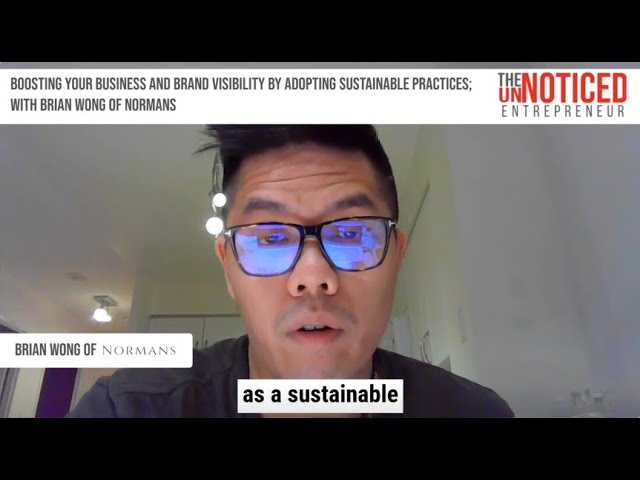
In this Unnoticed Entrepreneur podcast episode, host Jim James interviews Toronto‑based entrepreneur Brian Wong about his startup Normans Apparel. Normans positions itself as a hybrid‑workwear brand that fills the gap between formal suits and casual pajamas, targeting professionals working from home or in hybrid settings. The company’s core philosophy rests on three pillars: practical sustainability, comfort‑focused design, and a brand‑ambassador program that showcases everyday professionals rather than traditional influencers. Sustainability is pursued by sourcing end‑of‑line (overrun) fabric from global manufacturers, turning otherwise wasted material into limited‑run garments, embodying a circular‑economy approach. Wong emphasizes incremental, realistic changes over radical overhauls, stressing transparency with consumers about what is and isn’t green. Marketing is primarily digital‑first (website, Instagram, Google/Meta ads) with an eye toward physical pop‑up events to let customers experience product quality. The brand name combines “North” (reflecting Canada) and “Men’s apparel.” Wong also shares operational insights on building the business remotely with a co‑founder he hasn’t met in person, highlighting the importance of daily outreach—cold‑calling, checking in with customers and ambassadors—to generate traction. The conversation wraps with a plug for the Unnoticed Entrepreneur book series and a call to keep communicating.
Chapters
The Unnoticed Entrepreneur Podcast is sponsored by Prowly, the all-in-one tool for PR experts.
Thank you for joining me today on the Unnoticed Entrepreneur Podcast. I'm going to introduce you to Brian Wong, who's a young entrepreneur based in Toronto, Canada. Brian Wong, welcome to the show.
Thank you for having me.
Brian, look, thank you because we're going to talk about Normans, a brand that you and a partner have been building. You've not met. But you're building an online clothing brand in the sort of hybrid space for people that want something to wear from home when they're working, not pajamas and not suits, something in between, which is going really well. But also you're focusing on sustainability. We're going to talk about that. And we're going to talk about how you're using brand ambassadors that are not influencers to build the brand and a few other things. So I'm really excited to hear about the story. Brian, explain about Normans and what you're doing with this company.
Yeah, so once again, very happy to be here. Normans, it's an online fashion brand. We also brand out a sustainable fashion brand and we really stand for 3 main things. One, we try to practice sustainability in a practical way for our business. So we are not a big company at this point that we can afford to have everything green, right? We don't have, we don't own any green technology. We don't have that, but there's do things that we can do in terms of manufacturing, in terms of packaging, that we can try to contribute into the sustainability movement. So that's number one. Number 2, as you mentioned, we produce products that are tailored, or I guess the purpose is for people who work from home, or right now these days is more hybrid model, that they can wear working from home or going to the office, looking presentable, right for business. But also feel comfortable. And that's kind of the in-between that we're trying to strike between wearing a suit or wearing pajamas, right? And the third thing that the brand stands for is that we do use influencers for marketing purpose, but our main promotion or our demonstration is coming from our ambassadors. So a longer-term vision is to become a source of inspiration for others and the How we thought of that is we thought, yes, we can certainly draw inspiration from celebrities or well-known successful business people or athletes and all that. But if I think back to my personal life, uh, most of the inspirations that I've gotten is actually people that I come across on a day-to-day basis. So that makes me understand that, okay, everyone has a great story to tell. Everyone has some inspirational portion of their life, if not more of that. And so we identify ambassadors. Yes, they will promote our clothing, they'll promote our products, but more importantly, it's also a platform for them to tell their story, whether it's about maybe something that they do as a hobby, or maybe it's about their career, or maybe just their life in general. So these are the 3 things that our brand is trying to represent.
Yeah, look, that's wonderful. It's at normansapparel.com. And we're going to talk later on about the ambassadors and who you've got on there, because I think it's a really interesting approach that you're taking there.
Right.
But let's start with the simple things. The name Normans, your name is not Norman. Your partner's name is not Norman. So let's start with the name. How did you get that?
Yeah. So as you mentioned, we are a brand based out of Toronto, Canada. And I think Canada in general is being known as the northern side of the world. So then we have the word north and then we do men's apparel for the most part. So we just combine the 2 words and become Normans.
Yeah, that's really cute. I actually thought maybe it had something to do with Harvey Norman's, but it's completely distinct. So that's so an intelligent and smart way to give a brand. I really like that. Now, you have talked about on your website sustainability that you have across with practicality.
Right.
How important is sustainability in terms of the brand promise? for Normans, because many people have sustainability as a sort of part of their CSR on their website, you know, below product quality, price, fashionability, and so on. But you're leading with sustainability. Why is that?
Yeah, I mean, this is really in a bigger picture. This is really what the world needs right now. I mean, there's more and more on a daily basis, more and more news about global warming, more about like, how do we of save the world in a way. We, I think more importantly is that we emphasize and try to illustrate how we can do it without making wholesale changes to our life. So what I want to say is that our brand right now, we are trying to practice sustainability in the area that we can afford. And it's our entire supply chain or value chain, you know, practicing sustainability. Not yet. Okay, we may be getting there. Maybe at some point we will have our own technology in terms of how do we do things in the most sustainable manner? How do we generate less waste throughout the process? We may eventually own that, but as a startup, we cannot do that. However, and that's why we put a cross with practicality, is that even as a startup, even as a company that is brand new, we can still do things that contribute to this movement. It's kind of like our personal life, right? If I go from a person that, you know, just like everyone's habit, which is, you know, we use plastic bags, we drive a regular car, and all of a sudden you say tomorrow I need to now drive an electric car, I need to take away all my plastic bags, and I need to basically monitor any kind of waste. That is overwhelming and it's likely not practical for somebody. But just, you know, mathematically, even 1 or 2 or 5, It's infinitely higher than zero. It's not 100, but it's infinitely higher than zero.
Incremental change, isn't it?
Exactly, right? So you kind of slowly do these smaller things that is still better than not doing anything at all because you feel like you're not fully sustainable by going all the way to 100. So I think that's kind of the mentality that we have. We'll slowly implement more and more of these components as we can, as we go. But this is, like I said, I think the bigger point is that illustration of smaller things, maybe not crazily significant, but it's still contributing to the movement and it's still meaningful.
Well, and I think, Brian, what you haven't mentioned there, but I think we should, is that your garments are made out of the end product, if like the overruns that the big garment manufacturers have on site when they order stock from the mills. Isn't it? Isn't that correct?
Yeah, correct. So we use end of line material is what we call them. Basically, I don't mean it's just China. I think manufacturing practices around the world, when they need to fulfill any, you know, garment product orders, they don't just order enough to make just enough for that amount. They always order, you know, some buffers. They'll always budget for that. And so by definition, there will be something like, assuming production goes fine, there will be something that is leftover, and usually those leftovers would not get used because they are very specific for particular product to be made. And so then that contributes to waste. What we're saying is that, hey, we have those as well, and why don't we take those and make our product? So yes, there will be challenges in terms of how many we can make because obviously it's limited, right? Like, for example, for a particular color, we only have enough to make 75 units or 74 units. We cannot make 100 or 500. So we have some challenges there, but at the minimum, this is the way we saw ourselves. We see ourselves contributing to avoiding these being sent into the waste field, but instead being circular back to the economy and generating value.
Yeah, I think as you say, you referred to the, what, the circular economy, right? Where things are being used, and in this case you are helping where products has been manufactured and therefore it's got a carbon footprint and would otherwise lie waste. Now it's actually gonna have utility, which is wonderful. Brian, you put sustainability on your website versus practicality. How important do you think that is to your consumers, to your customers?
Yeah, like at first I didn't notice much, but as we were kind of, you know, promoting our brand, going through the process of setting up a company, At least here in Toronto or Canada, people actually buy things. They will be like, hey, I will only buy what they call ethical brands, right? Or like brands that are contributing or like fully sustainable. That's important to them because they want to do those things themselves. But what they cannot control sometimes is that the companies or the brands that they consume from, right? What they eat, what they wear, what they, you know, entertainment and all that. And so that is actually a lot more important to our consumers than we thought. And so we are not, by no means, we're trying to use this as a thing just to draw attention. We actually try to walk the walk as well, right? And that's what we emphasize. We, not everything is green at this point. Okay. We will be 100% honest, but we are trying to practice it as much as we can. And so far, I think it's pretty well received. Received by our consumer because it's not just because it's sustainability, but more important is that we are very transparent in terms of which part of it it is. And I think, you know, people who learn about our brand appreciate that because it's also realistic. You know what I mean? If I go around and tell people, hey, you know what, I have this very green new technology that we have and I'm a startup and, you know, like that just doesn't add up. Right. I think now it just sounds a lot more authentic. and realistic in terms of what we do. And I think people resonate with that.
Brian, I think that's fantastic. And now you've mentioned about people learning about the brand. So let's just think about distribution because you've got these designs. I could see them on the website. Very nice indeed. Sort of thing that my daughters would love, your hoodies. Tell us about how you're getting the brand noticed.
Yeah, so we are in a phase of kind Kind of trying to be in terms of getting the visual notice, the digital presence established. I think that part, I won't say successful, but at least we kind of have gone through the steps to say, okay, we have to have an Instagram account, right? We have to obviously have our website and we have put on ads, digital ads, whether it's Google, whether it's in IG or Facebook, we do all. But what we are starting to notice is that, you know, with the online direct-to-consumer approach. What our consumer, especially like more organic, say walk-in, quote unquote walk-in customers, they, when they first interact with our brand, what they do not get to know is the quality and the texture of our products, right? We are not selling software yet, right? We're selling actually a physical product. And the gap that we're trying to close right now is whoever have tried on our products have very good things to say about our quality, have very good things to say about Oh my God, like these are so soft or these are so comfortable. I love it. Like these are like real comments that we got back from our consumers. Uh, challenge is the people who haven't tried our product don't know that, right? And so we are finding different ways to your point to get noted is that to make our products more out there. So per se, more opportunities for people to access to try our products. So we are looking into, hey, are there any physical Pop-up store that we can participate in those opportunities, so that we can at least physically let you know other more people to see our brand and try our brand. We also reach out to people that align well with our brand value and just say, "Hey, here are a couple of products. We want to get some feedback. We're not looking for you to promote it, but we just want to get your feedback and also give you a chance to try our product and see whether you like it or not." So we're trying different things again. I won't say we have figured it out yet at this point, but. That's a journey that we're going through at this moment.
I can see that. I'm just going to as well share the screen so that anyone that's here now can start to see some of the products that we've got here. So I'd love to just talk with you about this area that you've got, which is your ambassadors. I'm just bringing these up for people that may be interested that can see it. We've got, for example, Ziv Deutsch, who's a senior director in fintech. We've got Scott Mitchell, who's a management consultant. We've got Maokai Shen. Who's a financial analyst and so on. So just take us through that strategy, Brian, of using real people to talk about their real stories, because that's really interesting and also very affordable because as a startup, you know, in a way you don't want overnight success because that can stress the supply chain, especially when you said you've got limited stock of any one kind of fabric, right? So then you could just lead to disappointment. So Tell us about your ambassador program.
Yeah, so we strive to become a source of inspiration for others. And yes, we can draw inspiration from celebrities, right? I can say, oh wow, what Elon Musk did back in his early days is really inspiring. And they are very inspiring. Those are inspiring stories. But when I think back to, you know, as I was growing up, you know, some of my personal major pivots or major turning points in my life. It's usually inspired by people that I come across. Like maybe somebody did something that is 100% not related to what I'm doing, but I just kind of get that inspiration. And so what that taught me is that, hey, actually a lot of people have, if not all people have an inspirational story to tell. It's just that it doesn't get broadcasted, right? Like, because obviously these are more day-to-day life incidents, right? And so we're trying to use this program, use this opportunity, use this platform To bring out these inspirational stories, number one, but also to use that to hone in on how our consumer can relate to our brand. Because sometimes when I think about it, like for example, I play basketball, right? Or people who play soccer, watch soccer. Yes, Lionel Messi looks awesome on this pair of boots, right? Or LeBron James looks awesome on this jersey. In my case, it's not 100% relatable. I'm not 6'8. I'm not built that way. And I also don't. You know, so yes, I would still, you know, you have more than enough people who still buy as a, but the angle is as a fan, right? It's like, yeah, like supporting who they root for or who they like. In this case, we are trying to, and again, I don't know if it's going to work long-term, but what we're trying is that how about relatability? How about somebody who also work in fintech or somebody who also work as a management consultant, watch this story and be like, oh wow, like that's what this brand stands for. And I can totally relate to what they're doing. are talking about, and from there build our brand equity. So that's kind of what we are thinking behind it. We are still fine-tuning how we are doing that. We think it is a good idea, but we are still trying to perfect that execution of that.
Yeah, that's great. And I guess as you do that, you're going to find more brand ambassadors and then they market the product. In terms of distribution, Brian, I see you are selling online through the store, D2C. What other channels Have you got for the Phenomenons Apparel?
Yeah, so at this point, that's our main way to distribute our products. However, we are also, um, you know, in talks for maybe potentially the opportunities for us to have some physical presence as well, whether it's maybe pop-up stores or like maybe at some physical retail locations that we can see our products. Nothing is finalized yet at this point, but we're trying to, you know, Kind of what I just said is to get, let more people try and see and touch and feel our products. It seems to be one of the key things that we need to do at this point. And so, you know, if we can have the opportunity to get into any kind of physical presence in Toronto or even some other places, we are more than happy to consider that and entertain that.
Brian, you and your partner have built this business remotely that you haven't even met him. What would be A piece of experience or learning that you'd share that so far has driven some results for you?
Yeah, I mean, I am totally like, because I don't have a sales or like a marketing background. And so I'm kind of learning all these on the fly. I do think on the days that I talk to, whether it's the people who have bought our products already or try to talk to people that like just kind of cold call or whatnot at a high level, if the days that I have communicated To the outside about my brand, I usually get better results than the days I do not do that. Okay. I know that sounds very simple, but I guess my point is that even I'm reminding myself every day, yes, I have my full-time job still, and I'm keeping that, and I'm doing this on the side, but that doesn't stop me from using my downtime to communicate with somebody, not the same people every day, but like, you know, checking in on my consumers, uh, my customers. Or like reaching out to people that are ambassadors. Hey, how are things going? Or like reaching out to people that we think can be our ambassadors. Just talking about our brand, doing that every day. In some ways I have blind faith that it will turn out well. So just kind of doing that every day, I think is important so that to your point, getting noticed, right? Talking to different people every day at some point is going to pay off.
Ryan Wong, thank you for taking the time to talk to me today. Brian Wong, one of the founders of a new company called Norman's Apparel in Toronto. Brian, thank you for sharing today with me.
Thank you for having me.
So you've been listening to Brian Wong in Toronto, an inspirational story. I'm sure you will agree with me, and I will include a link to the website that he has and also to his various channels where you can get ahold of Brian as well. Hope you've enjoyed this. If you have, please do share it with somebody. If you've got time to review it on a player, that would be great. This conversation is one of hundreds that I've had with fellow unnoticed entrepreneurs, and they're in the book. The first volume is published by Wiley, 50 Entrepreneurs Speak Out About How They Get Noticed, now available on Amazon and all other bookstores. So please encourage you to see that as a resource as well. And until we get to talk again, I just do encourage you to keep on communicating, just like Brian says. Brian, thank you so much for joining me today.
Thank you.
Now I'd just like to mention our sponsor for this show. The Unnoticed Entrepreneur podcast is sponsored by a company called Prowly. Prowly is an all-in-one software for leveraging your public relations activities. You can boost the media relations game for your business, find media contacts, send out press releases, and get more coverage while saving time and money on everyday Check it out, prowly.com.
More from Jim











2 people, infinite agents, 1 billion dollar idea #AIAgents #Startup #Productivity