The Kaleidoscope Advantage: How This Third-Culture Founder Outshines the Competition
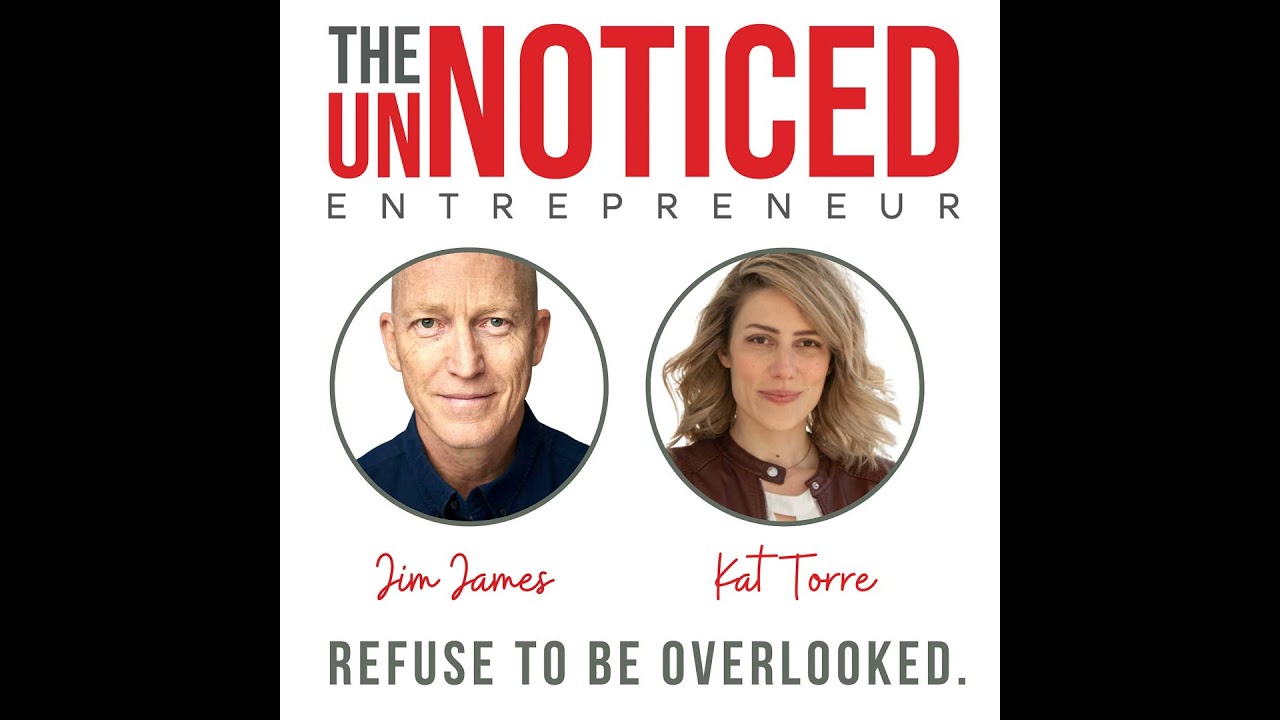
Kat Torrey, founder of The Brand Architect, built a competitive advantage by embracing her multicultural heritage. Growing up with Japanese, Irish, Italian, and Colombian influences felt like a disability until she turned it into a branding superpower through a three-step framework: identify inherited beliefs, decide what to keep, then express it through imagery and storytelling. Her authenticity attracted a niche audience of Western-born children of immigrants without active pitching.
Chapters
Welcome to this episode of The Unnoticed Entrepreneur. Now, some people have been expatriate entrepreneurs. In other words, they are living overseas and starting businesses, and that's been my case. But some people are the product of 2 cultures. They're in a 3rd culture, and they are entrepreneurs. They have a different kind of an issue altogether. They kind of have an identity issue. My guest today is going to help us to understand how people of the third culture can get comfortable and gain confidence in themselves as entrepreneurs, some challenges and how they might overcome those. And my guest is Kat Torrey, who's joining us from Washington, D.C., and she's the founder of a company called The Brand Architect. Kat, welcome to the show.
Thank you, Jim. I'm excited to be here.
Well, I'm excited to hear, and I haven't known exactly How to address your cat, because you've told me that you've got various different roots. Your heritage itself is from different places. So why don't you explain a little bit about your family history and then how that has led you onto this understanding of the challenges for people from a third culture as entrepreneurs?
Yeah, it's, uh, it's a great question. And so my background is from all over the world. So my mother, uh, was born in Tokyo, Japan. Um, she was a military brat. My grandfather was a career Army man. So she's half Japanese, half Irish, moved to the States when she was little, moved every 2 years. If you're a military brat listening, you know how that goes. And on my father's side, he's Italian and Colombian, and he was born in San Francisco like I was, but both of his parents were born abroad. And so family of immigrants from my, my mother to my grandparents on both sides, hailing from all over the world. And now I look like this.
Well, for those of you that don't know, know, um, Kat, when she says she looks like this, a very glamorous, um, blonde but with the, the dark eyes of, of Asians. You know, obviously I lived in Asia for 25 years and my, my wife is Shanghainese and my daughters are actually that third culture. They're living in England but they're half Chinese and half English. So, uh, Kat, obviously people can tune into the YouTube channel as well to see you, which I'm sure they'll want to do. But Kat, help me to understand, why is it a problem or a challenge to be, if you like, from all these different countries but as an entrepreneur? Surely it's kind of the American experience, isn't it, to be from many different backgrounds? What creates the challenge or the tension specifically for third culture entrepreneurs?
Yeah, well, it's, it's so funny. As young as America is relative to other countries, we've gone through so many different phases and have welcomed immigrants from all over the world. But what I've found is that each different culture holds different beliefs. And when you're young, you're raised by your parents and your grandparents, and they're gods in your eyes. And so you soak up those beliefs and that programming. But that programming and those beliefs are from times that occurred decades before you were born and on the other side of the world from where you're growing up. And it might not match as well to the school playground where you are going to school and you're, you're having your recess or the language you're hearing, the slang that you hear, the food that you eat. I remember thinking that it was normal to have multiple languages being spoken in my home growing up and to have like weird food, like to have inari sushi and to have like lumpia. One of my mom's best friends was Filipino, and then to go to school and everybody has Lunchables and peanut butter and jelly sandwiches.
Right.
And my first language is English, but that wasn't the first language of any of my grandparents and my mom either. She's fluent now, but it was just like this weird dichotomy to me. And I didn't quite, as a kid, know how to blend the two. They kind of just remained separate in my mind, and I felt like I had A foot in one world and a foot in the other.
Yeah, Kat, I agree. For my daughters, you know, they have also identified now that they're, they're never 100% English and they're never 100% Chinese. And, uh, they're getting the best of both worlds. Of course, they speak Mandarin, they eat noodles in the afternoon, but they have, you know, porridge.
Yeah, noodles are a food group.
Yeah, absolutely. It's a, it's a real comfort food for my daughter. So They're living that. Kat, what does that mean as an entrepreneur? Is this a superpower or is it a disability?
I believe it's a superpower because, and I had shared this with you, even just as recent as a few months ago, I didn't even know the term third culture entrepreneur or third culture kid existed. I was trying to discover more about myself and how I was reconciling the beliefs and the cultures that I had grown up around to the culture in which I grew up. And now where I am making a business and a livelihood for myself. And it's funny because, oh, I just lost my train of thought. Oh, I hate it when that happens.
Sorry.
What was the question you were asking?
So Kat was saying, is it a superpower?
Mm-hmm.
Or is it a disability coming, right? You know, with, with all these amazing strands, presumably there you had the Italian arguing in one ear and you had the, right, Japanese trying to keep the peace as the Irish in you was trying to stoke up an argument with the Irish, uh, with the Italians. So there you go, let's solve that one for you. You've got so many different voices in your head, but let's talk about superpowers or disabilities.
So definitely a superpower because like you said, you have all these voices in your head. And there was this study that was done in the 1960s in the US that talked about how kids who were Third culture kids and now our third culture entrepreneurs like myself have greater levels of empathy and perspective because they know different cultures have different beliefs and they are aware of it. So, they are less likely to say this one way is the only way because they've been around so many different ways. And so, I think it's a superpower. I think empathy, I mean, The world could always use a little bit more of empathy. And I think being empathetic in business is always a good thing and will always serve everyone.
You're absolutely right, because empathy, as you say, really is about listening to the consumer. But more importantly, if you've got empathy, you intuitively understand, don't you, that, for example, the Asians will view a particular problem in one way, the Latin Americans from another perspective. So if you can blend the strains, when you're approaching potential customers or partners or employees, you can really see how you can serve them in the way that they would like to be served.
Yeah.
Kat, what is the implication though when it comes to positioning of yourself and your business? Because you've got a company called The Brand Architect. Mhm. Often if you come from one background, one culture, it's very easy to articulate What you stand for, who you serve, how you're going to deliver, right? Because it's a fairly monocultural approach. If you're a third culture entrepreneur, how do you overcome the challenge of having all these different strains within your brand personality?
I would say it starts with first by identifying what they are. Like identifying what are the, what are the beliefs and the customs and the traditions of your parents and your— and then, and this is the hard part, not the hard part, the opportunity, deciding if you want those beliefs and traditions to still be true for you and your family. Because this might be an unpopular opinion, but I don't think that you are indebted to your family or that you owe your family everything or that you need to do exactly as they did. They were living in a different time. They were playing by a different set of rules. They were growing up in the era before the internet. I mean, that changed the game in so many ways. And so I think first knowing, you know, the cards you're playing with and then making a decision of which ones you wanna keep, and then how do you make your hand moving forward? And it sounds simple, but it can definitely bring up some fears for some people.
Mm-hmm. Yes, it's interesting you talk about not necessarily being tethered to the, the family heritage, or if you've got many different family strains. Obviously, with my wife and the Asian background, there's a huge amount of attention to family. And of course, in, in China, people still go and do tomb sweeping, for example. So in Singapore as well, where they go and pay their respects to the, to the dead, whereas in the West we Avoid cemeteries, you know.
Right.
So we make scary stories about them and movies about them around Halloween time.
Exactly. So very different perspectives. As, as an entrepreneur, you've identified and decided which you want to carry forward and which you want to leave behind. How does that manifest itself, Kat, in the messaging, the marketing materials The postings, the practical side of being an entrepreneur.
So a couple different ways. I think the first one that's probably the most impactful upfront is the imagery that you use, the imagery and the colors. I was fortunate enough to visit Japan for the first time last year, and years ago when I was little, still living in the San Francisco area, my cousins in Tokyo sent me a kimono for— as a Christmas gift. And my mother, um, put it on me and she took a picture and she was She said that I was so excited and I was like prancing around the house. I was so proud to like have something from my family sent to me. So now fast forward to last year, I went to Kyoto and I took photos in a summer yukata because it was very hot and yukatas are a little bit more breathable than kimonos. And I now use that imagery and I share it in my social media posts. I share it in my email newsletter and I promote this image that I'm honoring that part of my heritage. And it's the conversations it has sparked have been incredible and humbling and surprising. It's, it's really a really strong community building tool in business.
When you talk about comments coming in that are surprising, when I went to Tokyo with my family, we wore the, the outfits and the girls loved doing all the hair and the makeup. But those wooden shoes were just brutal.
Oh, the geta.
Yeah, they get absolutely brutal. So we, we did share pictures of those, but by and large they were kind of a meme for a family discomfort on holiday. Kat, you, you've been getting though comments of a different kind. When you say it's been powerful, what, what have you been getting? And as this is an entrepreneur show, what has been the business benefit for you of doing that?
Yeah. So the comments I've been getting are that I've been opening up people's eyes to the fact that they are not alone in feeling like this, that they were feeling similarly to me. They just didn't know it had a name. And business-wise, what that has given me is incredible competitive edge over every other personal brand consultant or personal brand speaker, because the way in which I deliver the message or I deliver value or I deliver tips or frameworks or strategies for individuals is so inherently unique and so inherently specific and magnetic to my audience that I have not had to pitch myself. I've had people pitching me. We want you to come and, and speak here. We want you to do a workshop. Like, we absolutely need you and your voice and your, your eye. And I was like, it's like, well, this is a nice turn of the tables.
That's incredible. So people are coming to you because of your Asian element, uh, part of your Asian DNA.
Yeah.
And because you're really what we would also term a global citizen, aren't you, in that, in that sense? So that's fantastic. And are these Japanese people coming to you, or are they Westerners that want to reach out to Japanese clients, or a different audience altogether?
So I would say they're, they're Westerners. They're here in the US and Canada, but they were similar to me in that their parents were immigrants their grandparents were immigrants and they grappled with going down the entrepreneurial path because that's a very Western ideal. Even to this day, I don't think my mom, even my grandparents fully quite understand what it is that I do, how it is that I do it and how I make a living. Again, right? The advent of the internet, the rules have changed from when they were growing up. But it's, it's people that want to know that they can still be themselves. Honor where they came from and make a good living for themselves and, and, and follow their purpose in a way that is fulfilling to them.
What's the bottleneck then, Kat, for people to get from a sense of, you know, self-identity but anxiety to self-identity and self-confidence? What's— what do you do to change that We'll be back after a quick break.
Would you like to double your salary without starting another business? The easy way to do this is to join the board of another company. You get well paid for a part-time role. You get all the credibility that comes with being a board member. Plus you get to hang out with some very cool people and learn how other businesses are dealing with their problems. If you'd like to know more, if you'd like to learn how you get your first board seat within 60 days, Just click on the link below as Unnoticed is a gold sponsor of our summit, so you get free tickets. Enjoy. I'll see you there. Yeah.
So 2 things. One, the thing that came up for me that was really holding me back for a long time was being, was the fear of being misunderstood or rejected by my family. For choosing a different path, for being very American, but also still wanting to honor my Japanese and my Latin roots. That was tough to overcome. It's still very much a practice that sometimes crops up for me. But one of the things that I do is by acknowledging that and knowing that my family truly— family just wants what's best for you. And Even if they don't understand, that's okay. They don't have to understand. If you're truly doing something that's making you happy, that you love to do, I believe that removed of any misunderstanding or fear or rejection, your family would support you. I tell myself that.
Well, I'm absolutely sure that they would. And they— it sounds as though also they've all been pioneers because almost by definition, if they've married and had families, Outside of their cultures, yeah. They've all had a worldview of some kind, and we're part of it.
That's a good call out. I hadn't thought of that.
Mm-hmm. Yeah. Well, you see, my grandparents on one side were in South Africa as missionaries, and so we have some Dutch in our family, and they were also in Indonesia. And then on my other side. of my grandfathers was— great-grandfathers was in the Klondike, uh, in 1848, scaling, you know, the Adirondacks and doing the—
No way.
Yeah, so it kind of can be in the DNA that actually the family history, when you look back into it, we're here where we are now not by accident but by the DNA that they had before. So you've— you're plainly the next, the next part of that life story, aren't you? Kat, when it comes to getting people to feel confident and the language that they're using now that they've moved to a place where they're feeling they've chosen which part of their DNA they want to accentuate and chosen which they maybe want to move on from, they've chosen some of their imagery, some of their colors, and so on. What about services? Do you think that changes at all if you're a third Culture entrepreneur, do you think that gives you a special niche opportunity or is it just, that's kind of a positioning, but it's not necessarily the product?
Excellent question. I would say it depends. Like if you are already serving a multicultural audience, right? That is your ideal client, then doubling down on showcasing your unique background through imagery and through messaging will only give you more of a competitive advantage. But 2, I think even if you're not, what it does is it informs the experience you provide your clients. And experience is everything. I have a background in hospitality. I worked as a busgirl, a server, maître d', host, like, you know, through all different restaurants from fine dining to casual and whatnot. And so I think leaning into this element, your ability to empathize and to be able to be Your ability to connect with people on their level gives your process of doing business a flavor of hospitality that's just so warm and genuine. And I think looking at your business processes and how you can infuse more of the way that you want people to feel based off of just how you are and the genuine beliefs you have, and maybe they're beliefs passed down, and maybe there are new ones that you're forging. What does that look like? What does the language look like? The confirmation email, the booking link, all those little touchpoints. How can you make it stand out?
That's really nice. So you can really take that content and, and make sure that your brand and your experience is consistent with your, with your personal DNA as well. Mm-hmm. Kat, you, you've mentioned before about mindset, about lacking confidence. And growing out of that. And I've, I've read before that you've called yourself the introverted entrepreneur.
Yes.
Do you think you're an introverted entrepreneur because you're from a third culture, or are those things mutually exclusive?
That's a great question. I think introversion and extroversion comes down to energy management. And I don't know if that is nature or nurture or a blend of both, because I have, you know, part of my heritage from Japanese and Latin cultures can be very demure and very much about the family over the individual. But then the Italian, which is very family-oriented but very bombastic, and then you have the Irish. And so I don't know. I mean, I just know how I am and how I need to manage my energy best. And from what I've observed, I tend to be drained by being around people, not in a resentful way, just simple physics. And I need more, more recharge time.
Okay, well, I hope that's not the case after recording this with me, that I haven't worn you out, Kat. She has to go down.
No, this has been fine.
Lie on the couch for half an hour after talking to me. Um, but I know, Kat, you have your own podcast as well, don't you? So, um, from a getting noticed perspective, Kat, For the Brand Architect. Is the podcast your main outreach piece or are you doing some other work as well?
Yeah, I would say so. I love and enjoy writing. I've been writing since I was 8, 9 years old. It was a form of therapy and then I realized people could pay me for it. And so that was great discovery in my early 20s. Um, but I also communicate very regularly with my community via email. So I have a monthly email newsletter and sometimes if I have Something of value to say, I will send it there as well. Um, I'm also very active on Instagram in addition to my podcast, so that's where you can most likely find me online.
Okay. Well, after I've asked you for your, your book, we'll ask you to share how people can find you. Kat Torrey in DC, what would be a book that you find interesting that you'd like to share?
Yeah, so it's called The Hero and the Outlaw. And it talks about the power of brand archetypes. And it's an older book, but still very relevant, which just tells me that the author Margaret Mark knew what she was talking about when she wrote it. And so if you're ever curious to learn more about yourself and what that could look like in your brand, an excellent book to start with because, and I think we said this before we hopped on, Jim, People want to get noticed. It starts first with noticing yourself. So that book is a helpful tool in promoting that.
Yeah, that's wonderful. And I'll put a link to that book in the show notes. Kat, if people want to get ahold of you, how can they find you?
Yeah, I, uh, hang out mostly on Instagram in true elder millennial fashion. So my handle is @kattorrixo. So you can find me there, follow me there, connect, and, um, I would love to meet you.
That's wonderful. It's been lovely to meet you, Kat. Thank you for coming on The Unnoticed Entrepreneur and, you know, raising the concept of being a third culture entrepreneur and the superpower. I think we've decided it is a superpower, um, but it does come with its challenges as well, doesn't it? But it sounds like you've really managed to move past those and And got amazing results from, from being brave and pushing through it. Kat, if there's one final piece of advice that you'd like to give for any third culture entrepreneur, what would it be?
That you're not alone. There, there are other people out there that are grappling with the guilt and the fear, but also just want to do things with love and purpose. So come find me and I'll help you find them. And let's change the world together.
Fantastic. In a few years, I'm sure my daughters will be coming looking for you, Kat. Here we go. They got through their exams. Kat Torrey joining me from Washington, DC. Thank you so much for coming on the show today.
My pleasure, Jim.
So we've been listening to Kat Torrey today, and you know, what an interesting idea. And you know, I guess as a Western male, middle-aged Western male, I've been an expatriate entrepreneur, but never a third. Culture entrepreneur. So very interested to have her on the show because really it's something that maybe one or two of you are third culture entrepreneurs and now you can realize you're not alone. And also there's support. And as Kat has really done, she's embraced it and moved past it, but also now uses it as part of her marketing strategy. So very, very clever indeed. If you've enjoyed this, do please share this episode. I'm sure Kat would love to hear from you as well, and I'm sure fellow unnoticed entrepreneurs would like to too. So if you can, do please share this with a fellow unnoticed entrepreneur and do review the show on your player. And until we meet again, my name is Jim James. I'm just in sunny Wiltshire. Nothing third culture here, just a bit middle class, Middle English culture for this show. But thank you so much for joining me, your host, on this episode of The Unnoticed Entrepreneur.
More from Jim











2 people, infinite agents, 1 billion dollar idea #AIAgents #Startup #Productivity