The Proven Path to Faster Profits through Franchising
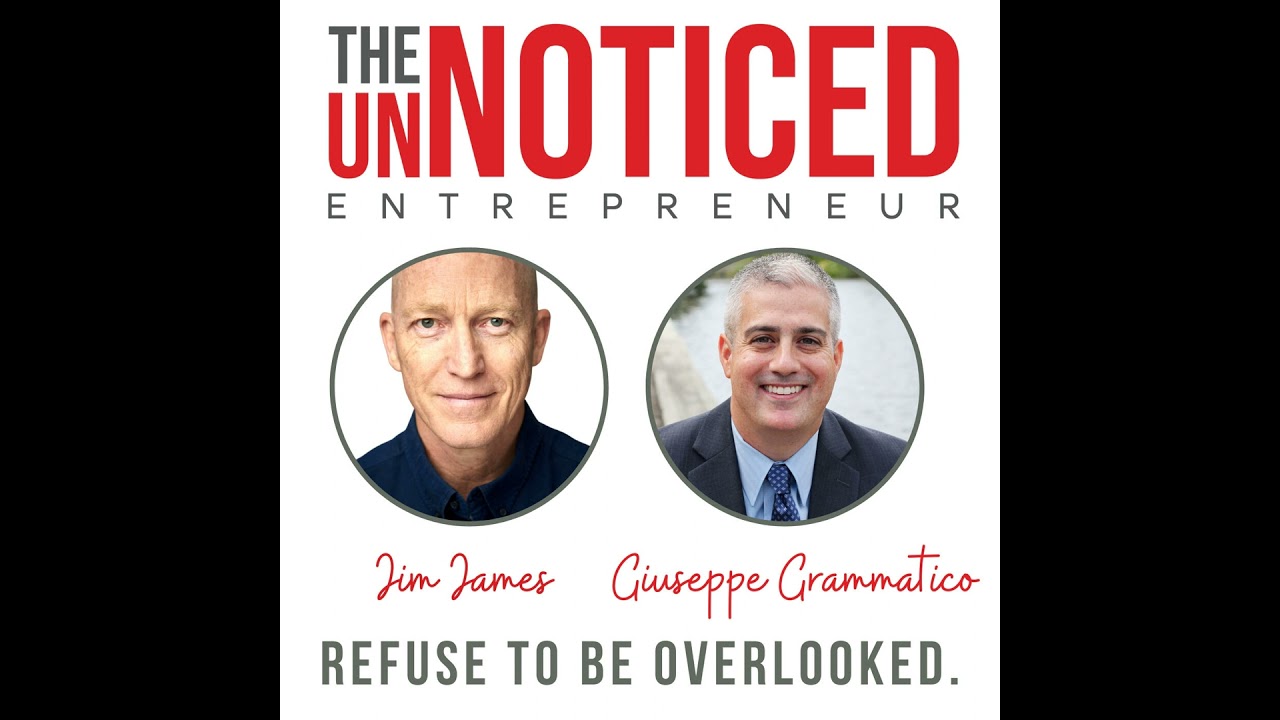
Giuseppe Grammatico, a former JP Morgan executive, explains how franchising can be a faster path to business ownership than starting from scratch. He launched a Subway franchise in under 30 days and turned profitable in year one, but warns that success requires matching the right franchise to your capital, goals, and how hands-on you want to be. Typical investment ranges from $100-200k for home-based models.
Chapters
Hello and welcome to this episode of The Unnoticed Entrepreneur. Today we're going to New Jersey because we're going to find out about franchising. Now, if you've ever thought about owning a franchise, about not necessarily taking the, the risk of starting your own business but buying a business that already exists with all the processes and the brands, then this show is going to be for you because Giuseppe Grammatico has helped over 1,000 people decide if a franchise is right for them, and if so, which is the right franchise. We're going to talk about franchising, we're going to talk about some of the costs. Is it really a risk-free way to run a business? And Giuseppe is also going to tell us about his entrepreneurial journey from JP Morgan to running his own business. And at the end, he's going to give us a free download, so stick around for the whole show. Giuseppe, welcome to the show.
Thanks, Jim. Thanks for having me. Looking forward to it.
Well, me too, because we haven't touched on franchising really before. And question to start with, you know, is franchising sort of a quick and risk-free way to get a business started, Giuseppe?
Uh, it's a quicker way to open, not definitely not risk-free. So a franchise is really for someone that Wants a proven business model that they can run with. A franchise has figured— a franchisor has figured out kind of via trial and error best ways of going about business. There's economies of scale, there's systems, there's operations, there's a process in place to help run that business. So I talk about an un— I mentioned an unfair advantage. You're up and running relatively quick. There's always going to be risk. And a big part of franchising is not, is franchising risk-free, but it's really, you know, how can I minimize risk? And it's really finding the right franchise, being well-capitalized, and that franchise that's just the right overall fit for you based off of, you know, characteristics, how you're looking to run it, that kind of thing.
Giuseppe, let's do the first one first, finding the right franchise. Your business, which is at ggthefranchiseguide.com, You know, and you've helped over 1,000 individuals, often corporate executives who are like you, you know, when you transitioned. And we'll talk about your background later, but how do people go from maybe a corporate job role to decide which is the right franchise? What are considerations they should have?
Yeah, so first figuring out, you know, what you're trying to accomplish. And a lot of people that are working corporate are running a— they want a side business because they want to keep their job. They want to keep the income and the benefits, but they want this side hustle, this side business that they can run, essentially run both until the business is generating enough income and then maybe they can step away from their job. So you could run it full-time, you can run it part-time, but a lot— that's where the interest has been lying. And, you know, for a starting point, it's figuring out, do you want that franchise or that business built for you so that you could run with it, or do you want to build a business From scratch. So that's something you have to figure out. If you see value in that business being basically prebuilt, we call it a business on training wheels, a business in a box, a franchise could be a good fit. And then we go down kind of a listing of, you know, where is the business located? Are you home-based? Are you going to a location, you know, physical location, shopping center, a standalone building every day? What is your investment range? What is your role in the business? One of my favorites and one of the most important is you buy a massage franchise, but are you providing massage services throughout the day or are you reviewing the KPIs and managing the manager and deciding when to open up your next location, that kind of thing? So, when you break down, when you reverse engineer, break down the characteristics of what the ideal business looks like and then look at the franchises available, It definitely helps with finding the right business and it definitely helps with reducing as much risk as possible.
Giuseppe, let's just talk about you because you started your business over 20 years ago, I think, and just share with us your background then from corporate into running a business of your own.
Yeah, so corporate executive, last firm was JP Morgan, as you mentioned. 5-hour commute into New York City. That's round trip, door to door. And it was just miserable. I didn't like the job. I had 30 managers I felt above me and didn't feel like there was a future for me. Tried interviewing different places, tried different industries, and just felt like I was a number. So, I grew up in the Italian restaurant industry and felt like, you know what, I really like to own my business, didn't like those hours. So I said, there's got to be something else. At the time, Subway was really popular. So I started looking at Subway, reached out to a franchise coach or consultant, which is what I do today. And we talked about the idea that there are 4,000 franchise companies, and I didn't realize it wasn't just food. There was eyelash extensions, there was massages and business coaching and dog waste removal. You name it. I mean, there's really literally a franchise for everyone. So I said, you know what? I am not creative to, you know, and don't have the energy or even the interest in starting something from scratch. Why not go with a proven business model that I can just plug myself in, learn the system, and be up and running? In my case, I was up and running in less than 30 days and I was generating revenue. Literally, in 31 days, I believe I was generating revenue. I didn't say I was generating a profit. We were generating revenue. So, I like the proven business model that I didn't have to figure out. And yeah, was able to utilize my skill set of sales to grow that business. And we were profitable year one.
So that's a wonderful example of how franchising can, if you like, help the corporate transition. And with your own life story, you've lived that success already. You have mentioned a couple of times about investment, Giuseppe, and I think it's useful to talk about that because when people start their own business, there's the investment in branding, hardware, technology, plus the opportunity cost of not earning during that time. But then at the end, you own the brand and you own the system and the products. Can you just take us through what does it cost if you can give us an idea of sort of a minimum entry level For a franchise?
Yeah. So with a franchise, keep in mind, when a franchise gives you the investment, it includes the one-time franchise fee. And they're going to include also in their item 7, marketing costs and technology and, you know, the branding, all the costs of working capital, essentially, to run that business. And a lot of, you know, a rough range in something that is not brick and mortar, we'll stay on the topic of home-based or something that could be run via a small office. And you'll see a rough range of Between $100,000 and $200,000. Why is there that range? Well, it depends on if you're running it full-time or part-time. Part-time, you may have a general manager salary, if you have an office or not. But the big one is if there's equipment or vehicles involved where you can lease those vehicles, you can buy those vehicles, that's going to affect the initial investment. But keep in mind to everyone listening in, 'cause I hear this probably every week, you own 100% of your franchise. So it may be a Subway franchise, but it's yours, but you don't own the franchisor. So that's where I think the confusion lies. So you own 100% of your business. The franchisor does not own your business. You're using their systems and everything in place. And in return for that, you're paying an ongoing royalty. So the opportunity cost, to your point, is the franchise fee. You pay it once and you have access to the entire system same day. And versus, you know, starting from scratch, you don't have a franchise fee. You still have the marketing fees and all the other fees that go along with it. But it may take you 2, 3, 4 years to develop that system. So, I always say, look at the opportunity cost of what could you have made in those, you know, 2 to 4 years developing the system versus, you know, having it handed to you directly as soon as you pay that franchise fee. So, That's just a way of kind of comparing and deciding if a franchise is a good fit.
Giuseppe, one point that I'd love to just ask you is that when people as entrepreneurs start a business, they have a why, you know, they have a mission, they wanted to help somebody to do this, or they've got an inspiration for that. If it's not your original brand and it's not the business that you started, how do you have that passion? For a franchise that you might have for a business idea that you had of your own?
That's a great question. So it comes down to the role, you know, and the why. So the why is why are you doing this? And a startup business and a franchise can get you there because ultimately it's all about systems. Without systems, you just don't have that true business, right? You can't be the entire business. There's going to be things that you outsource and things like that. So So, having that business, it's really the vehicle. And the vehicle for me in my first couple businesses was something that I didn't have to be involved in the business daily. And what's funny is that when you mentioned kind of something that you start from scratch or a franchise, in many cases, in my personal opinion, it doesn't matter. Why doesn't it matter? Because you're picking the things you enjoy doing. So, I can own a a startup where we're offering digital marketing creation and services, or I can have a water and smoke mitigation restoration business. They're very similar in that my role as the owner is overseeing the business, reviewing the KPIs, networking at my chamber of events, doing podcasts and webinars to essentially be a cheerleader for the brand, the mayor of your town, So, a lot of the roles and things we do are the same. My why, or I should say the thing on my goal in the business is to work as little as possible to have these systems run so that I can make the claim as we talked about prior that I never missed my son's soccer games because I became a coach and I prioritized that. So, that's what the business gave me. The why, the business is great and I love it, but my true why and passion is spending more time with family. So that's what it created. And I don't care if it's a dog waste removal franchise or it could be a startup, as I mentioned, offering digital marketing services. If it gets me to what's most important, I honestly don't— I'm not as concerned what the actual product or service is.
Yeah, it's really interesting. So seeing the franchise as a means to an end as opposed to the end in itself. So Giuseppe, are there opportunities then for franchises to create multiple sort of streams of income so that as an entrepreneur, the role that you play really is as a business owner with multiple franchises as opposed to working inside the business? Because presumably if you've worked in a corporate with a high-level job and then you become a franchisee, if you're than making the sandwiches. It's kind of a big shift in sort of job description and self-perception and also value created. So, how do you see that role playing out for people that are transitioning?
Yeah. So, it's really important in the beginning and how you're going to run it. So, you may have 2 sandwich franchises just because we use that example. And one is going to be you're going to need to be full-time hands-on making sandwiches and the other one, You may never touch a piece of, a slice of bread. They're gonna have you hire a GM day one and a team so that you can really work on big picture stuff, KPIs, growth, future locations. So, you know, when looking at the business, you always look at growth strategy. And in something like a restaurant, you know, the franchise, the franchisor may add revenue streams that may be products, but you shift gears into something like, home services. So we'll talk about a painting service. You know, there are various ways where maybe you have a painting franchise and you can expand and start to what we call a brand stack vertical expansion by adding other home service franchises. So it may be a franchise on cleaning. You may open up a non-franchise that does roofing as long as it doesn't obviously compete with the franchise. So just because you're in franchising doesn't mean every brand, every company has to be a franchise. So You start off with, you know, painting franchise, then a, you know, a mom-and-pop, you know, startup that does roofing, and then maybe another franchise that maintains the exterior of the home. So you are able to essentially leverage your 500 customers that are happy with your services and upsell them on the additional services.
I love that. I love that idea. And because you're getting the business model, the brand, and the system so quickly, you can add more revenue streams, can't you?
Correct.
To your portfolio investments. Giuseppe, it would be wrong to paint franchising to be kind of the panacea, wouldn't it? What would be risks for the franchise holder who may be sort of in their 50s exiting corporate, could either put the money into property or into a franchise? One seems literally safe as houses. What about franchise? What risks are involved for the franchise holder?
Yeah, so I mean, real estate historically has done really well. Stock market has done really well. But what's the missing piece? The missing piece is control. Can't control the stock. We have zero control. We have zero control in real estate. Areas can change and, you know, people are now migrating and, you know, working from home. So where You know, where's the next real estate boom since we're not— a lot of people aren't going back to the office. So, you know, with franchising, there's absolutely risk. You can lose your investment. I always tell that to everyone. To your point, someone that's maybe never owned a business that's getting involved, the risk I see is that not doing the thorough due diligence. They speak with the franchisor, they speak with their family, they buy, they don't talk to any franchisees and understand Truly, what does the day-to-day look like? So not doing proper due diligence, just finding something they love. Like, I love the product or service that's being offered. That is a very poor start because in many cases you don't know what your role's going to be. So it's like I'm buying a golf franchise because I love golf. Then you find out you're in the retail space. You have nothing to do with golf aside from selling golf apparel. Nothing against golfing franchises, but your role is going to be retail essentially, which could be similar to just about anything in the retail space and not really going out and golfing. So the biggest thing is finding the right match, the role, something you would enjoy doing. If you don't enjoy sales and you're more introverted, there are franchises that, you know, with the franchisee's role is going to be more introverted, more kind of backend kind of stuff. But the biggest one I also see is being undercapitalized. Great franchise match, great franchise system. You don't account for living expense. If you are leaving your job to run this business, who's paying your rent? Who's paying your mortgage? Who's paying the health insurance and everything else? The kids' school, that kind of stuff. So you need to have money in the bank, 6 months minimum living expense, unless you're You're working and having that side business. Yeah.
So, so in some respects, the, the traditional business concerns about, you know, cash flow, personal assets to carry forward until you get across the cash flow hump. Giuseppe, just final question on franchising, and then we move on to, on to you as a business owner and some lessons that you could share. People build a brand with a view to sort of be able to sell that. company, right? With a franchise, what's your exit strategy?
Exit strategy is similar. You know, you can sell, you can sell the business, you notify the franchisor. Sometimes they're able to assist via their network for a fee. They're going to have to meet the new buyer just so that they get trained and up to speed on the brand. But what I'm seeing is a lot, and what I recommend is, if you own a franchise and it has a a 10-year agreement, you don't have to wait 10 years to sell it. You can sell it at any point. Is I would contact your local, your neighbors, your neighboring franchisees, because they can, they don't need to be retrained or go through due diligence. They can simply take over your business and they're off to the races. So it saves a large broker fee and it's an easy process. So you have that advantage. But assuming you're in an area that doesn't have, you can sell through a broker or with the assistance of the franchise company.
Okay, and final question, I realize. How do you stop the franchise owner cutting you out? You build the brand, you build the territory. How do you ensure that at the end of the 10 years or 5 years they don't say, thanks, I'll have that, and go direct?
Yep, part of the franchise disclosure document will list that. So the terms, what the agreement is, the protection of territory, there's going to be a section that states these are the zip codes that, that are included in your franchise. This is your legal entity, the name, you have everything spelled out. There's no, oh, they mentioned this on a call. I always recommend having that. That's part of the franchise agreement, which is within the FDD that lists everything that you're getting for the franchise. So read that cover to cover, hire a franchise attorney, you know, not mandatory, but recommended, and make sure that everything is covered in the agreement.
Giuseppe Grammatico, if anyone needs to know more, they can come to ggthefranchiseguide.com. I think that's where we'll guide everyone to go. As an entrepreneur yourself, you've been building this business. Um, what would you say has been the biggest obstacle to get your own business noticed, and how have you overcome that?
Obstacles? Well, you know, one of the, I guess, mistakes or obstacles— I guess we can call them both— is, um, you know, kind of using— you know, I was outsourcing some of the marketing in the past to a few companies where They kind of decided the direction, the recommendations, and I was kind of just following, okay, what's needed? Let me know what's needed. And I noticed that didn't go well because my voice didn't come through. I was relying on someone that was not an expert in the brand. You are the expert in your brand. You are doing this day in, day out. You know every problem, every issue. No one speaks more or better than the brand than yourself, than the entrepreneur. So, that's why I started the podcast in February of 2020.
Yeah.
And I said, you know what, I'm going to lead the marketing. I know the pain points and the questions people have, whether they like the answers or not. It's going to be unfiltered, uncensored. So, what I did was I took— I kind of ran my own podcast and then I have— I just hired a new production company just to really break it up and produce it, clean it up a little bit. But you should really figure out your voice. If you like talking, video, maybe you're a writer. One is not better than the other. It's really what you excel at. So pick your medium, stick with it. When I say stick with it, we're talking years out. Don't just give up after the first 2 podcasts because no one downloaded anything. But, and then have, and then outsource the rest, the stuff that the production and things like that. So stick with what works, pick one, and then just go all in.
Yeah, Giuseppe, you have over 170 episodes now of your episode explaining everything about franchising. So that's fantastic for anyone that, you know, wants to listen more to Giuseppe Grammatico. It's called Franchise Freedom, uh, and you can find it on all the, on all the players. So that's brilliant, Giuseppe. Um, you know, now we're getting onto this, um, this idea of sort of podcasts or, or books, uh, before then we have you kindly share with us a, you know, a guide, a giveaway for people. Um, Any things that you've been reading or listening to that you can recommend?
Yes. You know, one of the most important is, you know, we talk about— so, I'll recommend a business book and another book, but the one I enjoy is The Blue Zones. Dan Buettner is the author. There's a dozen books I believe Dan has. And it just talks about the regions of the world with the most centenarians, people that lived over 100. But it talks about the simplicities of of movement and the importance of friendship and diet and things like that. And at the end of the day, that's what's most important, right? Business is important, but it's all about life and quality of life, not just living to 100 but having a good quality of life. So, that's a great book, simple. You can read it in, I think, in an hour. And it really made me think and slow things down and simplify. From a business book standpoint, the one I just finished up was Traction. By Gino Wickman, talking about the Entrepreneurial Operating System. And it's one of the few books out there, not saying the only, but definitely one of the few out there that talks about how to run a business kind of like the spokes of a wheel. They all have to be even from marketing to employee. You know, what good is a business when your employee retention, you know, you're replacing employees every month? So it talks about the KPIs and the specific things you need to be doing on a daily, weekly, monthly, you know, and so on, so on basis to keep those spokes going, balanced. And they're equally as important as the marketing as well as financials, you know, and the list goes on. So, great book for EOS, Entrepreneurial Operating System, and the book is Traction by Gino Wickman.
Yeah, that's wonderful. Thank you. And is New Jersey in the blue zone? Is New Jersey in the centenarians hotspot?
New Jersey is not, I think, the only one. You got Sardinia, Italy, Okinawa, Japan, and I know there's a small town in California. I can't remember the town, it's escaping me, but there's about 6 or 7 Blue Zones. And you'll be shocked at what you read. It's a lot of kind of you have this expectation, you find out it's different, but there's a lot of movement and sense of purpose. So, it's a really interesting read.
Good. Thanks for that, Giuseppe. I'll have to have a look at that. There's a bit of time left before Christmas gets here.
Yeah, absolutely.
Get a copy. Giuseppe Grammatico, if you've got one piece of advice, you know, you've been running your own businesses and had a very successful corporate career before that. One piece of advice for my fellow unnoticed entrepreneur, where would you take us?
Yeah, one piece of advice. And, you know, I asked, you know, and I'm not saying this is bad, but I felt like I asked too many questions in the beginning. What would you do in this case and recommendations when my gut, you know, I knew in my gut what was the best path going forward. And I think you need to trust yourself. I think we get inundated with the internet. I think we get inundated with information and we just get, you know, deer in headlights. We don't know what to do with this information. It's like, oh, I should do this now, I should do that. And what's the hot, you know, new shiny kind of object? So, I believe we have it all within us to kind of follow our gut, what we, you know, do what you enjoy. This journey has to be sustainable. No one builds a business in a few months and sells it and then they retire, or maybe they do and I'm not aware of it. But this is a lot of hours. This is a lot of time commitment. So do something you truly love. You know, be careful who you ask opinions for, you know, especially when you're asking opinions of someone that maybe have never owned the business. And I'm not being negative, but Owning a business and not getting paid for the first 3 months, explain that feeling when you've never gone through that. I challenge anyone. It's not the best feeling, but when you get past that hump and you realize why the heck you did this in the first place, and now you start experiencing the time freedom to spend at the soccer games, the financial freedom, and just about everything else that goes along with it, just stick with it. And When times get tough, which they will, I guarantee you, there's things out of our control, like what would happen during COVID You know, no one expected that obviously, but how do you get through those times? And you start to, you know, I made my business lean. You know, I figured out ways of cutting costs and getting through the rough times. But if you go back to the why, 'cause, you know, I've been down in the dumps before, I'm human as well. Once you go back to that why and remember why you got into entrepreneurship, why you got into business ownership, That will help you get back through those ebbs and flows in the business. So, go with your gut, be as consistent as possible with the podcast, with the marketing, and eventually, you'll look back and say, man, all that work was truly worth it. So, very basic advice, but I've learned it's the basic stuff that's really been the most helpful and the most consistent.
And, Yeah, Giuseppe Graviano, it'd be the basic stuff that keeps us in the blue zone, hopefully, as well. If you want to find out more about you, and you kindly got a giveaway, haven't you, for us today?
Yeah. So, if you go right to the website, as Jim mentioned, ggthefranchiseguide.com, we're having a new website being built, just not live yet. But right up top, there's going to be a free book download. And there's the podcast here on the screen. So we have 170 episodes covering various areas like how do I sell my business? How do I know if a franchise is a good fit? What legal entities do I need to set up? What about accounting? We cover all those aspects for you to review. It's not just franchise related, it's basically anything around owning a business. The book, Franchise Freedom as well, same title, is my complete blueprint of how to find a business, How to build a team, that professional team of your financial advisor, your attorneys, your accountants and CPAs, and so on. So if you like reading, it's an exactly 30-minute read. I just reread it myself. The podcast covers different topics, or there's a workshop. So if you're stuck at your job and you're trying to figure out the next steps, the best advice given to me was don't have it all figured out. The next step is one thing. And that one thing is just watch the, watch the workshop. And then from there, if you decide a business isn't a great fit, so be it. Maybe it's a new job. Maybe it's, it's something else or a different career. So that next step is crucial. You don't have to have the whole thing figured out. Just take the one next step and it'll get you hopefully in the right direction.
Giuseppe Grammatico, they've given us a lot of great steps to get in the right direction with franchising. Thanks for joining me today.
Thanks, Jim. It was fun. I appreciate it.
Well, it's been brilliant, hasn't it? Listening to Giuseppe Grammatico, and that's GG Franchise Guide, uh, ggthefranchiseguide.com is his website, and I'll of course put that in the show notes as well. So franchising gives you a faster and probably more fail-safe route because the business is already proven, but it's not by any means fail-safe. You still have to be an entrepreneur to run that business. But what I like is that also you can actually have a portfolio of franchises and add complementary businesses on top of one another in a way that if you were to try and run and build multiple businesses simultaneously, my own experience is that it's hard to run one business well, certainly even harder to run 2 very well. So thank you to Giuseppe for joining me today, and thank you to you for joining Giuseppe and I on this show. If you've enjoyed it, do please review the show on your player because it really helps. Just at the very bottom of all the episodes, you can see the review. And if you can share it with a fellow unnoticed entrepreneur, someone you think who'd find this useful, that would also be appreciated. And until we meet again, I just encourage you to keep on communicating. Thank you for listening.
Okay.
More from Jim











2 people, infinite agents, 1 billion dollar idea #AIAgents #Startup #Productivity