There are a million story reasons to get published in an anthology to #getnoticed.
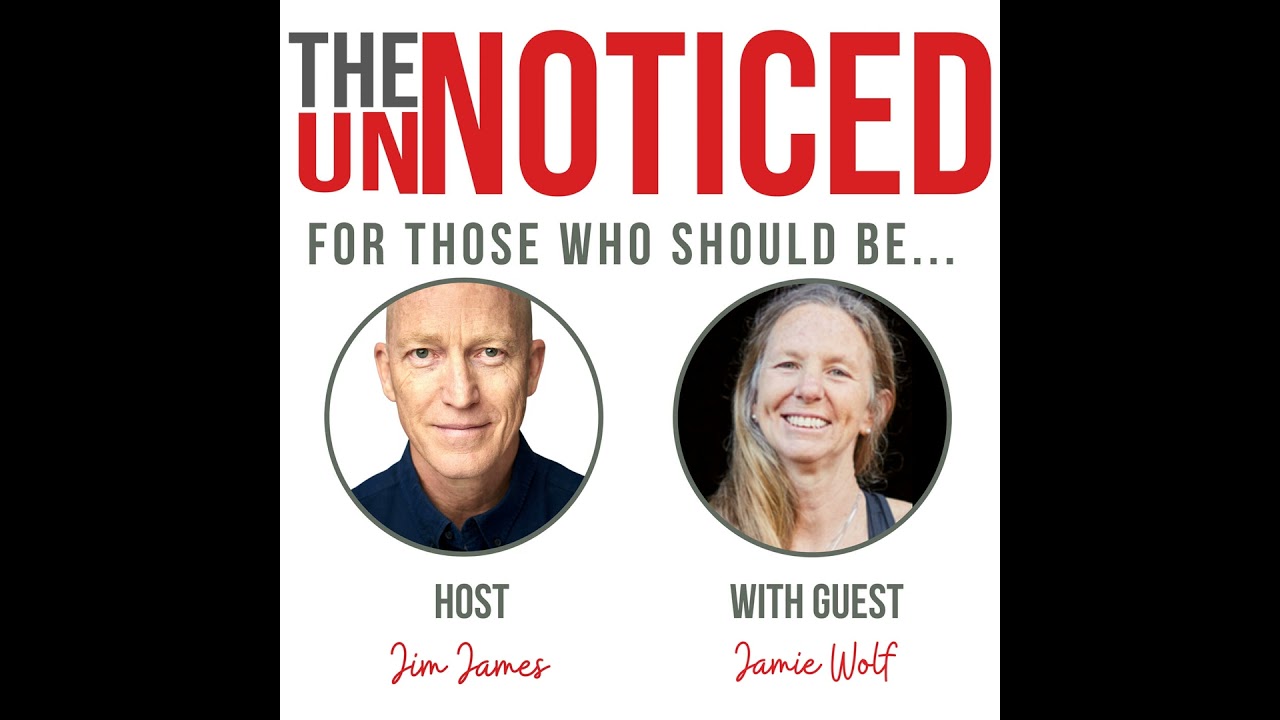
In this episode of The Unnoticed Entrepreneur, host Jim James interviews Jamie Wolfe, founder of the Million Dollar Story Agency, about using collaborative anthologies as a fast, high‑impact publishing strategy for entrepreneurs. Wolfe explains that her service helps entrepreneurs—typically those selling $5,000‑$50,000 offers and already generating seven‑figure revenues—produce a concise 20‑page contribution that functions like a 200‑page book, leveraging co‑author audiences to double reach. She outlines a step‑by‑step framework for selecting co‑authors, curating tone and voice, and ensuring chapter flow so readers experience a cohesive narrative despite multiple voices. Wolfe details the mechanics of achieving Wall Street Journal, USA Today, and bestseller status, emphasizing the 6,000‑10,000 sales window over six days, multi‑channel distribution (Barnes & Noble, iBooks, Roku, etc.), and coordinated ad campaigns. The conversation includes a case study of the "Million Dollar Identity" anthology, which hit #2 on the Wall Street Journal list with 20 contributors, and discusses optimal author counts (10‑20), deadline enforcement, and contractual safeguards. She also addresses common objections about ROI, time commitment, and perceived difficulty, highlighting how existing content can be repurposed, assistants and recordings used, and the author’s involvement kept minimal. Finally, Wolfe provides her website (milliondollarstory.co) for interested entrepreneurs to schedule a call.
Chapters
Hello and welcome to this episode of The Unnoticed Entrepreneur. I'm here with Jamie Wolfe, who's sitting in Beaufort, South Carolina. Jamie Wolfe, thanks for joining me on The Unnoticed Show today.
Thank you so much for having me. I really appreciate it.
Well, I'm so lucky to have you because you help people and entrepreneurs to get noticed through the power of books. So Jamie, tell us about what you do and how you help entrepreneurs to use publishing as part of their strategy to get noticed.
Well, thank you for that question. I work with entrepreneurs who have something to sell. If you are in business, you need to generate some profit. So we're not ashamed to say that the entrepreneurs we work with should have something that's going to sell in the $5,000 to $50,000 range. People talk about books not producing enough ROI. I work with entrepreneurs to write very strategic books. And in fact, they are not solo-authored books. So the concept behind it is entrepreneurs are always very, very short on time. And so if we can help them Produce 20 pages of content that is as effective and gets the same results as 200 pages of content. And we produce it within— by beginning of next quarter. So you haven't chased the next shiny object. You don't have to figure out what the economy is going to be doing 2 years from now when the book finally gets published. We go very fast. We're very tight. We provide a framework and we help people co-author or do collaborative anthology projects, because if you have an audience of 10,000 and they have an audience of 10,000, each of you now has an audience of 20,000. You're edifying your co-author. So their audience suddenly becomes warm to you instead of cold and vice versa. So I help entrepreneurs write, publish, market to bestseller, USA Today, Wall Street Journal bestseller. And then we have a big celebration and put you on the NASDAQ billboard in Times Square to provide marketing material for you going forward.
Well, Jamie, you make that all sound super, super simple. But I know having written just one book and been to the book awards this week, that it's not that simple. Take us through the idea. And I do love the idea of an anthology, but obviously that might dilute the entrepreneur's voice. For example, it might challenge them in terms of who the audience is. From a practical point of view, Jamie, how do you put together an anthology with multiple authors?
I love those questions because 2 of the objections I get often from people who have never written anything are, I don't want to be lost in the noise. And what if my competition is there? Or what if the audience isn't right for me? I use Jack Canfield as an example often. He's published and sold Half a billion books, probably more at this point. And he did that because he didn't stop after one book and he didn't solo author all his books. So he has chosen very carefully and strategically different influencers, whether it's 1, 2, 5 other people to co-author. And he's written many, many, many books because you have more to say. So don't stop with just one book. So when you are writing in an anthology, you can be in an anthology with this group of people this quarter and in a different anthology next quarter. And things of that sort. We work specifically with entrepreneurs who tend to be in the online digital marketing space. So they might be coaches, they might be e-commerce people. And so their audiences will overlap. It's so much of business's mindset, every single different business, whether you're in pavement management or dry cleaning or something like that, the thought behind how do you create systems and processes? How do you manage your budget? How do you market yourself? Those are all very common themes regardless of the type of business you're in. How do you get more prospects? How do you convert those prospects to paying customers? How do you fulfill whatever it is that you've sold so that they're satisfied and they come back and you ascend them up the ladder? How do you build relationships? All of those things are very common across businesses. So we can place different authors, entrepreneurs together within a collaborative effort who can talk about all of these sorts of things. And I provide a framework for each so that it flows chapter to chapter. So even though it's a different voice, a different topic, a different audience, the reader is You're not going to go, what the heck just happened? I feel like I just ate spaghetti that got thrown on the wall and I'm picking up the pieces sliding down the wall. We don't leave you feeling that awful.
No, I'm sure you do a great job. So just to be clear, an anthology is really a collection of works, isn't it? If I remember my sort of American literature, it's an anthology of American literature. We'd have like Hawthorne in there and Du Bois or whatever. So it's a group of different authors with one overall subject. And what about the issue of things like tone of voice and subject matter overlap, Jim? Jamie, how do you address that? Because different entrepreneurs will write in a different style, for example.
Absolutely, they will. Good questions again. So if you think of an anthology as a room in a museum where the artwork is curated, you might have all Impressionists in one room and all— I'm not a great art person, so I can't give you all the right language, but very modern in one room and very classical in another room. So an anthology is a curated work where we've selected entrepreneurs who can complement each other, again, their audience. will likely buy from each other at different stages. As far as voice, in my early days of doing this, the thing that I ran into is if your audience is familiar with Gary Vee, he has a very colorful way of speaking. There are other authors who are more Christian-oriented and would be highly offended to stand on stage next to Gary Vee and have that language. So the only thing that we've had to step in and monitor to some degree is let's have a consensus of who's comfortable with what language. Obviously super careful about just setting ground rules of no hate speech and no racial anything. So we want to be kind, informative, constructive, and instructive. Beyond that, we leave tone of voice a little bit to the individual entrepreneur because their audience is very accustomed to hearing their tone of voice. And if we changed it in the ghostwriting too much, their audience would go, well, that's not Keenan. I know Keenan. I listened to Keenan on Instagram and TikTok. Every day, and that is not Keenan. So what did you do? So we do provide the framework. We clean up the writing enough so that it's consumable by reading. It's simply a different format. People learn in different ways. We then record and edit so that we can turn the print book into an audiobook as well. So people can consume the information that way. And then we also make it into an ebook. So if people want to use their individual chapter or the whole entire book as a lead magnet in their sales funnel, they can do that as well. I hope that answered your question.
Comprehensively, absolutely. And you mentioned about the recent project where you became, or your book became a number 2 bestseller on Wall Street Journal. Do you want to give us the title of that book? And who are the authors and the subject matter so we get an example of a successful anthology that you've produced?
Certainly. Thank you for asking. So the book is called Million Dollar Identity. We launched it to number 2 on the Wall Street Journal bestselling list. When the book was launched, we had a book signing and celebration event in New York City so that the authors were featured on the NASDAQ billboard. I said that already earlier, but the point is that one hesitation other than, oh my God, writing a book is so hard and it takes 2 years and I have to go live as a hermit up in the mountains and I can't do that. Please let go of that thought about writing a book. Maybe some books need that, but not the kind of books that we write for business purposes. But the other objection I hear is there's no ROI. There's no return on investment. It might cost a whole bunch of money to work with a publisher and a marketer, even the mainstream big name publishers. Don't help with marketing much anymore these days. They expect you to come with an audience of millions or an email list of tens of thousands. So they want you to do your own marketing work to get the book out there. So people think there's no return on investment. If I only sell a couple of copies, what do I do? I can't quit my day job and then go have this new coaching business that I've always envisioned for myself. If what the book does is build a relationship with your audience, address any objections, it's going to shorten lead time, conversion time, conversion costs. It's going to repel certain people. They are not your person, so they're never gonna work with you and buy from you, and that's okay. It's going to show them that you're human. You had some ups and downs. If you can do it, if you provide some case studies and success stories, they can see themselves in that journey and feel more confident that they can work with you. So the ROI comes in positioning what it is that you offer and do in your daily business in order to have people come in and buy from you. In a typical Wall Street Journal launch, the requirements are that you sell anywhere between 6,000 to 10,000 books in a 6-day period.
Yes.
If you have 10,000 eyeballs on your book in the first 6 days, chances are good that one of those people is going to opt in and then you nurture them with your email sequence because you own that email list. And now you have an increased opportunity to sell to them either immediately or down the road. And that's where you recover your costs. So the other part of the question you asked was who is in the book? In the ClickFunnels world, Dr. Myron Golden is someone who is well known. I'm not certain how well known he is outside the ClickFunnels world. He is a huge influencer. So he was in the book. Kiana Danielle has 4 Wall Street Journal bestselling books. She's in the investment space. She helps women learn how to invest for themselves and control their finances and their children's future investment periods. So she's a great example of someone who keeps saying yes to more book projects. She doesn't stop with one.
Right.
So those are just some of the examples.
But let's just go back to that because I was talking to John Lee Dumas, for example, who got his book out, bestseller in Wall Street as well. And he was also saying just need 10,000, which is a surprising number in that it's not that many to become a bestseller, is it? At least to put your name on it. How do you get the 10,000 though to buy the book? Because it all doesn't also have to be different stores, for example. So how about the mechanics of that? Because you could do all the collaboration, have the anthology, but it's that number 1, number 2, number 3 bestselling rank that That really pushes it from being another, if you like, vanity project into being a publicity tool, isn't it, Jamie?
Absolutely. I'm going to go backwards with the question. There are some people who their business is extremely successful already. They have plenty of clients, customers. They have a good funnel to bring new prospects into their world all the time. And therefore they're generating sufficient revenue. They're at 7 or 8 or sometimes 9 figures already. So you'd go, why on earth do they need a Wall Street Journal bestselling book. Many influencers are published authors, have bestsellers. Once you're used to excelling and performing at a very high level, you don't want anything less than the Wall Street Journal. Perhaps New York Times bestseller, that is a different beast in the world of selling books. So I won't divert too much that way. But the idea is some people are simply happy having a Wall Street Journal bestseller credential next to their name as one additional point of I'm an authority, I'm credible, I'm trustworthy. It also helps when you're going after An Instagram blue verified checkmark. To be a bestselling author, it's only one of the many points to get that verification. PR is another big factor in it. To sell 6,000 to 10,000 books, I back up and I say many people go after the Amazon bestseller. And when people first started asking me for that help, I was like, absolutely not. It's an algorithm game. It's worthless. You don't want to do that. And then eventually I stopped putting out my thoughts and feelings and I listened to what the market wanted and they wanted the bestseller. And I did realize after time, if you have 5 fitness instructors and they all have raving loyal fans, but one of them says, I am a published bestselling author on Amazon. They have raised their profile a bit. People will just automatically trust them more. In Amazon, there's several different layers of bestseller. You can have a best new release. That's— you're just starting to sell a few more copies than the next book in your category. You can be a bestseller based on how much volume you sold in a period of time, and then you can get the bestseller banner. If you're not in my world, you don't care at all about all this level of granular detail, but it's what we look at behind the scenes. And that means you have to have sold not only a large volume of books, but books from different URLs. They've got to be unique individual buyers. So I, as the publisher, can't just go swoop in and buy 10,000 copies at once and go, oh yay, we got the banner. It won't happen. So that's the same sort of thing in the Wall Street Journal and USA Today bestseller. You must sell from Barnes& Noble, from iBooks, from Roku, from a lot of the different readers out there and different zip codes. So it becomes a very concerted, orchestrated, intentional marketing effort to make sure that you're selling from different regions of the country. You have strong email lists. You are running ads, Facebook ads and Google ads and Amazon ads. It's almost like planning for a regular event. You want to start well in advance.
Right.
Behind the scenes, we do not make our authors start in advance. The whole idea for our authors is they barely notice that they're writing a book. We can use repurposed content. We can work with their assistants. We can ask them to record things. We can use already recorded things like you've done with your podcast. So we want the entrepreneur to be hardly bothered at all, hardly aware that this is happening, but behind the scenes, we're building our list and building our ad campaigns.
Wow, Jamie, that, yeah, that's a huge operation, isn't it? To differentiate oneself with some success. So you mentioned people might only submit maybe 20 pages. to be part of an anthology. Is there a guide to how many authors or sort of collaborators should be in an anthology to be included within an anthology to make it successful? Is there a magic number? Too few, too many?
In a different lifetime, I helped run a board of directors for a company. And when I took the job, everyone shook their head and said, oh, 30 board members, you're going to be herding cats. Well, I'd never done it before, so I didn't know what they were talking about. And I quickly learned, oh my goodness, 30 incredibly busy people who this is low on their priority and they only have to show up once a month and they are not paying attention. It was a lot. So I think from the viewpoint of the conductor, it matters how many different people—
That's right.
—in the book, because if one person fails to meet a deadline, even if it's only the assistant turning in content that was already created, if one person fails to meet a deadline, the whole thing comes to a screeching halt. Contractually, we've learned to say, look, if you miss a deadline by too much, you're just out. And no, we're not giving you your money back. But we don't want you to be out because your material and you are amazing. We want to make sure the audience knows about you.
So how many would be included, do you think, Jemmye?
Yeah. In the one we launched most recently, like 3 weeks ago, Million Dollar Identity, we had 20 authors. I think 10 is a healthier number.
Okay, good. So would you recommend that maybe an entrepreneur gathers up, you know, 8 to 10 people and says, hey, we could make in effect a consortium, right? A collaboration. Or do you like it if they come to you and they say, I'd like to be in this category, can you place me with another cohort of authors?
I have seen it work both ways. I have a book called Million Dollar Moms and a mom who is an entrepreneur running 4 million-dollar businesses came to me and said, I've got teenage children. I have introduced them into the world of entrepreneurship. They've already paid for college. I want to get other moms together who are raising entrepreneurial children and talk about that. So that group came to me in Million Dollar identity, I put the ask out. I want to talk to people who have become someone capable of earning $1 million or more because you change when you grow a business that big, not in a negative way. You own more of who you are and how expansive you are in how you serve the world. So topics that we have coming up are things like million-dollar faith, million-dollar proximity. Who are you in the room with and how did that change your life?
And so to work with you though, Jamie, do people have to have $1 million or be involved in a million?
Because that seems to be recurring So my brand is Million Dollar Story. My agency is Million Dollar Story Agency. So the series I produce usually has the phrase million dollar in it, whether it's Million Dollar Moms or Dads or Identity or Proximity or Faith. Many of our entrepreneurs have reached the 7-figure mark. Some of them are close. Chances are you're not going to be a person offering something for sale in the $5,000 to $50,000 range if you haven't grown a business to that level. that large yet. So mostly I work with people who are already at 7 figures.
And is there a point that there's no point in having a book unless you're at that level? Because there's a lot of other less complicated brand building work that can be done before you go into authorship.
I think there's opportunity for anyone to choose and decide to write a book or be part of an anthology. Perhaps my offer isn't right for you yet, but there are other people doing similar projects. If it simply breaks down the barrier of you having belief that you can indeed author something, write something, use preexisting content, curate it, and start, I encourage everyone to do that because for some reason we feel like writing a book is just hard. That is a myth and a story that's perpetuated, and it does not need to be. And writing a sentence, if English isn't your first language or grammar wasn't your strong suit and you dropped out of high school or college, that should never be a barrier to sharing a story and your wisdom.
Jamie, people want to get in touch with you, whether they've got a million-dollar story yet or are going to have, how do they get ahold of you?
The easiest way is simply to go to my website, which is milliondollarstory.co, C-O. So milliondollarstory.co. There's a scheduling link. You can just schedule and book a call with me and we can chat.
Jamie, thank you so much for making the time to talk to me today from Beaufort, South Carolina. Thank you for joining me on the show.
Thank you for having me. I appreciate it.
It's wonderful. And so thank you for joining Jamie Wolfe and I on The Unnoticed Entrepreneur today. And it's a great idea that if you would like to get published, but you don't want to start and write a whole book, collaborate, create an anthology and be part of a book. It's a great way to get into the medium. Thank you so much for listening to this episode of The Unnoticed Entrepreneur.
More from Jim











2 people, infinite agents, 1 billion dollar idea #AIAgents #Startup #Productivity