This entrepreneur doesn't want you to hire his PR Agency, but this is what he will teach you.
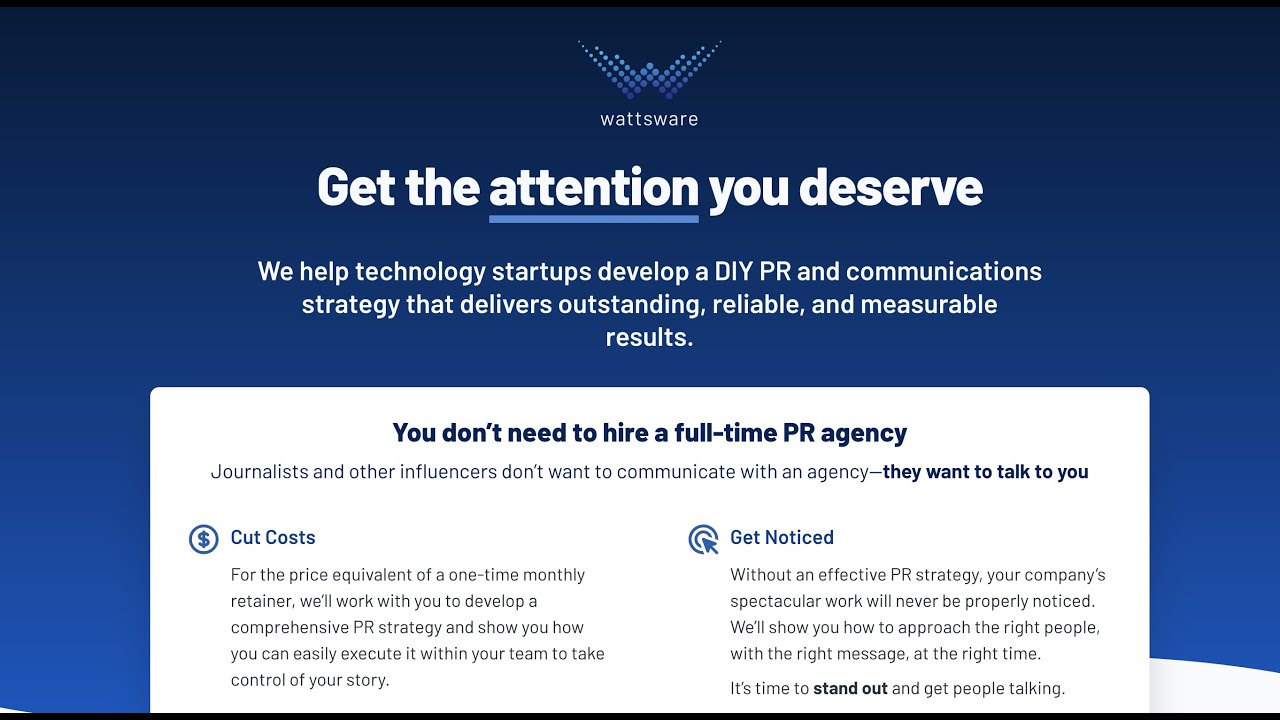
Brandon Watts teaches founders how to pitch journalists themselves instead of hiring a PR agency. Journalists want 1-2 paragraph pitches, often just 2-3 sentences. He shares a four-part story framework (problem, solution, experience, results) and recommends finding journalists by listening to their Twitter daily.
Chapters
My core belief is that companies are the best messengers of themselves. It's kind of right on the front of my website where I say reporters, journalists, they don't want to talk to an agency, they want to talk to you.
Hello and welcome to The Unnoticed Show. I am delighted to have joined me Brandon Watts, who's the founder and principal of WattsWare, who's in the sunny state, the orange state, I think, of Florida.
Yes, I am. It's finally getting beautiful here. So yeah, happy, happy to be with you, Jim.
Brandon, I realize it's Georgia is the orange state, isn't it?
Georgia is the peach state. But yeah, Florida is the orange state. So you got it. You got it right.
Okay, perfect. I didn't want to get the PR wrong for the state already. Now, Brandon, you have a background of like over 18 years of doing PR. And you're on the show to share with us how entrepreneurs and founders can do their own PR. using your 5-stage methodology. So that'd be really useful to share with all those people out there what you do to help them get noticed. Do you want to just dive in and just tell us the first problem you see entrepreneurs have and your first set of solutions?
I've done full-service PR and worked with clients for, you know, many years at a time and helping them handle all their PR needs. But I started to identify this opportunity for, say, like a seed-stage funded or early-stage funded tech startup, which is what I work with primarily, is tech startups. But I found an opportunity in the market for that type of startup that has a small team, a little bit of funding, but wouldn't really be interested in working with a normal PR agency, kind of like what I was. And my background is working with early-stage startups. I love working with companies when they're fresh and trying to figure out who their audience is and being that first pitch to the press. So I, I've been fascinated with this idea of productizing client services, and that led me down the road of what I'm doing now, which is DIY PR strategies for tech startups. And so yeah, it's broken down into about 5 steps, but essentially have a kickoff meeting with a client, learn about their goals, what they want to achieve, their competition. I go off, create a strategy with them, review it, see what they think, we adjust it as needed, and then present that final strategy to them and the training on how they can execute it. So they'll know their messaging, they'll know who they should talk to, They'll know when they should talk to their clients about certain things. And then I'm also giving them the training to be successful at it. And so that's kind of how the process breaks down. And then after 3 months, I have a review call with them to find out how it's going, to see what their challenges are, is it working for them, what can we tweak. So that's kind of how the service is productized, but it is a solid scope. So about working with companies for about a month to get them through this program. And then, you know, hopefully they have everything they need to do their own PR successfully as a small team.
So Brandon, are you doing agencies out of business? Because, you know, companies normally come to agencies like mine and like yours to get advice. So what is it that the, that the agency, if you like, doesn't do that the individual client can do for themselves?
Yeah, well, I do have a belief and I'm with you. I mean, I'm a normal PR agency too. I'm not going to reject a good client that I can help full-time and really assist them. I just saw this separate need, the clearly defined need for a certain type of customer. And really, I've wanted to experiment with this for many years. So this is, I figure COVID's the right time to try this. We're all trying different things and here we are. But yeah, my core belief is that companies are the best messengers of themselves. It's kind of right on the front of my website where I say reporters, journalists, They don't want to talk to an agency, they want to talk to you. And sometimes as a PR professional, you kind of feel like a middleman. You feel like you're the bridge between 2 different entities that really want to talk to each other anyways. And so especially with a small company that can't afford an agency, wants to handle it themselves, giving them the ability to know, you know, how to talk to the press, when to talk to the press, what to say. It just, to me, it drives a closer connection and it really helps them to create their own success because they can have that relationship directly. Now, as that company scales, they're probably going to want to hire a full-time PR agency. And that's totally understandable. But again, we're talking about a very small team, maybe raised $1 million or $2 million in funding, you know, so they're not looking to just expense a ton of things and do all sorts of different projects. They're trying to be lean. And be productive. And that's where this comes in, because really it's about the cost of one month's retainer and they're done. So it's very realistic for them and they can implement it.
But I think you're right about that idea that, you know, as agencies, we really are middlemen and we help to package and groom a client to be prepared for the journalists. But also, we do know the journalists and what they're looking for in advance because we have relationships with the media. that the client often doesn't have the time to build. How do you help them to overcome that problem? Because that's a structural one, right? They don't spend their time dealing with journalists in the way that we do for multiple clients for many, many years.
Yes. Yeah. And it's pretty straightforward advice. It's what we do as PR people, but it's helping them to appreciate it, which is essentially turning to Twitter. Really what I encourage clients to do is, you know, Part of my process is helping them to understand who they should— who their prioritized contacts are. So of course, there's hundreds, thousands of people you could communicate with through PR activities, but generally you want to find who has the most impact, the best fit, who's worth your time and attention in an ongoing way. And so I simply encourage my clients or anyone who's listening, follow those people on Twitter, spend 15 minutes a day just reviewing what they're saying. interact with them, see what they're asking for. It's amazing how transparent reporters are about what they need for a story or what's interesting to them. And so if you give yourself a 15-minute investment per day, you're going to be pretty close to what they're thinking about and what they're looking for. And that's how I get around that idea of PR people always know what everyone in the press wants. That may be true to some extent, but even us, we're divided with a lot of different clients and You know, it's kind of hard for us to always know what everyone's looking for. So that's, that's the advice is just be a listener on social media, interact with them and find out what they, what they want to hear about. And that's going to land your pitch better.
Then the other obstacle often for clients is one of self-confidence. I found, especially with tech clients that I've worked with, and they're like, not socially that comfortable. How do you help them to Articulate their messages in a clear and structured way so that the journalists can understand it, because often the technical people get very technical and the salespeople get very sales-driven.
Yes, well, that's very true. I try to break it down, and this is what I do in my own work, but also advising clients, is less is always more. And part of the process with working with clients on this, this DIY approach is figuring out what the competition's doing, what you have unique, how can you sum it up in a boilerplate like you see at the end of a press release, that paragraph My messaging always starts with that. We try to nail that down first to make that as clear, comprehensive, appealing as possible, and then your pitches come from that. And so one of the things I do too, and I picked this up from a guy named Donald Miller, he has a book about StoryBrand. He has this philosophy, incredible book on communication if you want to read about that, but he guides you through storytelling principles and I've kind of used that for my pitches and I have a storytelling framework which is very simple. Which is basically problem, solution, experience, results. If you can combine those 4 elements in a very simple way, in a very short pitch, that's really what you need to get attention. And I've looked at a lot of data on this and you realize that journalists, their preference for a pitch is 1 to 2 paragraphs. And I think something like 37% prefer 2 to 3 sentences for an initial pitch. So Sometimes we get in our own heads and complicate it, like we have to tell this incredible long story and all these different elements. Really, journalists are time constrained. They get hundreds of pitches. They need to know in 3 seconds if it's interesting. And so helping companies realize, make the initial contact very straightforward, simple, attractive. And then if you get a meeting, a briefing, or a request for an interview, you know, flush out the story, make it more verbose and, you know, tied to your goals. But to me, it's all about that initial contact. You have to get that first because the rest won't matter if no one's going to give you attention.
If you have got that journalist interested in your story, Brandon, how are you helping the clients to understand how to, if you like, fill out that story as you talk about to build it out? Because there's a skill as well in structuring the content for the media, isn't there? You want to talk through some of the key elements that are required for the journalist to actually be able to use it?
Yes. So I've been taking a data-focused approach on this, and there's some really good surveys that have been done for our industry, and I'm sure you're aware of them through like Muck Rack and Cision, where they interview a lot of different journalists and find out preferences and what's working, what's not. So I try to apply their research and show, you know, what do the journalists actually say they want? So this isn't hypothetical, like what's the outline of a structure they appreciate, You know, what format, what kind of images do they want, you know, using their actual feedback to factor into a company strategy. And a big part of that too is not just knowing the data and how that comes into it, but developing, for me, I think a quarterly PR strategy for a year. That's usually what I create in my process, mapping out which types of goals you want to achieve along the way. If you know how to communicate effectively and you know when to say the right thing, that's That's 90% of the battle. A lot of the formatting things are reporter-specific, but if you can follow some best practices and have some building blocks on your story throughout the course of a year, you know, generally that, that works out. And the idea too is that these, these companies are going to have dealt with these reporters along the way. They'll get some feedback. So they should know, just like we do when we work with reporters, we know what their personal preferences are because we've been talking to them over a course of time. So those 3 things combined really help them to be productive and deliver what's needed.
Now, a key aspect that I find with clients is they're always very keen on talking about themselves, and the content they produce tends to be quite internally focused and often quite technical, especially with the technology guys. How do you help them to understand the creative aspect of PR? The use of infographics, for example, infomercials and mixing it up. So Brandon, how do you help them to get a little bit more creative? Because you've dealt with the communication plan, but it's not just a process, is it? There's an art to PR.
Correct. Yeah. And that's, that's something that I always try to include in the plan is, you know, if you're just writing a bunch of long blog posts, you know, that works for some companies, but to me, that's a little uninspiring, you know. There's so many different formats and ways to do things these days. And that's always how I try to give a little sampling of that throughout a strategy. Like, well, what if you did a video series on this? Or, you know, what if you did a podcast about this? To try to open up clients' minds to different ways to tell their stories. And like what you're doing with this podcast is brilliant because it's showing— it's not just advising clients how to do these things, but you're actually showing them you're doing it, the way to do it. And you're balanced because you're getting other voices on. And so I agree, if a company's always talking about themselves, everyone tunes out. And the experts in the market you serve, one of the key things I always advise clients to do is get them involved. So the people in your industry that are known as experts, do an interview with them. That could be a blog post, that could be a 10-minute video. You get validation from them, they promote the content. It's a mutual, you know, relationship and you're not pitching yourself constantly. So yeah, you have to be creative and that probably is a struggle because the clients are on their own, but I try as part of my strategy to open their eyes to all the different formats of storytelling that exist today.
Now here's the one that's always sensitive for clients and that's crisis management, Brandon. Whenever I broach the issue of a crisis plan, they all look at me as though I'm insulting them. that they would somehow make a mistake. But I was reading recently, actually, it's the Buzzsprout hosting got a DDoS, denial of service attack on their hosting. And so now crises are not necessarily a function of the company, but of the environment, right? How are you helping them to prepare, or are you helping them to prepare for a crisis? Because quite a lot of companies now are suffering, whether it's under the Black Lives Matter, they, somebody says something wrong, or there was a guy that went on Capitol Hill to the march in February and it turned out he was the CEO of a company. You know, it all happens so quickly now. Are you helping people and how on the crisis comms?
Yeah, that's a good opportunity and something I should be focusing on more as part of my process. You know, each time I work with a client, I always try to find what are the weak spots in this? What can I improve? Because every time I've done it, it's gotten a little bit better. I always think of a different ask. And part of that is media training, which kind of combines with crisis management. So yeah, I'm actually trying to find the best way to do that in a scalable way to help a client realize the best practices of that.
Yeah. And I think with cybercrime and also environmental issues taking place that are beyond people's control and with more frequency, what I call scenario planning for crisis management is all about creating the different options of what might occur. And it was all about the preparedness, like any insurance policy really, that should be in place. Now, what about then, Brandon, some of the tools that a PR agency might use that a client doesn't know about? Can you shed some light on your course in terms of What they could use to help them either create content or distribute or amplification or monitoring?
Yeah. So I do link to some resources or give them a breakdown of different tools they can use to accomplish different things. For instance, you think about, you know, if you're trying to create quick visuals for your content, a blog post, and for instance, I recommend Canva is a fantastic way to do that. That's what I use. Great way to create basically any visual content you need, and almost anyone can use it and make something look good. So That's something I recommend. There's a tool called Biteable that helps you develop really good marketing videos quickly that look like ads. Looks like a really expensive ad house built them, but it's $15 a month or something like that.
Nice.
So I do have a bunch of SaaS tools that I go by and say, if you want to do monitoring, media monitoring, here's what you can use. Now, when I talk to companies, I try to have covered all the basics that they need so they don't need to use a lot of different tools. But it's basically as you grow your PR efforts, what are tools that you don't know about yet that I can instruct you on that are going to make your life a lot easier? And part of that could be newswire distribution, it could be SEO optimization. So I have some recommendations for how to do that. So yeah, that's all part of the process, but kind of at the end of it where if you want to really amp up your efforts, here are the tools I recommend that you should use to do that effectively.
Sheryl Sandberg, former CEO at Facebook said that the media aren't really interested in the small companies. And as we know, 90% of companies are less than 200 people. So what hope has the solo entrepreneur got then, Brandon, of getting noticed?
I think they have a lot of hope. That's why I like to work with them. That's why I'm going back to working with smaller startups. Now you have to have a good story, and you have to be willing to tell a good story. And that's part of what we do as PR people. You have to coax it out of your clients. It's funny, they get really ambitious when they talk to VCs and raise funding, but then for some reason, I noticed a lot of times when they want to talk to the media, it doesn't quite be as ambitious as you'd like. And so it's just helping clients realize you have to tell a big story. Anyone can get attention if you've got a good story and you can back it up. You've seen people that just build websites in their basement and get a ton of attention because they do great work. I mean, it's the quality of the work and it's how you talk about it. And, you know, it's kind of unfair how PR agencies that work with huge clients, like if you work with Tesla, you're going to get attention for anything you do.
Yeah.
There's no doubt about it. But, you know, you've got to put a little more effort for the smaller guys, but I never think it's impossible. Is it going to be hard? Yes. But that's where we come in and try to, as PR people, give advice to find the most appealing angle and get them attention. So it can be done and it's done every day.
And what about the use of owned content channels? Because that is really the preserve, isn't it, of the solopreneur, the entrepreneur. They can control their own outlets. So can you give us an idea of emphasis? Do you ask them to focus on their own channels or the earned channels first?
Yes. So own channels for sure. And what I like to do is emphasize content themes. And content themes could be per quarter, but they apply to all sorts of channels. That applies to content you create, pitches you share, maybe some ads you make. So it gives them some flexibility on any content related to that. But I'm a big fan of Jenny Dietrich. She has a blog called Spin Sucks that's really popular in the PR industry, but she has this model, the PESO model, which you start to hear a lot about in PR: paid, earned, shared, and owned. And the idea is that all of those things have to work together. It might start as a blog post on your owned channel, and then you use earned media to pitch it to the press. You then share it on social and you amplify it with paid advertising. And when all 4 of those things are working together, that's how you get the most mileage out of any piece of content. But usually it always starts with owned content, whether that is a blog post or even, in my mind, a pitch. is sort of owned content because you're creating a story that you're then externally sharing. So yeah, but it's— that's a key part of it. You can't just rely on outside channels. You need to be starting internally and then amplifying that. So I'm a big fan of that model.
Brandon, if you want to find out more about Brandon Watts and the Wattsware and the fantastic services you provide, how can they find you?
Yeah, simply put, if you want to Learn more, go to watsware.com and everything's there, contact information, socials. So yeah, happy to talk to anyone or just offer some advice if anyone's looking for that too.
Brandon, thanks so much for joining me all the way from, as we've agreed, the orange state of Florida.
Happy to be here. Nice to talk to you, Jim.
So we've been listening to Brandon Watts, who is the founder and principal of Watsware, but he also has his own podcast, which I want to give a shout out because it's called the Freelance Dance Podcast as well. So a man of great talent, obviously, and also wonderfully sharing with it. So thanks, you've been listening to the Unnoticed Podcast, and here we've been talking about really how you can create your own content and manage that as an entrepreneur. Whilst Brandon and I would be happy to help you as agencies, we're also happy to help you as consultants and to guide you. So with that, we wish you the best of health, a pro— or at least sustainable business, and that if you've got something to share, start sharing it now. Thanks so much for listening.
More from Jim











2 people, infinite agents, 1 billion dollar idea #AIAgents #Startup #Productivity