This organic oral care company is taking on the MNC's by building a tribe around its toxin free lif
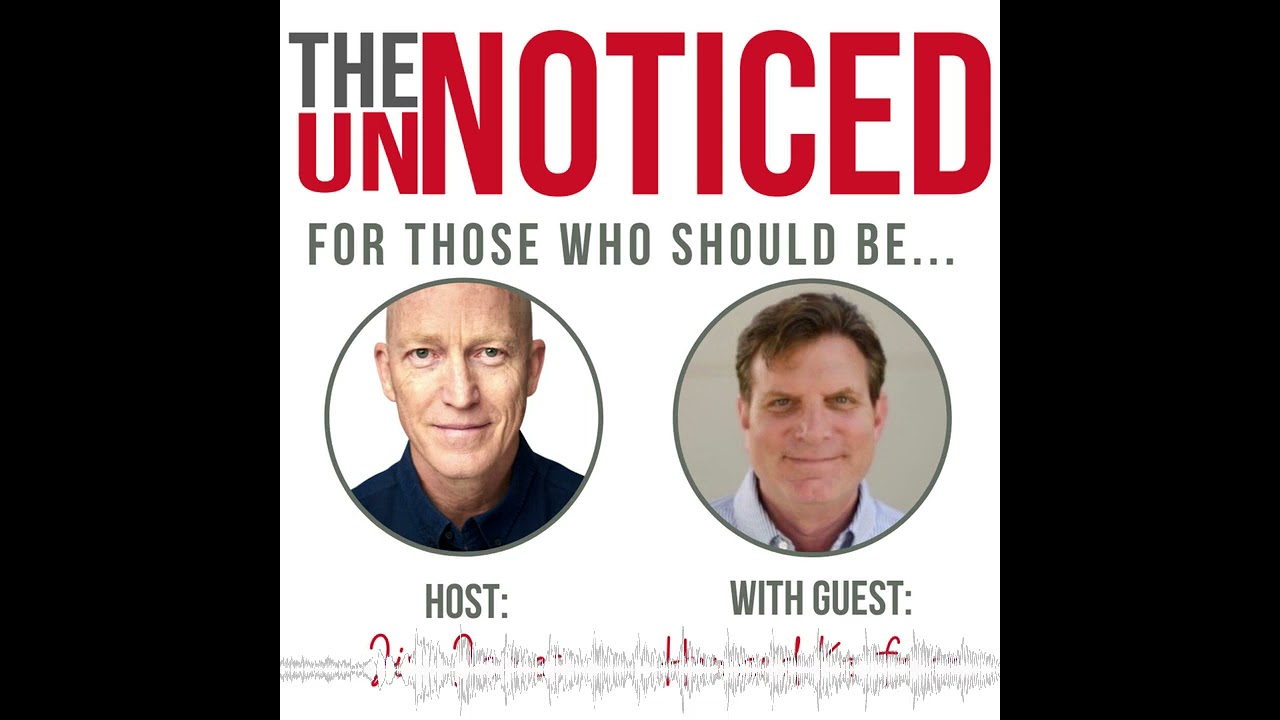
Howard Kaufman founded ORL after finding a warning label on kids' toothpaste. His research found 116 harmful ingredients across 300+ products. ORL makes toxin-free oral care with plant oils, vitamins, and CBD, selling through dentists, boutiques, and direct-to-consumer channels.
Chapters
It's not just the one-time sale or the second. It's really trying to develop where you're becoming so— I don't know if ingrained is the right word, but adopted to a point where you're really eliminating any future decision-making. Like you become the oral care product of choice.
Hello and welcome to the Unnoticed Show. I'm delighted to have Howard Kaufman, who's joining me all the way from Scottsdale, Arizona. And on this show, we're going to talk about how ORL is taking on the big guys when it comes to dental hygiene. Howard, thank you for joining me today.
Jim, thank you so much for having me and sharing some time. Yeah, so ORL is a company that has just celebrated its 2nd anniversary. So we've been in the market for about 18 months. It took us about 6 months once we incorporated to get product to market. But it definitely has been a labor of love for myself and my business partners. This has been an initiative we've been working on north of 3 years, and it really was the discovery. And for me, one day it was just shopping in a grocery store, and I happened to be looking at a children's brand of toothpaste from a very well-known national brand, international brand. And the crucible moment was as I was looking at the label and the ingredients Not only was I looking at a number of ingredients that at the time was very much like a foreign language, but what caught my eye was right below the ingredient list was a warning label. And the warning label said, not for children 6 years of under or under. If accidentally swallowed, get immediate medical attention. And it also provided in the state's poison control's phone number.
Really? And this is on a consumer good for— in the dental aisle?
In the dental aisle. And later I learned it's because that product contains sodium fluoride, which is considered— can be very harmful for children. But yet this was a national brand marketing and positioning this product as a children's toothpaste. And flipping back to the front of the tube, it— I looked and it didn't say for ages 7 and over or 7+. And that really was the trigger to just ask the question, if there's a harmful ingredient with a warning label for a children's toothpaste, what else is in the rest of the category? And that really started this journey of first researching products that were on the market and one by one taking a look at each ingredient And, and that really was the, the motivation to create ORL. So wound up working with a couple of dentists and a food scientist and a pharmacist friend. And we basically started with a hypothesis. Well, what if we created a natural and organic formulation that contained certain plant-based essential oils that have been identified to help with your oral health? And vitamins and minerals, but it did not contain any of the 100— and we found 116 ingredients at the time on the market amongst 300+ SKUs. And we just referenced with the National Institute of Health here in the States, and they do have a website called pubchem.com. Anyone worldwide can go to pubchem.com. You can put in any food ingredient cosmetic ingredient, in our case oral care ingredient, into a search bar and instantaneously you'll be rendered a full scientific report about that ingredient, where it's used, how it's used, if there's any aliases or other synonyms that ingredient's known for, and if there's any documented health or safety issues with that ingredient, it's all in that report. And that's how we discovered the 116 harmful ingredients that we made a commitment that we, as we developed our hypothesis into a pilot, that we were not going to introduce that back into the marketplace.
Good heavens. Well, obviously just a little bit stunned because I've been giving my daughters toothpaste for the last 13 years, and I bought some toothpaste from Thailand for them when they were young because it had sort of herbal extracts in it. But when I came back to Europe, Impossible to find. So this must be a brand, ORL, which comes up against some challenges when it comes to marketing, doesn't it? Let's leave aside all the compliance issues of getting it through FDA and so on, because that's another issue. But from a branding point of view, how have you gone about positioning this and really being a challenger brand, not just to the FNs and Gs, the big boys with what they're doing, but taking an entirely different approach? How do you sell that story to the retailers?
Jim, the best way I could describe that part of it is strategically, like any business, and you're an entrepreneur, obviously at the end of the day, you want to be profitable and you want to be making money. But the point of view is that's really, call it the outcome or the end result. And when you're starting in the beginning, the real focus is one about Creating awareness with the right target market. And then once you're able to achieve at least some modest awareness, gaining trial. Because as a new brand, if you don't have the awareness and then the trial, you don't even have to worry about what your answer is going to be financially. So from that perspective, we have deliberately— the best way I would describe this is think big, Start small and scale. That's really our mantra. And it's not to suggest there aren't other ways that brands can come to the market. And there's definitely well-known, documented, the unicorn brands, right? They just happen to be at the right place at the right time, and they hit it big. But the research would show you, the data would show you that those are truly more the exception than the rule.
Yeah.
And in our case, It's really a focus on having a belief of who the customer you're serving, but at the same time, knowing that once you're able to bring product to market, it's really important to challenge yourself and your group and your team to also be active listeners. Because the marketplace is going to tell you what they like, what they don't like. They'll have questions or things that they don't understand, right? And so much of what you have to kind of challenge yourself from your own internal paradigm is to something that you think may be really important to you. And in our case, say for example, it would be like the 7.0 pH balance and why that's important. And we can talk amongst ourselves enough of it, but in certain segments, the market's like, so what? So it comes back to that old adage, and I know it's something that I think the Leo Burnett agency really was a big believer in is that test of, is it true, yes or no? And if it's yes, but the second follow-up question is, does it matter? And that's really what the challenge as a brand, as a marketer, to be building awareness, building a brand, is figuring out, well, what does matter to your marketplace?
Let's just then drill down. You talked about starting small. How did you do that? Because presumably you've got to get a sample size that's Small enough to listen to, but big enough to be representative. And you've got to have some brand values in place for them to take shots at, but be flexible enough to give them some opportunity to criticize. Can you just tell us, how did you communicate to those people and how did you do that?
Absolutely. So this would have been October of 2019. Our intent was we were introducing In total, 8 SKUs to the marketplace in the beginning. It stands for stockkeeping unit. Essentially, it's 4 specific individual products. In our case, we had 2 product lines, mouthwash and toothpaste. Each had 4 different, call it flavor profiles or formulations. So that's a total of 8. So for example, we offer fresh mint as a flavor profile. We have a cinnamon.
Mm-hmm.
A bubble gum for kids. And then the 4th one is, as we were developing our product through our dental advisory board, one of our dentists, she felt very strongly, well, you're doing all this formulation, would you consider introducing a formulation that included CBD oil? And we learned about what the benefits from a dental care point of view could be, especially people that have serious Gum irritation. In some cases, periodontally, they may even have slow bone loss in the back of the jaw. CBD may help those cases.
And sorry, what is CBD? Sorry.
Oh, so CBD is the, the non-hallucinogenic part of the cannabis plant, and it's got cannabinoids that help with pain. Can— it's anti-inflammatory. Can help with other health issues. So it's a growing category. I bring that up because your question is, well, how did you kind of start in the beginning? Well, in the very beginning, our intent that October of 2019 was we were introducing our entire product line to the market. But we did run into an early production issue because we're not using any plastic tubes or bottles. Everything's in glass.
Wow.
And we learned that in the very beginning, labeling a piece of glass, we were having, call it a high fail rate, meaning 70% of the labels on the bottles we were rejecting. So we stopped the presses.
Wow.
But it just turned out that our supplier provided us first was a shipment of our labels with CBD. So we started there. A lot of retailers, certainly in the States, unless it's topical, like for hand cream, they won't touch CBD right now. There's still some ambiguity in the market because the FDA hasn't come out with, call it, national guidance. So for us, in the very beginning, it was working with CBD boutiques and distributors But also, there's a segment of dentists that really believe in the benefits of how CBD can enhance your oral care. So we started out small in that marketplace.
Mm-hmm.
And then February, right before the pandemic, we were able to solve our labeling issue, introduce the rest of our product line. And even prior to pandemic, Initially, yes, we do have ambitions to be in large retail grocery chains that would be a fit with the brand, but boutiques, spas and apothecaries, dentist offices, we do sell direct-to-consumer online. Certainly that part of our business continues to accelerate coming through the pandemic. And then because Amazon, they will not approve selling any product with CBD at this point.
Okay.
Until there's national guidance on it. But we did list our non-CBD products on Amazon. So long-winded way of saying, in the very beginning, it was— call it playing the field. It was dentists, periodontists. We even have some optometrists that know the connection between gingivitis and ultimately the risk of getting glaucoma. So it was finding these small little niches or segments. And experimenting with the segments to determine, is there a fit with the brand? And building off that, right, there are things that would work, things that wouldn't work. And along the way, we have been taking a regional approach to gaining retail distribution. So it's been kind of an omnichannel approach in the very beginning. And I would suggest we certainly don't have the resources as the big— when, you know, you're David with the slingshot going after these mammoth multinational companies. But you got to also look at it when we remind ourselves, let's win with what we have. So we're small. We can out-service, we believe. We can be very responsive. We can maybe be more generous than a large— we can certainly make decisions faster. So we're trying to basically use that to our advantage. we enter the market.
And to what degree are you using the knowledge that you've been getting, Howard, around all these health-related benefits in your marketing? Because actually, you are to some degree going to be changing behavior, aren't you, as well? So is that part of the ORL kind of brand story? Because you are asking people to adopt new brands, but also new ways of perhaps looking after their own healthcare, but also their children or their aging parents. So how are you using that in your brand story as well?
No, it's a key component of it, right? Because we know our brand, it's really tailored for the consumer who's looking to lead a more active and healthier lifestyle. So much of this is choice, and I am very respectful of all the other brands out there because It is choice. And we have no grandiose ambitions that we're like looking to achieve dominant market share. But I do know enough now after, again, 18 months in the marketplace and validation from our own research that we've done, certainly looking at consumer behavior in terms of order patterns and feedback, and then even with our retail partners, The amount of stickiness that we're developing. So, I do know enough to be convicted that there's a tribe now for our brand. But Jim, what I don't know is the tribe only 2,000 people? Could it be 20,000 people? Could it be larger than that? Strategically, I don't know. But along the way, gaining the feedback and input from the market, and I can give you a A recent example. So our, call it generation 1 of our formulation with our toothpaste has had a natural ingredient, diatomaceous earth, which is an ingredient that would, the toothpaste would be almost like mud, but it's a natural ingredient. There's a lot of other health and oral care benefits to it. But what we learned very quickly from a few customers and then actually from a doctor was, well, it's also shellfish sourced. And from an allergy perspective, that's very much a growing concern among that type of allergen. So we did challenge our formulator and our partners on, okay, what if we now modified our formulation, eliminated that ingredient? Replaced it with some other natural ingredients that have benefit for you. And that's ultimately what we did. So starting about 4 months ago, we now have, call it a new and improved toothpaste formulation because we did eliminate that ingredient, but we only learned of that because we were in the market. Now, it's not to say if we invested in perhaps more sophisticated consumer research, we would have learned it earlier on, but it was just feedback in the market, listening to it, and then determining, is this something we can take action on? And we decided as a team, yes, this is something we want to take action on because it's important to the brand that we're building.
And I love the fact that you talk about actually building a tribe around this oral care because obviously that's topical ever since I think Seth Godin Talked about building a tribe, but for what some people might consider to be a commodity purchase, toothpaste, the idea that you could build a tribe around what for most people is just an off-the-shelf buy price is really interesting. I think what you've done there, Howard, and what about, you talk about this idea of the iterations on the product. How much of the iteration are you sharing with your tribe? And how much are you saying, da-na, we've got a new one? Or are you sort of saying, we're thinking about formulating this? Because I'm quite interested in how much discussion and dialogue you have with the tribe for it to not spread fear that there's no sense of direction in the leadership. But on the other hand, you are taking participation. Quite a balancing act, isn't it?
Yeah, we are. We are. And certainly there are things that strategically You can plan out, plan ahead. And it's really important for us as we're building our brand, as we engage with our customers, either it's directly— for example, there's a number of dentist offices that we engage directly with. We certainly engage with retail buyers, but very often there's a couple of levels of separation, not as close to the end consumer at times.
Right.
But getting that more immediate feedback We're also fairly active with our own, call it, customer base, whether it's people who purchase from us. But we also have a segment of consumers interested enough in our brand to opt into our emails, but yet they haven't purchased. But in terms of surveying them for feedback and input, and there are a couple of examples. One most recently is we actually sped up on our product development roadmap in January, even though going through pandemic, but we actually did introduce a travel set. And the travel set was we had enough consumers say, hey, your product's great, but, you know, your toothpaste is 500 milliliters, your— excuse me, the mouthwash is 500 milliliters, the toothpaste is 120 milliliters. It's kind of bulky. And if I'm traveling, Yeah. It would be great if you guys had introduced more of a travel convenience and something that, at least in the States, would be considered TSA compliant for air travel.
Mm-hmm.
So in January, we did introduce a travel set that's a 1-ounce toothpaste in a glass bottle and also mouthwash. And we did actually apply some innovation to it. So to have this not just a one-and-done type of travel set, The mouthwash is also 1 ounce, but we developed a concentrate with a mess-free pump. So when you're traveling, all you need is some bottled or filtered water and a glass, and it's like 3 to 5 sprays and mix it, and there you have your mouthwash when you're on the road.
That's a really nice idea.
So we, when we, and there's a number of things we have on our product development roadmap that opportunistically and ambitiously we want to develop. But getting that feedback early on from, as you're also characterizing, I guess, from our tribe, we said, we're hearing enough about it. Let's at least accelerate this and respond to it. Because we, as much as we believe in our product, but like anything, there's always ways to improve. And to my earlier point, so much of this is choice and you have to earn the consumer. It's not just the one-time sale or the second. It's really trying to develop where you're becoming so— I don't know if ingrained is the right word, but adopted to a point where you're really eliminating any future decision-making. Like you become the oral care product of choice. So when they have a need, They're automatically thinking your brand. Sounds a lot easier than it actually is to achieve that and earn that.
Yes.
But that's kind of at least the can-do. And again, I just point that example of our travel set as another way that we know that, hey, we can move perhaps faster than a large conglomerate, and we can get to market quicker. And if it doesn't work or we mess something up, we're humble enough and also nimble enough that, hey, we could make the adjustment or fix it. Or if it turned out this was the wrong thing, we can certainly just move on to something else.
Now, if people are interested in finding out how to get your travel kit— and I love the idea of the concentrate, that seems real genius. Howard, you're the co-founder and CEO at ORL. I'm not supposed to call it oral, but it does spell ORL. I don't want to upset your co-founder. How can people find out about you and And get involved and join your tribe.
Well, Jim, thank you so much. And again, thank you for this opportunity. So certainly on LinkedIn, I'm on LinkedIn, or if you— certainly another great way to contact me is directly via email. And it's simply howard@orllabs.com.
Howard Kaufman joining me all the way from Scottsdale in Arizona. Thank you so much for joining us on the On Under Show and really inspiring us with what you're doing in terms of engaging with the current and future customers to develop your product. A really great example of how you can use communication to build a business. Thank you.
Thank you so much, Jim. Appreciate it.
Great. You've been listening to the Unnoticed Show with Howard Kaufman all the way in Scottsdale, Arizona, who's the co-founder and CEO of the ORL brand, really bringing oral care, which we don't have to be afraid of giving to our children, to the market. So wish him well with that and hope that he can get the products over here. To Europe. Thanks so much for listening to us here on The Unnoticed Show. In the meantime, until we meet again, we wish you the best of health, a profitable business, and that if you're developing a business that may seem unnoticed, listen and ask questions of your tribe, and they will give you guidance on how to grow your business. Thanks so much for listening.
More from Jim











2 people, infinite agents, 1 billion dollar idea #AIAgents #Startup #Productivity