Tip of the Spear Sam Palazzolo shares the 4 key points an investor wants to see in a presentation.
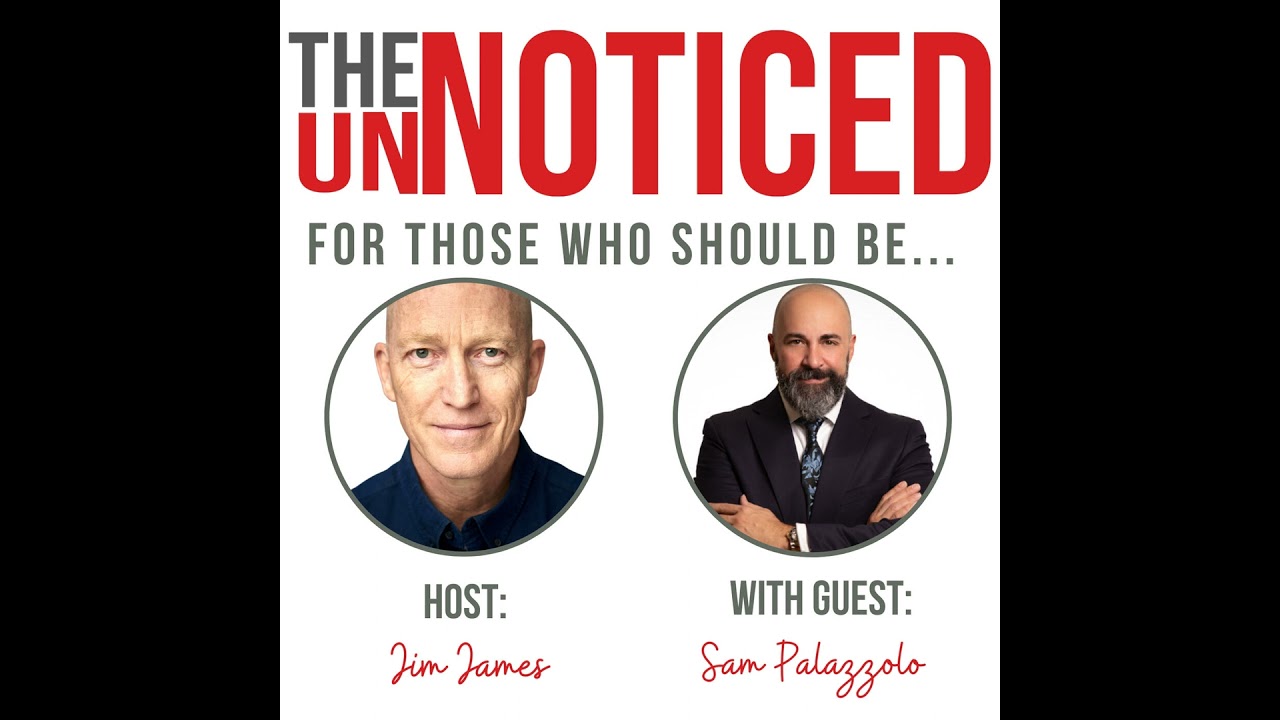
Sam Palazzolo, founder of Tip of the Spear Ventures, breaks down what investors need to hear: a two-minute pitch answering what you do, your traction, how you'll use the money, and when they get returns. He targets specific investors through research rather than blast emails, then calls first to land 15-minute briefings. Building inbound demand through content, like HubSpot does, works better than constant cold outreach.
Chapters
I'm laughing.
No, you're okay to laugh. We don't disallow laughing on the show.
No, I'm laughing because I did have somebody ask me that, some of those questions. I won't say all of them, but that's great.
Sam Palazzolo. Is that how I pronounce it properly, Sam?
It is. Yes.
Great. So Sam, you're joining us all the way from Los Angeles, and you're going to share with us today how you help companies both to raise money and how to communicate when they're raising money. So welcome, Sam.
Hey, thank you so much for having me, Jim.
So just give us a little bit of background. How do you help entrepreneurs to get noticed with the money men?
Yeah. So I founded Tip of the Spear Ventures back in 2012, after successfully leading a tech startup to a private equity exit. So we raised $8 million straight out of the chute at that tech startup. I, prior to that, had my own sales business development consultancy. I brought to the tech startup that same Blueprint architecture plan for how it is that we were going to not only raise capital, but actually develop the sales pipeline. We grew some traction. Traditionally, one of those mythical hockey stick graph revenue charts was our reality. We grew the attention of a couple of private equity firms at around the 18-month mark, and at 24 months, one of them ultimately purchased us. Kind of an acquisition to eliminate competition, if you will, from their perspective. Regardless, I off-ramped either way, formed Tip of the Spear Ventures. And we have 2 sides of the firm today. We have a venture side of the firm where we work with entrepreneurs. We also do what McKinsey and Deloitte calls business transformation consulting. I mentioned I come from big consulting now, but it's essentially change management, heavy focus though on sales and marketing therein.
So Sam, getting bought within sort of 24 months is most entrepreneurs' dream. How did those other companies know about you? Did you court them? Did you get in their face? Did they see you in PR and went, I've got to buy that company? Tell us about how you manage that.
Yeah, so we do the same type of a methodology today in our business transformation consultancy that we implemented at the tech firm. I think it's one of those things where if you think about consulting work, traditionally it's a handshake type of a deal with the people that you know that are within your network. That pool or that circle of population is only so large. We wanted to figure out how is it that we can expand that circle. In other words, we just weren't interested in buckshotting. We wanted to know with specificity, we're going to approach a specific organization or a specific client or prospect, and we want to target them, and, and we want to outreach, attempt to connect with them, and then see if we can develop some type of a relationship first. And then relationship leads to ultimately business conversation and how it is that we know we can help them. We're a value creation firm, and we believe that each one of the organizations that we work with has a value that they provide to their end client. How they message that value can be all the difference. I'll give you a great example, Jim. So we're working with an organization right now. It's engineer-led. Engineers come up with some of the best innovative ideas. They lead the best organizations, or potentially the best. The problem is that as an engineer, You want to talk engineering. A financial community, somebody like myself with a financial background, we want to know what the engineering specifics are, but if that's the only thing you're going to talk about, you're going to lose us. He's looking at putting a presentation in front of a financial community that is so deep in the weeds, might be the best analogy I can give you. It's so engineering detail rich That a financial investor doesn't really understand what it is that they're looking at, which is always amazing, right? Because financial folks look at numbers all day. But it is one of those things where they want to know something about what the business does, but more importantly, from an investor community, they really just want to know a couple of things. What is it that you're doing? What type of traction with what you're doing have you been able to achieve? And if we invest in you, 2 things: what are you going to do with the money? And what do we get in return for the money? Over what timeline? Right? Those are really the nuts and the bolts and the essentials of what an investment community wants to hear. They also have a relatively short attention span. So you need to be able to encapsulate those parameters that I just mentioned, those handful, within about a 2-minute time period. Now, it doesn't mean that you can't circle back and do deeper dives on each one, but you need to architect a high-level architecture so that way the investor can get a sense of, okay, great, this makes sense. It makes sense for us to have a deeper conversation, dig a little bit deeper on some of the things that you mentioned in the overview. And if you think about it, this is what an executive summary is all about too, right? This is why you provide an executive summary. That way, when the executive reads it, if they want to go deeper, they can. If they don't, they know just enough to be dangerous. So that's kind of, that's our approach on how it is that we help organizations share that value creation that they provide to market.
So Sam, you mentioned that in your business, you found the company you wanted to get in front of. So should entrepreneurs that are looking to raise money, should they really be shortlisting those VCs or angels before they prepare that presentation? Because it sounds like not all investors are looking for the same kind of investment.
And they're not. I think that the more specific that you can be, where you've done the research prior to what the organization or the individual likes to invest in, those can be some of your most productive types of conversations. The things that don't work are the generic, non-customized types of outreaches. I just got one this morning from an individual. We don't invest in anything that they're doing right now. Here's why specific outreach and approaches also work best, because if the individual that you're outreaching to and you customize the outreach to them If they can't help you, they probably know somebody within their network that can. The thing that I love about what it is that we do, and that is within this financial, this venture space, is that it's a community of sharers, right? It's one that if the opportunity isn't right for them, they'll share the information to somebody else who it's right for, and that works vice versa. So your original question, should I specify who it is that we outreach and connect with? The answer is absolutely.
Now, Sam, where would an entrepreneur go to find that community? In Asia, there's the Asia Venture Capital Journal, for example, but you need to subscribe to that. So it, you know, it can be a slightly dark and distant community to get into. How does an engineer or maybe a food tech entrepreneur find the right investment company to approach?
We had an entrepreneur who approached us about 4 years ago. And he said, I've got an entrepreneurial idea. Here's what the idea consists of. It was brilliant, Jim. The problem was, is that he had the idea and had been trying, and I say trying loosely, to approach investors in the investment community for a period of about 3 years. When I asked him, So why aren't you making headway with the investment community? And his response to me was, Sam, I wasn't born with a platinum or titanium spoon in my mouth. I don't have that network. And I said, I'm afraid that we're probably not your best resource in this instance, because if you're going to give up that quickly, none of us are born with a platinum or titanium spoon, or the majority of us aren't that are entrepreneurs. I wasn't. I was born in Detroit, Michigan, in the shadow of a Ford manufacturing plant's smokestack, as my mother likes to say. On a good day, we had plastic spoons. But it is one of those things where you've got to figure out a way. Today, and especially during the pandemic, Jim, it's never been easier to get a hold of whoever it is you want to get a hold of. Because you can outreach and connect with them, and you can conduct this type of a Zoom meeting with them. They never have to leave the confines of their work-from-home, hopefully comfortable office space, or even their kitchen table. And so it's never been easier. Where do we find, or where do we recommend people look? You mentioned some of the published listings of, you know, some venture capital, maybe private equity, maybe family offices. Those resources are available, but we also look at it from a different perspective. And that is, let's get a little more organic. Okay. Let's set up some Google alerts to see who it is that's investing in this type of a space. So Google, setting a Google alert, we'll get up to 10 each day. You can click a link to see more in the event that there were more. But that'll give you a listing of some articles that were published on the topic. And if it's a business article, somebody probably published it, the author, somebody probably the author interviewed someone. So a great opportunity organically to find some people and specify who it is that you outreach to. We also have this thing that nobody takes advantage of and nobody works well. I'm convinced we're in the top 3% of how it is that we go about leveraging LinkedIn. But I can tell you that there are some times even I sit back and I hear something and I'm like, why didn't we think of using it like that? LinkedIn is a great tool. It'll give you geographic specificity. It'll give you the industry, the organization, the leader information. The 2 things that are differentiators for us that allow us to pinpoint some prospects and targets in an outreach attempt. Those are the 2 primary things from an organic search.
So Sam, then you're using LinkedIn, but as an entrepreneur looking at getting to these storied people like on Sandy Hill Road, is it just an email well-written, or are there some other tools or tactics? I remember years ago, the old story, someone sent one shoe in a box to an ad agency and said, now I've got my foot in the door, let me come for an interview to talk about the job. Do you have any stories or any ideas for people that— to make them different so they're not all just sending in the same formula 4 or 5 page PowerPoint presentation?
Yeah, we've gotten that type of tchotchke where it's a baseball. We've gotten toothbrushes. We've gotten fertility testing kits. I've gotten all kinds of crazy stuff over the years, and some of it is worth me looking at. The majority of it though are things that we don't even look at. And we don't recommend that type of a hokey gimmicky type of an outreach because we know the entrepreneurs that we work with, they drive value. They want to be the top 3% of what, whatever industry or organization type classification that they produce within. And if they're value creators, they probably have a unique value that they have to offer. And part of that is the presentation for what it is that they have to offer. And here's what I mean by that, Jim. They probably have a unique perspective within the industry or the space that they're operating in that can elevate them from just somebody who's got an organization that's looking for some money or looking to connect with the investment community to being a valuable authority within the space. And as a valuable authority in the space, it's the— these are the opportunities also financially within this space that exists, and here's how our solution kind of bridges to that opportunity. So we always, I want to say, position the entrepreneurs that we work with to outreach and connect with those investors or the financial community leadership to conduct an executive briefing. It's a 15-minute type of an overview that establishes them as not only an entrepreneur, but an authority in the space, And hear from an authority perspective is why it is that you should talk with us. Because if they're not, from an investor perspective, if they're not looking in the industry at this unique perspective that they're coming to the table bringing them in that executive briefing, they're going to miss out.
Okay. That's a really good idea. So getting the entrepreneur to be seen as a thought leader that can drive that forward. Now, Sam, with Tip of the Spear, Ventures, you're plainly a thought leader and with lots of experience. How have you been building the brand of your own business? And you'll need to get deal flow as well, won't you, from both entrepreneurs coming in and companies looking for business transformation? Can you share with us as an entrepreneur how you are succeeding in that area?
So we do the same thing. We do the same type of organic outreach that I mentioned, where we set Google Alerts within the industry or with specific keywords. We develop our own list of prospects on a monthly basis. And we go on the hunt. We outreach, connect with folks that are outside of our network. We want them also to know that we're outreaching and attempting to connect with them. We're an email-second type of an outreach approach as well. So here's what I mean by that. Yeah, most folks just simply want to get together a listing, some type of a database. Maybe they'll go formal, put it into a CRM, and they'll begin some type of an outbound campaign. campaign where they'll blast emails. Okay. We do that, not necessarily a blast, more of a customization of those emails, but it's secondary. We're a phone-first type of an organization. So we attempt to place phone calls outbound. It's a differentiator for us. It's a differentiator for the entrepreneurs that we work with as well. And it forces them to actively pick up the phone. And the phone call isn't necessarily to conduct the executive briefing right then and there. It's simply just provide the introduction and establish an appointment for a future date to conduct that type of an executive briefing. So we're different in our outbound approach from that perspective. It's very value creation driven, phone first, email second. We're looking to provide an introduction. 2 seconds ago, the individual didn't know we existed. So let's introduce ourselves. Let's drive the value creation and setting up a 15-minute appointment for an executive briefing. That's our outbound approach. Inbound, we do, and we encourage our entrepreneurs that we work with to follow HubSpot's methodology. I'm a pre-IPO HubSpot fan back since 2014. I'm— I won't say that I'm the best writer. I've written 5 books. I have almost 300 articles out on our website at tipofthespearventures.com at the Point blog. You can look at those. We've also got a series of white papers and whatnot. But we want to establish ourselves as that type of an inbound-outbound approach to prospective customers. And we manage a sales funnel on a monthly basis. And get this, Jim, I also challenge myself to outreach and connect with 50 different prospects each month. Why? Because I just don't want our team to have to do that. I want to do it as well. I'm not willing to assign anything that I'm not willing to roll up my sleeves myself. as a leader to go out and conduct. It makes the conversations in our team meetings with our outbound-type folks that much more productive because they know I'm doing it. I'm slugging it out right in the leadership trenches next to them.
Sam, if people want to find out about you and Tip of the Spear Ventures and even get a chance to pick up one of your amazing 5 books, how can they find out about you?
Yeah, super simple. tipofthespearventures.com. You can find us there. In the lower right-hand corner, there's a chatbot. You'll see my picture on it because I'm the chatbot. If you type something in there, I'm the one who responds. If I'm at my desktop or in my office, I'll respond right then and there. We had an entrepreneur who Outreach connected with us a couple weeks back. I called him up and he said, who is this? And I said, it's Sam. You're at our website right now. How can I help? And he said, I can't— he said, I can't believe it. I can't believe you're calling me.
I'm the same. I have the Zoho chat on mine, and I've rung someone and said, you're on my website. And they go, oh, so that's amazing that you're doing that. You're there online.
I'll give this offer. I know we'll put it in the show notes too. We developed a business transformation self-assessment workbook. It's 37 pages in length, 132 questions, and it details out specificity, regarding what it is in a self-assessment, kind of a DIY for your listeners, so that way they can look at and assess their business over the 4 parameters that we work with in our business transformation. Small businesses, SMB market here, as well as the Fortune 100 organizations that our clients, they're in. But our gift to you and your listeners, that business transformation self-assessment work.
Sam, that's wonderful. So to summarize then, you've got some Day-to-day making phone calls. You've got a lot of self-discipline, a lot of outbound and inbound. And I love it that you are the real-time on reception because that is the mark of a true entrepreneur. I'm with you. I have that on my mobile phone. So Sam Palazzolo from Los Angeles, Tip of the Spear Ventures, thanks for an inspiring and really informative conversation today with me on The Unnoticed Show.
Thank you, Jim.
So you've been listening to Sam, And he's got a long and complicated surname, which is Italian, even though he's from Chicago, living in Los Angeles, Palazzolo. And he is from the Tip of the Spear Ventures. So we'll put all that in the show notes. Until we meet again, I wish you the very best, that you are staying safe and that you are getting noticed for all the value that you can provide to your customers. Thanks so much for listening.
More from Jim











2 people, infinite agents, 1 billion dollar idea #AIAgents #Startup #Productivity