Toxic content online can kill your brand faster than COVID, but there is a solution available now.
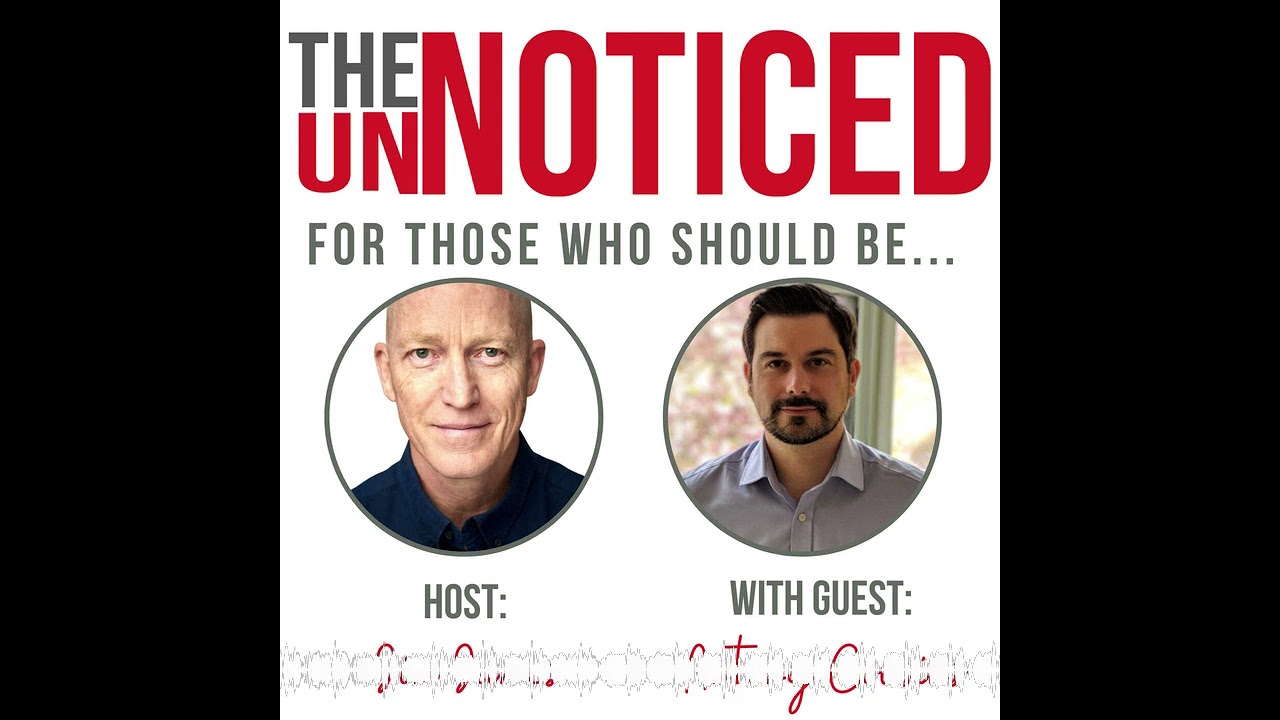
Ant Cousins, CEO of Factmata, explains how the company's AI platform detects toxic narratives and brand threats faster than traditional monitoring tools. It clusters topics, extracts narratives, and identifies stance to show why sentiment shifts. The platform costs $1,000 per topic per month and flags early warnings on racist or toxic content before they spread.
Chapters
If you want to know how to get noticed, this show is for you. I have interviews, tools, tips, everything that an entrepreneur could need in order to help their organization get noticed for free. Thank you for joining me, Jim James, on The Unnoticed Show. Hello and welcome to this episode of The Unnoticed Show. Today I've got Ant Cousins, who's the CEO of a company called Fact Matter. And Thanks for joining us on the Unnoticed Show and tell us, how do you help companies to find out what facts about them do matter?
Thank you. So we are, we're in the media monitoring space overall. So I think, you know, we ended up there through trial and error and like a lot of companies heading into this space, we started off actually in the fact-checking space back in 2014 when our kind of CEO and now founder Dhruv Gulati started working on this problem academically and scientifically, like a lot of people did back then. And over the course of the last few years, we've ended up refining our vision, refining our approach, which has taken us into the media monitoring space as we realized that fact-checking in and of itself was useful, especially around pinch points like the election debates and things like this is a really great time. But the commercially sustainable, scalable, exciting story wasn't there just in fact-checking. Actually, there's a lot of other harmful content out there, not just mistruths and disinformation and fake news. We've also got racism, we've got sexism, we've got toxicity, hate speech. hate speech in general. We've got a lot of other things that are actually harming ourselves and harming our society and harming brands and organizations. So that kind of broadened our scope from fact-checking to basically finding lots of harmful content, and that moved us closer towards the media monitoring, brand protection type space, which is where we are now. So we are comparable to some of the players out there that you've probably heard of, the bigger players like Brandwatch or the smaller players like the media monitoring systems like Social Mention or Mention. Those kind of guys.
So you've mentioned those other ones, and obviously for anyone running a company, if you get negative reviews, for example, on Trustpilot or Google, or if you're like AstraZeneca or one of these vaccine providers at the minute, you can find your brand and your business and your share price attacked pretty quickly, and you've got to respond. So how is Factmata really answering that need that's different to, if you like, Social Mention, or even Cision? How is it special?
So those companies came out of the way that PR was previously run, or the way that PR was up until very recently, is basically, you know, get our volume up as high as possible, get our sentiment up as high as possible. We want as many people talking about us as possible in our target markets, and we want that as positive as possible. If you're doing that, great job. But obviously what we found is we need now more nuance because those narratives, those harmful narratives, those toxic racist narratives, that sentiment being shared online, has a massive potential to impact your overall sentiment or brand reputation, which ultimately hits your bottom line. So those systems that were born out of the way that PR was previously run meant they were relatively simplistic, right? Tell me how much I'm being spoken about and the relative sentiment, but they didn't tell you why. They don't do the analysis or the qualitative analysis as to the reason why those volume numbers are the way they are, that sentiment the way it is. And that was hard to do, actually really hard to do up until really just a year or so ago. when we developed the technology to allow that kind of analysis. Now, what we've done is, in comparison to those other guys who give you the overall numbers, we go behind the numbers. We want to know why is that volume the way it is? Why is that sentiment trending this way? Why is it happening like that? That's effectively what we're automating is the intelligence and the analysis, which is only really available now with recent advances in AI.
Really quite pathbreaking stuff. I can see We used to, as agencies, be asked for volume. And actually, a lot of negative sentiment wins on that because there's a lot of volume of it. So how are you going behind that to understand where that's coming from? The— if you like, the drivers. Are you looking at who is putting out that content or the context of the context? Because that is what we'd need to do from a marketing point of view, is to understand the source, isn't it? And the motivation of that content.
Absolutely. 2 things. So we have a topic— what we call in the industry topic clustering technology. So effectively, in the same way that those other media monitoring systems will go out and find all the mentions of you— here's the tweets, here's the Facebook posts, here's the articles— um, and they'll give you that as a large corpus, and the best you'll get probably is like a word cloud. It is generally what is being said, but not really the reasoning why. What we do is the exact same thing in terms of gathering the data, gathering all the mentions, But then we run that through our topic clustering and what we spit out is the narratives. So we find the kind of common threads, we find the narratives and identify those narratives across all the different mentions, across all the different platforms so that you as a human aren't looking through 1,000 tweets trying to work out why is this all so negative? What is the thread here? We automate that process and identify the narratives for you. So you've got a human amount of data you can look at and interact with. So that's what we do differently.
And when you say you go across all the platforms, you talk about obviously social platforms like Facebook, but are you also able to read gated media, for example, mainstream newspapers like The Times or The Economist, or are you only able to see what's available in the public domain?
It's, uh, it's all up for grabs. I would say right now the need from our clients is around the broader, easier to access stuff. It's the B2C, the, the broader public opinion type information. So we are focusing largely on social media and that, that content. But we have one of the parts of the value of the company is we have arrangements with data aggregators. So if a company's interested in a particular data source, we can probably get it. So we tend to work mostly on the social media and finding the online narratives, the public opinion and understanding public opinion. But we can also get to that, that data.
That seems important because I did research last week on the Dominic Cummings hearings and on social mention tracked, the mainstream media had given a much more neutral view. than the social media sentiment. So they'd really diverged quite significantly between what people who are not paid to write and those people who are paid to please their publishers and their advertisers. So in terms of how a company would use it then, Ant, because with fact matter, someone's giving you a narrative that they'd like to have about their own company, or are they doing scenario planning for crises? What are some of the use cases?
Yeah. So it's generally around threats and opportunities. So, you know, we've done the narrative analysis. We've told you, here's the top 10 narratives about you by any metric, by most positive, also by most negative, by most racist, by most toxic, by popularity. So we give you the ability to understand those narratives in terms of whatever is important to you. So yes, you can find the most negative. You can also, through those narratives, identify the most negative influences. So that's the second order effect is we've identified the narrative, but who is it that's actually promoting this? And are those significant people? that we can engage with? Can we, can we, can we switch them? Can we educate them? Or can we deploy our own people or other people that we think disagree with that particular stance that individual is taking and counter that narrative? We need to get behind the narratives to tell people who the influencers are. We've got to give them that. But also, it's really what, what matters to them. If they are most interested in avoiding risks and crises, then sure, you use our narrative identification And then look for the riskiest, most threatening, most racist, most toxic content out there.
And is this content report coming out in real time or is it historical? Because some of the information that comes out now trends so quickly that a company has to really deal with it. If you're in Bitcoin, for example, the narratives of Elon Musk can affect the share price of Bitcoin and the price of Bitcoin within minutes. So just tell us about the timeliness Yeah.
So we are very much more on the insights and the longer-term kind of planning and the longer-term impacts. We're not real-time. So if, yeah, if Elon Musk tweets about Bitcoin, we're not going to pick that up and warn you about it within seconds. We are within the day. So we are— our intelligence, because of, I guess, also the amount of intelligence running through all of that content. If you can imagine, you've got a million tweets to analyze and work out what the trends are. It's actually pretty hardcore computing. So we tend to run on 24-hour cycles. So we update our data. We can look historically. So if you want to analyze a certain period, we can do that. But generally we start the topic running. If you want some historic data, we'll give you the historic data. And then going forwards, every day we refresh. Here's the narratives that are bubbling away. Here's the narratives that have the potential to trend, but we're not down into the kind of the individual tweets.
Now, and you mentioned a couple of things in there. One is about the volume. Obviously English language is where there's a lot of volume, but what about other languages? Because Many companies now have to deal across geographies. What's the capability with other languages for Fact Matter?
Got it. So right now we do English and that was because we had to solve the technical challenges in a certain language. We've done that, but actually we've actually won an award from Innovate UK for developing multilingual models to deal with these same problems. And we're tackling the languages, we'll actually be in about 8 weeks' time. So mid of the summer, we're starting with the highest volume of of speakers. So we're going with Spanish first and then on through the languages. So at the moment, English only, but very shortly it'll be Spanish and others.
And if a company then wants to use Factmata to track how their own sort of social media presence is trending and being perceived, that's great. But obviously we don't exist in a vacuum. What about our relative position to other players, other competitors? Or if you're a politician, I guess you want to track If you're Nicola Sturgeon, you wanna track how Alex Salmond is being seen or Dominic Cummings versus Boris Johnson.
Yeah.
Is Fact Matter helping both with the absolute and the relative narratives?
Yeah, absolutely. If you wanna track a brand or what we call in our parlance a topic, if you are Pfizer and you wanna track what are, what are the conversations going on around Pfizer, probably a whole bunch of misinformation, disinformation in that space, then you can track Pfizer as a topic. But Pfizer are interested in what people are saying about AstraZeneca or Moderna. You could track those topics as well. And it could also be individuals for us. Any topic, it's very simple kind of logic to go out and get the mentions relevant to that topic. The one thing we do differently to other people in that space is we don't just track kind of basic sentiment, like objectively, is this piece of content objectively positive, negative, or neutral? We have stance. So we layer on top of that, how is this person talking about the overall topic? So in the case of Alex Salmon, for a tweet that could be negative in sentiment, it might well be positive in favor of the topic of Alex Salmond. We actually have 2 different lenses there, and I find that's much more interesting, especially when you're doing influencer analysis. So stance is something we would also do there.
Yeah, because people's syntax, I mean, could impact as well. If an engine just picks up something that's written with some irony, actually could be interpreted as negative, but it could have just been humor. So it's got to be a little bit more, a bit more clever than that.
Exactly. And we've got intelligence, for example, we did some analysis, it was A company who had protein powders and they were in kind of that space and trying to create healthy living and healthy lifestyles. They wanted to know what people are saying about their products. And we tracked, I think the specific comment I think was we tracked it as a positive towards the, sorry, as a negative towards the product, even though the keywords, if you just looked at basically it was saying it was sweet, which ordinarily you think is sweet, that's good. But when you look at the content itself, it was sickly sweet. So we'd identified that sweet wasn't positive, sickly sweet together is actually negative in sentiment towards the product.
Yes. Tell us then about how stance works, because a sentence can be quite sophisticated in English, not only have the noun, but the adjective attached to it, which could modify the noun quite significantly. Are you taking that into account within Fact Matter?
Yeah. So that, that's what we've been working on for the last 3 or more years. The models have been trained on that level of complexity. So in the case of the protein powder where people were saying this was sickly sweet, we understand that's negative in sentiment, even though it contains generally a positive word, Which was sweet. So if you take that and extrapolate that across the rest of the conversations and things we're tracking, then yes, we will pick up kind of irony. We'll pick up those modifiers in context. Is it, is it 100% perfect? Of course not. There's no such thing, but it's, it's reliable enough to give you reliable overall data and overall statistics.
How is Factmata helping someone not just with, this is the narrative, but here's some sort of prescriptions around what you could do about that, or do you leave that at the door?
Obviously, the first step is identifying a narrative. You've got to know what's being said. You've got to understand who's behind it and their motivations and intentions. And that's obviously, you can do that within our product. You can find all the information. We also arm you with the keywords and the associated phrases that go along with that narrative, especially if you're trying to track hashtags or trying to find where else those conversations are happening. But then, yeah, you're kind of the creation of the content. That's almost next on our roadmap. Is, okay, so we know the narrative that you want to beat. We know this piece of toxicity or this piece of mistruth or whatever. We know the narrative you're trying to beat. Is there a narrative already about your brand which counters that narrative in terms of its kind of volume or sentiment or its influencers? Can we identify that for you? So at least then you can support and exponentially grow that narrative to counter it. That's the next step in our intelligence roadmap is identifying for you the automatically the narratives and influencers that most naturally counter a narrative you want to defeat.
That sounds really useful. Now, I do have a question for you though about influencers, because a fair amount of content, for example, around the elections in America, the view is it's been generated by foreign agents and by bots. And certainly when we look at, for example, advertising, over a third of all click-throughs are by automated bots. There's a huge amount of foreign agents of one kind or another. How are you helping a company to safeguard themselves against that, or even to track down the foreign agents and then take action against that?
I think the very first thing is understanding the narratives. And you've got to do that from a starting point. It's not irrelevant where it's coming from. You do need to understand that because your actions, your countermeasures might be subtly different. I would say that the first thing you've got to do is understand the most risky narratives. Once you've understood the narratives, it's not irrelevant where it started, because if the narrative has already picked up, The fact is there's already going to be humans involved because that's the aim of the bot farms, just to get a human to see that stuff and then immediately share it. So I think by the time that currently, by the time brands are seeing those narratives, it's already too late because the bots have done their job. It's already being shared by humans. And that's the problem. What we do is identify those narratives much, much earlier in the cycle, down to clusters of even maybe 3 or 4 opinions when it could still be largely bot-driven. So what we're trying to do is get that early warning for those companies just much earlier in the cycle so that they can head it off and either, you know, start takedown measures or at least identify what the potential trend and potential trajectory of that narrative is going to be so they can head it off.
I can really see the value of that. And so with much more depth, and I love your idea of the stance because the social mention misses the context too much, doesn't it? And it's much more sophisticated than just you got mentioned.
Exactly. Context is king and getting that context as early as possible, way before a human would spot that trend. We will spot that narrative and flag it to you. This is potentially really toxic, really racist, really harmful, whatever. We're going to do that much earlier than any human could possibly find in that kind of mess of mentions.
Yeah. Or conceivably it could be positive things that there are trends happening around coming out of lockdown, for example, that people could capitalize on.
Oh, absolutely. The opposite, the opposite absolutely applies. It's just a toolset. So We started off in the finding harm and protecting people from harm, but actually the same toolset applies for finding positive opportunities for brands too.
And in terms of toolsets being available for the average entrepreneur, owner-operator, what sort of fees are we looking at? Is it accessible to SMEs or to startups?
So you're aiming for a broad kind of market and it's not expensive. If at the moment our pricing is relatively transparent and simple, it's $1,000 for a topic. So if you want to track your own brand or a competitor's brand, it's, you know, just that times $1,000. And that's on a monthly basis. We'll update that every single day, and the intelligence insights comes with that. But we're actually also opening up a simpler version of the product. It's similar to the Experian credit score approach, which is if you just want to have a broad idea: Am I in danger? Am I under threat or not? A simplified version of that score, I think, should be available for all companies in the same way that every company has a firewall to protect them from from harm. They need that fake news firewall. Every company needs to understand just is there a really harmful narrative. about my company I need to investigate. So just giving that sense of early warning, that threat detection, that I think is a much simpler, cheaper product which we'll be rolling out shortly.
That sounds really useful because I think everyone now, however big or small, can be held to ransom by negative, even just negative agents or consumers that want to get their own back. And if people want to find out more about Factmata— sorry, I should say, if you want to find out more about Factmata, How can they do that?
Easiest thing is, is go to the website and use the Contact Us page there, or they can go onto LinkedIn, uh, and find us there and drop me a message. I think the PR industry in general is relatively closely connected, so if I'm not a first degree, I'm probably at least a second from whoever wants to get in touch.
Great. And Cousin, thanks so much for joining us today, the CEO of Fact Matter, on the Unnoticed Show on how we can track how we are getting noticed And whether it's good or not.
Thank you.
Thank you for listening to this episode of The Unnoticed Show. I hope that you've enjoyed it. And if you have, please do rate it on any of the players. If you'd like more information, go over to eastwestpr.com and subscribe to our weekly newsletter or connect with me on LinkedIn. That's just Jim James, East West Public Relations. I'd be delighted to connect with you and let me know how I can help you to get noticed.
More from Jim











2 people, infinite agents, 1 billion dollar idea #AIAgents #Startup #Productivity