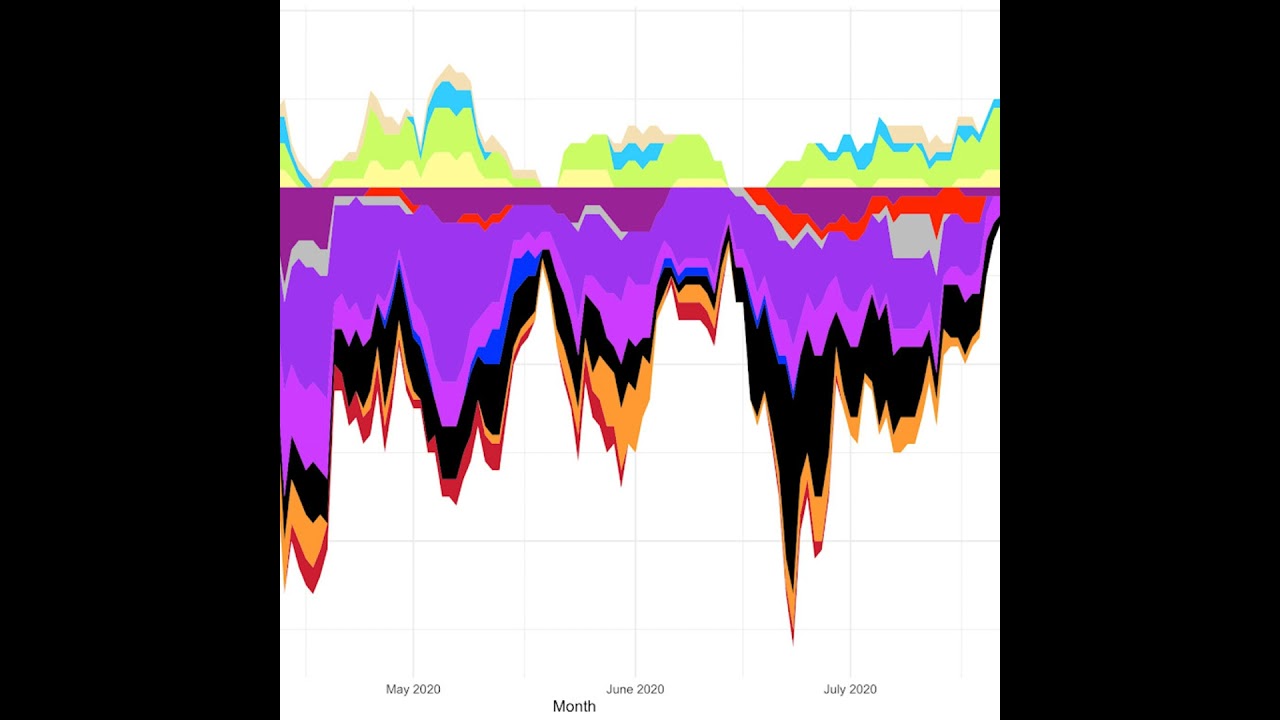
In this Speak PR podcast episode, host Jim James argues that effective communication—especially for governments and organisations during crises—must begin with a clear understanding of the audience’s current emotional state. He references a recent Significance Systems (earth.ai) report, discussed with founder Dr John Ricketts, which tracks UK public sentiment from March 2020 onward using online discourse analysis. The report visualises emotions on a vertical axis, with positive feelings (belonging, optimism, hope, fearlessness) above a line and negative feelings (anxiety, panic, fear, despair, anger, grief, resignation) below. Over the first six months of the pandemic, the data show a shift from early optimism and belonging to rising panic, fear, and later grief and anger, especially as the UK entered a second lockdown. Jim explains that policymakers and entrepreneurs often ignore these shifts, leading to messages that are “tone‑deaf” and filtered through at least ten cultural and psychological barriers (Wio’s Law, Weir’s Law). He stresses the need to “Know” (the K in his Speak PR framework) the audience before speaking, using sentiment‑analysis tools like Significance Systems or rapid internal surveys. He outlines practical PR steps: segment audiences (internal team, partners, external public), tailor tone, vocabulary, and messaging to the prevailing emotional climate, and monitor sentiment continuously to keep messages aligned with public mood. The episode concludes with a call to action for listeners to adopt sentiment‑driven communication strategies to avoid backlash and improve public trust during lockdowns or other trigger events such as elections.
Chapters
Hello and welcome to this episode of Speak PR. My name is Jim James and I'm your host. We're going to talk about the importance of knowing the market that you're gonna be talking to before you start the talking. And you can use a platform like Significance Systems, earth.ai, which is one that I spoke to the founder of yesterday, Dr. John Ricketts. And they've just published a report, which I thought was timely because we are here in the UK about to Enter another month of lockdown. So John and his team have just published a report that shows the way that the British have been feeling and expressing that emotion through online and through discussions since March of 2020. And what this graph shows is over the last six months, a growing sense of despair. Now it's important because entrepreneurs and politicians all need to know how to say. The right message to their audience at the right time. So understanding what people are thinking before you start speaking is a fundamental part of the communications program. The reason it's important is because, as we covered in Wio's Law, the messages that we share are going to be misunderstood because the people that we're sharing them with are not in the same frame of mind as we are when we're sharing them. This came home to me when I was listening to people today talking at the tennis club and about how really they're feeling that the current government ministers are not necessarily in tune with the sentiment in the country. So I was interested in the Significance Systems report, and basically it shows on the axis a number of emotions that are being expressed by the British population through the correspondence and the discussions they're having online. And those include the following: a state of belonging, optimism, fearlessness, hope, alarm, grief, confusion, panic, fear, despair, anger, resignation, and anxiety. So you can imagine belonging at the top being positive and anxiety at the bottom being the most negative. Now what we see is that in March there was a peak of optimism and belonging. So from the original announcement of COVID through to the sort of government taking some control back in March and April, we had belonging and we had a little bit of optimism, but we had quite a lot of hope and also some fearlessness. And if we think about, for example, the recognition of the NHS and the beginning of the clap for the carers. Now, below the line, we have some fear and we have a little bit of anxiety, but not a great deal. And the weighting above the line and below the line means that overall, we have a country that is unsure of itself. But feeling relatively optimistic, we do have as we move from April into May, we have a growing amount of panic, which is at the bottom of if you can imagine a multicolored iceberg, and below the the sea level, you can see these icebergs with purple and with dark blue for confusion. Some panic and some fear, and just a little bit of anger creeping in. Now, June—it seems as though everyone was beginning to feel as though the problem was was going away because above the line we have a small sense of belonging. We have a a smaller amount of fearlessness than we had in March, but we had a lot of hope. And we had some sense of optimism. And below the line, we had some sense of fear and some despair, but it starts to creep up so that by the end of June, there's a sense of normality returning and we're moving into some degree of grief that it's happened. And I guess the beginnings of grief for those people that have missed those events that took place with their loved ones. And into July and early August, we have the beginnings of quite a lot of hope, in fact. So above the line, we have a large swathe of green, and we have optimism, which is yellow, bubbling up as well, just underneath the green, and the sense of belonging coming back as well. But below the line, what we're seeing is a larger iceberg of purple, which is the fear, silhouetted by the light pink of despair and a growing amount of anger, but also the growing amount of anxiety. So we have, as I have detailed in an earlier post around the Boris Johnson communications And we've had the sense of misunderstanding of their body language, confusion of their messaging, of other ministers undermining the messaging and making their own statements which are contradictory. Now the government has rested on some relatively simple messages, and with more people like Dr. Chris Whitty as spokespeople flanking the Prime Minister. But the government appears to be underestimating the degree of anxiety and fear and despair and a fair swathe of panic in the country. And as we enter another period of lockdown, the fear is that this is only going to get worse. Now, we have this idea that the government is communicating knowing what it's talking about. But actually, it would appear that rather than a bulldog spirit, which we see coming from the Parliament, we have more despair with flashes of anger and grief. And that seems to be the sentiment around this second lockdown. So this seems to be the concern now as the government manages its messaging, if it is tone deaf to the anxiety that resides within the body public that it's speaking to, then the messages will become increasingly out of alignment with what people need. So from a public relations and communications perspective, this chart that the Significant Systems, uh, provides us with really shows that the depth of feeling— in other words, the depth of the icebergs as we see them visually in purple and black and dark red— is nearly 2 times as deep as the sense of belonging and optimism and hope above the line. And this is really, of course, a major problem for policyholders and for communicators, but also for the people at large. Now, as we're entering obviously the same today, the American election, there is going to be a similar sense, I'm sure, within America of this anxiety and some degree this despair that some of the ways that the Trump Party have taken the election will be not so much about a fair handover but calling into question the very essence of the election itself. Now, this is not a party political conversation. This is not a podcast about politics. This is a podcast about communications. I'm using the significance systems charting here to really draw out what would then be a narrative if we were to be managing the corporate or the public relations exercise as we go into a lockdown. So central to this, of course, is that we need to assuage people's fear and anxiety. Fear coming from the question of whether we've got healthcare in place, anxiety about jobs. We've got the sense of despair where people are not sure, especially the freelancers in the market, which is nearly 5.5 million people in the UK. Who are wondering about where they're going to get their income if things like music and sport are put on hold. Certainly, the tennis coach that I spoke with today was very worried because they've just come back from a period of furlough, and now they're not sure if there'll be another furlough, but how will they possibly continue through the winter? So communications strategies need to address all the different audience groups, and we talk in the Speak PR about 3 different audience groups: the internal, the team, the partners, and then also the external, which would be the general public in this case. So as we prepare all of our messaging for the second lockdown, or even for the results of the American election, or wherever you are struggling as we seem to be across the world at the moment with various challenges, it's going to be really important to take some sentiment into account before starting to communicate. It's always so easy to start saying what we'd like to say, but what we need to do is to listen first to find out what people are thinking so that we can judge the tone and the manner and the vocabulary to be appropriate so that the audience feels as though it's something they can accommodate. Otherwise, we're going to get backlashes and we're going to get people frustrated because they feel as though they're being spoken to with a tone and a manner and ultimately with a message that's not appropriate for where they're at right now. So the K in the Speak PR program is for know. And products, services like the Significance Systems enables people like me or you at a relatively low cost to do some analysis before the communication starts. And as we're going through a sea change, a trigger event, which will be a lockdown, for example, or an election result, it's even more important than ever to understand the audience and the mentality of where the audience groups are. Because as the WIO law of communication suggests, that there are at least 10 filters that anybody will have between the message that you're giving and the message that they understand. At least 10 being cultural language readiness, disparity between where they're at and you're at in terms of your social status, and so on. And so the Weir's Law suggests that even with the best of intentions, only some 20 to 30% of what we communicate will be understood in the manner that we intend it to be understood. Showing the depth of feeling and resentment towards the current policies will be important for the communicators within the government to understand before they start bringing out new messages. If the goal is to bring more people to above the line, to that place of belonging, optimism, fearlessness, and hope, which of course is ultimately what every leader will want to do for their community, for their team, for their customers. So thank you for listening to this episode of Speak PR. I will post this image, uh, because it's so arresting And I think that if we can think about who we're talking to and the frame of mind, using a tool like Significant Systems or not— there are other tools that one can use for quicker sample surveys as well of your own team— but knowing what people are thinking before you start communicating must be a fundamental part of any communications platform. Thank you. My name is Jim James. You've been listening to the Speak PR program podcast. If you like this, please do reach out to me, jim@eastwestpr.com, or you can check out the mastermind that we've started at speakpr.co. And so in the meantime, then I wish you best of health, a profitable enterprise, and that you keep on listening as much as you are communicating.