Unleashing the Entrepreneurial Storyteller Within with Tom Jackobs
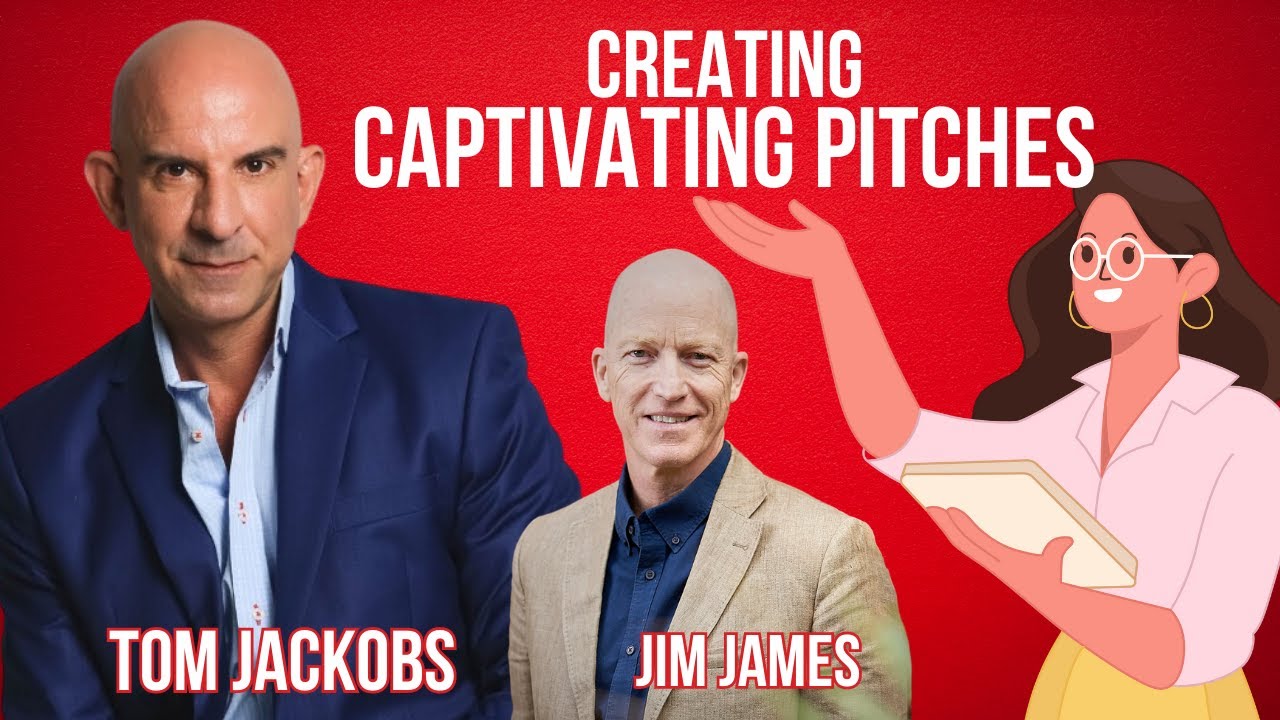
In this episode of The Unnoticed Entrepreneur, host Jim James interviews Tom Jacobs, a former personal‑training studio owner turned entrepreneur‑coach behind Impact Pilot. Jacobs recounts his journey from a theater graduate working a low‑pay corporate job, through a health crisis that sparked a personal transformation, to founding a boutique fitness studio. He explains why traditional gym marketing failed—most people don’t want to work out—and how he discovered that public speaking and storytelling were the most effective lead‑generation tools. Jacobs shares a costly mis‑step advertising on Kroger shopping carts, illustrating the importance of selling benefits over features. He then details how he prepared his business for sale by cleaning up the books, creating SOPs, and separating the brand from his personal name, making the transition smooth for new owners. The core of the conversation is Jacobs’ Impact Pilot framework, the “3 Ps”: Presentation (crafting a goal‑oriented sales pitch), Performance (using stage movement and vocal inflection to engage), and Profits (listening, asking the right questions, and closing). He emphasizes the power of a personal story framed as a hero’s journey, offers practical performance tips, and stresses that mastering sales is the single most critical skill for entrepreneurs. Jacobs points listeners to his free Storybook workbook (tomjacobs.com/storybook) and his website for further resources.
Chapters
Hello and welcome to this episode of The Unnoticed Entrepreneur with me, Jim James. A little bit froggy today in the UK. It's sunny but a little bit chilly. We're going to Taipei to meet with Tom Jacobs, who is having a company called Impact Pilot. But actually, he was previously a pilot, has a pilot's license, I believe, Tom, right?
Mm-hmm.
And we're gonna talk about how he put a whole bunch of money into shopping carts and showed pictures of himself when he owned a fitness gym. But now he's helping entrepreneurs to get their story right and to really make an impact through proper presentations. Tom, welcome to the show.
Thanks. Thanks for having me, Jim. Glad to be here.
Well, it's my pleasure. You've moved, you know, in Chicago, as I think where you're from, and you went to university there and you have a degree in theater. You've moved across to Taipei in Taiwan and Thanks for joining me on the show. Tell me a little bit about you. As you know, that part is quite briefly, but I want to hear then about Impact Pilot and why is it important for entrepreneurs to know how to present themselves properly?
Yeah, absolutely. Great question. Yeah. So, you know, I do have a degree in theater. However, once I graduated, I had a job offer making $15,000 a year and living in Chicago at $15,000 a year, you can barely live under a bridge, I think. So I quickly went into the corporate world and spent 12 years there. And through the politics and just kind of navigating through corporate BS, frankly, I learned just how important communication really was in everything that we do, whether it's just personal communications or business communications. And, you know, when I opened up my fitness business, it really dawned on me that that was an area that I was really good at and could excel and build my business through the power of, you know, communication. And I really went into public speaking as one of the best and most productive ways of getting new clients. And, you know, Being able to tell that story, be engaging, and have an audience, whether it's 1 person or 100 people, to go, yes, that's exactly what I want because I know you, I like you, I trust you, and I want what you're offering. And when I got that formula right, business just absolutely took off after it.
Tom, I'd love to hear that formula in just a moment. But first of all, you go from theater school to owning a gym. And then, you know, obviously you could be fit as a, as an actor, but, um, just tell me, why would someone think about public speaking if you're running a gym? Because most people would think that you're there, you've got, you know, you've got the muscles, you've got the cut shirt, and you've got all the facilities, and people come in and you're selling them a membership. So why was that not working? Why does the traditional route of marketing and selling a gym not working?
Yeah, because it wasn't a traditional gym. So it was, it was really a personal training studio. So we did, you know, all one-on-one training and small group training and some classes as well. And so when doing that, you really have to differentiate yourself from a gym, which nobody wants to work out. That's why we have an obesity problem in the world. Nobody wants to work out. And here you are trying to convince people to do something that they do not want to do. It's a very hard sell. And, and, you know, in terms of gyms in general, it's, I think they said it was like 2 or 3% of the population will go to a gym no matter what. It's that other 70% of the obese population that needs to go to the gym that isn't. And so, there was something really broken in the way that gyms were trying to attract people. They were attracting people that already wanted to go to the gym. And wanted to get healthy and fit. So, now, how do you get in front of your ideal client? And for me, my ideal client was somebody that didn't want to go to the gym. They wanted to have a community. They wanted to get healthy and fit and not feel like they were in a meat market where they were always having to, like, fend off the handsy guy or the handsy girl. And they just wanted to work out. So, in that aspect, you know, I went through my own body transformation, and that's really why I started the fitness business, because I was overweight, had high blood pressure, high cholesterol, because I had a high-stress job. And being in corporate work for 12 years, I had put on quite a bit of weight, and I was like 200 pounds at my heaviest. And when the doctor saw me, he was like, well, you're going to be lucky to see 40. And I was 30 at the time. If you don't make a change. And I suggest that you take these 2 pills, one for hypertension and one for cholesterol. I was like, is there another way? He's like, well, some people do this whole thing called diet and exercise, but I recommend just taking the pills because Big Pharma is paying me. But, uh, wow. Yeah, it was crazy that I would get such advice from a medical professional. And luckily, he's no longer practicing medicine. But I decided to do the hard work of diet and exercise. And in 12 weeks, I lost that 40 pounds of fat and gained 10 pounds of muscle. But more importantly, my cholesterol came way down, my blood pressure came down, and life got a lot better because I also found that passion for fitness. And that's what got me into personal training and then ultimately opening up my gym and owning that for 10 years.
Oh, I see. So, Tom, you mentioned there about the personal story. How did you then take that to the potential sort of gym customers? Because, you know, you've got your story there, but how did you go out and share that? Where did you find those people? Because, as you say, attracting people to come to the gym, which are quite often fairly cold, slightly musty, smelling venues with people who, whenever I go, I always feel slightly guilty because I'm never as fit and as healthy as everyone else there, right? So, how did you go and find and present those people, Tom?
Yeah. So, I actually went to my current clients and I asked them if they had programs at work where guest speakers could come into and do a lunch and learn or, a little seminar or a health fair or something like that. And that was the best decision I ever made was just to send out a blanket email to all my clients. And I was like, hey, does anybody offer this at your work? And I had like 12 people respond. And almost immediately, I was booking 1 or 2 events, public speaking events a month going out. And every time I went, and did a talk, whether it was to, you know, so one, one, I would, I would speak to any group too, by the way, just to get, you know, my, my experience doing it. And I, I went to a gardening group, these, you know, 6 very nice older ladies, and they wanted some stretching advice and some tips and tricks because, you know, gardening can be strenuous at times. And so, I mean, you know, I get cookies and milk. It was a really nice, uh, experience, you know. So that was like one event. And then Another was to a major corporation, Energy Corp in downtown Houston to 100 people. And every single time that I went, I shared my story. I shared some tips and tricks and I always had a call to action at the end. And every time, I always got at least one new client every single time.
So, Tom, I think a couple of things in there. I had Brad Sugars on the show from Action Coach and he just said, you just got to go out and be visible. Um, and he was doing shows, you know, lunchtime and, and dinnertime. So you're backing that up with you just got to go out and if you like, just do the reps.
Yeah, exactly.
Uh, if I pull on your, on your gym, uh, metaphor there. Um, Tom, so you also found one or two things with the gym, didn't you, that didn't work quite so well? Do you want to just share with us, you know, not to embarrass you, but we've all spent money on, on activities that you, you put your head in your hand afterwards and go, What was their thinking? But just, it's useful for anyone thinking, you know, that they might do something. Could you give us any examples of what didn't work for you when you were building the gym practice?
Yeah, absolutely. So, I had no idea how to sell. I had no idea how to market when I first, you know, opened up the gym, which are 2 very good skills to have as an entrepreneur and a great way to get noticed, right? So, I would try anything and I was like the shiny object syndrome, like, 10x. Like, that's me, like squirrel, right? And this sales rep came in and Kroger was the brand of the grocery store in Texas, in Houston, and all over the US as well. But they're like, hey, would you like to have your logo, your name, your picture on the front of every cart in Kroger? And that Kroger is like 2 miles away from my facility. I was like, yes, that would be awesome. I'm going to get so many business. And they're like, yeah, 30,000 families go to that Kroger every single month. It was a very large Kroger. I was like, wow, that's amazing. And so, yeah, I gave him $9,000 for the year. So, about $900 a month and got him the ad. Which was a picture of me without my shirt on and the logo, the address, and a list of things, not even like benefits. They were just features, right? And that's like Marketing 101. You talk about the benefits, not the features. So, it's like easy to park, brand new equipment, convenient hours. Like, nobody cares. Especially the target audience that I just told you about was the people that don't want to go to the gym. They don't care about parking. They don't care about new equipment. You know, all this stuff that I was trying to market towards. Well, that $9,000, I might as well have just flushed it down the toilet because I got zero leads from it. The only thing that I did get from it was just a little bit famous. So, every time that I went to Kroger, because that was where I shopped, People would stop and want to look in my cart and see what I was shopping for. And so, I had to give up the beer and cigarettes.
So, I thought you're gonna say they wanted to— I thought you're gonna say they wanted to see your abs, Tom.
They're like, hey, you're the guy on the cart.
Yeah, incredible. But as you say, we all get caught up in some idea and also this this idea that proximity and featuring, you know, on the ad would bring you the benefits. But thanks for sharing that story.
Sure.
Tom, you've since sold the business. Just tell me from a communications point of view, when it came to selling the business, how did you position the company? Because for many people, especially you are the value, you're the founder of the business. Selling the company without you being in it, how did you accomplish that?
Well, that's such a good question and something that every entrepreneur needs to know the answer to. And that was preparation. I didn't just wake up and say, you know what, I'm going to sell the business tomorrow. I woke up and I said, I'm going to be selling the business in 5 years. And I did a lot of preparation, especially the last 3 years, to make sure the books were all in order. They were showing a profit every single year. I took out all those extra owner expenses that everybody likes to put into their books so that it shows actually a profit. And yes, I had to pay a little bit more in tax by doing that, but It showed the new owners progressively more income coming into the business without all the little fluff stuff that entrepreneurs love to put through their business.
Yeah, exactly right. School fees were my killer, wiped out any profit we ever made. Awesome.
Continuing education, right?
Yeah, that's right. Exactly. So, presenting the books. And what about from a branding point of view, Tom? I don't know, because obviously, you were not on the Kroger shopping charts anymore, but the new owners may have not had that legacy to deal with. But what did they do about the branding?
So, the brand— so, and that was the other big thing that I did was take me out of the brand. So, I didn't train anybody for the last 5 years. I had trainers that I trained and I was And it wasn't named after me either. So it wasn't like Tom Jacobs Fitness. It was Body 3 Fitness. And by having one, the different name, that makes it a lot easier to sell than selling your name to somebody else. But also just making sure that there's process and procedures in place because especially for solopreneurs or people that have a small practice, that practice is you. And if somebody's buying that practice, what are they buying? And for me, because I wasn't doing any of the training and because I had SOPs all for everything in the, in that business, it became a very, very easy sell because the new owners were like, I just need to come in and pay you some money and the business is operating. Hell yeah, I'm going to do that.
Yeah, Tom, that's wonderful. Yeah, thank you for that. Now, I think one of the elements that you mentioned in there was about the branding not being an extension of your personality, um, is a key theme, I think a recurring theme for business owners. I sold my agency in Singapore recently and I'd called it East West PR intentionally for 20-odd years, so it wasn't just me. Tom, nice. Now with Impact Pilot, Tell us about what you're doing because you have a background in theater. You learned about public speaking and that was the primary source of getting leads. Tell us about Impact Pilot, what you're doing now and helping entrepreneurs to understand how to present themselves.
Yeah, absolutely. So I have a kind of a 3-part to that and I call it the 3 Ps. So we have the presentation itself. And that is where we put together that sales presentation and the public speaking presentation. And they can be the same one because in my world, you can be presenting to 1 person or to 100 people. It's basically the same presentation. And then we get that all set up because it's more than just sharing information or teaching people. It's sharing information with the goal of having somebody do something at the end of that, whether that's just adding an email to your email list or having them sign up for a consultation or having them buy your program right there at the speaking event. So, whatever that goal is, we're driving, we're creating that presentation to drive towards that goal. And then, so we could definitely stop there and it'd be okay, But now we take in my degree in theater and go towards the performance. The second P is performance. So any presentation, you can stand behind a podium, you can read your presentation and bore your audience to tears. Or you can ditch the podium, use the entire stage and your body and your voice to now create a performance out of your presentation, which is so much more engaging. Than standing behind a podium reading your notes and teaching, right? You want to engage that audience. So that's part of the performance piece. And then the last piece is profits, and that's the sales aspect of it. So how do you sell to somebody one-on-one so that they ultimately buy if they're a good fit? And/or how do you have a really good call to action at the end of your presentation so that people will actually sign up for your email list. They'll give you— they'll sign up for a consultation or buy your program right there.
Okay, Tom. So we've got the 3 Ps: presentation, performance, and profits. Which sounds also maybe a little bit like could be pitch because at the end you're pitching what you want them to buy. What are some of the hallmarks then, Tom, of a great Yeah.
So, the first thing is your personal story. And this is where a lot of presenters and entrepreneurs shy away from because a lot of the first thing I always hear is, well, my story has nothing to do with what I sell. Probably not. But there's probably a story within that story about why you're passionate about what you do. And that's the important part. Because you want to show that passion for what you do, especially in a sales presentation. Because at the end of the day, people are buying from people. And if they don't know you, like you, or trust you, they're probably not going to do business with you. And sharing a personal story is a way of just connecting with that person.
So, in that sense, Tom, the personal story doesn't necessarily have to be sort of an extension of the pitch. but rather almost like a positioning for yourself and why you're there in that room at the time. Would that be accurate?
That's a very accurate statement, yes.
Okay, and that's quite reassuring, isn't it? Because then you're not sort of digging to find some maybe tangential reference to why you're selling what you're selling and who you are, but just being present as yourself is what matters, right? Rather than necessarily being an extension of yourself, what you're selling. That's wonderful. And a key element, Tom, of the performance, what would be the number one ingredient that people should look for or should try and put into their performance?
Yeah, so 2 aspects. One is meaningful movement on the stage. And I add meaningful, or just being very conscious of where you are And where you want to go. Because you'll— I'm sure you've seen the tennis match presentation. They just pace back and forth, and it's just, it's horrible. I teach people, you talk, you walk, but you don't do it at the same time.
Interesting.
So generally, you finish a thought, you're ready to transition into a new thought, you change spots. It's just an easy hack to create some visual diversity for people to enjoy. And the second thing is the vocal inflection. And that is probably more important than the movement itself, because that's what, you know, people are hearing that more than maybe what they can see, you know, depending on the stage itself. So being able to change your tonality And really match it to what you're talking about. And so, that's another skill that a lot of people just don't really realize that they need to develop.
Okay. Yeah, that's really, really handy. And then, for the final one, for the pitch, Tom, you call it profit. Sorry.
Yeah, same thing. I might actually now change it. I'm on my website now. I'm changing it.
Unless you're selling at a loss, of course, then But only because, you know, sometimes you're not trying to make money. What would be the number one element of the profits part of your piece?
Yeah, so in a sales presentation, like a one-on-one sales presentation, it's always listening more than you're talking. So what that means is asking the right questions to get the prospect to convince themselves that they need your product or service. Whereas a lot of salespeople like to just kind of jam it down the prospect's throat and say, this is what you need. And the person's like, oh, maybe, maybe not. I'm not sure. But if they're coming up with the idea themselves, then it's going to be a much stronger sale.
Tom, that's fantastic. I know that you've also got a workbook you're going to share, make available. Do you want to just tell us about that? Because that'd be a very, very handy resource because obviously you've got a lot of information. We've only got our 20 minutes on this show. So lots of questions unanswered, but I'd like people to come to you. Where can they get this workbook and what is it?
Yeah, so it's on my website and it's tomjacobs.com/storybook. So it's tomjacobs.com/storybook. And what it is, is it's basically a guide to find your personal story. Number one. And then number two is how to develop that story into the hero's journey framework so that it reads like a Hollywood script rather than just a boring life story that somebody might just say at a dinner party.
Tom, that sounds great because mine's feeling more like a low-budget movie than a big blockbuster at the minute. I gotta tell you, Tom, with one piece of advice for my fellow unnoticed entrepreneurs from you, you've had over 30 years of business. Been on Kroger shopping trolleys. So, so you, you've got fame on your side. You got noticed. What would be one piece of advice that you give my fellow unnoticed entrepreneurs about, you know, getting noticed?
Yeah. So like the one thing that keeps moving business forward is sales. And if you don't know how to sell, at a very high level. That is the number one skill as an entrepreneur you need to do because that's what's going to help you build your business and ultimately get noticed.
Tom Jacobs, thank you so much for joining me from Taipei, a beautiful city actually, Taipei. If you want to find out about you, where can they do that?
Yeah, best place is my website, tomjacobs.com.
Great. Tom, thank you for joining me on the show today.
Absolutely. Thanks for having me.
So we've been going to the other side of the world to Taipei, which is obviously in Taiwan, just south of mainland China. And you've been joining me. I'm just here in sunny Wiltshire. And if you've enjoyed this show, do please share it with a fellow unnoticed entrepreneur and review it if you can, would be wonderful. And until we meet again, I encourage you just to keep on communicating and thank you for listening.
More from Jim











2 people, infinite agents, 1 billion dollar idea #AIAgents #Startup #Productivity