UnNoticed Chase Palmieri
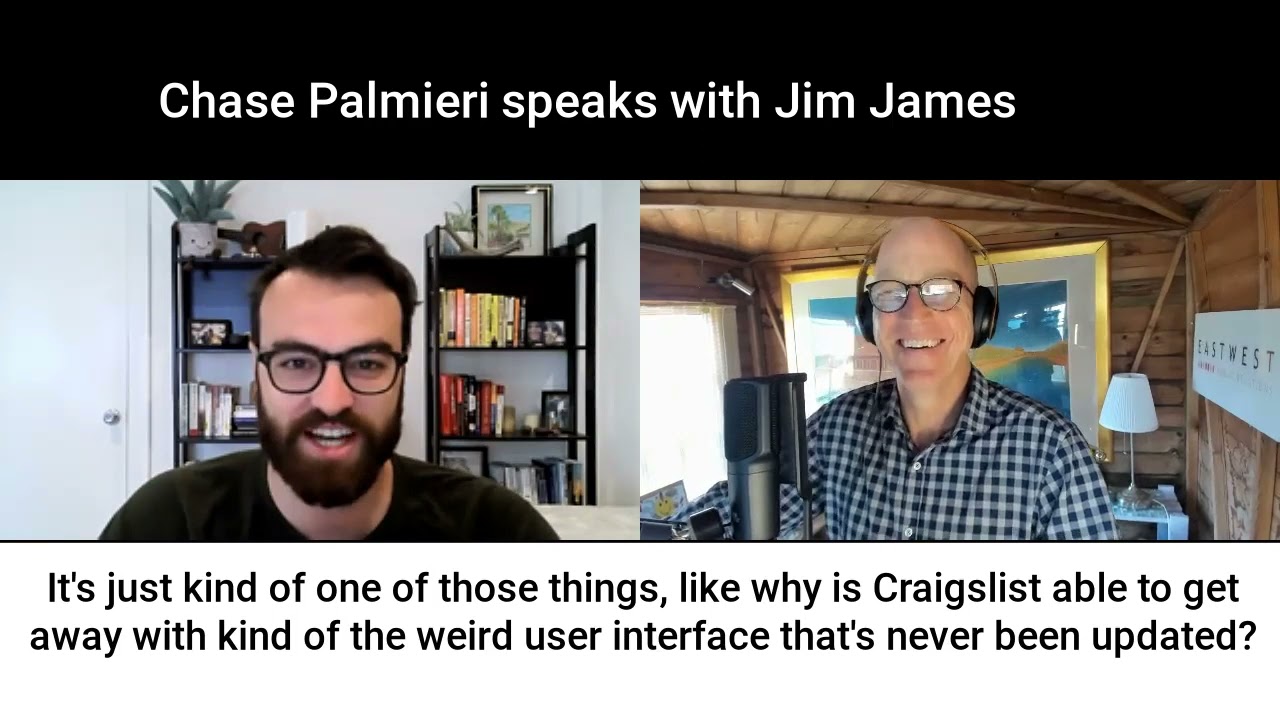
Chase Palmieri built Credr to rate news articles like Rotten Tomatoes rates movies, with scores from journalists and readers. The company licenses these credibility ratings to platforms like Google and social media, and has raised $495k so far with Patrick Lee, Rotten Tomatoes' founder, as an advisor.
Chapters
Chase, thank you so much for joining me. Chase Palmieri joining me from credder.com. Chase, welcome.
Thank you, James. Great to be here.
Now, Chase, tell us, where are you from? And which problem you're solving for entrepreneurs when it comes to getting noticed?
I'm from the Bay Area. So right now I'm talking to you about 10 minutes north of the Golden Gate Bridge, which is the town of Larkspur where I grew up. And the problem that my team and I at Credr are trying to address is that journalism, when it moved online, was forced to kind of chase clicks to satisfy advertising partners because that is the underlying revenue model. And so the mission of Credr is to move the news industry from clicks to credibility, and we're doing that by building an open review platform for news where journalists can review under one category and the public under another.
So really seeing the opportunity in this fake news?
We had our start before that term really got popularized, and we're not personally huge fans of the term because You know, anything can be called fake news. It's not a very helpful label, in our opinion. But definitely, kind of the 2016 election and the popularization of the term fake news has helped build awareness of what we're working on.
So Chase, just explain to us then the business model for Creda, because I've seen the website. And I can see that you've got articles and people reviewing them. Can you just take us through just briefly the business model that you've got with this?
Yeah, so the simplest way to think about Credr is as the Rotten Tomatoes for news. So when people think of Rotten Tomatoes, they know that there's a critic score and an audience score. The same thing applies here. We have journalists reviewing under one category and the public under another. And then some people might notice that when they go to buy a movie on iTunes or certain streaming platforms, that they can actually see the Rotten Tomatoes score next to the content. And so that's basically a licensing deal, and that's how Credr wants to make its money. So what we want to do later this year is begin licensing the Credr scores for individual articles, authors, and outlets to third-party platforms, typical platforms like social media, search engines, web browsers, news aggregators, and programmatic advertisers who are trying to address content credibility on their own platforms without having to make as many editorial decisions as they are right now.
Right, Chase. So That's a complicated sort of business model, isn't it, with multiple stakeholders? So can you just share with us from a sort of a communications perspective, some of the challenges that you've had to deal with in building this online review program?
Yeah, so we kind of have to be something different to a lot of different people. And that's really the point you're getting at. So yeah, to attract journalists to review on the platform, we need a different kind of set of value propositions like, oh, we're going to bring additional traffic to You're gonna be able to build up your Twitter followers because your, your Twitter handle is featured next to your reviews. A lot of these different types of value props geared towards them, then different ones towards the regular reviewers. And then as you kind of mentioned, even with our different customers that we're gonna license to, like social media and search, those 2 platforms use ratings like ours in very different ways, kind of in customized ways. And even then, 2 different search engines might use the ratings differently. So We really do have to change our language and copy and, and our kind of stated value propositions and brand promises to them differently based on who we're selling to. And the way that I've found that kind of a helpful exercise in doing that is try to create a one-page brochure. And so we'll, we've created a one-page brochure for our ratings licensing strategy to social media, a separate one-page brochure to news aggregators. Because our enterprise API, which gives the access to these ratings, can do all these things for all these different platforms. But we really need to express, you know, why we're a good fit for that particular type of platform.
So really offering custom content sort of propositions to the different stakeholders in the business, Chase, that's got to have some challenges. For example, for a corporate identity perspective, does it? Currently, you've got a what looks to be a golden piece of cheese on the homepage. How have you sort of addressed the corporate identity side when you've got so many servants and so many masters at the same time?
Yeah, yeah, no, it's a challenge. And I can't say that we're, we're, you know, not making missteps. In fact, you're pointing out our current branding, which is the gold cheese for Cheddar's logo. And we're actually addressing what we kind of think of as a branding misstep in the early days, because When we went with the cheese, we started to get a lot of people who would stop reading the name as Credr and start seeing it as cheddar, just kind of a psychological phenomenon. And so we're correcting that. We're going to be going towards some more traditional ways of showing good, not so good, and bad rating icons. And also that's important because if we're going to display our rating icons and scores on third-party platforms, It needs to be really simple for their readership, and it needs to not have our brand overpowering their news feeds or their search results. So we're going to be moving towards a much simpler iconography.
How did you find that out, Jase? Because it's quite easy to sort of carry on in splendid sort of isolation, isn't it? Did, did someone at home tell you they didn't like it, or did you have some mechanism in place?
Yeah, we, we thought we were being cute for a while. We kind of wanted to differentiate ourselves in the media rating space by not being a simple green, yellow, red checkmark, for example, or a shield. We were trying to kind of create that, that timeless, lovable brand that Rotten Tomatoes, for example, has in the movie rating space where they appear to not take themselves too seriously. But now that's becoming a problem because now it looks like we're not taking ourselves too seriously. And here we are. selling to third-party platforms. So we figured this out with just months of user feedback with our reviewers, our passionate community of people rating on Credr. And they were very upfront with us and we kind of said, no, no, you know, stick it out, stick it out. People said the same thing to Rotten Tomatoes in the early days, but then it became an iconic brand because they kind of broke the norms. But in the end, I think it became too big of an uphill battle for us to fight when we're fighting so many other uphill battles.
Yeah.
That we're now kind of retreating on our initial goals there.
Okay. So you talk about sort of a number of different battles, Chase. I will ask though, before I get to that, why do you think Rotten Tomatoes got across the divide in terms of keeping that brand and that icon?
And, you know, I've been trying to figure that out. So the founder of Rotten Tomatoes and the former CEO, Patrick Lee, he's actually our first advisor at Credr and helped us raise our angel round. And so It's another reason that we liken ourselves to a Rotten Tomatoes for news. And so we've leaned on the Rotten Tomatoes crew for a long time, but it seems almost as though they also don't really know why it was able to work. It's just kind of one of those things like, why is Craigslist able to get away with kind of the weird user interface that's never been updated?
Yeah.
I think that there's just some of those early internet companies that were providing a lot of value. And became the go-to spot.
Yeah.
And people just kind of learned to deal with it or love it.
Yeah. There are a few sort of diners like that, aren't there, that don't seem to have changed their decor for decades and somehow continue to be the place that people go. So Chase, you mentioned a few other challenges. Having built myself an internet distribution business back in 1998, I know that building that product doesn't necessarily mean that people come and buy it. Can you take us through some of the challenges and how you're solving the distribution challenge for Credr?
Yeah, absolutely. And you're definitely right. And everybody really needs to let that sink in that if you build it, they will not come. You need to have both sides of the issue worked out. You need to have a great product. Yes. But then you really need to have kind of a product-focused approach to your distribution. And luckily at Credr, we've actually found a successful approach there without paying for it, which is our search engine optimization strategy. So every single article, author, and outlet on Credr has a public-facing rating page, kind of like IMDb or Rotten Tomatoes does. And what we've done is we've kind of optimized all of these different pages for Google search results. And so we've managed to have 13.7% month-over-month growth over the last year. And that's all unpaid search traffic. That might not work forever because if there are more media rating sites with more public rating pages, it's going to get more competitive in those search results. But as of right now, we actually are the only media rating site that shows those star ratings inside of search results when you search for an article, author, or outlet. So we also have kind of a click-through advantage there because maybe people don't know this, but when you have a star rating next to your search result, it becomes more attention-grabbing and more clickable. And so the SEO strategy has been an effective one for us. And we're also implementing a new feature soon where every time you leave a review, we have this database where we have the Twitter handles of all of these different journalists that are on our platform. And so we're actually going to allow you to share your review to Twitter, and Credr is going to basically make sure that every time you leave a review, we're helping you call out that journalist or that outlet to their face on Twitter.
Under the Speak PR program, we call it amplification model, right? So you're sort of merging both the content creation and amplification in one I guess one click after the next. Is that right?
Yeah, it's the, the SEO one is absolutely a flywheel where then people click to the pages, then a certain percentage of them leave reviews. Then we index those reviews onto the rating pages to make them even stronger for Google to index in their search results. And it's this virtuous cycle. Yeah.
That's lovely. And are you in danger of upsetting any journalists who find people presumably being able to rate them good or bad. And I know talking to some people just yesterday about on Amazon, the danger of being held hostage by reviewers who are not really genuine, but are just trying to game the system. How do you, how do you safeguard against that and your reputation with the journalists?
Yeah, definitely. Credr will upset some folks in the same way that Yelp upsets some restaurant owners and still does. And Rotten Tomatoes probably upsets some movie studios and Production studios. So we don't expect to kind of make friends with everyone. What we're trying to do is create that level playing field, though, where, you know, a smaller independent outlet, if they create a great piece of work, do a great investigative piece of reporting, that it can actually— we can drive traffic to it and that they don't need to be a New York Times level brand to really capture that attention and that we drive traffic based on attention. And there's a lot of things that we do internally that kind of mitigate the risks of gamification of the ratings or reviews and all these types of things. So first off, we have a very specific review process that's not just a simple 1 to 5 star rating. You have to label a specific reason for your review and an explanation for your review, which then actually gets voted on by the rest of the community as helpful or not helpful. And that actually creates the reviewer rating. So The reviewers on Credr are also held accountable and have scores next to each of their names.
I see, a bit like on the Apple community, for example. If you go into the support community, you get ratings as well for the people that are giving the support. It's becoming an amazing sort of social validation project, isn't it?
Yeah, it's kind of like a— yeah, it's like a built-in immune system that we're always going to have to keep improving, but it at the very least allows for the best review on any piece of content to bubble up to the top of the page.
Chase, you've mentioned that you've got angel investments. So changing tack just a little bit, because we talked before the show about different stakeholders. And I'm personally a fan of talking about not just the customer, because a business has many stakeholders. Would you mind just sharing, how have you addressed sort of the investor relations for Creda?
Yeah, so we've raised, I believe it's $495,000 in total investment to date. And we actually are in the middle of a current pre-seed round where we're raising up to $600,000. And we've been really lucky when we brought on Patrick Lee, the founder of Rotten Tomatoes and former CEO of Rotten Tomatoes as our first advisor. He was able to make some key introductions to some really kind of heavy hitter Silicon Valley angels. And we were able to raise our angel round and then kind of meet certain milestones and product rollouts that that led to our bridge round. So for us, it's kind of been a mix of convincing investor community that there is a need for this solution, that the problem is getting bigger and bigger, and that sooner or later these social media platforms, search engines, web browsers, news aggregators, they're going to have to address this problem. And we're seeing that that's kind of playing out with increasing pressure from their own users and the media and now regulators to address content credibility issues. And we're basically having to convince them that, look, there are other content credibility solutions out there, but the one that will have the most staying power and the most brand loyalty and probably the most adoption by these platforms in the future is one that is creating kind of decentralized reputation and not just media ratings as decided by some small select insider group that's going around and labeling outlets. We need to create the Yelp for news consumers or Rotten Tomatoes for news, and that a brand like that could actually have a really kind of important seat at the media landscape table.
Right. So some sort of personal outreach, but then you still had to pitch them on the narrative about the industry as well, Chase.
Yeah, yeah. Where the hockey puck is going.
Yeah, yeah. What about media? I can imagine, are a very media-friendly company, because you're addressing something that must be close to the hearts of the journalists themselves. Are you doing much in terms of media relations, actual journalist relations work for Credr itself?
Yeah, absolutely. So I have a background actually as a media watchdog for Project Censored, which is a nonprofit, nonpartisan watchdog founded in 1876 here in Sonoma County. And so I was doing that role before I started Credr, actually. And now I've kind of continued my, you know, let's call them some basic skill set on the radio and podcasting to create the Credr podcast. And so this has been a really interesting way to bring on journalists who I can then feature a great piece of reporting that they just did, or I can bring on the key decision makers at a platform a big social media platform or web browser to talk to them about how they're addressing content credibility issues. So at Credr, we're very open and easy to get in touch with and trying to kind of have conversations with all these different stakeholders we're talking about in the industry and basically assure them that, hey, we're not here to pick on anyone, but we need to all agree that there's a problem. Trust is at a record low, and, and now the United States, which is our main market, is the most distrusting of online media out of any country in the world at about only 29% saying they even trust what they're seeing in online media. And so the problem is big. It, it is hurting and is going to continue hurting the publisher's bottom line. And with Credr, we're basically trying to provide them a communication tool that will at least allow them to understand how and why they're gaining or losing a reader's trust.
I can really see you can address not just an individual publisher's problem, but a nationwide one. I believe that the credibility, for example, of the government now in the US is also fairly low in the public mind. So Chase, in terms of taking the lead, are you working as partners with other industry associations? Because one of the topics we've had on another podcast is about adjacent marketing and about being in organizations that have a common, like, goal, but slightly different businesses. Can you share what you're doing with Creda with other trade associations?
Yeah, I wouldn't say that we're doing too much with other trade associations as of right now. We are working directly with publishers through what we call our partner program. And so that is a way that we can actually put the Creda review process at the bottom of articles on publishers' own websites. Which is a great way for them to capture that feedback and those early scores from their most loyal readership and to really start to show their readership that, hey, we are, you know, willing to be held accountable. We want to— we want your feedback at a time when a lot of people are actually just getting rid of their comment sections and moving in the direction of not understanding why they're gaining or losing trust. So we like to work directly with the publishers. And then obviously we are trying to work closely with all these social media and search engine type platforms, but we are We are not really doing the convention circuits much right now. We really use the CredR podcast as a way of targeting a specific individual in the industry, whether that was Craig Newmark or Jay Rosen or any of these other, you know, high-profile industry guests that we've had on the podcast and, and just dive into an hour-long discussion with them as a way of introducing ourselves.
And final question, how do you get the consumers, the readers, to look for the Credr logo, whatever that turns out to be, in the same way that they do the Rotten Tomatoes logo or say a Trustpilot logo?
Yeah, that's a great question. And that's really the focus of what we're thinking about when we do this rebrand is how do we basically make it so that before somebody reads an article, they say, well, let's check the Credr rating, or has this, has this been rated on Credr? And we want them to kind of ask themselves that in the same way that somebody does with a movie or before they go to a restaurant, they check that Yelp rating, kind of the before experience check. And so that just comes with a lot more brand awareness and ideally with what we're doing with these search engine result pages. But that's definitely the long-term challenge. But if we can achieve that status, then we really will help save news consumers a lot of time. The challenge there though is that with Rotten Tomatoes doing it for a movie, that's a 2-hour commitment. And so there's even more incentive for you to check a score for it. And the same thing with a restaurant, it's probably also about an hour and a half to 2-hour commitment as well as the cost of paying for the restaurant. So, or maybe you could even say the risk of a bad, you know, a bad bite of food that leaves you sick.
Yeah.
So there's a little bit more reason to check a score there, but at the same time, we have a lot of these kind of 20 to 30-minute articles of great investigative reporting that people just don't read anymore because they're worried that they're going to start committing to a 25-minute article and that it's going to end up being some piece of clickbait or, you know, press release or, you know, faux advertising. So that's really what we need to do is, is show them that, hey, once you've seen what other readers before you have to say about a particular article, now we've de-risked you diving into that long-form content.
Great. So rebuilding the concept of editorial integrity into the media, right, Chase?
Yeah, yeah.
Chase Palmieri, thank you so much for joining me all the way from California today. If you want to find out about you and Credder, where can they go?
The best place would be to start at credder.com, which is spelled C-R-E-D-D-E-R dot com. If you're somebody who is interested in just exploring our enterprise API, that, that licensing model where we give access to our database of reviews and ratings, that would be enterprise.credr.com. And then other than that, we do have the Credr Podcast, which is available in video form on YouTube, and then audio on Apple Podcasts and Spotify Podcasts. And then last but not least, you can follow me @chasepalmeiri on Twitter or @credrap on Twitter.
Which is where, of course, Chase and I met each other. So thank you so much, Chase, for connecting with me on Twitter and taking the opportunity to meet with me. So thank you so much for sharing all the wonderful work you're doing as a reader. And someone that has, you know, found as well that editorial integrity is such an important part of what we do in the public relations world. It's great to have you out there doing this work. Thank you.
Yeah, thank you, Jim. And thank you for all the work you're doing for entrepreneurs out there. I really appreciate it.
Absolutely my pleasure. Well, thank you. You've been listening to Chase Palmieri, the founder and CEO of Creda, on this episode of The Unnoticed Show. And until we meet again, we wish you the best of health, best of business. And if you're going to be reading something, look out for that little golden piece of cheese, because that will give you the credibility rating of that article you're about to read. Stay safe.
All righty.
More from Jim











2 people, infinite agents, 1 billion dollar idea #AIAgents #Startup #Productivity