Venturing into the Realm of Startup Triumphs and Branding Mastery
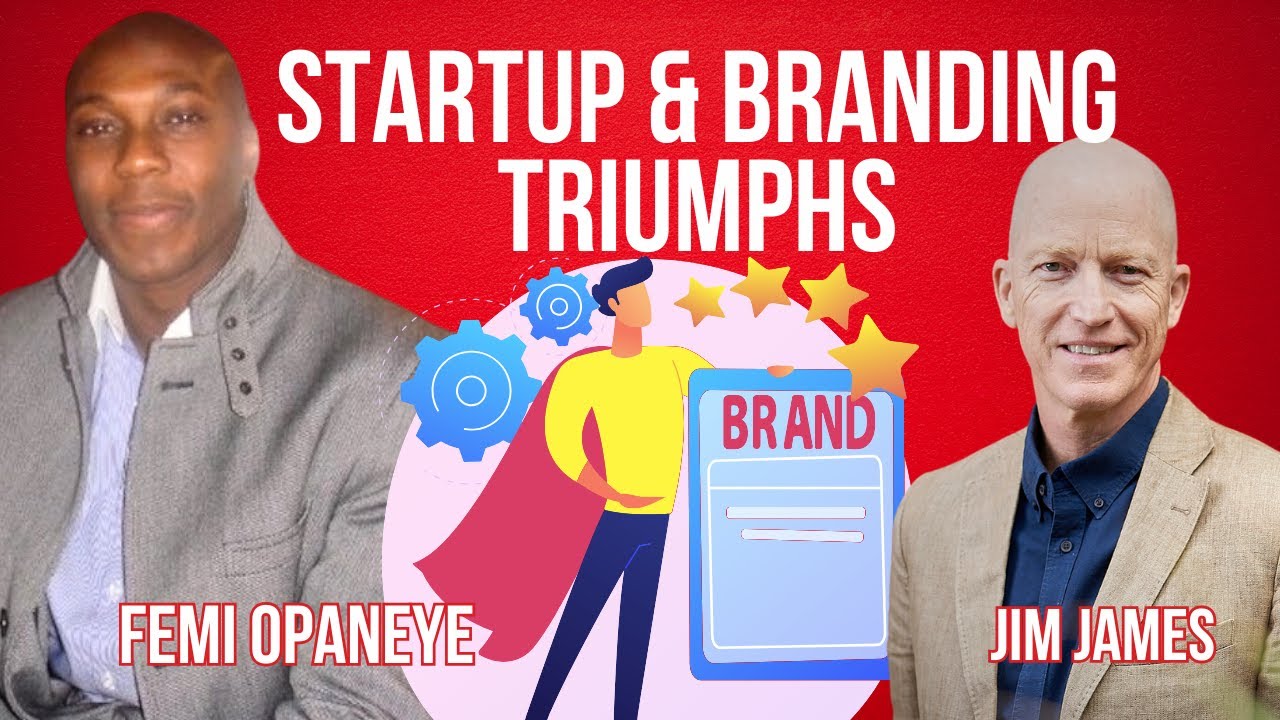
Femi Opanaya, founder of Paine Ventures, helps early-stage startups with fundraising and customer acquisition from Bali. He built a global client base through YouTube, podcasts, and social media, and stresses that pitch decks need to convince investors, not just look pretty. His core advice: drop the corporate persona, write your KPIs on mirrors, and treat health as wealth.
Chapters
Hello and welcome to this episode of The Unnoticed Entrepreneur. As you know, this is a show for entrepreneurs who really deserve to get noticed for what they do, entrepreneurs that are looking for real-world examples of marketing strategies on everything from personal branding to SEO to, uh, public relations and podcasting and so on. So I'm delighted that today we're going to Bali. I'd be even more delighted if I was going to Bali myself. We're going to meet Femi Opaneye, who I'm sure is going to help me pronounce his surname correctly. And we're going to talk about how he's building Pain Ventures and how he's building a brand from Bali but getting global clients. Femi, welcome to the show.
Hi there, Jim. Thanks for having me.
Look, first of all, help me out. Make sure I've got your surname correct so that everybody listening can find you. Help me out.
Yes, it's Femi Opanaya.
Opanaya, I'm sorry.
That's right. No, that's okay. That's okay.
So Opanaya and Pain Ventures comes, as you said, from the name. Now we're going to talk about what you do for your clients, but we're also going to talk about how you get clients through personal branding when you're based in Bali and have been for many years, but your clients come from around the world for your advisory services.
So That's right.
First of all, let us know what Payne Ventures does, how you serve your clients and the kind of clients that you do serve.
Yeah, sure. So Payne Ventures, as you said, it comes from— it derives from my name. Actually, my brother came up with that name almost, I would say, about 35 years ago when we were kids. He always said when we eventually grow older, we're going to have this company called Payne International. And so, when I started my business, I decided to run with that name. Interestingly enough, I'm sure he's forgotten that conversation, but that's where it comes from. But in terms of what we do, Paine Ventures is a startup advisory. So, we help our clients in 2 main areas, and that's customer acquisition and in fundraising. So, typically, we help our clients with things such as financial modeling, developing pitch decks, custom-made fundraising strategies. Some of our clients ask us to develop business plans as well as investment memorandums for them, as well as implementing lead generation campaigns via cold email. Now, as you rightly pointed out, most of my clients are international. And so what I need to do is I've developed a bunch of strategies which we'll talk about I guess later on as to how I communicate with, with my clients that are based all over the globe.
That'd be great. I'm sharing for those people that are listening, I'm sharing Femi's website, which is painventures.com. And on there he's got fueling startup growth and fundraising. And you say that you're found— you're not— you're, you know, you're founders, not designers and not marketeers. But you have a background originally in law and then in banking, Femi. So where did you see the opportunity to create this really advisory service for startups?
Yes, I would say that. And the reason that we position ourselves this way is that a lot of people in this space are actually— a lot of them are designers, a lot of them are in marketing. And a lot of people come to us and they're expecting people that are specialists in these areas, although I don't understand why, because it's actually very important to understand who is reading this documentation. And most of these documents are actually prepared for investors. So if I'm a small business, so a startup, and I'm in the early stage phase, Um, what I'm— what I actually require is, let's say I want to raise capital from an angel, is that they're going to ask you for 2 documents, and those are, um, a financial model and a pitch deck. Now, you don't want to go to a marketer or designer for these documents because actually the document— whilst the document might look good, uh, and they might select the right, the right shade of magenta The actual angel investor doesn't care about that. What they care about is getting a return on their investment. And that's really what we do is helping clients to understand how to position their startup properly. And that is, I guess, from a sales and marketing perspective, but also to speak to the actual investors or to speak to their clients. So that they can actually sell their product or service effectively.
So, Femi, when you say there needs to be a, you know, a pitch deck, but also a business model, most of us are familiar with a pitch deck. What goes into a successful business model illustration or presentation?
Yep. So it's a financial model. and a pitch deck. So an investor might ask you, typically they'll ask you for a 5-year financial model or a 3-year financial model. And essentially they want to know how you're going to, how the business generates income over a 5-year period. Now look, at such an early stage, it's damn near impossible to predict how this is going to happen. But they need some kind of idea of how they're going to get their money back. And that's essentially what a financial model does. And whereas the pitch deck, I would describe this as a visual representation of the business. So maybe a visual representation of a business plan. So this is the problem that is at hand. This is the solution that we come up with. This is our particular product or service. This is what the market looks like. This is what our team looks like. So essentially, you can think about it as us being like a matchmaker or dating expert. So we are saying to them, hey, this is what your future or potential partner is looking for. So this is how you need to present yourself to them. And another thing that I want to add as well is that developing and growing a successful startup is a 7 to 10 year commitment. And you can be in a 7 to 10 year relationship with that investor. So you need to present yourself the right way in order to find the right partner so that you can have the right relationship with them. And that's essentially what we are. We are dating experts, if you want to call it that.
Well, Femi, that's, that's one. Well, dating experts, but I mean, 7 to 10 years is a long time. In your experience, why do most startup businesses fail then, Femi? Because if you've built the business model, you've done the illustrations, in your experience with Paine Ventures, Why are most startups failing?
Well, there are a multitude of different reasons, but I think a lot of people set unrealistic expectations. Now, when I wrote the book Meet Active and Verified Investors, one thing that I wanted to stress and one thing that I do stress to my clients is that being a startup, being a founder, can be very difficult. It can be very grueling. And this is something that needs to be kept in mind when you're doing this. So a lot of people, for example, I guess it's the old adage that people say that, you know, when you'd ask people back in the day, okay, well, what is your idea? People will say, oh, I can't tell you that. You might steal it from me. But actually, in order to develop and grow a successful business, You need to put your idea out there. You need to speak to your potential customers, for example, and say, hey, is this something that you will spend money on? So that's very, very important. You need to test the market because actually a very difficult thing to do, which a lot of people in the corporate world don't understand, is it's actually very difficult to get someone to trust you to part with their money. Right. I mean, look, I worked in the corporate world for, I guess, almost about 15 years. And I would get to work, sit in front of my computer, and I would work. And at the end of the month, I was paid a salary. Now, as an entrepreneur, it's not that simple. You could just getting to work and sitting in front of your laptop will not— I mean, you could do that. I mean, you could do double the amount of hours and not get paid anything at the end of the month. So one thing that I think is very important is setting realistic goals, making sure you stick to those, putting a plan in place, and also making sure that you're hitting certain KPIs. Now, myself, for example, some of the things that I do to make sure I hit my KPIs is I write them on the wall, so I'll have them on my mirror. And in fact, this is a tip that I offer to people. Write your KPIs on your mirror so that every morning when you go to brush your teeth, you see them. So you know which targets you need to hit, which metrics you need to hit in order to get another client. I also have them on my door, for example. So if I'm going out, I see them. I have reminders on my phones for these these KPIs, and I think it's it's very important to be realistic about how you grow your business, develop your team, and bring people into this system so that you can have a successful business.
Femi Opanaya, have I pronounced your surname correctly this time?
Ha ha, Opanaya.
Okay, I'm gonna get it right. Femi Opanaya. There we go. Uh, everyone's gonna remember it now because— no, but Femi, I don't know whether I could put Post-it notes all over my mirror. My wife might get upset as she sees my KPIs, uh, in the, in the mirror. Uh, you've been building Pain Ventures not in the UK but in Bali.
That's right.
And servicing clients from around the world, looking at the amazing testimonials you've got. Let's just talk about you as an entrepreneur now. How are you getting noticed? Because you've got this new venture, you're in Asia. So how are you getting clients?
Yeah. So, I mean, look, I'm single, so it's easy for me to put all of these Post-it notes up. There's no one to complain. I mean, people come to my apartment, they think, okay, he's weird, but It may be why you're still single.
I don't know whether I should break that to you, but, you know, any woman's like, okay.
It may be. Thanks for the tip.
Yeah, that one's for free. That's on the house.
I appreciate it. So in terms of the way that I have been building my business, so what I would say first of all is that I've been an entrepreneur since 2014, September. And so I first started off as an entrepreneur in Hong Kong. Where I was for about seven years, but I was a I was a I was an entrepreneur there for three years. I then spent the next three years in London, and then I spent about three years in Bali as well. So that's Hong Kong, London, and Bali that I've been working on as an entrepreneur, and all of my clients have typically been international clients. Now, at the moment, the visa that I have means that I need to. Even though I'm based here, I have to work online. So it's incumbent on me to work that much harder to get my clients. Now, the reason I say that is that it's easy to build rapport. It's easy to build trust when you can meet someone physically in person, right? I mean, you can shake their hand, you can get a feel for who they are. People talk about a vibration. So a vibe. Okay, I get a good vibe from this person. It's a lot more difficult to do that when you don't meet people. And so there's a number of strategies that I've had to adopt. Now, I mean, I'm 43, right? So I didn't grow up in the era of TikTok and IG and all of these other forms of social media, but I've had to start adopting them. And learning about these strategies so that I can use them to develop my client base. So one of the things that I started as well is my YouTube channel. Now, actually, I enjoy using YouTube, and the reason I love YouTube is that you can be creative on the platform, right? So I can showcase my personality, but I can also talk about serious topics on the platform. Now, I have to say, in starting some of this, I have ventured into the realm of clickbait. But utilizing these strategies, it allows my creativity to come through because that's one thing that I wasn't afforded in the corporate world. I wasn't able to be creative, but I'm able to be more creative on YouTube, on these forms of social media. I'm also creating— it's also free content that I'm giving out to my clients, educational material. I've also developed a book, an ebook, which we talked about earlier. So this is another asset. And the reason I call them assets is that this is something that Daniel Priestley talks about. So he talks about creating 24 different assets. Which is a lot. But these are my different assets. Another thing is also being on these, on podcasts and being published in business publications.
I mean, I notice, for example, with your YouTube that it doesn't look corporate, doesn't look ex-HSBC, ex-lawyer.
No.
What risks are you taking with that branding strategy? Because people may not take you seriously if they see you know, the Elon Musks and the Nazi, and as you say, clickbait. Do you think they'll— what's been the response and what risks are you taking with that strategy?
Well, actually, that one specifically is true, unfortunately, but it wasn't Elon Musk himself. It was his Tesla factory. And some of the— and these Nazi swastikas were actually on the walls. in his factory. And if you watch the video, I was actually extremely surprised that this kind of thing can be associated with Tesla. I would say that in becoming an entrepreneur, you're afforded the ability to let your personality shine. And I think that— I believe that that is very important. Whereas when you work for a company, particularly a multinational public company, you have to wear a dark suit, a light tie, and a dark— sorry, a light shirt and a dark tie. I was that guy. But actually, I used to wear pink shirts, and I would wear pink shirts, pink ties. I would wear red socks. So that was my way to showcase my personality. But these days, I let my creativity flow through even more because I believe that actually I was always a creative type of person. But because my father is a doctor and I was raised to move towards that way, right? Most of my family are doctors and lawyers. So I was moved into, okay, this is what you want to do or this is what you should be doing. But, you know, I think creativity is, is a great outlet. Now, to answer your question specifically, I haven't gotten any pushback yet, but I'm sure it's coming the more I put myself out there.
But Femi, it's plainly working for you because you're getting leads. And you're able to sustain yourself in Bali working with clients worldwide, which sounds like a dream solution for many people. If there's a mistake that you feel that you've made or something that you feel you wouldn't want to do again in terms of getting noticed, what would that be, Femi?
Yeah, sure. So the book that I'd highly recommend is Key Person of Influence by Daniel Priestley. Now, I wish I had learned about that earlier. So letting my personality shine through, because one of the mistakes that I made was, okay, look, I'm going to be this corporate person because I've been trained to be that way. That's all I know. And being trained as a lawyer in the UK, it is extremely conservative. I mean, it's changed a lot now, but it's a very conservative profession. And working in these law firms that I worked in, everyone was told to be conservative. And even these days, I mean, people tell me as well. So the other day I went on a podcast and someone said to me, hey, you're not going to wear a shirt? And I said, no, I'm going to wear this t-shirt. So people feel that, okay, you're having a business, you're at the forefront of that business, And so therefore you should be this particular way. But I wish I had let my personality shine through. And what I would say to people is that, look, if people don't want to work with you, they don't have to. And not everyone is going to like you. Humanize your business and I believe you will find your tribe.
Femi, that sounds fantastic. And you know, my final question is always, if there's one piece of advice that you give my fellow unnoticed entrepreneurs, what would that be? Or have I already teased that out of you, do you think? Is there one thing you'd like to give us as an entrepreneur to another?
Yeah, absolutely. I would say that, you know, showcasing your personality more is very important. But another thing I would say is also be very conscious of your health. I think that is very, very important. I mean, look, I'm 43 and I've always been very fit. And recently I've had some health issues. So high blood pressure. Last year I ruptured my Achilles tendon. And so I'm coming back from all of those things. And so over time I thought, oh, you know, this is— it's not that important. I'm going to focus on my business. But neglecting your health is, is, is, is something that you will regret. We will regret down the line because, I mean, look, you become a multimillionaire, but you're not healthy. How do you get to spend all of that money?
Femi, I think that's absolutely wonderful advice. There's a new book called Outlive, isn't there, as well, by Dr. Attia? that's also talking about retaining our health, because that ultimately is the true source of wealth. Femi, I'm going to try this one last time. Opanaya. Have I got it right?
You got it this time, right at the end.
Mate, I got to dub that in for the beginning. Femi Opanaya, thank you. I can say it with more confidence now. If you want to find out more about you, where can they come?
Yes, absolutely. So painventures.com. You can also find me on, on LinkedIn. I encourage you to connect with me. I accept all connection requests. I have a Linktree as well, my YouTube channel, you know, my— I have my book as well. You can connect with me via that. So just Google my name and you'll find me.
Okay, that's perfect. We're glad we found you. So thanks for gracing us with the presence from the warmth of Bali. Femi, thank you so much for joining me on The Unnoticed Entrepreneur today.
Thank you for having me.
Well, it's been a pleasure, hasn't it? I mean, Bali is such a beautiful place and more and more international entrepreneurs are basing themselves there as well and building global businesses and personal brands from Bali. Sounds like an amazing life story as well. So if you've enjoyed this—
If you decide to come to Bali, then please let me know. I'll be glad to entertain you.
Well, we can all go around to your house and look at the, at the little Post-it notes on your mirror, Philly.
Absolutely.
I mean, I'm sure a woman will have snapped you up well before we get there. So thanks for listening to this episode of The Unnoticed Entrepreneur, where we really try and find true stories from real entrepreneurs sharing how they're building their brands and their businesses without big budgets, but with creativity and with tools. And with determination. So I hope you've enjoyed this show. If I can ask you to please rate and review this on your player, that'd be really helpful. And do follow the show. I don't want you to miss another episode because we've got great guests like Femi lined up all the way through to Christmas, in fact. And there are over 750 episodes of this podcast if you have some spare time on a long flight to go and see Femi in Bali. My name's Jim James, joining you from sunny Wiltshire. Thank you for joining me. Thanks, and keep on communicating.
More from Jim











2 people, infinite agents, 1 billion dollar idea #AIAgents #Startup #Productivity