What is Post and Ghost and how to create content funnels on your website which work quickly.
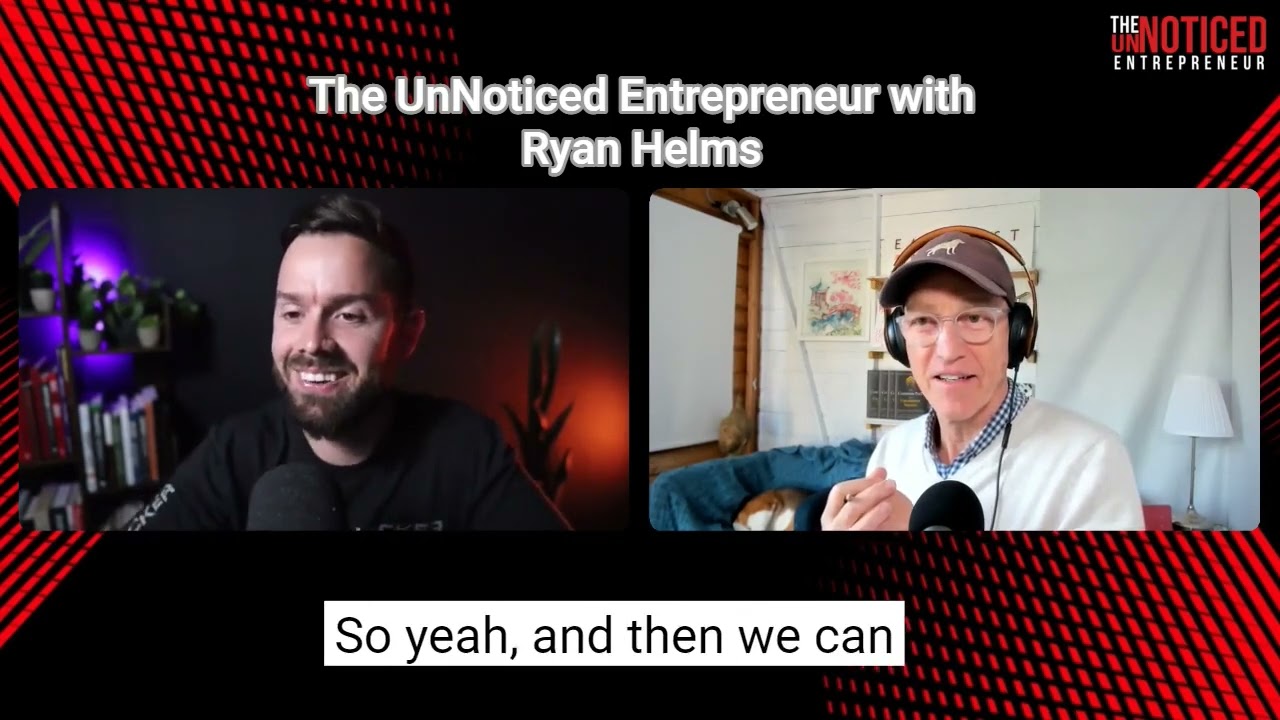
Ryan Helms explains how to build content funnels that convert. Start with short-form video on TikTok, Instagram Reels, or YouTube Shorts, then move to longer YouTube as your audience grows. Use a "post-and-ghost" mindset to ship content fast, track platform-specific metrics like first-30-second retention, and add content-specific calls-to-action to turn viewers into measurable leads.
Chapters
Hello, and welcome to this episode of The Unnoticed Entrepreneur. And today I'm delighted to have Ryan Helms joining me all the way from Austin, Texas. Ryan, thank you for joining me.
Yeah, thanks for having me, dude. Hopefully I can bring some value to your audience today.
I know that you will because you have a company called Legacy Media and you help business owners to get noticed using content across multiple platforms. So in your words, how do you help business owners to get noticed using content, Ryan? Yeah.
So we create what we call content funnels. So a lot of, whether it be people that would identify as entrepreneurs, business owners, or just content creators, they kind of aimlessly pump out content just for the sake of like, hey, I should be putting out content. And we come in and we say that everything should be deliberate that we're putting out. The content should have a mission. It should be helping push the business forward if, if you have a business. And by that, I mean like growing an— it could be purely just growing an audience. It could be ultimately driving people to a product or service, but we try to strategically create content that supports the mission of the company. And that's, you know, done via YouTube, podcasts, social media, blogs, email, et cetera. And we kind of handle all of that for a wide variety of clients.
Ryan, that's, that's a lot you're doing for clients. Perhaps what we can do is we could start with where you start with a client, because as you say, many companies create and maybe gets diluted. How do you first of all help them to be focused on what they want to say, Ryan?
Yeah. So for us, the conversation always starts with what is the actual goal of the content? And what I mean by that is for Company A, the goal may be I want a million downloads, right? This is what I hear all the time. I want a million downloads on my podcast. After talking to a client, because this conversation actually just happened yesterday, It's happened many times, but you know, we had one yesterday where the client was like, hey, we want a lot of downloads. And I was like, okay. So I ask a couple more questions, probe in, and then it turns out, and this is typically the case, someone either wants growth and exposure, meaning they want more views, more downloads, more reach, or they want relationships. They want to get to know. So like, Jim, I don't know if this This could be the goal of, of your show, but you could be like, hey, Ryan could be an interesting person to get to know. Maybe he could be a, you know, a good potential client for my business or whatever the case may be. And I could just be using this to open the door to start the relationship. And that's, that's usually the 2 goals. It's either like, I want to grow a really big audience or I want to develop relationships. And they have different strategies that help. each of those kind of come to life and become an actual thing. So we kind of talk through what is the actual goal here, growth, reviews, reach, or relationships. And from there, we kind of dig into the strategy.
Okay. That's fantastic. So having taken, if you like, the first approach with the client, take us through the process of thinking about content formats and types, because I think many people, including myself, we're not sure what kind of content to create, whether it's a long form or a short form. Is it an article? Is it an Instagram post? And then of course people get fatigued because if it doesn't generate results. So could you just talk us through what would be best practice, Ryan?
Yeah. So it really depends on the size of the audience that you have. If you already have a decent size audience, I would, I mean, I would say do everything, right? If, if you can, if you have a team, if you can afford it, et cetera. But the bigger your audience, the more things like podcasts become more valuable because podcasts are great, but the discoverability on a podcast isn't fantastic. Like it, it can be kind of difficult to grow a podcast from scratch, which you might have experienced that as well, Jim, that, you know, like getting new subscribers and new listeners to a podcast can be challenging. So Let's just, I would say most people don't have big audiences. So let's just use that for an example here on this conversation. Let's assume you have either no audience or a smaller audience. 100%, what I would do is I would start with short-form content, meaning YouTube Shorts, Instagram Reels, and TikTok videos, all video content. So if you're not comfortable doing video, get comfortable because that's just the nature of the beast. That's what you have to do. So I would start with those 3 platforms and then possibly consider longer form YouTube videos as well, because these are just the biggest opportunities for you to grow an audience the fastest. So if we're talking about right now today, that's where I would focus if I don't have a big audience and we can kind of unpack some strategies around that as well.
Yeah. Okay. That's interesting. So start with video. And what I will ask you is what kind of content then should someone be creating? Because most people that I speak to, they say, well, I, I kind of run out of ideas or I'm not very photogenic or, you know, I don't really know how to make the video. So how do you overcome that really sort of first step anxiety, Ryan?
I would say the only one that's judging you is you. So, so I can be kind of tough. So I would just say, get over it. The only one that cares what you look like and what you sound like is really you. Everyone else is just consuming the message. So the thing that everyone is out there judging you is I think just a bad mindset to have. And if you are super concerned about it, you can use the old strategy of post and ghost, meaning post some content and never go back and look at the comments or anything like that. So you can implement that strategy as well. But yeah, I would just start recording content in terms of getting ideas. One, I would look at the potential person you want to reach. What, just in general, what types of things are they interested in? Literally just jot down a long idea. If you have a product or service, meaning you're, you know, you're a business owner, which most of your audience is, what are the common questions or challenges that people have? And the great thing about short form, starting with short form content is you don't have to have a whole document outlined of like what I want to say in this 30-minute video. You're creating a 30-second video and all you need is a couple bullet points. You don't need any fancy equipment. Pull out your phone, put it in selfie mode, record a video, and just talk about the 3 tips for X or whatever the case may be. So I would just start with challenges that your audience would be having, your ideal customer, and go from there. And also you can try to ride waves of things that are trending. So it could be stuff going on in the world. You know, before this, we were, we talked briefly about, you know, the things going on in Ukraine and how their president is effectively leveraging social media. So if you have a social media audience, like if that's the service you provide as a business, you may want to do a short video on how he's effectively leveraging social media to amplify his message about the war. And that would be riding a trend. You could use trend, you could use hashtags and things like that around that topic to increase your exposure. So I would start with those areas.
Interesting. And so when you say shorts, you're really talking seconds. So people shouldn't stress too much about trying to make a 5, 10 minutes, but just really very short indeed.
Yeah. The, the best content for TikTok, Instagram Reels, and YouTube Shorts is going to be 20 to 40 seconds long. That's where you're going to find the best range of exposure.
What about the anxiety that that's not very corporate? What about, you know, people are saying, well, that's great. That's me, maybe the founder of the business doing that, but I'm trying to build a brand here. I want to, maybe I've got a solicitor's firm or an accountant or, or something that's a business that people are worried about the, if you like, the respectability and reputation and so on. What about that, Ryan? How to overcome that?
Yeah, I would say don't worry about it and I'll give you an example. So whether you want to believe it or not, everyone is on TikTok, is on using Instagram, everyone is using YouTube. So your ideal audience, anyone that you would want to reach is on these platforms. So the question you have to ask yourself is, do you want to reach your ideal audience? If the answer is yes, then you should just say that this type of content is what I need to be doing. You don't have to be dancing and pointing at little bubbles like you see on YouTube and Instagram Reels and stuff. It doesn't have to be like that. And I'll give you a perfect example. This weekend, I went skiing with a bunch of entrepreneur buddies of mine, and we were sitting there on Saturday night. And one of the guys was telling me about his brother, who's a lawyer in Philadelphia. And has several million followers on TikTok now because he just blew up. The first video he recorded was, and this goes into like picking the right type of content. Apparently there's a big lawsuit going on right now about schools searching the backpacks of kids and whether that's legal or not. So he was riding a trend and created several videos on TikTok about, is it legal for your school to search your backpack? So he was creating it for the younger demographic. Not saying there's only younger people on TikTok. I'm sure parents ate up this content as well. But he blew up. That had like several million views on that. And that kind of catapulted his channel. Now he's creating short-form content for Instagram Reels, TikTok, and YouTube Shorts every single day. And it's growing his law firm Like crazy. So he's getting all these inbound leads and he's actually, he can't support all those leads. So he's actually just selling all the leads that he gets to other lawyers.
That's crazy.
And so you're missing the boat if you don't think this short-form content can support leads.
Right. And that's very, very interesting. Does that apply on LinkedIn as well? You've mentioned YouTube and TikTok.
Not, not as much. So LinkedIn doesn't have the short-form content type that at least it gets the reach as it does on these other 3 platforms. They even took down, they used to have a stories feature, kind of like Instagram stories. They even took that down a few months back. So not really those 3 platforms that I mentioned are the main ones where you can actually get some real reach to a—
Oh, that's fascinating. Now let's just talk a little bit about data if we can, because, you know, all of this is great, but as you say, a lot of people create content. Including me, not necessarily knowing whether it's landing or not. How are you helping companies run to understand what works and what doesn't, what to do more of, what to do less of?
Yeah, so I'll, I'll just give some advice for the audience. So if you guys are content creators or you're thinking about creating content, here's a couple of things that you should be looking at. So first, let's talk about podcasts, right? We're on a podcast right now. So if you're creating podcast content, the number one thing that you should be looking at is you should be going into the backend of Apple Podcasts, which the URL is podcastconnect.apple.com. Once you log in there, you can look at each one of your episodes and you can look at the average completion rate. And this is the only real metric, in my opinion, in podcasting that matters, because what that— it tells you a lot of things. It tells you how much of an episode people are getting through. So with that, you can say, are my podcasts too long? Because people drop off halfway through, they start dropping off at the 30-minute mark when I'm recording hour-long interviews. It can— are solo content versus guest interviews, do they perform differently? Should you do more or less of one of them? So you can start to make all these different decisions based on that single data point. So for me. That is the most important metric that I look at on my own podcast and on my client stuff. So have you ever looked at that?
Actually, the answer is I haven't. I've looked at my Buzzsprout download stats. Although I, I have to confess that I decided not to be too slavish to it. I got to 10,000 downloads and then I thought, you know, I'm, I'm doing it for the, for the people that I can share with as much as the metric, but I think what you've just described is to understand what's the best show and the best format is a different intuition altogether. Thank you for that, Ryan. I didn't actually know how to do that. So I've learned something already on the show. There you go.
Yeah. And it's, it's a great metric just to keep your eye on. So you're making good decisions with your content and using data to make decisions, not like gut feel, like, oh, I don't think these interviews are going well. Well, maybe the audience loves them. You're just not enjoying them. And you know, then you need to make a decision. Do you wanna just suck it up or like change the format of your show? So yeah. And then we can go into other platforms as well, like YouTube. And let me just back up because on a podcast there's different metrics that increase discoverability on all the different platforms. And on podcasts, you've probably heard people say like, I want my podcast in like new and noteworthy, or I wanna be like a ranked podcast in Apple Podcasts. 3 things that impact that are new subscribers, total listen time, and average consumption. So that number that I was just telling you about to keep your eye on is actually the 3rd metric that matters in the podcast algorithm. So for you guys that are creating, those are the 3 things that you need to keep your eye on.
Okay. That's really, really handy advice there, especially for people doing podcasts. And presumably YouTube has got something similar in terms of metrics, does it? And TikTok as well?
Yeah. So YouTube, some of the things that I really like to look at on YouTube are one, if you go into YouTube Studio, which is like the backend analytics side of YouTube, there's a tab that says Reach. And if you click on that tab, you'll scroll down to the bottom right. They have an upside down, or maybe it's not upside down, just a funnel. So it's the wide part at the top. And you'll see a little metric there that says percentage of your content recommended by YouTube. So on YouTube, the only way you can grow is if YouTube is actually promoting your content. You can have the best content in the whole wide world. If YouTube doesn't choose to show your content, you will get seen by no one. So you need to make sure that you're creating content that YouTube likes. And that metric of percentage of views coming from YouTube recommending is one that I always keep my eye on in general. I say anything above 30% is good. The call I had with a client right before this interview, Jim, they were at 75%. So their channel is really starting to take off. And so 75% of the views they get are coming from a cold audience that YouTube is putting them in front of. So that's how you know that you're doing something really good by that metric and that metric alone. And some of the things that go into YouTube recommending you, because obviously, okay, well, that's nice, but how do you get them to do that? You need to focus on the first 30 seconds of your video. So the first 30 seconds are the most important because YouTube looks at that. If you can get somebody to stay more than 30 seconds, you have a very interesting topic. The, and it's the higher likelihood that people carry on further through the video. So the first 30-second drop-off rate is super important. And then just like on a podcast, that average consumption is really important as well. And then the last thing that I would keep your eye on is your click-through rate. So the percentage of people that are shown your thumbnail as an option to click on that actually do, those are the metrics that I would focus on from a YouTube standpoint.
There is so much data in there, Ryan. This is only 20 minutes and it sounds like a lifetime's worth of work. And obviously that's why people come to you, Ryan, at Legacy Media. But just let's talk about the function of this content is, as you mentioned, to get other business for most people that are not content creators. As a profession, how to create the funnel, right, with this content back to the business where you're selling what you do. Yeah.
So the key here is just to create and manufacture an attribution point. And what I mean by that is if you are a, if you're a business owner and you've been creating content, the chances that the thought running through your head is, yes, I'm spending a lot of time and money creating content, but I have no idea if it's working or not. The chances of that being the thought are pretty high. So what you have to do is you have to manufacture the attribution point, which is easier on things like social media and YouTube, but very difficult on a podcast. So what we like to do is we like to create what we call content-specific offers. And it's exactly like it sounds. It's something— could be a product service, which could be like a lead magnet or however you want to think about that. Something that someone would have to opt into or buy. I would recommend it being free versus paid, but it has to be something that is offered nowhere else in your business. They, they can't find it on your main site. It's not a popup. It's not anything like that. The only place that URL is talked about is in your content, whether it be YouTube, podcasts, social. And you, you know, if you have active engagement on those platforms, because if you have a URL that Only is talked about on the podcast and you see that, you know, this month you got 10 opt-ins on via that link, whatever you have on that page, that means that you have people that are listening and not only are they going to the page, but they're so interested that they're opting in. So it's just a, a good data point to tell you not only are you getting downloads because you can see that, or you can just go in, like you said, in Buzzsprout or whatever host you have, but Are those people actually engaged and they're the right people? So this content-specific offer is what you need to be crafting.
That's fascinating. Can I ask then, if you're doing this, Ryan, are you finding there's a particular category of client this strategy works for, or does it work for all companies? Help us with that as well, because some industries might say, well, that works for some industries, doesn't work for mine.
Yeah, it works for any and everyone. Doesn't matter if you're a pharmaceutical company or, you know, selling some affiliate marketing course or whatever it might be. It, it works for anything. The real question and, and the challenge here is crafting something that is truly interesting to your audience, which goes back to a basic marketing principle of, is your marketing message too wide or do you have a good target niche that you're going after? And if, if the answer is the former where you're trying to target everybody, it's gonna be really hard to craft a content-specific offer or any offer that is actually interested to the people, because you're trying to talk to everyone. So the more niche you are, the better this is going to be able to work. And it doesn't have to be anything fancy. I'll give you an example. We have a client that she helps stay-at-home moms between the ages of 40 and 55. She helps them start online, like e-commerce stores. And so what we did with her was she has what she calls like a manifesto. So it's like kind of like a motto that her audience like lives by. And we turned that into downloadables for desktop wallpaper, phone wallpaper, things like this. And that was her content-specific offer. So in the intro of her podcast, she has like a 10-second intro and it's like, hey, if you want X, go to this URL. The only place we talk about that URL on the podcast, it converts at like 74%, which is really high for someone not familiar with like landing page conversions. So if you have the right offer, they can't get it anywhere else. It's a great attribution point for you.
That's fantastic. Thank you so much for sharing. I mean, you've got so much value you're sharing with me today, but we only have the 20 minutes, I'm afraid. Ryan Helms from Legacy Media. How can people find out about you? I guess I will put your details in the show notes, but just give a shout out to your URL.
Yeah. Legacy Media can be found ironically at legacypodcasting.com. That's kind of where we got our start was in the podcasting space. So you can check us out at legacypodcasting.com. If you want to follow me on IG. I put a lot of— I'm sitting here telling you to do short-form content, and I actually am practicing what I preach. So you can check out, get some ideas from the content that I'm putting out on Instagram at The Ryan Helms on Instagram.
So you can check that out. Ryan Helms, thank you so much for joining me on The Unnoticed Entrepreneur. And people listening to this will become much more noticed as a result of what we've learned from you. Thank you for sharing today. All right. You've been listening to Ryan Helms all the way in Austin, Texas. Thank you so much for listening to this episode of The Unnoticed Entrepreneur.
More from Jim











2 people, infinite agents, 1 billion dollar idea #AIAgents #Startup #Productivity