When you need the right freelance consultant, call the PR Cavalry and fire over 700 data points t...
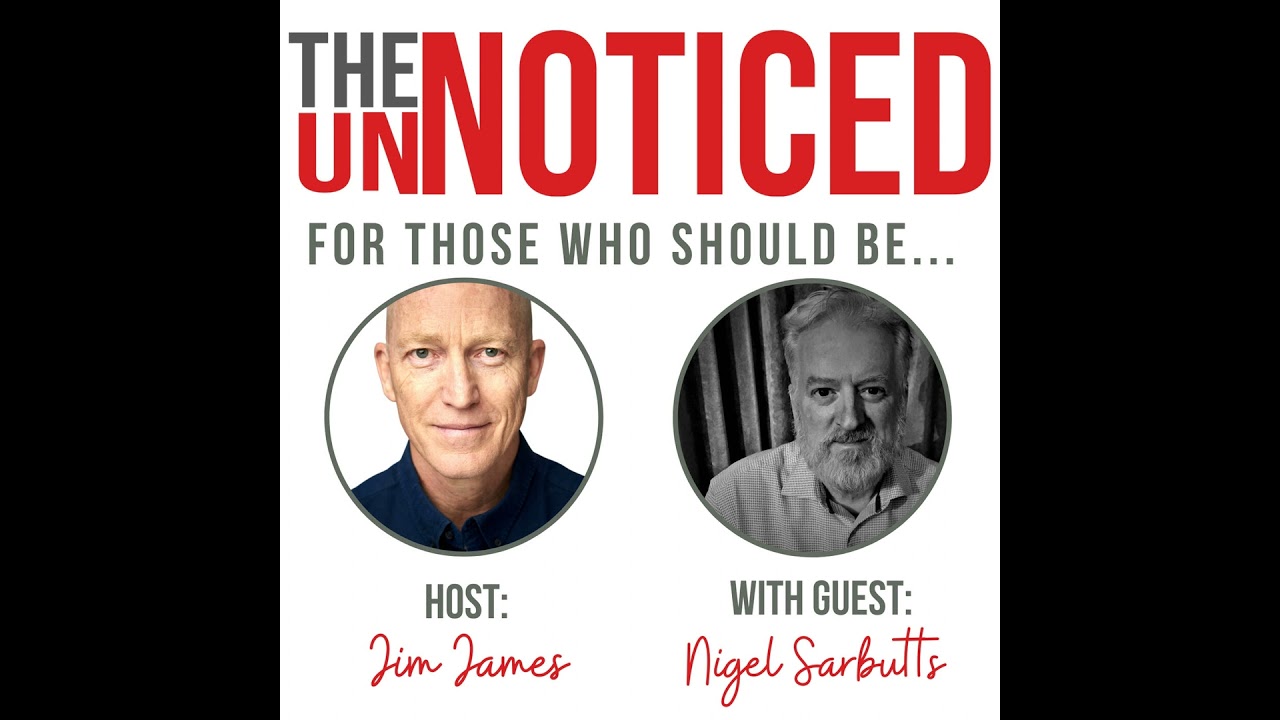
Nigel Sarbutz built PR Cavalry, a Booking.com-style marketplace connecting 1,600 UK freelance PR consultants with small businesses. Freelancers charge £400-£500 per day versus £3,000+ monthly agency retainers, and one PPE startup got national TV coverage for under £1,000 after a day and a half of work.
Chapters
Nigel Sarbutz, welcome to the Speak PR Podcast. Now, you started a brilliant service for SMEs and business owners called PR Cavalry. Could you tell us about that, please?
I will, Jim. Thank you. Yeah, we're a bit like Booking.com for clients who are looking for PR freelancers who have deep understanding of their market, and have got relevant skill sets. So we're somewhere between a search engine and a dating agency, I guess.
Right, and I saw today on LinkedIn that you'd posted a really nice glowing testimonial from a client about one of your consultants listed on the PR Cavalry. In this day and age of AI, would you like to just explain what that client was so impressed by with this consultant and And really why people still make a difference.
Yeah, I mean, this was a client in the PPE market, masks, you know, protective— it's a very crowded market, and they came through our platform to find a freelancer who could help them, only a startup business, and in the space of a day and a half of work, you know, simply a very short project, this freelancer had got them on national TV, had got them some some really impressive international media coverage, press media coverage, and, you know, a huge number of specialist market titles as well. And really, it was on the back of knowing the market, having great contacts in the media, and then just, you know, without any fuss or fanfare, getting to it. And that's really what clients want. They want somebody who they don't have to explain how their market works, how their sector works, whatever. They just want someone who gets very quickly and then can, without any fuss, just pick up the phone and speak to journalists that can make it happen. And for them, it was an amazing investment of a rather small amount of money for some amazing results in the media.
Nigel, that's a great point and an amazing turnaround as well, frankly. I'm full of admiration for that pitch. What sort of money are we talking about on PR cavalry? Because on the whole, clients and SMEs are really wary about agencies coming up with, you know, big-ticket consulting fees.
Yeah, I was talking to a client a couple of days ago, and they had approached some agencies, you know, relatively small agencies, and they said— and, you know, with absolute honesty, I've got respect for the agencies— they said, well, look, you know, unless you're paying a retainer of £3,000, maybe more a month, Then, you know, really there's not a lot that we can do. Now, a freelancer who may be charging you, you know, maybe £400 a day, something like that, well, you know, do the maths. You know, you can get 5, 6, 7 days a month of work from a freelancer who will be very experienced and also very invested in the result because, you know, it's their income, it's their work. They can't pass the work on to anybody else. So freelancers will always give you a very honest appraisal of what's achievable because only they are there to deliver it. They can't give it to the B-team to handle it. So for that investment of maybe £400-£500 a day for a freelancer, you're probably getting somebody with upwards of 10 years' experience in your market and who will be very, very dedicated to the task. And it's difficult for agencies to compete against that.
Right, because the freelancers really benefit also probably from low fixed costs in terms of rental and—
Absolutely, yes. I mean, any business has overheads, of course, and whereas a freelancer is an extraordinarily cost-efficient way to get an expert working for you with minimal overhead.
Can you tell us a little bit about how many freelancers that you've got on PR Cavalry and, you know, where are they based? Is it all in the UK?
About, I would say, 95% of them are UK, around about 1,600 freelancers who have profiles on our platform. So within that, as you can imagine, we have anything and everything on there. We reckon we've got about 12, maybe 15% of the freelance market registered on our platform. So, you know, if you can't find what you're looking for out of 1,600 people, then you probably have got a really unusual niche. But it's amazing some of the briefs that we've been able to match by a little bit of extra diligence. But the algorithm that fuels the business, the matching algorithm between what the client wants and the skill sets of the freelancers that we've indexed, is very accurate indeed. We very rarely find that a client comes to us, puts a search on the platform, and finds no matches. It just doesn't happen.
And from a practical point of view, if there's a client out there like your PPE customer or company, then they are coming to the platform, and are they talking to you and then you're doing the search, or do they go on themselves with an account and And a bit like Upwork, then it's, you know, it's—
I mean, it's a similar approach as a status to a business like Booking.com. You know, you go on and say, I want to go to Paris on these dates, 3-star hotel near the Eiffel Tower. And, you know, so you input your criteria into the search engine, and then our algorithm does the matching. So a client would go on and say, I want somebody who knows the DIY sector For example, and within that I want somebody who has done blogger outreach or has done event management or has done copywriting or, you know, has profiled a CEO, different types of PR work, because it's a bit like hiring a lawyer. You know, you say I need a lawyer. Well, why? You know, you're getting divorced, you're selling your house, have you been committed a crime? You know, It's not just, I need a PR person. I think quite often businesses struggle with that last part. You know, they say, I just want someone to do PR for me, and it does need that extra level of narrowing down to say, well, what kind of PR do you have in mind? And we have nearly 30 types of different PR and communications activity that a client can specify, so they can clearly say what I've got in mind is, you know, we have a new CEO, so I want to profile him in our trade press or something like that. So they would tick the box that says CEO profiling. So we make it easy for clients to be very specific about what they need, to articulate their needs, and that obviously then gives a much better outcome because when that first contact between the client and the freelancer takes place, hopefully it's a meeting of minds because is we've matched very precisely between what the client's got in mind through some simple dropdown menus on our platform and what the freelancer is able to provide. So there are benefits to both parties in the way that we work, and it's all driven by a simple front end on the platform. That is, you don't have to be an expert in PR to work it, just as you don't have to be a travel agent to, you know, know what you want when you go on to Booking.com to book your break in Paris. You have a clear idea of what you need, and we make it very easy for the system to understand that and then match it precisely to a talent pool of, say, 1,600 people. My background is PR. I've run PR agencies, and I've been a freelancer, so I've been a buyer and a seller of freelance services, and it was seeing both sides of the coin that gave me the inspiration for that, and also knowing that there is this huge talent pool of freelancers out there, but for most people it's invisible. It's very hard to know where the talent is, and so clients end up kind of putting a shout-out on LinkedIn or asking around or, you know, kind of fishing around for business cards they may have, you know, have got in a desk drawer, and it's a very haphazard way. And I thought in an era where we expect everything to be searchable and instant results, there's got to be a way of matching the 2 sides, the need with the availability. So that's what we set out to do around about 2 years ago. So we kind of built the shop and then we had to stock the shelves. So we spent a long time building up that talent pool to the point where we were confident that pretty much any client search could be matched within our resource. So we've been open to clients now for searches for about Plus or minus a year and a half, and in that time we've probably had about 300 assignments go through the platform. We want that to increase. Obviously, everybody took a bit of a hit at the start of the year, but it's surprising how much work is coming back through the platform now. And we feel buoyant about the future because we think as the economy feels its way back to new normal— I hate that phrase, but we all use it— people are going to be taking baby steps. They want to have flexible resource on tap rather than taking the plunge and saying, right, I'm going to commit to a big investment in people or resource. So having talent that you can dial up and dial down at very low risk, it's also very cost-efficient, seems like a that we're in the right place at the right time, and that's certainly borne out by the number of client briefs that are now coming back onto the platform after the big hit that everybody took in the first, well, March, April, May, June, I suppose.
Now, when a freelancer signs on, what's the business model? You've mentioned that a client will pay, say, £400 per day to a To a freelancer, is the client paying that or the freelancer paying that or a bit of both?
The client pays us nothing. There is no mechanism in our model for us to charge a client for what we do. We are free. Free to search, free to hire through the platform. The way that we make our money is that when the client pays the freelancer's invoice for the work, we take 10% from the freelancer, not the client. So, so what we're doing is creating value for the freelancer in work finding them, hopefully while they're doing something else, so they can devote more time to farming work and less time to hunting work, which is very expensive for a freelancer. And because of that precise matching, it's very profitable work because it's right in their sweet spot of what they do best. So, but, and for the client, we are an inversion of the traditional recruiter model. where normally, you know, in normal recruitment, a client would pay to be matched to somebody. We charge no fees at all to use the platform to hire anything. And of course, clients love that because they're getting access to a huge searchable talent pool at no cost.
And can you just tell us some of the names, which kind of companies? Because often, you know, there's this perception that only big companies can do PR, but a big belief that I've got is that, you know, it's the SMEs really and the owner-operated businesses that need the marketing support the most.
Yeah, I mean, what kind of profile companies are you having signing up? Most of the work, probably 60% of the briefs, are coming now direct from SME business owners or SME marketing managers because we add huge amounts of value to them. You know, a very time-hassled SME marketing manager is probably spinning a lot of plates. They simply don't have the time or the resource to have a big black book of contacts of freelancers. So, you know, these are the guys that are typically posting on LinkedIn or casting around in a rather haphazard way for support when they need it, and quite often that decision is quite time-pressured, and that can lead to a problem, which is, you know, well, I needed someone, I need someone tomorrow, and that's why we're called the PR Cavalry, because you want to call the cavalry. So where you're time-pressured but also trying to find an expert, those 2 things can be in conflict. So sometimes that can lead to people hiring people, the wrong people for the wrong reasons. And, you know, let's be honest, a lot of clients can be dissatisfied with using PR because it wasn't quite what they wanted. And I think at the root of that problem is they didn't speak to the right person. You know, the right person wasn't available to them to hire at the time when they needed it. And that's the big problem that we're trying to solve, is You need that person who knows the DIY sector and who has done 20 product launches in DIY. Well, you know, if 10 names are presented to you 5 seconds after you've hit search on our platform, we've solved that problem. You know, we've given you a long list of 10 people that are able to do the job. It's up to you then to decide which of those 10 you want to have a further conversation with, to, you know, to to dig deeper into their skills and for that freelancer to dig a bit deeper into exactly what you need so that they can come up with a plan and a proposal that is right for the budget, right for the task, and also is right for human chemistry. You know, the algorithm is great, but it doesn't replace human chemistry. You know, we put human beings in touch with each other to work out whether they can, you know, genuinely work together, because I think PR is a bit different to hiring a web developer or hiring someone to do your SEO. You need someone who you have a deep understanding with, you have kind of, you know, quite a good mental connection with, because there's a lot of trust, there's a lot of variables, there's lots of tiny details that need to be oriented, getting the right things in the right order in PR. And that's where you do need that level of trust, that kind of deeper understanding. So You know, that's why we're very clear that the algorithm is great, but it's the start of a process. It doesn't solve everything. And of course, no client would hire a freelancer on the click of a mouse, and probably no freelancer would want to be hired purely on the click of a mouse. There needs to be that human contact, which is the stage 2 of our process once the client is shortlisted. But you're shortlisting from a small pool of people any one of whom could on paper do the job well for you.
And what about testimonials then, Nigel? Do you have sort of as you do on say Upwork or any of the— or, you know, oDesk?
Yeah, yeah, that's a good question. We went around the houses on that, we really thought hard about that and we decided not to. Freelancers can put testimonials on their profile previous work that they've done, and we do encourage them to do that, particularly with a named individual, because that is, you know, the greatest credibility, that John Smith of Smith Industries is putting his name to that testimonial. But we decided not to have a star rating because things can go wrong, and, you know, as say TripAdvisor have found, is that, you know, people Leave reviews sometimes for the wrong reasons. PR is not a magician. You know, again, go back to the analogy of law. You know, simply hiring the best barrister in the city doesn't mean that your case will win. You know, there are other factors involved. There is an element of risk. And, you know, be very honest with clients and say, if you want guaranteed— if you want your message to guarantee getting the media on the day you want it using the words you want, take an advert, you know, because that's the way to guarantee it. But that's a very, very different argument. You know, PR is a question of judgment and there are risks involved, but when it works, as with that little mask supplier startup, they invested A day and a half, or, you know, a day and a half of fee. I won't give away, you know, exactly, but it was— we've mentioned some day rates, so you probably can guess what kind of day rates. And they've ended up with, you know, 2 or 3 minutes on Good Morning Britain TV. They've got, you know, an amazing spread of coverage for an investment which isn't even 4 figures. It's under £1,000.
Nigel Sarbutz, founder and managing director of PR Cavalry. So if a client wants to call in the cavalry, how can they find you?
Go to prcavalry.com, watch the explainer video. It's very simple. And if you've used a site like booking.com to book a hotel, you can use our platform very, very easily. It's just as simple.
Nigel, Nigel Sarbutz, thank you so much for joining us on the Speak PR podcast today. And thank you once again for listening to this episode of Speak PR. If you'd like more information, you can find us at eastwestpr.com. In the meantime, we wish you the best of health, a profitable business, and that you keep on communicating, and quite possibly by working with a freelancer.
Thank you.
More from Jim











2 people, infinite agents, 1 billion dollar idea #AIAgents #Startup #Productivity