Where are the business opportunities in China for entrepreneurs?
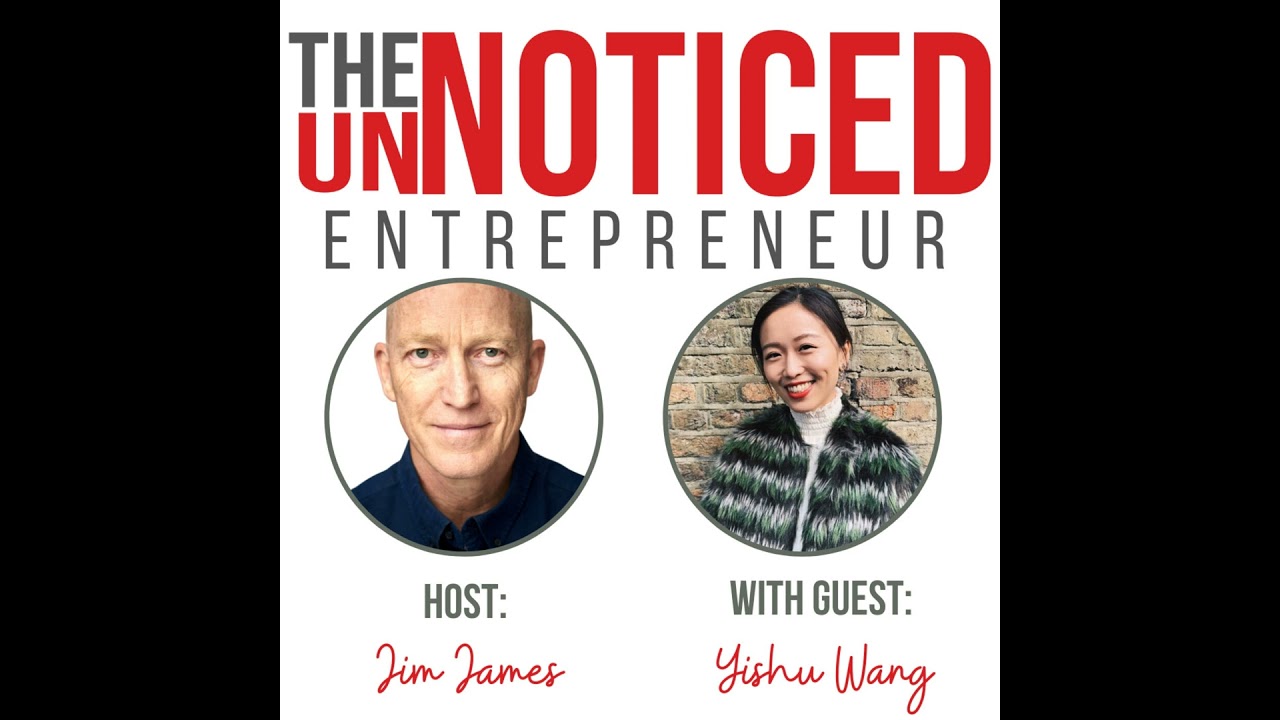
Yishu Wang, founder of Half a World consultancy, explains how Western brands enter China by adapting messaging while keeping core values intact. He covers naming strategy, China's tiered cities, WeChat and Douyin, and why Farfetch's localization drove growth. Joint ventures versus wholly foreign-owned entities each have trade-offs.
Chapters
Hey, Ni Hao! Hello and welcome to this episode of the Unnoticed Show. I'm delighted to have Yishu Wang with me. Yishu, I'm going to say Ni Hao because I've got to practice my Chinese, but you're in London. Hello.
Yes, I am.
You're originally Chinese, based in the UK, uh, having studied at Goldsmiths and one of the many amazing students that then make a home here. Now tell us about your company, Half a World, because you help companies to Go global. Tell us about how you get companies noticed overseas.
Cool. Yeah, yeah. So with Half a World, we help companies and brands to establish in a new market. So a lot of our clients are Western brands and Western companies trying to grow in China and APAC area. And also I've been helping with Chinese brands and trying to grow and establish in international markets as well. So it's really helping brands to, to launch in international new markets.
Can you give us maybe a couple of key observations that you share with clients when you first meet them, when they're thinking about going global?
The first sort of tips that I would always tell the client is know your audience in the market, because they, they might be different, and chances are they will be different. So really understand your audience in your target market, and also try to forget the things that you know about your home market that that you already know, just try to learn, adapt.
And then how do you get a company to think about the new audience? And maybe, as you say, almost not remember the current audience, and still be the same company? Because that often is part of the challenge. How do you retain the brand when some of the messaging might need to be localized?
I think that's— it's definitely very interesting. It's something that's fascinating to me personally as well. There's basically what's make my career is that when you look at the brands, every brand has their own sort of values and missions. The brand is unique. A good brand is. So it's really looking at the brand, pull out those core values that represent the brand, and then find those sort of any sort of points that would make it relevant to the local market, to a new market, if there's any consumer. Basically, essentially, just still analyze who the— what the brand is. And then there are bound to be some points or some values or some messaging that would make sense to your, the new audience in the new market. So it's just really look at both ways, look at the brand itself and also look at the audience.
So when a company goes, for example, to China, Yixue, do you think that they need to have a local brand name or can they operate with their global brand name and then have maybe local materials? What's your guidance on that?
Well, with the names, it really depends. From a legal point of view, it would be good to have a Chinese name to register trademark. From a marketing point of view, not necessarily. If the name, if it's an English name that is easy to remember and pronounce, then you could probably lead with that. And also, if it's a name that a lot of people have already heard of already, and then yes, go lead with that. With the Chinese translation for your legal and business purpose. If the name is difficult to pronounce for Chinese consumers who don't really speak English or any other language, yes, definitely lead with a local Chinese name. And in terms of localization, yes, definitely. From sort of social media content to PR content and website, down to like image, video, visual assets, definitely localize. The more you can localize, the better.
Now, there are some brands that have a lot of the value in being a foreign brand in China, aren't there? Like Rolls-Royce, for example. How do you help companies to be positioned in the overseas market appropriately according to their brand positioning, say, at home?
Yeah, especially in sort of a luxury space. If we're looking at 10 years ago, being an international brand from the US or the UK or Europe, which is definitely a strong selling point by itself. I don't think it's still the case nowadays. A lot of brands will say they're made in a certain country, but what that means is you need to explain what that means to the Chinese consumer. For example, Rolex, made in Switzerland. What that means is that good quality, the tradition, the craftsmanship from Switzerland, that is more of a selling point to a Chinese consumer rather than being from a location Just by yourself.
Okay, that's a really good tip. Then are there some clients or a client that you're working on that's a case study you could share that's a success story that we can learn from?
Yeah, I always try like to talk about Farfetch. I worked with them many years ago when they were just starting. They were still a very niche brand at that time to help them. So my job was to help them to launch and launch and grow in China because they saw at that time despite They didn't have a Chinese website or any language. So it's really— so help them to localize and do the China markets. They are very keen to learn what's new, what's different in the China market, which is really a good start for any brands trying to be successful in China. So yeah, work with them to localize their brand messaging and localize their website. And then I think later on they had a— Big investment from China. Now those had Alibaba to invest in them, so they're really taking off. I think they have been a very good successful story for any Western brands trying to launch and grow in China. They really localize their everything basically in China, which is great. They really made effort to connect, to understand the target consumer in China, and then just localize all of their efforts. To, to communicate with them.
Now, Yishu, you talk about China, but it is 1.4 billion people, landmass the same size of America. Having lived there for 13 years, my view on the different variations around the region, but what's yours? Do you think one can have a China strategy, or do you need to have a regional strategy? Just tell us, how would you approach that?
I think most of the time when people talk about China strategy is the sort of certain areas, or your China target audience strategy. So you still need to, as you said, like China is massive, so you need to tailor your offering to who is your target audience. You can't just target 1.4 billion people in one hit, it's just impossible. I've been working with quite a lot of luxury and fashion brands. For them, their primary target audience will be in tier 1 city, now increasingly more in tier 2 cities. So to them, the China Strategy will be China tier one, tier two cities strategy. But then for other other brands, they might be looking to like tier three, tier four, or like from a northern China strategy or southern China strategy. Yeah, it really depends on the what the brand is.
Okay, just clarify what's a tier one and tier two because that's a a nomenclature that's only relevant to China, isn't it? No other countries do that.
Yeah, so essentially tier one cities are just four cities: Beijing, Shanghai, Guangzhou, and Shenzhen now. So the 4, basically pretty much the 4 Chinese cities that non-Chinese people would very likely have heard of. And then you down tier 2 cities were more likely to look capitals of local provinces, different provinces. So it's not, I don't think it's official tiers, that system is not official, but people tend to have this sort of tier system based on the economical power of those cities.
Now here's a question for you, Yixue. Is it possible to build a business in China without going to China oneself?
You mean the business?
Yes.
In China?
Yeah. How can a company go to China without setting up and having the, frankly, the cost and the time and the risk of having its own people and operations?
There are definitely ways to do it. I've helped quite a lot of smaller brands to just to do that. You would want to have a protect— protect your trademarks, that's probably quite necessary. If that's not— if that's done, then you don't necessarily need to have a China team to start with. You could do— you can have a team here to organize everything from logistics, from marketing point of view, but also you can do cross-border shipping and e-commerce from outside of China, which is increasingly more popular as well. So Chinese consumers are actually quite open to wait a little bit longer to get their products, as long as the products is what they want, they love the product. So it's definitely possible. But I would suggest any brands, if long term, if they want to be really successful in China, they should have a plan to say establish in China.
And what about Chinese brands, Yixue? Because that is also something that we're realizing with the brands like Huawei and the mobile phones. Notwithstanding the political issues around 5G, Chinese brands are growing. How can foreign companies compete with the domestic companies?
In this case, I assume foreign company means Western company.
Western companies, yes, that's right.
It's definitely a trend in the last couple of years for Chinese companies to grow, to grow and launch globally. It's—
they—
some advantages they have is that they tend to be quite agile. Things happen really fast in China, to take the same sort of pace when they launch in the global market, which is really useful. They also tend to have lots of capital to work with. So they're all sort of advantages they have. But then for them, the challenge is the same, to understand Western markets, which are very different from local Chinese markets, is something like a lot of brands are still learning. But yeah, to compete, I think it's Every, you know, Western brands, every brand, not just Western or Chinese, every brand has their own sort of advantages and something that can, you know, play up with and then, and then to just figure out what they're lacking and then just try to solve the problems. Yeah.
What about the idea of working with a company in China to develop a business? Because as an entrepreneur or a business owner, it is possible to partner with a company in China. Have you got some experience that you can share about that as well? Any successful examples?
I believe there are successful stories out there, case studies, but personally, all the joint ventures I've heard of are not that happy.
Marriage is a challenge in that sense.
Yeah, there's a lot of challenges for just culturally, and I know, so everyone runs business differently. There's a lot of challenges out there. What we usually do is recommend brands to go, if they want to established in China, just, just do a foreign-owned entity rather than JV, unless they know someone personally in a good relationship.
Yeah. And are there some sort of tactics that you recommend, for example, around social media or events or print that you found to be the building blocks for campaigns?
Social media is definitely the key nowadays for China. Even just from an e-commerce point of view, you see a lot of e-commerce platforms become more social, a lot of social media platforms become more sorts of e-commerce focused. So social commerce is the thing. And also think of like in China, many brands don't even have their own websites. They just rely on their social media. So their social media channels are essentially their website's equivalent, where people get to know the brand and interact with this brand. So I would say like social media is— just rethink like the role of social media is not just a marketing tool now. It is who you are. It's your base when it comes to China.
And when we're talking social media, we're talking about WeChat. Any other platforms do you think are necessary?
WeChat, Weibo, Douyin, which is the parent company of TikTok. There's another app called the Little Red Book, Xiao Hong Shu, which is really popular nowadays. There's also, I think there's a new one called Poison, or it's, I think they specialize in sneakers and just more male-focused consumer, but they're now expanding to more Male and female. So yeah, I think I know. So every day seems like there's a new Chinese social media app.
Yeah. And the other thing that seems to be really big in China is the live streaming to commerce, isn't it? Do you have some experience with that issue of how brands can leverage that?
Yes, I've worked with some brands to actually Western brands who don't actually have presence in China to run live streamings and to in that way to sell products. I wouldn't recommend live streaming to every brand. It really depends on. What the brand is and what's your— what's the business goal? The business goal is to sell more products essentially, but then as long-term business goal, do you want to build a brand and what kind of brand are you trying to build and everything? So it's definitely a very effective way to do live streaming to push some sales, but I would recommend every brand just look at the format and watch some videos yourself and then see. if you want to, you know, do it yourself, can you imagine your brand being in that environment and selling some products? And also after, what's— what would things be after that? One 20-minute live streaming, you can sell some products, but what's after that? Do you have any plan for that?
Yeah, so part of a strategy but not the strategy itself, live streaming. Okay. And then how many Western entrepreneurs do you think are in China, and which sort of industries do you think they're particularly successful in?
Awesome. I think in terms of consumer-facing brands or companies, there are actually quite a lot of fashion, quite a lot of others of fashion and accessories and everything. I think growingly there's quite a lot of mum and baby brands out there as well. This is all growing markets. I think The brands that tend to do very well in China are now that focus on targeting young consumers who have— in China, they might be young, but they definitely have the spending power. They're very switched on in terms of marketing, they engage with brands. But yeah, so those are the brands who target those consumers tend to do very well in China. But I also do think there's a huge opportunity for brands to target, let's say, Over 50, over 60 demographics in China is a huge market that tends to get ignored sometimes.
Yeah, the aging population in China and the healthcare issue. And on a practical point of view, we were finding recently that the search on Google for content in China delivered entirely different results to the search on Baidu for the same keywords in China. Any ideas of how people can solve the problem that China really is living behind its own internet Great Wall?
Yeah, it's challenging. That's why, like, you have to reach out to them. You can't just say they will— yeah, people have VPNs in China, they go around the firewall, but for any brands, you need to go there and try to communicate with them. Just go do SEO on Baidu, do PPC on Baidu, and other social search engines as well, but But again, I think more increasingly that you see things more effective on social media, even with SEO and PPC, you can see more tangible results when you do that on social media platforms rather than search engines.
And then Chinese companies that you see doing well, you're helping a couple of Chinese brands into the UK, into Europe. Any ones that we should be looking out for?
I'm actually working with a toy company. They're launching, they're launching a brand They they have an Amazon store already. They're very small, well small in China's sense. They have about twenty eight million US dollars revenue a year, which is pretty big already.
Yeah, it turns all into business in China, isn't it?
So yeah, they have they do great sales on Amazon store already. They just need now what they want. I'm helping them to do is to establish so they're doing more. This is a brand rather than just. They want to sell the brand rather than the products, which is the right way to go. So yeah, I would say they are not the only one in China. There are so many of these kinds of companies in China that have good products, have some sales, have certain sales already, which means they have the capital to work on many other things. They also have consumer insights based on them.
Okay. So I think there's an opportunity in China, but not necessarily an easy one, but there's also opportunities to work with Chinese companies that are coming overseas, it sounds like. So, Yixiu, your company name of Half a World sounds like it's perfectly branded because you're obviously a Chinese based here in the UK. If people want to find out more about you and the wonderful services that you can provide, how do they do that?
Yeah, the name started because we do Asia, China, which is essentially half of the world's population are there. And so, yeah, we help brands to— the idea is initially to help Western brands to grow in the APAC area. Now, with the growing trend of Chinese brands going overseas, we also work with lots of Chinese brands or Chinese companies to grow and establish their business overseas, primarily through sort of marketing insights. So we mainly help on the marketing point of view. But then, because for a lot of brands, like I do, say I do China for them or I do US market for them, I become the person that they go to whenever they have any questions about the market. We also tend to answer questions about Legal, what legal side of things or trademark, what kind of trademarks and that kind of do. So yeah, we just try to help with pretty much everything.
Yishu, thank you so much for sharing. What is the best way for people to get a hold of you at Half a World?
Oh, what's the easiest way probably to find me on LinkedIn? I just Yishu Wang.
Okay, and I'll of course put your contact details in the show notes. Thank you so much for joining me, and I will practice my last little bit of Chinese. 很高兴认识你。很高兴认识你。
More from Jim











2 people, infinite agents, 1 billion dollar idea #AIAgents #Startup #Productivity