Why Entrepreneurs Make Better Lovers Than Husbands | The UnNoticed Entrepreneur
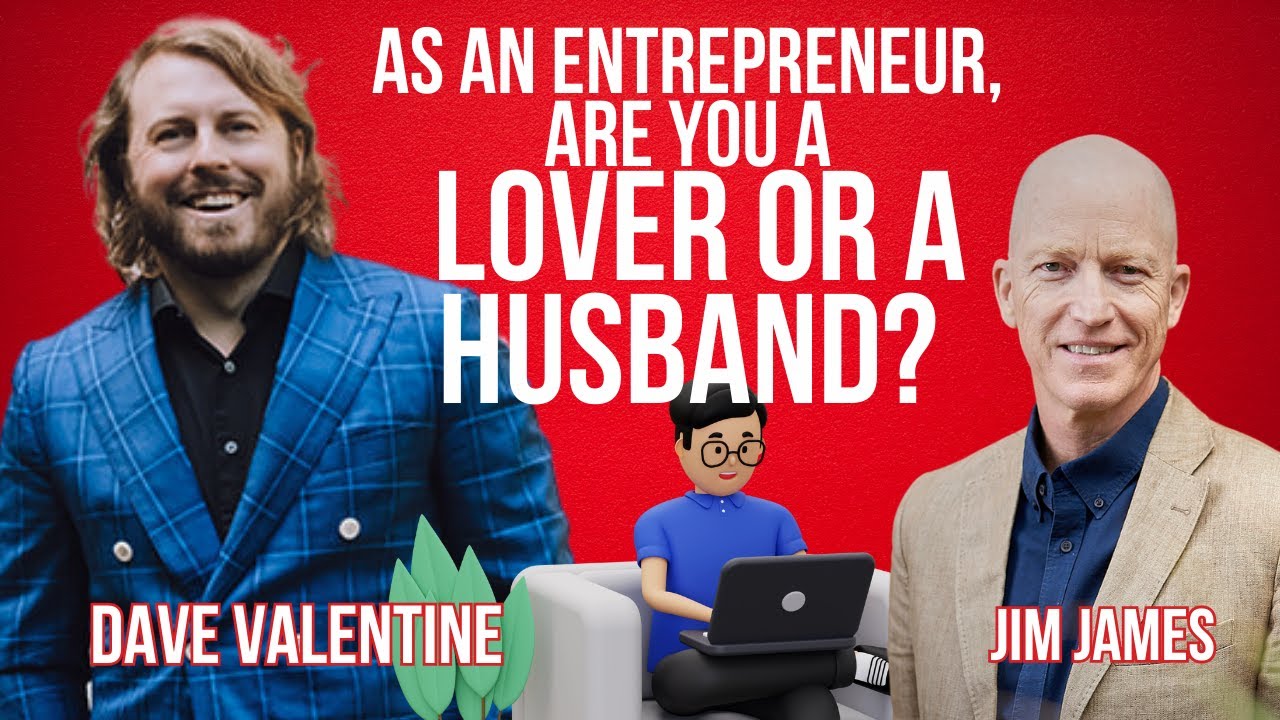
Serial entrepreneur Dave Valentine, who built and sold eight businesses for over $1 billion, explains why entrepreneurs thrive on launching new ventures while CEOs focus on infrastructure. He shares tactics for landing high-value clients through cold email and tools like Apollo.io, and how a heart-attack warning led him to daily habits like walks and meditation.
Chapters
Welcome to this episode of The Unnoticed Entrepreneur. If you ever wondered why entrepreneurs make better lovers than husbands, this show is for you. Now, my guest is in Portland, Oregon. Actually, he's left the screen temporarily because I think I've shocked him with that introduction. But we were talking before because Dave has, over the last 16 years, account for over $1 billion worth of revenues, run 8 businesses concurrently, and has been selling them off successively. So we're going to talk about why you'd start a business and then not want to carry on with that business. We're also going to talk about the impact of running multiple businesses at the same time. Dave's also going to give us some insights into what really still works when it comes to generating all that revenue that he's been helping clients to do. And he's going to give us a book that might surprise you because it comes from the music industry. Dave Valentine, welcome to the show.
Thanks for having me, Jim. Super excited to be here.
Well, we've got to talk about this. Are entrepreneurs better lovers than husbands? What do you think? Where do we go with that?
Yeah, you know, it's a dicey conversation because I've been married for 15 years, Jim.
You've had more companies than marriages. I thought you were going to say you've been married 15 times. That is not in the briefing materials.
That's right. Yeah, I think there's 2 different types of people that are entrepreneurs, right, Jim? I think one is someone that loves to start things. I fall into that category, right? I'm very good at, as a friend of mine would say, launching rockets, right? I'm not great at managing the systems and putting everything together. I get bored. So my first company, I reinvented it 3 times in 7 years before I sold it, right? And so like, that's the hilarity of it all is that for me, I need something new. I need something dynamic. And so I'm really great whenever there's a problem, an issue, like we have to make a sale. We need to have a a big ad campaign. We need to hire 12, 15 people because we're growing so quickly. Sign me up. I'm in. The moment that you go, hey, listen, we've got to do human resources reporting for this state and that state and this state, and we need to make sure that we really button up our policies and procedures, I'm not your guy. And so there is something to the entrepreneur is a better lover than a long-term partner simply because there's a fundamentally different headspace. And I was actually talking with a friend yesterday who built a— scaled up an 80— company from $3 million to $80 million. And he and I were talking about the differences between an entrepreneur and a CEO. And it was just a— it was a fun rap, right? Like, it was really, really enjoyable. And he said, you know, to be an entrepreneur, you could get a company up to $10 million a year in revenue. And then at some point, you're gonna have to be the CEO. And the CEO thinks differently than an entrepreneur. And as we started to have that conversation, we started to highlight some ideas of what's different. And what was very plain and simple to both of us was he's a CEO and I am an entrepreneur. And there's a fundamental difference.
Yeah, that's lovely to think of that. And although, as I have been laboring over creating a course, I, you know, I'm with you. I, I've realized, you know, consistency is a kind of a different skill set over a long period of time, isn't it, than origination and innovation? They've both got their places, of course, um, in the same way that, you know, being a lothario has a certain role to play at a certain time of the relationship, and then being a consistent husband and father has it in a family stage, a different set of—
That's right.
Uh, objectives and qualities. But Dave, I better move away from the lover and husband thing before we get any phone calls or get your wife charging in and telling me that I shouldn't be talking about this. What about risk then, Dave? Do you think that the fundamental difference is risk appetite between an entrepreneur and a CEO, or is it a process versus an origination? And then the question is, What's the fundamental difference and are they sustainable concurrently in one person?
I had a friend who was also a client whose father fought in D-Day. He was on Utah Beach. And one of the things that his father always said when he came home was, you got to get off the beach. You can't stay on the beach. Whatever you do, you can't stay on the beach. And I think that that's the fundamental function of an entrepreneur. They realize that there's an urgency to get out of the, I have to scale role, I have to grow role. So I coach and mentor a number of marketing and advertising agency owners. And oftentimes what ends up happening in those conversations, Jim, if they're sub-$3 million in revenue, sometimes even sub-$5 million, they're going, how do I get more leads? How do I get more sales? That is every conversation, right? They will listen to a conversation about operations or management or whatever, and they in the back of their mind are going, I need more leads, I need more sales. It's about the $3 to $5 million range that they start to go, oh no, I have people. How do I train them? How do I lead these people? How do I hire? And that's fun too. And I help them with that as well. But the entrepreneur is going, how do I get more leads? How do I get more sales? How do I handle customer issues that are because we didn't deliver at an early stage? Versus a CEO is going, right, and how do I liberate all of Europe? And so the entrepreneur is just going, we got to get off the beach. And that's a very different mode of operation. than someone that's going, I've got a bigger vision for what we're going to do and it's to get the company to $100 million. That's a fundamentally different form of thinking.
Yeah. And the CEO, perhaps if you follow that analogy, which is brilliant, is the CEO is sort of really thinking about building the roads and the infrastructure that gets all the tanks to the next town and worries about the logistics, right?
That's right.
And is maybe not dealing with the same kind of incoming fire. and concentrate on operations. So that's a wonderful analogy there. Dave, you've been on the beach several times. You've probably run out of northern French beaches, actually, in that way. You'll have to move on to Italy, maybe, and Spain.
Oh, yeah.
So you're going to do a whole European tour. But what about from a communications perspective? Because that's what this show is about. If you start a company, as you know I've done as well, I've started 7 or 8 businesses of my own, people buy into you, right? The first member of staff, the first client, uh, in whichever order that comes in, that first 8 to 10 people, you're still very much almost like a small team or just an extension of a family or a social group. How have you dealt with the engagement and the transition From, hey, I know I started this business, but I'm not going to be there for you when you get to the other side of the sand dunes?
Yeah, it's a great question because, you know, I have people that come to me all the time. They're like, hey, I'm thinking about selling. How do I even start? Tell your people that it's the goal. Tell your staff it's the goal, right? So, what I always did was I would say, hey, listen, I love all of you so, so much. I'm so grateful to be working with you. This isn't it. This isn't the endgame. The endgame is not to have 25 people. The endgame is not to have 47 people. The endgame is really big. And some of you are going to go with that new company when we sell. That's the goal. The goal is to sell. Some of you will stay here. And some of you will want to say, Dave, do you have anything else for me? Right. And so Either way is cool, but I always set up conversations with staff the same way, Jim. There's only one of two ways that this is gonna go. Number one, you're gonna leave. You're gonna say, hey, I wanna go work for someone else. I wanna go do something else. That's fine. Number two, you're going to get fired by me, right? Like, there's only one of two. You're not— this is not the United States Supreme Court. or you die on the bench. It's not going to happen, right? And so, so I've hired my family, I've hired my close friends, and I've had that same conversation with them. And guess what? I've had people that are very close to me leave, and I've had people get fired. And so when you, when you establish it, you say, look, the outcome is I'm going to try and sell this company. And I've got a track record of doing that. I'm sure I'll be successful. If you don't want to come work for a company that's going to get sold, then don't work for me. If you do, if you find that exciting, if you find the growth exciting, you know that we're going to grow really, really fast, we're going to add lots of people, it's going to be kind of like a party, then come. And there is something, I think, Jim, in a personality for people as well, not just the entrepreneur. I've found that there are employees that are really excited by that prospect of building something. And then moving on to the next thing as well. And there are certain employees that are like, I want to build a thing. And then as soon as I say, hey, we've sold, they start looking for another job. Not because of anything other than they're like, I love Dave. Dave's my guy. And I don't want to work with anybody but him. When it comes to the clients though, every time that I've sold a company, Jim, I try and sell it in a way. And at a point where I haven't been doing sales for at least 2 years. So what that does is most of the clients, most of the customers know that I exist. They don't know me. And so whenever I leave, it's not a big suck on the company at all. They know that I was there and now there's a new ownership group and they don't care.
Yeah, so Dave, I think it's a fantastic point there that you make. Actually, you make a lot of fantastic points, but one is about the transparency with the team and the people and also attracting people who are not looking for their last job, right? But who are also equally dynamic.
That's right.
And I always used to say to people, this is not a family, it's a team. That's right. Because in families, you don't fire your sister, but in a team, you all have to compete to be on the field. Right? And that people get subbed in and subbed out and sold on and bought in. And also this idea that you are being very clear with your clients that you're not mission critical to the business. Because if you're mission critical to the business, actually the buyers aren't going to want it in the first place.
That's right.
So you have to then be very clear about that. So that's wonderful that you've shared those insights. Dave, um, is there something that you did with all of these different agencies? Because I think they've all been marketing-related agencies.
Yeah.
That was particularly successful from a marketing point of view in terms of building the brand and bringing in leads? Because plainly you're wearing a Manchester City shirt. For anyone that knows about football, um, Dave will know that wearing a Man City shirt would appeal to a very small number potential customers. You know, if you had a red shirt on from Manchester, you might get more. But joking apart, Dave, you know, obviously, you know, being a member of the Manchester City Supporters Club would have won you one or two clients. But apart from that, any particular strategies that you've used that the rest of us that are not Man City fans could use?
I really— by the way, that was funny, Jim. Thank you. And I really feel like I belong in the UK and that I'm displaced. I have this weird accent that prevents me from moving there permanently, but I get along with people much better. So anyways, the point is, yeah, the thing that I found that works really great is cold email outreach. It's how I built my first business in 2013. It's how I built all of my businesses. Even now in 2024, It's just the thing that gets you into the space of big decision makers. And I, just to prove that it worked, so we're recording this in middle January, 3 weeks ago we had a, I had a client who booked a meeting with a consulting firm and it turned into a $1.8 million deal for my client, $150,000 a month. And I helped them close the deal, Jim. Because they were like, we, they were going to try and sell it for like 15 or 20 grand a month. And I said, oh no, timeout. What you're doing is worth so much more. And so we talked about like, hey, you're really worth like $300,000 per month here, which blew their minds. Right. And I said, but I know you need the client because they did. They sincerely did. And let's go get this. And so we had this conversation. We said to the client, look, Normally we charge 300 grand. We want to work with you though. What could you pay us over 12 months? Let's figure it out. So they came back with 100 grand and we said, ah, can't do it for that. That's a little bit low. Again, by the way, 100 grand a month would be their biggest sale ever times like 3, 4, 4. Um, and so when I went back and I said, actually, we're gonna, we're gonna do 150 grand, 1.8. Um, and then we closed it. They looked at me like We discovered fire. The reality is, Jim, cold email outreach gets you into the lives and the spaces of individuals that have never heard of you. They're usually at larger corporations, not always, and it's the most cost-effective way to reach them. Digital advertising, everybody thinks that that's the place, and it certainly helps. It's not a bad spot to get new clients. It's exceptionally expensive. You're going to have to disqualify an inordinate amount. With cold email outreach, when you do it well, you get the right lists, you're able to hit up your ideal customers that have the budgets that you're looking for, that have the level of professionalism that you want to work with, and subsequently you have a very good close rate.
Dave, how are you getting those emails? When you say cold email outreach, How are you getting those emails?
Yeah, I blew another client's mind last week when we went and looked at Apollo.io and I said, okay, who do you want to target? And she threw out consumer packaged good companies, right? And so I throw in the parameters for that at large corporations. And she— we start scrolling through and she says, hang on, wait a minute. You're telling me you just typed this in for— I think it's $50 a month. You just type this in for $50 a month and all of a sudden I can be meeting with the head of Hershey's? And I'm like, yeah, here's his email address right here. And she's like, that is why— how did I ever run my business without having This information. So there are a lot of databases out there. Apollo is a great one. ZoomInfo is very, very good, but it's also exceptionally expensive. So I don't recommend it for entrepreneurs. The other one that I really like is called seamless.ai. It's quite good. S-E-A-M, seamless.ai. It's very, very good. It's scraping LinkedIn. And so you can basically get about 30,000 contacts a month for about $300 a month. Um, it's pretty good. Uh, and so you're able to use any one of these databases to really leverage, and there are always new ones too, Jim. So if you go to appsumo.com, you will find deals where you can get lifetime deals from specific databases that are just getting started, uh, and usually you'll get them on the cheap, maybe $100, you get a lifetime deal of 10,000 contacts per month. And so, there are different ways that you can go about this, but the general rule here is go find a database. It's going to make your life a whole lot easier.
Wow, that's amazing because, Dave, you've mentioned— is it called Apollo as in like the rocket ship Apollo?
That's it.
Hopefully won't meet the same fate, but it says one platform to close them all. And it has, you know, uh, millions of sellers. Over half a million companies, um, beat their number with Apollo. So, you know, they've got 275 million contacts. Of course, that's less than LinkedIn, right, with its 600, 700 million.
Correct.
But you're getting presumably a, a detailed and broken down and usable mailing list of people that don't feel as though they're being tackled at every twist and turn on LinkedIn.
That's right.
So thank you for that, Dave. That's absolutely fantastic advice there. Um, Dave, we're going to touch on something that's a little bit more sanguine, if you like, because, you know, putting, you know, putting your energy into that many companies simultaneously— and I've run a few concurrently myself, um, and it's pretty exhausting.
Yeah.
And I did ask you whether you're willing to share about this because A topic that we don't often touch on is about mental health and mental wellness, because one of the reasons perhaps you've also been selling down these businesses is to kind of get to a normal state of life when it comes to sort of work rates and so on. Do you want to share this? Just how have you been impacted by running all these companies and how did you sort of work your way through to a place where you'd be in a good place and a place where you can have a good laugh with a complete stranger like me from England who's not a Man City supporter.
Okay, Jim, none of us are perfect, so I forgive you.
And being British or—
no, you're my favorite people. You're my people. I— one of the things that I struggled with 4 years into my first company, I went to my doctor and they did a stress test amongst a myriad of other blood work and whatever. We just had our second kid and my wife was like, you know, you haven't had a physical since you played proper football in college. It's been a while. So maybe you should go get a physical. So I did. And in the course of going back the next week and talking with the doc, Sat down and the doctor said, hey, Dave, I just got one question for you. How do you know you're going to have a heart attack? And I was like, I don't understand the question, doc. And he goes, how do you know you're going to have a heart attack? And I'm like, repeating the question doesn't help me understand it better. He goes, you don't know if you're going to have a heart attack, you just have one. He said, you're 29. We've tested 4,500 people. You're the most stressed-out person we've ever tested.
Wow.
Like, you're off the charts, you win. And he said, if you don't change your behavior, you're not going to make it to 40. So that took me on like a trip, right, Jim, of like, what do I do? Now, at the time, by all standards, I'd been successful. So in the United States, if you have a million-dollar business, if you do a million dollars in one year, which I did in 2017, you were in the top 7% of all companies.
Wow.
In the US. If you are an agency doing that, you're in the top 3%. So I was in the top 3% of all agency owners, and I'm stressing myself out into the grave. So I had to figure out how to do things differently. It started very simply with, hey, I'm gonna take a walk for 5 minutes and I'm gonna drink a glass of water. Because I had this terrible habit, Jim, where I'd go from drinking coffee all day to like 4 o'clock. to opening a pint and sitting down and enjoying that. And so, I'd switch from caffeine to alcohol seamlessly. Oh, this is so bad. And sometimes there would be days where I wouldn't have drank a single glass of water, which sounds absurd to me now, but at the time, it was how I was living my life. So, I set the bar very low. Hey, 1 glass of water and a 5-minute walk. Now, most days, I would have multiple glasses of water because I was thinking about it. Most days, I would go for a 30, 45-minute walk. But I had been an athlete in high school and college. And so, for me, I'd really let myself go. I just stopped working out because why? Blinders on. I'm building the company, right? I'm also a new dad. So, there's a lot that's happening that's not conducive to me making time for myself. So, I really had to get back to going, what do I need? And, at this point, it's 2024, it's 7 years after that event. At this point, Jim, my self-care routine is pretty robust. I've been on the road for the past month doing speaking gigs and holidays and whatnot, so I haven't been able to do it as much. But usually, it's, hey, I sauna every day, I do a cold plunge in the river every day. go work out every day. I'm lifting weights and/or running and staying in some sort of shape. I meditate. And all of those things are really feeding the, hey, Dave needs to be well beast, as it were.
Dave Valentine, I think that's fantastic. And you don't want to get too late in life to realize that the health is really the wealth that we all need.
That's right.
Um, because there really is no point in having all that money and, and being unable to enjoy it. Dave, um, plainly you've given yourself plenty of time to relax and literally let your hair down. Um, what about reading or listening? Because I love to ask entrepreneurs, you know, what are they— what books or audio are they getting enjoyment and inspiration from?
Yeah. I actually just recommended this to a friend last week. It's called The Creative Act by Rick Rubin. He's a music producer in LA. And it's this like very, it's great for entrepreneurs because it's bite-sized chapters, right? It's, as we were discussing before, Jim, it's 2 to 4 pages per chapter, very short, simple ideas that have been cataloged and that are really inspirational, whether you're a creative in business or not. The reality is, if you're an entrepreneur, you are a creative because you're problem solving, and problem solving requires necessitates creativity. And so I highly recommend it, and it's just this beautiful big permission book. And and I do recommend that you go look up who Rick Rubin is. He's got like an Einstein-like hair effect going on, and a beard down to his belly button that's well that's very unkempt, and he surfs every day. He is what you think of as an LA music producer. You've got it. He's a fascinating character and his book is remarkable. So I can't recommend it highly enough.
Dave Valentine, I can't recommend highly enough time with you as well. If people want to find out more and get a chat with you, maybe talk about the Premier League, how can they do that?
So you can go find me on any social media channel at my handle is @real, R-E-A-L. Dval, D-V-A-L. TikTok, Twitter, Instagram, I'm on all of them. And then as far as reaching out to me personally, dave@davevalentine.co is the best way to get to me. Hey, I'm giving you my email. Practice what I preach. Find me where I'm hanging out at. I'm hanging out in my email inbox, so find me there.
Great. I'm going to think of something to sell you, Dave. Now I've got your email address.
Do it, Jim.
Maybe I'll sell you some Manchester United merchandise.
Oh, come on.
Well, then, then you could leave it out in the Portland cold, couldn't you? So, like, to get revenge. Actually, these seasons you don't need any revenge against Masonite. They're inflicting it on themselves. Oh, Dave Valentine, thank you for joining me so much on the Unnoticed Entrepreneur Show today.
Jim, it was such a pleasure. Thanks for having me on, brother.
It's been wild. So, um, maybe Dave, we'll see him over here in the UK, but if not, check him out. He's in Portland, Oregon, um, but you can get him on his website. Of course, I'll put his details again in the show notes as always. And we've talked there really about entrepreneurs being great lovers, not necessarily great husbands. Of course, we can be great husbands at home and still be great lovers in business.
That's right.
So, it doesn't mean that we're inconsistent and love starting new things in the office and in the home. We can actually have almost sort of bipolar disease where we are good at starting things in the workplace but also great and be consistent men and husbands and, and fathers and so on, sons and brothers. Perfectly possible to do both of those. And Dave is an example of that. And the other takeaway there, of course, is using email, Apollo.io. Thank you for that, because that sounds like a really nice alternative to spending lots of money on Google Ads. And also fundamentally that this is a journey, but we must look after the vehicle. on the way. The health of our body is paramount, or we're just not going to get to the destination. So thank you to Dave for all that wisdom and, and hearty tortles as well. So thanks for joining me, Jim James, here in the UK. Dave's in Portland, Oregon. Wherever you are today, we hope you're doing well and just encourage you to keep on communicating.
More from Jim











2 people, infinite agents, 1 billion dollar idea #AIAgents #Startup #Productivity