Why you should 'Test Before You Invest,' with John Li
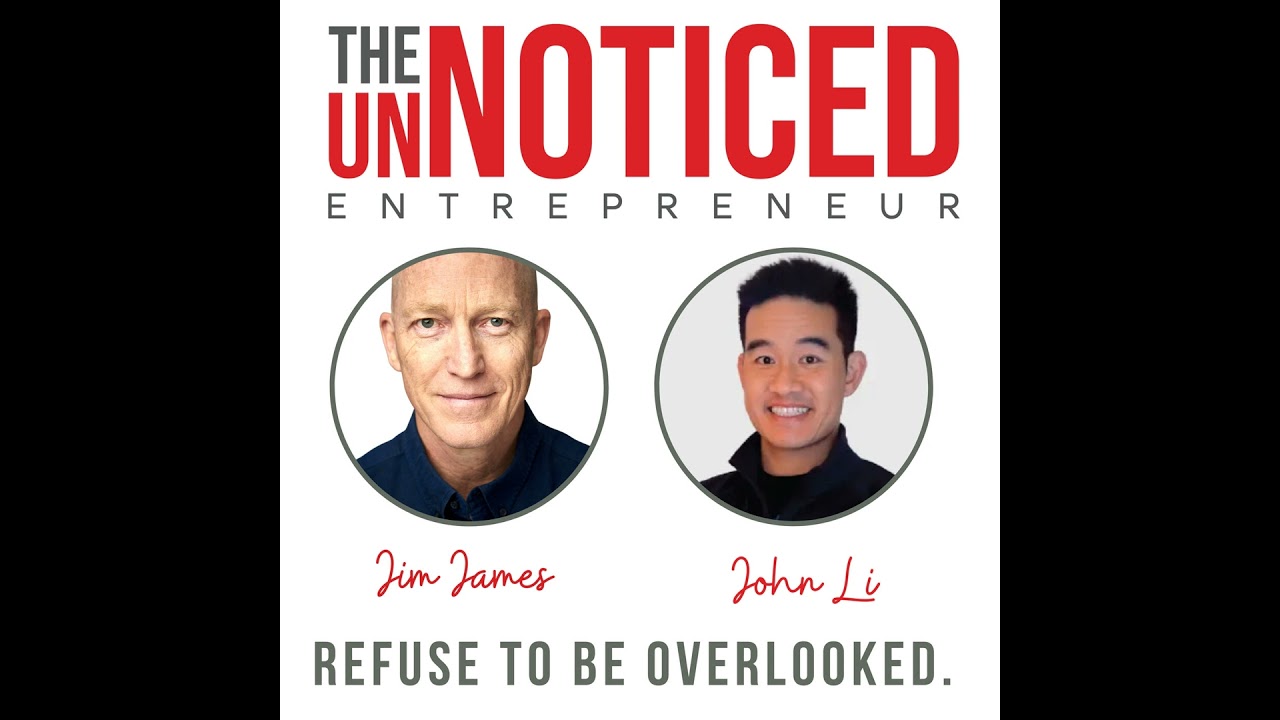
John Li, CEO of PickFu, explains how his platform lets entrepreneurs test product designs, packaging, and ads with real consumers in minutes for $1 per respondent. A rebranding of Angry Orange pet deodorizer, validated through PickFu, drove a ten-fold sales increase for Thrasio.
Chapters
The Unnoticed Entrepreneur podcast is sponsored by Prowly, the all-in-one tool for PR experts.
Hello and welcome to this episode of The Unnoticed Entrepreneur with me, Jim James, here in the UK. Today we're going to San Francisco, the town with the Golden Gate Bridge, and John Lee, who is the co-founder and CEO of PickFu. John, welcome to the show.
Thanks, Jim. Happy to be here.
Well, delighted to have you because you're going to talk to us about how you've got a product that's grown virally that helps companies, entrepreneurs understand to test before they invest. And you're doing a, actually a quick model on the front cover of my book. And we're seeing some amazing results already because you've got tens of thousands of people who you can poll in real time, different formats of content. And so people can make decisions about what's the right product to use and how to market it. So John, tell us a little bit about PickFu, how it started and what it can do for the entrepreneur.
Yeah. So thanks, Jim. So PickFu is the best way to get real consumer feedback on decisions that matter for your business. So it delivers consumer insight in minutes. You should think of it as an online focus group, but far faster and easier than traditional focus groups. So my co-founder, Justin and I, we've been serial entrepreneurs and we've been building businesses online for a long time. PickFu actually came out of a need that we had, which was getting real unbiased feedback about our, let's say, design decisions, right? If we're testing a certain color on a website, a logo, something like that. Truth is that being entrepreneurs, our friends and family were kind of tired of us asking them, hey, what do you think about this? Hey, what do you think about this? Do you prefer this one or this one? You know, first of all, they're not our target audience and they're unbiased because they don't want to hurt our feelings. They were available, but they were absolutely the wrong audience to be asking for this kind of opinion. So being engineers and nerds and product people that we were, we built a tool to be able to get that unbiased feedback for the business decisions that mattered to us, right? And not wanting to go to coffee shops and asking random strangers and so on and so forth. So we built that tool. It's called PickFu. We actually put it on the side while we were building our main business. And it started, you know, growing virally, organically on its own through word of mouth. And so every time we took a break from the main business, looked over here, hey, it's growing. Okay, back to the main business. And so at some point the side business became the main business and that's how we're focused on PickFu.
We've got a lot to cover there, John, in just a short amount of time. You've mentioned before we started recording that PickFu is being used by, for example, Amazon resellers or Shopify or Etsy resellers. as like a sandbox for testing products, brands, and so on. Take us through that because that is such a growth category and people can spend hours and hours both on the decisions and also lots of money on different designers to do different design formats. So tell us how PickFu removes the lack of clarity on what's going to sell.
Absolutely. So one of the sayings that we have at PickFu is that PickFu helps you know what sells before you sell it. One of our biggest customer segments are people who sell online e-commerce and particularly Amazon sellers. What they're able to do with PickFu is pretest either a product design, product packaging, you know, product variations. Like if you're selling a teapot, should the handle be shaped this way or this way, or test the packaging all in a private sandbox with our respondents. And get written feedback super fast before they actually go out in the market. For people who are already selling online and actually have a product or a listing on Amazon, they can split test different images without risking sales by doing live A/B testing. So they can test it in our sandbox, not only get votes from our panelists, but also written responses. So you understand what motivates your target consumer. And you're able to iterate on those design choices to make better creatives, which increases your click-through rates and your sales and so on.
John, you know, you and I work on a quick sort of panel discussion on the unnoticed book cover. So I'm looking forward to seeing that at the end.
Yeah, for sure.
But just tell us, first of all, you know, how many people are on this panel and just reassure us that there aren't any bots because let's face it, you know, a lot of the Internet polling and ads, for example, are not necessarily what they seem.
Absolutely. So the PickFu panel is composed of tens of thousands of respondents in the U.S. We are working on international expansion, but let's focus on the U.S. panels. We source them using the same panels that enterprise market research firms source their panelists from. So there's a network of market research panels out there. They power the same surveys you see during election times. Political polling. So what we've done is we've built a layer that stitches a lot of these panels together with a layer of demographic targeting. So you can micro-target the type of consumer that you want, and then also a layer of quality control. So we use both human and ML algorithms to make sure that the responses are high quality and human. That's what our customers keep coming back to us for is that high quality feedback that they get from our panelists.
So John, you've mentioned customers. Are we able to ask you for a case study? Because you've explained what it does and who the panels are, but can you give us an example of PickFu at work?
Absolutely. So there in the Amazon seller space, there are these entities called aggregators. What they're doing is basically buying small mom-and-pop sellers on Amazon, individual sellers on Amazon. They're buying up those businesses and They're investing their resources to improve the product, improve the packaging on an already well-performing listing to sort of turbocharge it and refurbish that listing to increase the sales. One of the first and largest aggregators is named Thrasio. And what they did is that they purchased a pet deodorizer called Angry Orange. This is a couple of years back. Wonderful product, worked really well, but the design was a little dated. And so their theory was that we can buy this product, rebrand the product, change the packaging, make it brighter and so on, keep the formula exactly the same, but just do the rebranding and that they could increase sales. So what they did was they actually developed over 100 different designs of the bottle, then went and priced it out. And the design that they wanted would've cost them $50,000 to go through and do the repackaging. It was a colored bottle, it was bright orange, and They needed validation, so they turned to PickFu and they ran a couple hundred dollars of PickFu polls with, I think, dog owners at the time, cuz we, we do allow you to target pet owners. They ran a number of polls testing out the, the new branding versus the old branding, read the results, understood, got their validation that the rebrand would be worth it, that people liked it, and then they moved forward with the rebrand. Now, After they did the rebrand, the day that they switched the listings on Amazon, their sales 10x'd. This is all public. I think they have a case study on this too. Angry Orange went from a $2 million a year brand to a $20 million a year brand just on changing the packaging and changing the bottle, but not changing the formula at all.
Wow. It's a great story of testing before you investing and, you know, they could have made or broken Absolutely. That product as well. John, you did mention pricing. Let's just touch on that. You've mentioned about this PickFu being able to kind of democratize testing for entrepreneurs. How much does it cost? Can you give us a sense of what the investment would be in testing before going out live?
Absolutely. So we've worked hard to make PickFu as easy and accessible, cost-effective as possible for independent entrepreneurs. Pricing starts at $1 per respondent, and you can choose between 15 to 500 respondents on your poll. This is all self-service. So for example, the poll we ran right before we started recording, that was for 15 US respondents that cost $15. And the pricing scales based on the number of people you choose, and then also the complexity of the targeting and poll that you're putting in front of them.
Nice. So really the entrepreneur can choose how much to invest and there's not really this sort of quite high barrier to entry either, really, John. That's great. Now we've mentioned the product packaging. We're doing the book. What about different formats? Because someone might have, you know, an audio tune for a jingle, for example, or a video. What formats are possible, John, on PickFu to test?
On PickFu, you can test anywhere between 1 to 8 options. If you're testing 1 thing, you're just getting feedback like a focus group. If you're testing 8 things, the panelists are choosing in a ranked choice way. What they prefer and also writing and telling you why. And you can test images, audio, video, text, basically any format and in a comparative way. So for example, like video, we actually have had companies test their jingles. PickFu, ourselves use PickFu to test voiceovers for specific scripts that we wanted running. We have game companies who are testing videos of gameplay walkthroughs, animation. A lot of marketing companies are testing ads as well on PickFu, like pre-testing ads before they actually put that spend out in the marketplace.
So it really is multidisciplinary in that way. In terms of output, John, what would a client get? Do they get a spreadsheet or do they get a PDF display? So that they can use that data and share it maybe with investors or designers. How does that work?
Absolutely. Once you launch a poll, it launches immediately. It's answered first come, first serve by the qualifying panelists. Most polls finish in under an hour, and what you'll get is a webpage with the question you posed, your creatives, and then a written response from every single panelist, plus demographic information of each panelist. And demographic breakdown of all the panelists who answered as well. And from there, you can just share that link with your teammates so that you can go through and analyze the results together. And we also allow downloading, you know, to CSV and PDF and so on for you to share with your team.
John, you mentioned as well that you used PickFu for choosing the name of PickFu. Just give us a little bit of background because it's an interesting name and How did you come up with the branding for PickFu itself?
Yeah, so what mattered to us when we were naming PickFu was that we wanted it to be short, 2-syllable, and available as a .com domain. And so we actually made a huge list of names and we wanted it to be able to serve as a verb to just PickFu it, right? We made a long list, narrowed it down to maybe our top 10 choices. And we actually ran the list through PickFu. So we used PickFu to choose the name PickFu. Our thought with PickFu is that the Fu kind of represents mastery, like kung fu or Google Fu. Pick helps you choose options and it's fairly catchy and memorable and people generally say that they like it.
It's great. You've got a tick box as part of the logo, which is fantastic. John, you're a serial entrepreneur yourself. When it comes to PickFu, how are you building this brand? Give us some examples of some of the things that you've been doing to get PickFu noticed, if you can.
So PickFu at its core is a way to communicate with your core market. And I think we take that approach very much to heart. So all the ways that we've grown PickFu have involved speaking with our customers a lot. So we are constantly in communication with our customers. Like I mentioned, Pigfu was growing organically before we put a lot of our efforts into it. So once we started focusing on Pigfu, we actually spoke with a lot of our customers, went and tried to understand what is the nature of these customers and how exactly is our tool and our product helping them. And then going and finding where are these customers residing. And by residing, you know, I mean online, like is it online communities? Is it forums? Is it courses? Like trying to find where they spend their time and then working with those communities to get ourselves, you know, at least just to make them aware that we have a product that might help their community. So that could be Facebook groups, it could be Discord servers, it could be online courses and educators and so on.
Really? So you say very much a sort of a grassroots outreach.
Absolutely.
And in terms of Moving the product around, I noticed that you've got an affiliate program.
Yes.
Would you like just to explain how that works and how that plays into your strategy for growing the business?
Yeah, so I mentioned that we were going to these communities and we realized that most of these communities aren't purely organic. I mean, there's usually one or two individuals who are creating these communities. And so we would work with the leaders of those communities, you know, offer an affiliate program to to have them be an advocate for PickFu. Obviously, it's not a great idea to pitch an affiliate program for a tool that doesn't work, right? So it's important to be able to demonstrate value to these potential affiliates that, hey, you know, this is a tool that could really serve, really help your audience. And I think that's what was important for us. That was our main focus, particularly in the Amazon space. There's a lot of course creators and coaches and so on. And so it was initially, it was a lot of demos and calls and saying, hey, this is a tool that could be useful for your business and also useful for your students.
I see. So really very much a practical and step-by-step approach, which I guess considering your computer engineering and how methodically you've approached building up PickFu makes a lot of sense. In terms of what the business will do in terms of partnerships and going overseas, Is PickFu available only in English? I know multiple formats, but is this something that an entrepreneur could use internationally, for example, or does it really need to be only in English?
So our core panel right now is US audience. What that means is if you are selling a product where the end consumer is a US audience, then PickFu is super valuable for you. That applies whether you're based in the US. And it's even more applicable if you're actually located outside of the US. For example, we have a lot of Chinese, a lot of European e-commerce sellers who use PickFu because their culture is very different from their target customer's culture, right? And so in terms of branding decisions and writing copy and writing, you know, value propositions and so on, PickFu is super valuable for them to understand how their target customer is going to respond. That's for US-based consumers. Now, going back and actually talking to our customers, we've been hearing from our customers that not only do they sell or target the US consumers, they also are trying to sell in the UK or in Australia or in Germany and, or in these other countries. So we're working on expanding our panels to be in those countries as well. And so we're basically beta testing right now, but we should be releasing that fairly soon.
It'd be very interesting to see the difference in response to the same packaging across different geographies, right?
Yeah, we've done some internal tests. It's very, very different. On the product side, we're also working on localizing so that if you're a US entrepreneur selling to Germany, we could potentially auto-translate, you know, like let you target German speakers, do some auto-translation and so on. And so we're definitely working through all of that.
So we're catching you at a very interesting stage. John Lee over at PickFu. If there's one tip that you'd give to a fellow unnoticed entrepreneur on getting noticed, John, what would that be, do you think?
I think it's what you mentioned earlier, which is test before you invest, right? The success of your business as you're building it is based on so many micro decisions that too many entrepreneurs are making in a vacuum. When you have an opportunity to make an informed decision, that decision usually ends up with a better chance of success. So being able to go out and get that feedback before you make that decision is super critical.
And John Lee, you and your team at PickFu are really enabling that in a wonderful and cost-effective way as well. So thank you so much for sharing, John Lee. If people want to find out more about PickFu, where can they come to?
Absolutely. So anyone can go onto our website and start running a poll right away. The website is pickfu.com, P-I-C-K-F-U. And just come on, run a poll, and that's it. It should take less than 5 minutes.
Okay, John, that's wonderful. So of course I'll include your link in the show notes. John Lee, thank you so much for joining me and sharing, and I'm blown away by what I've seen. And I wish as we designed the book cover and the podcast covers that I'd known about PickFu earlier. So I'm glad I've managed to find you. And thank you for sharing your genius with my fellow unnoticed entrepreneurs today, John.
It's been my pleasure. Thanks for having me on, Jim.
So you've been listening to John Lee, the co-founder of PickFu over in San Francisco, and I will include all of his details and the PickFu link in the show notes. And until we meet again, I encourage you to keep on communicating and take a test before you invest by going to pickfu.com. Thank you for listening. The Unnoticed Entrepreneur Podcast is sponsored by a company called Prowly. Prowly is an all-in-one software for leveraging your public relations activities. Find media contacts, send out press releases, and get more coverage while saving time and money on everyday tasks. Check it out, prowly.com.
More from Jim











2 people, infinite agents, 1 billion dollar idea #AIAgents #Startup #Productivity