Australian Business Icon Jim Penman Spills His Most Valuable Insights!
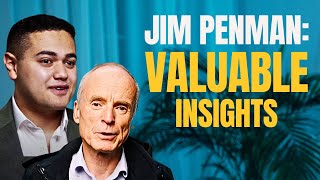
Conversation at Jim Penman’s head office where Jim (a longtime Australian franchisor) and a host discuss his life and business lessons. Jim describes starting gardening work aged 8, scaling a lawn-mowing business into a franchise, and shifting from an intended academic career to full-time business to fund research. He emphasizes selective franchising, founder-driven culture, customer-first sales (ask questions, give value), and practical rules for choosing franchisees. Notable facts mentioned: Jim is 72, spends about $3 million/year on research at La Trobe University, his first franchise began in 1989, the group reported over 200,000 unserviced leads in the last year, and four new sites launched in Sydney last month each opened with 50+ students.
Questions this video answers
72
About $3 million a year
'89 (1989) — "89 was my first one."
More than 200,000 unserviced leads in the last year
Four new sites launched last month in Sydney, each with over 50 students from the first week
Chapters
Hey Jim, how you going today?
It's great.
That's good. It's very, very nice to be able to be with you here today at the gym's head office. Thanks so much for making the time. I know you're a very busy man.
It's an honour to speak to you. Here's a guy who's. You've got 50 franchisees at the age of 25. Let me tell you, I didn't have 50 franchisees until I was 40 or so.
You know they say age is just a number because it's never too early, it's never too late to do something that you're passionate about.
No. 72. I still feel full of beans. Look old, but I do not feel it.
Yeah, that's exactly right. And I was very lucky enough at a young age to be able to find my passion, which is business. And it's something that I'm really happy that I was able to find that passion at an early age. So. Yeah. So tell me a little bit about your story. I mean you are Australia's largest franchise saw. So tell us like from like your, like from when you first like grew up, like a bit of a background about yourself.
Yeah, well, I've been gardening since I was 8 years old. Didn't work for a neighbour across the back fence. So it's been sort of my life almost ever since then. I did it as a student, I did it as a, as a, as a school kid. I did it as a student at university part time while pursuing a PhD. I intended to be an academic. I had a way of looking at society which I thought was revolutionary. Ended up realized I was far too radical to get any kind of academic post. So I decided to make enough money to fund a research institute which would pursue my ideas. So that's kind of in the way. That's why I turned my part time law and my business into a full time business with a hope of creating something.
Yeah, so it's like a means of like making some money.
Right. That was literally what it is to fund my research. I'm currently spending about $3 million a year on a research project which is at La Trobe University. Mostly in areas like epigenetics and those kinds of things. Looking at changing human character.
Yeah, yeah. So like for those that don't know, like your like you're you know, growing up, like how was your, like where did you grow up? Like which part of. Originally from Melbourne, I grew up from Adelaide.
We moved to Sydney for a year when I was 14 and then to Melbourne after that.
Yeah. And what made you like start your own business? Because starting a business is something that's like, it's not something that everyone does. Right. Like it's something that's like, it does take a bit of extra confidence and a bit of push to do.
It wasn't that difficult for me because it was a part time student job. See when I started off in, I started when I left school, I took a gap year and I just did try a few different things. Like I worked on a farm for a while and you know, I worked the public service for a while but I also put a couple of notices in the hardware store in the window offering to do gardening. And in those days $1.50 an hour, which was even then was pretty pathetic money. But I didn't know any better and I just got some jobs and then I kept on doing those, raised the price a little bit and then I decided I wanted to buy a car. So I thought, well, I'm going to have to do better than that. So I borrowed the money from the bank and to pay it back I got a lawnmower because that was better because I could do, say I used to charge most lawns $5. That was my advertising. So I could make 10 bucks an hour which was pretty good back in the 1970s. So I started with that and I just kept on doing it as a part time student job which was good because it's like I liked it. I liked being outside, I like gardens, I've always done it. So it was kind of easy. And then really what happened is this is only meant to be something short term, just to get myself a PhD in academic post. And then when I found myself with no potential for an academic career, I decided to go full time into business and it was the only business I knew. So it wasn't that challenging or exciting. I mean it was very tense because when I started off full time I was actually deeply in debt, newly married, I had just some crappy old equipment. But I knew what I was doing, that was the point. I knew how to make a living as a lawn main contractor. So I just grew from there.
Yeah. And how long did it take you to get your first customer? Was it like an easy thing or was it something that took a bit.
Of time but it wasn't that difficult. In the early days it was just leaflets mainly.
Leaflets. Yeah.
And then, and then when I got bigger local papers and then when you get bigger than that you use yellow pages. It was easy in Those days before social media, dead easy. There was nothing to learn about marketing.
Do you think it's as easy as you know now or do you think.
It'S harder, much more complicated because of social media? Yeah, that's why someone like Joel's so important to us because frankly I can't follow it. I don't have a Facebook account.
Well, actually when I first started my business I started in a spare room in my parents house. So it was a three by two room. Right. And it took me eight months to get my first customer. I had to keep marketing, keep marketing seven years ago. And it just keeps getting harder in terms of being able to attract customers because there's so much competition out there. So there's never been a more important times for, for people to consider a franchise. Right. Because it gives them that, you know, the opportunity to go behind the brand.
You're in a tough brewery because you're in a white collar area which is tutoring in blue collar sort of manual type jobs like gardening and so forth is not quite as difficult. We have more than 200,000 unserviced leads in the last year and mostly in things like mowing and fencing and so forth. So it's not difficult to start a business successfully for all kinds of reasons to find enough customers. But starting part time isn't that hard. Mm.
Yeah. So yeah, started it in a spare room and you know, and just yeah, it took eight months to get the first customer. We kept growing and we kept, you know, reinvesting everything back into the business.
When you say your first customer, you mean your first tutoring?
Your first tutoring.
Yeah, that was slow.
Yeah, it took a lot of, you know, because I was, when I first started I was only 17 so I had to really show people that I meant business like I could get them results. And so I had the first two customers which I, which I helped, which was actually through a referral. So all the marketing I was doing, that didn't even, that didn't even do anything. It was actually through a referral right, from, from a friend and ended up helping those two students. Got some really good results and you know, parent was very happy. And then word of mouth quickly spread and we were getting results like wildfire which was.
Where does most of your work come from nowadays? From social media.
Social media is a big thing. Word of mouth is very powerful. With all new sites that we open we actually, we sign up the customers before the business opens. So it's like a bit of a risk mitigation strategy as well, so many of our sites, because our business model works like a gym. It's like a gym membership. So we sign up the customers before the business opens, which allows us to open up with a set number of students. So, for example, we launched four new sites last month in Sydney, and all of them had over 50 students from the first week.
Good business model. We'd love to do gym shootering one day, but as in everything, it's finding the right person to drive it, because that's the biggest thing by far. Customers, I don't think are that difficult to find. Finding franchisees is harder. Good people. The hardest of all is find someone to actually drive the business.
Like your role, you know, the founder's role is the most important, I believe, because it's the visionary behind the plan. Right. I always say this to people. People, you know, ideas are great, but execution is better. And I think the execution is largely done through the founders, you know, ability to employ resources in the necessary areas to be able to grow a business.
I think a lot to do with culture, too. I had a very peculiar attitude towards franchising. I was very obsessed with making my franchisees successful. I didn't want to sign anybody who I always had doubts about, which was, nobody did that. Everybody just took. Anybody had money. That was just the normal way. And I just didn't like that. I just wanted to do it. I wanted my franchisees to become super, super successful. And that obsession, in actual fact, the really wonderful thing about it is that in general, most of my franchisors share that kind of value. Even though there's 200 of them now, they really have the same kind of values that I did, and they tend to be very pro franchisees. So we have. We've developed a culture and that's the hardest thing to spread, actually, when we try going overseas, it's very difficult because you've got to try and spread the culture, not just the programs and the contracts, but the way of thinking about things.
That's right. And I'm actually doing this course from the Australian Institute of Company Directors. And I was doing the reading actually on my way flying over here from Sydney, and there was this. There's this saying in organizational culture. It's, you know, it all starts from the top, right? It's from the top down. And there's this saying, it's like a fish rots from the head down, and it starts at the head. So, for example, for any organization that isn't doing well, it's usually because of, you know, from the top. Right. So it's very important. It's never been more important than it is now to make sure that we've got very, very strong for the founder to be really focused and fixated on providing a lot for the franchise partners. Yeah.
My interesting thing about Jim's group is that I'm not particularly capable at doing most roles. I really am not. I mean, in terms of social media, I'm a little infant compared with this guy. He's a thousand times better. I just don't have any feel for social media. I'm not a particularly good manager either. I have any skills at it. I actually am good, remarkably little. But the vision thing and the communication of values is part of that. But generally speaking, the great thing about business is you can find people who are good in different areas and work with them on a team.
Yeah, definitely. And so moving on to sort of your experiences in franchising, what do you feel like is something that may be missing in franchising these days, especially as there's a lot of new evolving franchise brands that do come out. I mean, you've been in franchising for many years now. How many years have you been in franchising, Jim?
89 was my first one. So you figured that's about 35 years, I think.
So we'd have seen a lot of reforms, especially happening in Australia at the moment.
Mostly they fail very fast. I don't know. People often go into franchising. I hear weird reasons. People say, I want to franchise a business because I can't figure out how to make any money as an individual business, so I'll franchise. You make money that way? Well, that's a pretty caci way of doing it because obviously to be a successful franchisor, you've got to be able to show people what to do. So you have that kind of attitude, and a lot of people just do it because they want to make money, which is really not a great attitude. You've got to have a passion for what you do. If you're. If your motives are purely mercenary, it doesn't tend to work very well. My best franchisors tend to be those who really care about their franchisees.
Absolutely. And I think it's really important. You know, I think a lot of people, especially going into business, they make the mistake. They want to make money, money, money. But actually, in actual fact, money comes after you've provided value to people. So if you focus on giving, that's more. You know, there's like a saying that the more you give, the more you receive. And you need to always give without expecting anything in return. And from my experience in business, when I always give to people, I always get something in return. But even though I'm not asking for anything in return, most of my best.
Decisions are actually made against what I consider my self interest. Like my decision in the beginning not to sign a franchisee I wasn't confident of, which I thought would slow me down. It turned out to be a great decision. But the anecdote I talked about most about with this, which is really the foundation of everything that happened in gyms, if you understand why it works, is when I was trying to sell lawnmowering rounds back in the early days, I used to build up and sell lawnmower as pre franchise before I even thought about franchising. And I was very bad at selling and I just couldn't do it. I used to employ a professional salesperson to sell for me. I was just very uncomfortable. I'm not very good with people. And my whole life changed in a single day when I went to see somebody I knew from my church who was in the advertising business and very successful, much more than me in those days. And I went and he invited me to his office to have a talk with him. It was an office near in the city. And for half an hour he told me about advertising, about where to advertise, how to advertise and where to. Now this guy had an advertising agency, but at the end of the talk he simply said to me, jim, you don't really need an advertising agency. You just need to follow these kind of principles. And as I was leaving his office and walking back to the car, which was parked a fair way away, I was thinking, if ever I need to use an advertising agency, I would go straight back to this guy, no question at all, wouldn't even think about. And the point was, he told me nothing about his business. I didn't know what he charged, I didn't know anything. And yet I knew I'd use him. And as I almost reached the car, I thought the only concern he had was for my welfare and my business. And therefore he sold me on his business. So as I reached in the car, I just had a thought. Why don't I try this to sell more main grounds? I'm so bad at it. So the next time somebody rang me about a lawn mowing round, instead of telling them about my business, I asked them a question. I said, tell me, do you know what the cut of a lawn mowing round Means because it's in the paper, cut each job done. Once you've done, you know, 100 jobs for $80 each, that's $8,000 cut. And you'd value the business in terms of that. But people didn't know that. So I started talking about it and talking about the business and how you succeed and where you advertise and how you market and hourly rates and equipment and everything else. Just talked on the phone about that. He came to see me. More of the same and the end of it. I just said, okay, there's some jobs in your area. Have a look. A little while later, somebody said, rang me. One of these guys rang me and he said, I've been offered a business in my area and I want you to advise me which is better, that one or yours. So he's asking me to give him advice as to whether to buy my business. So I thought, okay, got to be real. So I asked him the questions. How many customers, how far apart are their average cut? Why is he leaving? What's he doing? The number of questions, you actually assess the value. So I said, that's a better business. Buy that one. I got the same question three times in a row. Three times. And each time I told them to buy the other business. In the end they all came back and bought from me. And from that time onwards, I never had any trouble selling lawnmowers. This lousy, terrible salesperson suddenly became good at it because I stopped worrying about myself and that that particular experience was the core of everything I've ever done since then. You don't worry. And I, and I go through it this morning I was just doing franchisor training. I was doing a session and I go through all the reasons why you're selective and there's lots of good reasons for it. And there's reasons because if you choose, if you don't have good such, if you don't, if you have all good people, then you have better customer service and therefore more work and you have happy franchisees and they're going to inspire others to join you. And then you can give a list of current franchisees to them. And it's a better interview process because you're helping them to buy. There's all kinds of reasons. And I said, but what's the real reason? What's the main reason why you're selective? And I just kept on waiting until I got it. The main reason is for their sake, because if you don't have the attitude that, that the franchisees interests are more important than yours, then you're not really a gym's franchisor.
Yeah. And a lot of people make the mistake when they're in sales is they really try to, you know, push down people's throat the, you know, the value proposition, why they should buy from them and et cetera, et cetera. And the reality is in sales you need to be focusing on the customer. And that comes back down to that philosophy, which is the more you give, the more you receive. So the more you're trying to genuinely help someone, someone, the more you're going to find it much easier to be able to eventually work with them. And you know what, sometimes you can't work with everyone. Sometimes it's not the right fit. And by asking those questions, you can find out whether they are a suitable person that you could assist.
And I think if you're not the right person for them, you should say so. Which is hard to do because you're going for the sell. But you can't have that attitude. Yeah, it's a different way of thinking about things, but it actually does work surprisingly well, certainly in our industry.
Absolutely. And I think a lot of people make that mistake, like, especially new franchise partners, like, they think, okay, when you're trying to open up a new store, for example, we need to be trying to push down people's throat. Like what we're doing, and I always say, especially in the training that I provide them is, it's not actually like that. What we need to be doing is we need to be focusing on providing value to the parents. So, for example, asking questions like, you know, how is your child currently tracking at school? Can I see the report? Where, where are the strengths, where are the weaknesses? Like being able to ask those questions. And I'm sure you've, you know, with your franchisees that, that you have, you've got those same questions that, you know, where they would ask them questions rather than, oh, you know, you should pick us, for example.
Right, yeah, you ask them questions too. You, you say to them things like when you're interviewing somebody, look, let them know there's tough times, it's going to be difficult. First of all, what does your partner think about this? What does your wife think about this? Your husband, whatever. So you've got to get their opinion. I would actually say that you don't sell a franchise to somebody whose partner is not in favour. You don't sell a franchise to somebody where a parent is providing the money for the kid, because that never works. That's an absolute no no, if you can't provide the money yourself, no matter how young you are, but if you can't actually provide substantial money yourself, then you don't sell the franchise. And then you look at the background. Do they really want to do this job? Would they enjoy it? Put them out on the road, give them a try, have a look at it, get some assessment from the trainer. You've got to go through the process. It sounds like it'll slow down your growth, but it actually works very well.
What would you attribute some key things to your success so far?
Well, I'm very franchisee focused emotionally. So every one of my franchisees, there's five and a half thousand, have my direct phone number, email address and they can ring me anytime. I had franchisee ring me on Christmas Day. It was just to wish me Happy Christmas, but it was. Most CEOs don't have that kind of relationship. But I find it incredibly useful because I get to know what's going on. I pick up problems and solutions. Sometimes I can help the franchisee directly, sometimes I can work out there's something going on that shouldn't be going on. There's a problem with the system or with the franchisor or with the IT or something like that. So I'm constantly getting feedback. And most of the changes that take place over the years are driven by franchisees interaction. So people think it's a very strange way to spend my time. But I find that the biggest problem is people don't contact me enough. But I do find a way kinds of things. And the point of it is what you do in business and I'm sure you have the same experience. It's not one giant.
More from Jim


Rising mental illness and falling birth rates have the same cause, it is this.....








