From Gardener to $500 Million Dollar CEO | Jim Penman Story
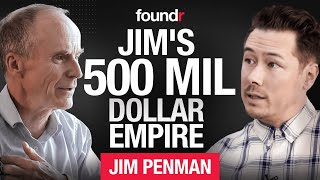
An interview with Jim Penman recounting his path from a student lawn-mowing business to founding Jim’s Group, Australia’s largest franchise by outlet count. Penman describes why he franchised (competitive pressure), how he designed unusually franchisee-friendly contracts and selective recruitment, and the systems (lead-fees, complaint tracking, automated customer follow-up) and metrics that drove quality across many service divisions.
Chapters
So yeah, thanks so much for taking the time to speak with me today, Jim. So the first question I ask everyone is how did you get your job?
Not by intention. I went to University back in 1971 with the aim of working out why civilisations rise and fall of all things. So I went and did a history degree and then a PhD and my whole aim was to be an academic and lawn mowing was my part time student job. And when I finished up in 1982 I realised that I had 0.0% chance of any kind of academic post because my ideas were far too wild. So I decided to turn my part time mowing business into a full time job.
Yeah, wow. Incredible. And you know, if you fast forward to now, you know Jim's Group is, you know, the largest franchise in Australia. Purely by numbers, not by turnover though.
McDonald's and the Stuff do a bit better than us, but by numbers.
Incredible feat. Like you know the Jim's Group is an iconic brand. Like when Joel reached out to us to do this interview, I was really excited because you know, everyone knows the Jim's Group brand and you've got over 50 different services and franchise that. Have you franchise? So I'm curious around anyone that's watching this. How did it all start? Like what? So you started, you, you know, you started doing the lawn mowing. What, what happened next?
Well none of this was intentional. This was when I started mowing full time. I had no idea this was going to be anything particular. This was so and something to do until my real business came along. I started off by, well I was mowing lawns and I didn't know what I was doing but I had a big passion for customers. That was the biggest thing I had going for me. So I used to find it very easy to pick up and keep regular clients and I figured after a while that it was more money in building up and selling lawn mowing rounds than there was in doing anything else. I had tried employing subcontractors and difficult to get the quality right so forth. So I started building up and selling lawn mowing rounds. And again that was short term thing, no long term intentions. And about 19, when it was 1986, a major competitor, a franchise lawnmower business came to Melbourne. That was vip.
Yes.
And to a large extent I simply franchised in self defence, otherwise I thought they'd swallow me whole.
Ah, interesting. And you know what happened next? You decided to franchise. Was it easy to find other franchisees or.
Well, I've been selling lawn mowing Grounds for quite some time. So I had a lot of people who I knew.
Yes.
So when I actually launched my first franchisees were people who bought lawn mowing rounds off me in the past. And I knew they were good. Some of the good ones, yes. And I've been in contact with them and, and some of my best subcontractors. So I had about a dozen to start with and then I started going from there and honestly I didn't really understand what this thing was. When somebody asked me at that time, how do you think it might go? And I said, if it's really successful, if it really works well, one day I could have as many as 100 franchisees. That was my reach goal.
Yeah, there you go. And you got I think 5,000.
Just under 4,000.
Okay, 4,000. Okay. Interesting. And when it comes to, I guess anyone that is watching this and they might have a service based business that they're looking to franchise, they have something that is unique enough in the marketplace that they think that they would like to license their brand and turned into a franchise. What, what is your recommendations there, where to get started?
Well, first of all, there's nothing particularly unique about what we've done. Our services are mowing, gardening, cleaning, dog washing, very basic things. There's nothing particularly clever about what we do. It's more how we do it that matters. It's the way we treat our franchisees, how we maintain quality, how we make sure they're looked after, they're happy. That's the innovative part of the system.
Interesting. And talk to me around that system for your first five franchisees. Like what did that system look like? Because I think that's one thing that is very inherent of some of the best businesses out there. They have incredible systems, operational processes. You guys are obviously a master, like masters of this and being able to basically put your business in a box with a nicely tied bow. Can you talk to us around that?
In the beginning, our systems weren't particularly strong. What we do now is many, many times more sophisticated and complex than what we used to do in the beginning. I had really one simple idea when I was a mowing contractor. My fundamental idea was I was going to make my customers into raving fans. I wanted my customers to be so delighted, they used me forever. They'd recommend me to their friends, they'd pick up their neighbors. So that was the concept of my gardening business. When I wanted to franchise, I had the same concept with franchisees. My whole idea was to turn my franchisees into braving fans. So what I did was develop a contract that I thought was the most favorable there possibly could be to any prospective franchisee. I wanted a contract so good you'd have to be mad not to join the system. I got hold of the contract from my competitor, I look at it and I said, no, that's not fair, that's not right. So I put a whole lot of clauses in giving my franchisees protection. For example, I told them, I will not take regular clients off you or clients off you without your consent unless the customer complains. I will give you territory rights. You get right of first refusal for any client in your area, in your territory. I can't give it to anybody else, but you can take work wherever you wish. You can build your business to whatever size you wish. When you come to renewal, you've got an automatic right to renew. Now, this was all really strange stuff. One of the reasons it took me nine months to get my contracts done is because the lawyers kept on arguing with me. They kept on saying, you're being too nice. Why are you giving all this stuff to your franchisees? And what they essentially said to me is, this is so unreasonable, this is so extreme, you're going to have to soften it down. But actually, what happened is, as time went by, I actually gave my franchisees more rights. For example, I gave them the right to move to a different franchisor if they weren't happy.
Yes.
Basically to walk away from the business if they weren't happy. They most paid for fees. No exit. Well, it's very small, but $4,000, which we don't normally charge. And most radical of all, the right to vote out their franchisor, which is completely unprecedented in the world. So we've done all this really radical stuff. Strange thing is, what it means is that at every stage of the business, you've got to look after your franchisees.
Yeah. So when it comes to that, like, what was the outcome? Was it the outcome because of these things that you're doing for your franchisees, that the customer was always really happy and they're always happy to come back?
The secret of looking after customers is to have good people. Like, if you want to look after your customers in any business, you've got to have great staff. You've got to have staff who believe in what you're doing? Well, the same thing with franchising. If you want to look after your customers well, you've got to have great franchisees. Which means our actual first priority in gyms is not clients. It's franchisees. We say our first priority is the welfare of our franchisees.
And what do you look for in a franchisee? Do you have a rule book?
Well, first of all, one of the unusual things we do, which is not common in franchising service franchising in Australia, is we are very carefully selective. In fact, when I talk to franchisors, my first hour and a half is talking about why it's so crucial to be selective and to knock back people that you not, unless you're convinced they will succeed, you should not accept them. And then we go to how we select. Now in reality, to run a successful cleaning or a mowing business, you don't have to be some all time genius entrepreneur. You basically need to have a good character, be able to follow the system, have a concern for customers, just be a decent sort of person, fairly steady, that kind of thing. But we would look for things like, first of all, we take them out on the road. That's the best test of all. We look at how they do it. Do they follow instructions? Can they do a look? Like when you're mowing a lawn, for example, you don't just go around in circles, you go around the edge and you go up and down straight lines. Now if you tell a prospect that a couple of times, if they're not doing it by the end of the day, you foul them. You've got to move the hose, coil the hose in the garden, don't just mow past it. If they're not doing that, then you foul them. If they don't turn up on time or if they, if they come in late and they don't apologize, you fail them. So you look at that sort of thing. As far as the interview is concerned, we look for a supportive partner. Very important. We would not normally accept somebody who hasn't got a partner in support. We would not accept somebody who's not putting up the money themselves. Like if the father's putting up the money, that's almost certain failure. We look for somebody who asks good questions. See, we're not asking for somebody who could run a McDonald's outlet. That's a different level of business. Yes, but just somebody with a good character. And most of our franchisees would tend to be for sort of the middle to the upper end of the employment market. So it's not that hard. You just got to recognise the ones that really won't fit.
I see. And at what point did you start.
To move into different verticals, different divisions?
Yeah, yeah, sorry, you call it Divisions. Okay, sorry.
Well, I guess it sort of explains that, you know, I'm going to ruin people's idea that I'm some genius entrepreneur, because that was almost by default. What actually happened was when I had this system set up for mowing, my thought was, okay, well, I've got these contracts in this system as ways of developing, delivering work and so forth, so why not apply it to cleaning? But obviously, this beard, this is a gardener. It looks like a gardener. That's what it looked like. That's me, actually. That's a picture of me. All right, so obviously that wouldn't work for cleaning, clearly. So what I did was I set up this other brand called Sunlight. S U N L I T. Little sprays of things that looked like cleaning. Sold a couple of franchises, failed completely. Couldn't make it work. All right. Somebody came to me and they said, okay, I'd like to do gyms cleaning. I said, no, you don't want to do that because it's a gardening image. And they said, it'll work. And I said, no, it will not work. It's a gardening image. It couldn't possibly work for cleaning. And they said, well, we'll give it a go. We'll do it. So I said, all right, well, if you do it and you take the risk on it, well, have a go. And it worked. So I was wrong. People would look at the. Somebody would come in to talk to a real estate agent and say, I'm from Jim's Cleaning. And they'd say, oh, yeah. Oh, Jim, let them. Oh, okay. All right. So you can see the reaction. Somehow the brand cross itself, and that applies to anything. It's funny that this gardening image actually seems to work for women who turn up to wash your dogs or bookkeepers or computer. The brand just works far beyond what you think it would.
Yeah, no, it's interesting. So at what point in time, how long did it take before you launched your first division after Jim's mowing?
Would have been a couple of years.
Oh, really? Okay.
Two or three years. I'm not sure exactly. About 1992, I think about. Sorry. Yeah, about that.
And it. Was it hard to maintain the consistency across all the different divisions as it grew around, I guess, keeping the customer happy and the quality of the product or the service.
The point is, there's no real difference between mowing and cleaning and dog washing, computer services and antennas and book. There's no difference at all.
Yes.
The basic issue is the same. You've got to. When we get a lead, what we do is when we get a lead through, it's actually allocated by the computer because the computer, the system knows who needs work and where. So we'll know that there's four people taking a job in Doncaster and we'll pick one of those if it's a territory holder first, and others. So that's all the same. So what you've got to do for a franchisee, you've got to follow up that lead. You've got to phone the client back quickly. Every minute that passes by delays, it makes it less chance you're going to get the job. So follow up quickly, you ring them back. If you can't get through, you've got to send a text. These days with mobile phones, you've got to turn up when you say you will give a couple of hours leeway, then you've got to give a quote, a written quote and then you've got to satisfy the customer. So it's pretty simple. It doesn't really matter what the service is. The basic problem is getting people to do all that consistently. And obviously in the start we were better than we had been because we had systems of. I introduced systems like, for example, one thing I found was that people weren't always following up leads. So we used to have, in a sense, a flat rate fee system in the beginning. And we found that people were just ignoring leads. They would get so busy they just say, I won't bother with that. So what we did actually changed the system of charging for jobs. So instead of having a flat rate fee, which is what most of our competitors still do, we have a lower base fee and we charge for every lead, whether they get it or not. And we did a little survey. We had some people on flat rate fees and some on these newfangled lead fee ideas. And we found that when there was a no lead fee, a quarter of the clients we rang hadn't been followed up. When there was a lead fee, 3%. And what we actually found when you looked at the conversion of the lead to the job for the when there was a lead fee, we're converting about three out of four, which is about what we do. But for the flat fee, it was less than half. So we were getting one eighth as many customers unhappy and 50% more actual jobs than the same volume of leads, simply by changing the way we charge fees.
Yeah, interesting. So still quite data driven.
Very, very data driven. And what we then started to do was to look at ways of going beyond that. So, for example, one thing we look at in gyms is is complaint rate. That's the number of clients that complain. Now, in pre franchise days, I can remember looking when I had subcontractors, they weren't very good. Okay, I remember for every hundred leads we get approximately 100 complaints. Now, when we put the franchise system in place, we obviously selected a lot more carefully and we were, you know, we were talking to them about things and we were training them and doing all kinds of things to improve this. And then there was the leave fee system. We found that actually dropped quite well. We were down to 5%. So for every 100 leads, five complaints. But I said that's not good enough, that's not good enough. And I actually noticed it too because the complaint rate wasn't showing that. But I was taking a lot of calls in the office and I noticed that I was taking more complaints than anyone else. They weren't recording the complaints strictly enough. So I got all the staff to do that and then I discovered this 5% figure and I said, this is no good, this is still too high. So then we started putting systems in place. And the first thing, after talking with my franchisors, because our Gymzy's got regional franchisors look after franchisees, I went to them and said, ok, actually there was this suggestion. Every time a complaint comes in, we're going to send not just to the franchisee but to you as the franchisor. Your job is to ring the franchisee and see what happened. And then that, that then generates a conversation and the franchisee gets into problems. That improved things a bit. Then we started recording complaints and we started the system which is now heavily automated, where if they get a certain number of complaints, which is six complaints within six months and at least 6% of leads, they get a warning letter. And then if it happens again in the next six months, they get a breach notice and they have to attend retraining. And then every complaint gets. So you put this in place and they continue to get complaints, they get terminated.
So similar like how Uber, how they score.
Very much so. And just a few years ago we also started doing customer service which is automated mainly by SMS. And about 30% of our customers respond. And then we record that as well. Now the actual level of complaints now is just a fraction under 1%. So in other words, about a 99% improvement complaints. And we are putting some stuff together at the moment to do with it. I am convinced we can drop that. At the very least in half we can improve what we do.
Interesting. So when you decided to launch the other divisions, did you do much cross selling? Because you know that would raise overall, even though this is a franchise and they've got many franchisors and franchisees, it would raise your LTV of lifetime value of a customer. Did you do any like, do you do right now or did you back then a lot of different cross selling and.
Well, the question is how, how you can cross sell. Because bear in mind the person who comes out to clean your house is a cleaning franchisee. These people aren't high level entrepreneurs. They're, they're good people, they're sensible enough in business, but they're the kind of people that probably wouldn't naturally run a business successfully themselves. I mean, there's some interesting stats on businesses I've just looked up. There's a organization in America called the International Janitorial and Cleaning Services Association.
Yes.
And their estimate is that 95% of people fail in a cleaning business in their first year with us. The relevant figure is around 11%. So these are people on the whole who probably wouldn't be successful in business without our help. But because of the training, because of the leads we give them, because of the ongoing support and the meetings and everything else, they tend to be successful. So it's, I guess it's a long way of saying is the people that most of the people who do air, some of them are absolutely brilliant. There's no question. Some are natural entrepreneurs. Most of them aren't particularly sophisticated. So they're not going to. A person who comes to clean your house is not going to upsell to the mowing or the dog wash or the antennas. On the whole, sometimes they'll establish relationship with somebody that they know another division, but usually they don't cross sell. The only way we really cross sell is we have a client newsletter which goes to about half a million Australian households every month. And that just soft sell promotes the different divisions.
Gotcha. I'm interested around your thought process or what your thoughts are around the concept of focus. You know, a lot of entrepreneurs, they have what is called.
More from Jim


Rising mental illness and falling birth rates have the same cause, it is this.....








