How does Jim's Group CEO, Jim Penman apply his Christian faith to everyday life with Joel Kleber
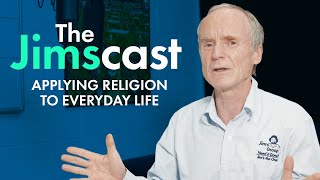
Jim Penman, CEO of Jim's Group, talks with Joel Kleber about how the parable of the talents and the Sermon on the Mount shape his business. He discusses tithing as a blessing, servant-leadership in franchising, and how his Christian faith guided him through divorce and reconciliation.
Chapters
As for anyone who watches or listens, Jim, you know, Jim drops it occasionally, but he is a very well Christian in his faith and we've done a podcast as well with an atheist sort of Christian debate. So we thought we'd do something where I can ask Jim a bit more questions and he can let us know in depth more for people who are interested in that type of stuff. So let's talk about your. In Christianity in general, what texts do you find useful in Christianity?
The two most relevant texts I find to direct my life would be. One is the parable of the talents. You know the story about the, the, the, the king who goes on, or the ruler who goes on a journey and leaves property to his, to his servants. One gets five talents, which is a lot of money. In those days, talent was a huge amount of money. Then there was three talents and there was one, and that was based on their level of ability. And he goes away and when he comes back, the person with the five talents has actually been out there and used that money and got five talents more. Jesus had a very commercial understanding and Jews are pretty good at finance in general. So he said, that's great, that's well done, you've used those talents properly. And then the three talent guy, I think maybe it was two talents. He'd also done the same thing on lesser scale, but he'd also produce two talents more. Then he goes to and he says, well done, that's great. Goes to the third guy with the one talent and he said, look, I knew you were a hard man, so I buried the money in the garden and here it is, it's yours. And the master was really angry. He said, you should have at least put it in the bank and got interest from it. And that's where we get the word talent in English language, of course. But the whole point of the story is that God gives us whatever he gives us natural abilities, wealth, whatever, and it's up to us to use that. And that to me is a defining basis of how I think about business. I mean, I'm in my business because I wanted to have a business, because I wanted to pursue my research goal. And I believe that was the goal that God gave me. And somehow, even though it seemed incredibly unlikely at the stage where I was impoverished, deeply indebted gardener, that I would ever be able to fund a multimillion dollar research program, that's what my aim was. And I just felt God has given me this task. He's given me abilities and it's my responsibility to Use it. And I always kept that a goal in mind. And I still feel the same way today. You know, I look at what I'm doing with my life and I say, am I using my talents, my abilities, my money in the way that God wants me to? What's my ultimate goals? What am I after? And then everything relates to that. And I think all of us have abilities. And I think that's a. That's a powerful principle to give your life some meaning. What are your abilities? What have you got? And then what can be useful? What can you do that's useful? I really, really love the Sermon on the Mount, particularly the one in Virgin in Matthew. Just talking about ethics and attitudes towards life and humility and stuff. There are certain things I find very difficult, like turning the other cheek. I wouldn't be good at that. Somebody smacks me on the cheek, I'd like you to give them a haymaker. But that would find it very hard. But to a large extent, I'd say I'm a follower of the carpenter from Galilee. I like Jesus example is to me the core notion of what a human being should be like.
Let's talk about sort of throwing on from that your thoughts on tithing, which sort of goes in with your talents, have generated your business, and you've had wealth. What about tithing?
Tithing is a basic Christian principle. It's not really an optional thing. It's part of what we're taught to do from way back. It's part of giving back to God. I have to say, in a purely financial sense, I see it as a business investment. I do not think that you can put God in your debt. I have experience in the past from situations where I was very, very short of money and I couldn't pay my phone bill or my power bill as well as pay my tithing. And I paid my tithing first because that was the absolute priority. And then somehow it would always come about that the other bills would get pa. And so I've just had so many experiences of that kind of blessing. And I just do believe God will bless you. And I just consider it a fundamental. It's not only an obligation, it's something we owe. God is gratitude for all he's given us. But it's also something that's actually sensible because God controls the universe. And somehow if we do what he wants, it will come out right.
Now when you say it's an obligation, is that something that you know from your circle, that's other people practice, or is it.
I don't ask what other people do. Sure, it's not my business. I would not ask a person about their tithing. It's not my job to do.
But it is an obligation.
We're taught to tithe. The Christians should tithe. It's a basic biblical principle. And you know, we get service from the church too. I even, I even tithe now even though we can't even go to church, but we've still got a church community and so forth and we're in touch with each other and so forth.
Now what about some parts of the Bible that are examples for you or that you sort of reflect back to? You mentioned at the start that story which was the example of talents. What are some parts of the Bible that resonate with you that you sort of always keep in the back of your mind?
Another part of the Bible that really appeals to me is the story about Jesus washing his disciples feet. And people don't quite understand what a radical statement that was for the time. That was a very hierarchical type of society, far, far more than we can possibly imagine today. And even amongst the Jews who were less, more egalitarian than most in a certain sense, washing somebody's feet was a very lowly duty. It was something that a slave did. Now there were some situations where a really revered rabbi or master, his disciples would wash his feet for him. And that was considered to be an enormously, enormously praiseworthy to actually have such reverence that you as a free man would voluntarily wash someone else's feet. But during the Last supper before Jesus was taken and crucified, he actually washed his disciples feet. And they were quite horrified at the idea. It was so radical, so extraordinary. But what Jesus was showing by the most extreme example is that we're there to serve each other. And that concept is actually the foundation about the way I think about gyms. In a strange thing. Even though I've never talked about normal scent, but we talk about serving franchisees in a way I look at gyms as being the opposite. It's not like a hierarchy with me at the top and the franchisors and the franchisees. The franchisors are at the top. They're the ones we serve. And the franchisors are there to serve them. And I'm there to serve my franchisors and my franchisees and everybody up, including the clients. Of course, that turning of things on itself. For example, some of the strange things we do in gyms, like the fact that franchisors can vote out their Divisional franchisors and franchisees can vote out their franchisors. Nobody in the world does that. But that's a very typical example of the idea that we're there to serve.
Now, that creation. When did you. So interesting to your business journey, when did you. Was that story the one that really resonated for you and you form your business practice off that, or was it just something that sort of married up as you were going along?
It's part of my basic attitude. From the beginning, right from the time that I first wanted to be a franchisor, or even when I was selling lawn mowing rounds, my whole concept was the idea I'm going to serve the people that I deal with. In other words, when I was selling lawn mowing grounds, what can I do to make that person successful? Even giving them advice to go to somebody else. That idea of service when it's against my own financial self interest, it wasn't actually, it was very much in it, but I didn't know that at the time. And the same thing with when I had franchisees, when I determined from the beginning I wasn't going to take people on that had any problems with customer service that I could work out. So I used to take them out on the road and have somebody look at them and say, are these people good enough to be in gyms? And that wasn't because of customers, that was because of franchisees. Now, I thought in the beginning this would stop my business from growing. I thought this would be a limit, that I wouldn't take on as many franchisees. When I came to realize with time, it was actually one of the best things we ever did because we had a very, very high success rate. And then I could use my current franchisees and I'd say, here's a list of them, here's their phone numbers. Go and ring them and ask them and say they're making great money. The great majority do. So that came out of the idea, but the fundamental concept was service and it comes straight from the Bible. And I can't say I necessarily consciously thought washing feet, but the whole notion of service. And that also applies to things like the washing up brush in the office and not getting staff to get any cups of coffee or anything like that. That kind of idea, it's all to do with we're here to serve in a sense, you know, in a business. I'm here to serve my staff as well. My staff have interests of their own and obviously we've all got to serve the company. And the franchisees. But also, in a sense, I'm here to serve them. So I like to turn the hierarchies on its head.
Yeah, it's almost like. Imagine a pyramid, traditional pyramid, but you sort of flipped it up upside down when you're down the bottom and everyone else is up there. Customs, franchisors, franchisee staff.
Look, I have certain kinds of abilities. I recognize that. But there's certain areas that I'm very bad at too. So in a sense, we're all part of it. And I would hope that it's ever got to the stage where I wasn't the most effective person to do my job, that I should leave it as a matter of moral obligation because we're here to serve. We had to serve our franchisees.
Franchisees are doing very well at the moment. So leads are up and everything said. So I want to talk about now, your observations about any franchisees that are Christians. Do you know many franchisees who are Christian, or do you converse with many on that sort of basis? Or what are your observations?
Yeah, I do, actually. It's nice. When I'm giving my talks, I actually throw out a few clues. Like I talk about going to church as an example, so that quite often Christians will come up and talk to me afterwards. Look, being a Christian itself isn't anything in particular. It's not so much being a Christian as living Christian principles that tends to make people successful in homes, at home, or in their business. But those who've had the basic attitude of doing the right thing by other people, whether they're Christian or not, tend to do a lot better. And so obviously Christians tend to be more likely to succeed, other things being equal, because people tend to tend to make shortcuts. That's what tends to happen so much. You see, people who, if I can just get through this job a bit faster or I can forget about doing this or forget about doing that because I make more money this way, in the end, they actually tend to do a lot worse. Whereas those who really do the right thing for the sake of it, because it's in their nature.
Yeah, that's interesting. So is there anything so moving, let's say, in general, what are you doing now for you? Obviously you can't go to your. To go to your church. So how do you guys stay in contact or what are you doing now to keep up with that?
Well, we have. We have things coming from the church, like stuff we can watch and so forth. And obviously we still pray amongst ourselves and stuff. We pray at the dinner table always. We meet together and then we take turns. My 11 year old son gives a beautiful prayer. He's very cute and it's just Christianity is part of our lives. I miss church really badly. It's something that I just. It's hard to get used to not having because our church services are wonderful. We're a charismatic church and just to be with the people of God singing, especially on a Sunday morning, it's just like a high point of the week. It's very, very happy, very emotional time and I miss that really badly.
Let's hope the lockdown can ease up ASAP so you can get back in there on the regular Sunday.
But we're doing pretty well from the crisis. I have to say, financially speaking we're doing well. We've got lots of leads and lots of franchise sales and it's not affecting us too much and it's great. We've got my daughter living with us, a very sincere, committed Christian and That's wonderful. My 21 year old daughter. But I miss church.
But what do you think about Christianity moving forward, let's say in the next 10 years? Obviously there's a decline in some areas, but. So what do you think Christianity in the next 10 years is going to look like? Or do you think it's still going to go strong or do you think it's going to be more galvanized in the community?
What tends to be happening is that the more lukewarm churches that are more nearer to community values tend to be declining quite fast. And the growth is in the areas like the charismatics and fundamentalists and stuff who are more fervent about what we believe in. So that's what's happening. A lot of people who are just lukewarm are just moving away. I think the decline will continue for the time being anyway. Eventually it'll reverse itself.
So anyone who's watched or read the books, obviously it's a big part of the chapters is there about your divorces now as a Christian, it's death to us part. So what were your thoughts about the divorces and obviously reconciling that for your Christian faith?
Yeah, I never thought I'd ever be divorced. I really, really never occurred to me that would ever happen. Never crossed my mind as the possibility. All I can say is that sometimes I don't make very good choices. I tend to choose more passionately than in sense. But also that I'm a very difficult person to live with. There's no doubt about it. I didn't initiate my divorces. It was basically women who really felt they couldn't live with me any longer. And then I met Lee, which was just over 19 years ago, and she wasn't a Christian at the time, but she's a person imbued with Christian principles of service. And she just turned me around. She loved me enough and looked after me enough to build a relationship, which is actually fantastic. And she's become a very sincere, committed Christian herself. And we're 100% united, and it's a great source of strength to us. So, you know, in this source, it's a great sense of shame to fail so badly so many times, and, you know, you can't get past that. But, you know, 19 years and counting and a wonderful, wonderful, happy Christian marriage. It just shows what is possible. And to anybody who does go through difficulties, and it's not uncommon in this day and age, never give up because God is always there and there's somebody out there for you.
But saying that, yeah, you might have had to go through those, let's say, failures to lead to that massive success of your marriage.
I would rather not. I would so envy somebody who found the right person from the beginning, lived a completely pure life until they were married, then they were married, and that was faithful to that one person with them until death were part. That's the ideal, and that's what I would really hope and pray for all my children. I would never want a person to go through what I've been. I would never want the hurt that my children have suffered from divorce. It's terribly damaging.
It definitely is very, very tough. So thank you for that, Jim. And if anyone who's a Christian, especially if you're a franchisee, please reach out to Jim as well. I know you might get the occasional email from people as well, anyone who's.
Any question jims.net in or outside of gyms for that matter. I'm always happy to talk to fellow believers. We really are. We have a bond. We have something between us that is unique and immediately means that you've got a brother or a sister, you're very close.
And as you said, you do have people at the training. When you drop those hints come in after the ethos.
I enjoy that very much.
And they pick up on it. So thanks for that, Jim. And if you'd want to connect with Jim, jim@jims.net.
More from Jim


Rising mental illness and falling birth rates have the same cause, it is this.....








