Jim clears up incorrect information about his epigenetic research!
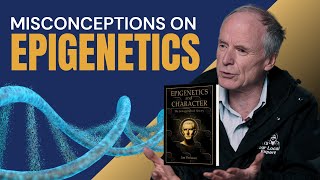
Jim Penman clarifies that epigenetics, which studies how environment regulates gene expression, differs from eugenics. He cites the Dutch Hunger Winter and rat studies showing environmental effects on offspring, and explains his argument that Aboriginal disadvantage stems from epigenetic and environmental factors rather than genetics alone.
Chapters
So, Jim, thanks for joining me today. And what we want to do is there's a bit of incorrect information that goes around regards to epigenetics and character. We obviously talk about this topic a lot on Ask Jim, and you've talked about it on podcasts a lot. But it seems to be when the general interviewer asks you, they always get it wrong and misconstrued with something called eugenics. So maybe you want to just talk a bit about what the difference is, first of all, and what does it define us?
Okay. Eugenics is the idea that. That certain people are genetically better than others. It's the idea that Hitler had in wiping out the Jews, which is pretty ridiculous because Jews, if anything, are probably smarter than other people or, you know, gypsies or people who were, you know, mentally had mental health problems or were intellectually backwards. So that's what eugenics is. And it comes from a guy called Francis galton in the 19th century. Now, epigenetics is completely different, and epigenetics is what I'm about. Epigenetics is the way you turn genes on or off. It's an environmental influence. What I make it very clear in my books is that it's not about genetics at all, but what we're looking at is how to change the epigenetics, how to change the environment so that people. Genes are expressed differently. In fact, I would say people, genetically, people are very uniform. Humans are a highly uniform species genetically, far more than chimpanzees, for example. So I don't think any kind of success can come from trying to change people genetically. I think what we need to focus on is the epigenetics, because it's quite.
Annoying for me because obviously I run the socials and occasionally we get this thing as a comment, and it's really annoying. I know it's not correct. So on Wikipedia, for example, it says that you believe in eugenics. Just to be clear, that's obviously not the case.
No, no. Actually, what I talk about, the trouble is, I think people don't understand the difference. They think eugenics, Epigenetics sounds very different, but it's actually quite opposite. Eugenics says, let's change the genetics. Epigenetics says let's change the way the genes are expressed, which is the change to an individual. So you can actually change your own epigenetics by doing something like the same, say, eating a bit less. That will actually change your epigenetic settings. It doesn't change your genes. It'll change the way they're expressed.
Now where do you think these ideas come from? Where do these ideas come from?
I think people don't understand the difference. People are scientifically ignorant. They hear epigenetics, eugenics, they sound, they've got genetics in it, it's got E in front of it. Therefore it's the same thing. Is that actually the opposite?
Yeah. And do you want to just go in a bit more detail then you mentioned an example there about food restriction being one. What are some other things that can changed?
Well, for example, during the Dutch hunger winter, there was babies that were born at the time when there was a famine created by the Nazis in Holland. And the children that grew up who were born at that time or in their mother's womb at that time actually were different. And even their children to some extent different. So what happened is the environment affected the genesis. We've done similar things, actually. Some of the epigenetics can go down through generations. For example, we have male rats that had limited food, not extreme, just a mild amount, like 25% less. And they were mated and then they never saw their offspring. But the offspring to some extent acted as if they were had limited food themselves, even though they hadn't. So that's an epigenetic change.
And why do you then think Aboriginal Australians, Australian Aboriginals are similar or and similar groups do so poorly than in today's socks? This is a thing that we get a lot. There was an article back in 2013 and a lot of, we've done a lot of media recently and the only thing that ever seems to come up is that eugenics thing and it's this vice thing from 2013. So maybe you want to explain a little bit about it to give more background for people.
Okay. For a start, Aboriginals and white Australians, other Australians are extremely similar genetically. That's an important point. We're not talking about genetic difference here. Now what you have with Aboriginals is a epigenetic pattern which is from themselves, from their environment, from their parents, from their grandparents, from their great grandparents, which is based on things like the way they're brought up and so forth. And that causes them to have a different sort of character, which doesn't fit in very well with the mainstream Western culture, which is why you've got the poorer levels of education and so forth. It's not a genetic difference. It's an epigenetic, basically environment driven difference. And the reason this is important is because some people assume that the only reason that Aboriginals do poorly is because of racism. So if you get rid of racism, then they'll somehow be all exactly the same and do as well. But if you understand that the problems are epigenetic, then you can actually work towards a treatment that if people wish to, they can actually change their epigenetics, change their character, just like you can change it, as I said, by going on a mild diet, for example. But there's different ways of doing it. So one of the things we're working at in the research project is to give people a way of actually being able to change, if they wish to, their character, change the epigenetics.
So I want to be very clear about that, because this is the one where people go, look at what he wrote about. Aboriginal advice is like a quote or a highlight, and I don't read anything else. But you've explained it really well, then. So just to be clear, it's nothing to do with racism at all. It's about what those.
No, it's quite the opposite, actually. When my book came out, which made the point very clearly that genetics isn't the point, the Occidental Quarterly had a look at it, and that's a basically racist sort of academic magazine. And they didn't like it because they said, well, hang on a bit. No, you're wrong, because we believe it's genetics and you're saying it's epigenetics. So they actually panned the book for that reason because it's against racism. It doesn't agree with the racist point of view.
Yeah, so that's my last question there on that, was that basically there are people who like that, people at the magazine believe in that, whereas they think yours is completely wrong. Yeah, so that's very clear, because the Wikipedia. Because people will go to Wikipedia and they'll do the source, which is half the reason why we've started your newsletter and jimmypeitman.com to try and clear up this incorrect information, because there's not too much way of changing those things sometime. But you've gone through it. So what else is incorrect with that Wikipedia profile from your memory regarding your views on this, sort of. Regarding your research?
Well, they said I'd go into a Catholic church, which isn't. I don't find insulting, but it's not true. I'm a Baptist. It's amazing. It's amazing how they get these sort of things out. The number of children is right, I think, but mainly it's an accurate profile. I get the weirdest thing that sent me online, one I just looked at recently and apparently I'm single and not currently dating anybody, but actually I've been happy for 22 years and have four children with my wife. So you can't believe everything you read online.
Yeah, because we want to address this because every time we do videos, most things are good. It's just that the this thing keeps coming up and it's always reverted back to that Wikipedia entry into the article from a long time back. And I think if people understood as they've heard you're actually what you mean.
The trouble is people who say these things actually haven't read the book.
That's the point.
Concern they read what somebody else who hasn't read the book said about it and that's good enough.
That's what happens. Yeah. So if you want to learn more, JimPeman.com, we've also got Jim's new newsletter, which is great because it has little snippets off that as well. But jimpeman.com you can find a lot more information about this as well. And thank you for your time on that, Jim. Appreciate it.
More from Jim


Rising mental illness and falling birth rates have the same cause, it is this.....








