Jim Penman: If Government Got Out of the Way, We’d Have Affordable Housing
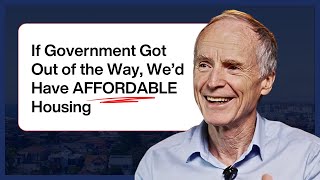
A podcast-style interview in which Jim Penman explains why he supports the Libertarian party and lays out a policy agenda focused on making life cheaper and easier for ordinary people. Core claims: restrictive zoning is the main driver of unaffordable housing and rents (allowing denser/alternative builds would rapidly improve affordability); replace stamp duty with higher land tax and remove perverse subsidies (5% loans, excessive negative gearing) rather than subsidising high house prices; cut planning red tape, streamline building standards, and make government easier to do business with. He also argues for stronger policing, more efficient public services (firing underperformers), lower power bills through market/technology progress (not rushed subsidies), and reforms to franchising transparency and regulation.
Chapters
If the government got out of the way, stopped the stupid zoning, allow people to build where they want to, we would have affordable housing, affordable rent. What is in the interests of ordinary people? I'm not talking about the millionaires. They'll take care of themselves. People like me are going to be well off regardless. Okay. We don't need the government to boost up our wealth. Cool.
So welcome to the Jim's podcast. This will be on Jim's podcast as well. So it's pretty, pretty. I'll call it an emergency episode because there was an article in the Australian that went out there saying you're getting into politics and there's a lot of support, especially on X, for this. And we want to obviously hear about reasons for entering it, who you're joining, why a bit about your policies as well, so more people can know a bit more about why you're actually getting into this sort of this, this field. So let's just. First, let's start off with Jim. Who are you throwing your support behind and joining through the libertarians.
I'm going for libertarians. I've looked across the political spectrum. I looked at all the different companies that are fighting, including the majors. Of course, the single biggest issue that we're facing is housing. Housing prices are double what they should be. Rents are vastly higher than they should be. People can't afford to buy houses. If they buy them, they're stuck with these massive mortgages for years. It is not good. It's bad for the environment. It means people are spending more time traveling in cars. You're pumping carbon dioxide. If you care about the environment, you don't want cities to be too spread. People should be able to live close to where they work. It's better for social mobility. At the moment, we've got a system that actually enriches a few people who've got property and impoverishes the majority. And my experience is that most people are not in favor of this. Most people would say affordable housing, affordable rents is a good idea.
So why, why are you then passionate about this area? Because you've got a business to run and you've got a whole bunch of different things you're working on. So why is this area so passionate?
I just think it's so important. I think it affects so many people. Look, I've got kids who are getting a stage where they want. They're marrying and having families now. They're lucky because they've got a father who's a multimillionaire and I can help them with Housing, you shouldn't have to have a rich father to be able to afford to buy a house. Basic homeownership is key to, I think having a secure. If you have. If you've got your own home and if you can pay off the mortgage, you're in a very secure situation. It's in a great position to be in, to raise children. It's a great situation to be able to retire on. So I think it's. And it's unlike a lot of other issues which I'm concerned about. This is something which is solvable. There actually have been movements like in New Zealand. It started in Auckland eight years ago. They actually reformed the zoning system and housing became more affordable, rents became more affordable. It happened in Minneapolis. You can see differences in cities within the U.S. you can see San Francisco where the average price is equivalent to $2 million in Australian terms, compared with Houston where it's like half a million dollars. All right, that's just zoning. So a simple reform to say to the government, get out of my hair, stop restricting zoning, allow people to build what they want, to live where they want, how they want, would do so much good for zone. It will help millions of people. And even people who've got property aren't necessarily wor. So, for example, I have a property. I live on five acres, all right? Now, I quite like to have a lot of land. That's good. But the fact of the matter is, if you bought in new zoning, even with higher land taxes and stuff, to really make it work, I could subdivide. And so you could have 30 families living on my property, which is five minutes from the station, five minutes from shops, five minutes from employment. It's a good area. But the government says you only have five acre cabinets. That is just stupid. I've got Strawberry Farms. You can go for a walk, you can see straw. Why have we got Strawberry Farms in the suburbs where people need affordable housing? Strawberry Farms can go anywhere. We need people to be able to live affordably, close to work, close to schools, close to shops.
And you're going to get people commenting saying it's migration, right? So there's too many people coming in. What would you sort of say to the people who say that?
I'd say the clear evidence is that when you look at what happens in other countries, say America is a perfect example. You have got, let's say, San Francisco one end, okay? Houston at another end. All right? Now, if you look at immigration, there's a lot more immigration going into Houston yet. Houston prices are a quarter of what they are in San Francisco. San Francisco is ruled by Greenies, the kind of people that are. It's the wet dream of the inner suburban greenies. Okay? You've got people who drive two hours to come to work, two hours to go home because the school teachers and the policemen and others can't afford to live in this city. How on earth is that good for anybody? It's dreadful. Those people, dreadful for their families, it's dreadful for the environment. That is what the Greens seem to want. You know, destroy families, destroy the environment. We need proper, sensible thinking that looks after the interests of ordinary people, the great majority of people in this state or would be far better off. Affordable housing, Affordable rent.
Yeah. Well, there's actually a viral video online about San Francisco, about Google. People who work at Google, they can't afford rents or a home or get a home. They have to buy a caravan and there's a whole bunch of caravans on the street. These are people who work at Google. So these are. It's quite ridiculous, isn't it?
It is absolutely crazy. And most, we've never had such a one sided reaction. I mean, I say a lot of things that are a bit controversial, but when I talk about housing and I say we need affordable housing, affordable rents, it's like 96% in favor. I've never seen any issue that unites so much. So why is it that the tiny minority that are in favor of expensive housing, expensive rents, why are they the ones that run the state?
And so what do you think about all these new initiatives that have been coming? Because I personally, my opinion is just tinkering around the edges because they don't want to try and annoy the investors too much. Right. So what do you think about all these 5% and all this sort of thing that they've been doing?
What's the 5%?
So the 5%, you can get a house with a 5% deposit and you don't have to pay LMI and this sort of stuff.
Yeah. The worst way to deal with this whole thing is to put more and more subsidies. First of all, if a person buys a house on 5%, it's pretty insecure. You've got a massive, massive loan. You've got a burden of debt on you forever and ever, ever. You haven't got a lot of equity in the house anyway. It's a terrible idea. How much better rather than selling a million dollar house with $50,000 down, let somebody buy say a $400,000 house with $50,000 down,. Have a mortgage which is less than what they're currently paying in rent. That's what we need to do. The government wants to put subsidies in. They want to give tax breaks. No, rubbish. That's more taxes on ordinary citizens to pay for their stupid policies. All you got to do is to get out of the way. If the government got out of the way, stopped the stupid zoning, allow people to build where they want to, we would have affordable housing, affordable rent now.
Negative gearing and CGT concessions as well. So that was quite. When we put that online, when you talked about negative gearing, that was. You got quite a bit of pushback from landlords and people who hold properties and stuff like that. What would you sort of state it.
Around that look, if you've got a situation where you're forcing the price of housing to ridiculous, obscene levels, you almost have to have negative gearing because nobody's going to rent them out if they don't get tax advantage. But we are costing. We've got a problem with tax in this country. Taxes are rising and rising. Never so more than in Australia. Okay. Fundamentally we don't. We've got to get tax revenue from something. It's okay to say that. Spend more on tax less. You can't do it now. Negative queuing is not a great tax because all it does is makes renting slightly more affordable. If housing is affordable, if rents can, naturally speaking, cover enough of the investment. You don't need negative gearing. It's just a way of avoiding tax and it's not the best way to do it. I'd much rather have affordable houses. And let's get rid of negative gearing and let people pay their full tax. People should be prepared to pay to support the community. Look, governments do a lot of really good things. We have in Victoria, magnificent police force, one of the best in the world. They are decent, they are professional, they are caring. Every relationship I've had with the police has been fantastic. We have a great hospital system. Just been had my wisdom tooth out. I'm a bit puffy on the screen now.
I'm noticing it now.
Yeah, yeah, okay. I went in on Monday. I tell you what, people there were superb. I gave them a rave review on the feedback. It was just embarrassing. We have these amazing people doing amazing work in this country. We need to properly support them, properly pay them. That's what taxes money is for. It shouldn't be to do with trying to subsidize the outrageous cost of housing.
The big thing was a problem for Me and my, my wife was, took us years to save is the stamp duty. And it's like, what do you get for it? Right. So obviously governments are addicted to stamp duty because it's a massive source of revenue for them. But what would you, what would you do around.
Stamp duty is a very, very bad form of tax. The problem with stamp duty, it stops people moving. So you've got somebody who's in a house now, if they can go somewhere else, they can get a job which pays them say 40% more. Better for them, better for their kids. But the cost of moving is so astronomical. What we should do is take the money out of stamp duty, get rid of it entirely and put money into a land tax. And the land tax is actually a lot better tax because it taxes people sitting on property that's not being properly used. So for example, one of the things that the supermarket majors do is they land bank. They buy up masses of land and sit on it. Why do that? So that Aldi. So that these low cost people can't come in and compete and drive down the cost of groceries. So a land tax has some very positive things. It pushes properties into the hands of those who really use them, develop them, take them away from the property speculators. So I'm all in favor of it. So I'd say take off the stamp duty and charge a bit more land tax.
And also I've been talking to actually a few franchisors. I won't name the franchisors, but what I'm he's doing, the amount of red tape to council with architects and all these costs are going to have to make their property a certain way. And the amount of money he's had to pay for this planning sort of thing, I understand is ridiculous. So the cost of the property as well, a lot of it is due to tax and all these different things too. So you know, your platform would be basically get rid of it all or what would you sort of do in that area?
Yeah, basically. Look, they've got a scheme in Texas which says that if you don't get a proper response from the local council within a month, you can get a, like a town planner or an architect to do it for you. We should just completely get rid of all the town planning bureaucracy, have the simplest, possible, clearest system of zoning with minimal restraints. I mean, I don't want you to put a factory into a residential zone, but apart from a few things like that, let people build what they want and then you license people like town planners to do it. Now there the costs are trivial. It's not just a matter of the cost of doing it, it's the time if you actually put in an application for a development and it takes six months to get it through. Now the common idea is that's a cost on the developer. No, it's not, it's a cost on the purchaser because developers will just put the price on. So if we make the system simple and cheap and quick and we get rid of the ridiculous zoning, the cost of building will come down and down and down. Also things like standards, like for example, we are forbidden for using materials and systems which are widely used in the EEC as an example. EEC is one of the toughest environmentally pro environments in the whole world. And yet we've got these Australian standards. You can't do what they do even if it's safer, even if it's cheaper, even if it's better, even it's better for the environment. You can't, it's not Australian standards. We have stupid, meticulous, ridiculous standards basically enforced by bureaucrats who are just so arbitrary in what they do.
And I was going to say as well, with, with what you're proposing now as well, what would you then say? Because I think a big problem has been there's so many people who are making, who need to, who can make the decisions that invested themselves. So I think there's a massive conflict. You've got one of the Green senator, Marine Farouk, he's got three investment properties, right? So that you got all these politicians who are supposed to be ruling on this are heavily invested and in my opinion, conflicted.
Yes.
So what would you sort of say about that?
And I'd say I think it's one of the problems. I clearly think it's one of the problems. Look, the fact of the matter is, I'm not saying politicians are massively wealthy, all of them, but they tend to be in the upper crust. Come on. They're the educated ones with degrees, with more. Of course they are. That's the kind of people that go into politics, succeed in politics, and politics does pay. Okay, so you've got a natural difference between the ruling class, the politicians who own properties and the bulk of the electorate who are trying to get into the property market. And I don't think they represent us very well. Now look, I'm a well off person. I've got multiple properties myself, mine, my family, of course we do all right? And in a sense we've done very well. But I Don't see why the government's business is to say let's go in, let's screw ordinary people and let's transfer more and more wealth to the well off people who are multi millionaires don't need the government coming in and giving them more and more and more and taking and giving less and less to the people who really need it. The struggling, the battlers, they're the ones that need the help, not the rich.
And I was going to say as well. So what's your plan then? Obviously you're going to run in a seat or what's the idea?
I'm not sure about whether to run. The biggest thing is being a Member of Parliament is a heavier responsibility and it's pretty much a full time job. Whether that's entirely compatible with my responsibilities to my franchisees for example, which are always my top priority, I don't know. I'm looking, I'm considering, considering it.
Yeah, yeah. So we'll update more people on that as well. Closer I guess to the election when.
I totally intend to support the Libertarians in every way that I can.
Absolutely. Well you will get the argument from people saying well we don't need to, we've got to stop. They'll argue, especially Victoria and say but we've got to stop supporting minor parties because we're taking votes away from the Liberal Party because they're really probably realistically the only obviously opposing party who could get in. And there's a lot of people are joining minor parties that don't feel represented by the Liberal Party.
Yes.
So what would you sort of say around that?
Look at that. There's one great thing about the Australian system is we have proportional voting, we have voting where you. Preferential voting where you can do so actual fact, what can happen is this if you have. Even if you stick to the major political parties, say labor and Liberal, for example, if you vote Libertarian one and then you choose whatever you want number two, you choose Liberal number two, labor number two, Greens number two, national number two, whatever. If you put libertarians first with our policy, what that does is convey a message and it says, hey, people are interested. So even if you vote, even if your person doesn't get in, it's actually shouting out change your policy to the major parties. And it's not necessarily a left versus right thing too. Liberals are no better than Labor. In fact, Labour's done tiny things to actually improve business. We'd like people to build things in their backyards like granny flats and stuff. They've been probably marginally less disastrous. So you can actually make a difference. You can vote twice in a way, hey, vote once to say I really care about housing. Message to government. Secondly, okay, I'll vote for this party. But the other thing is this, and this is a really different situation. We have an absolutely disastrous, dreadful state labor government. This is high tax, high regulation, high unemployment, the worst lockdowns in the world. In Covid, the highest death rate of any Australian state. In Covid we have a growth industry of green bureaucrats stifling economy. The worst state for ease of doing business. No business in their right mind would set up in Victoria when they got any worse. I wouldn't be in Victoria if I wasn't locked in here by my family and my employees and so forth. Because it's such a disastrous state, so terrible, dreadful, debt prone, inefficient, incompetent, overspending government. Then you've got a Liberal opposition. Now the Liberal Party ought to be the proper party opposition. They are pathetic. They are really so weak. They seem to have no presence on social media, no ability to talk, endless machinations and politics. They are hopeless. This is a time, this is the one time that there's a potential for a third party to come through and actually take power. I believe the Libertarians, they're a competent party with really professional leadership. I've gone through the whole process of how they select people and the carers, they're a very well organized professional party with existing MPs. They know what they're doing, they've got a base of support and they're good people. And I believe they are actually possibly in something. Maybe a coalition with the National Party might be a possibility. I believe there's a real possibility next year that we could have a new government. You look at the uk, what's going on there, you've now got a Reform Party so called. Now, I don't necessarily agree with what they do or anything else. I'm just talking about the principle. They are now the top ranked party over Conservatives, over Labor. It's not impossible. The same thing. And if it's ever going to happen anywhere, Victoria is the place to be.
I was going to say as well, one thing you didn't mention there, which I want to mention because it is very topical, is crime. So I think crime for me, from what I see online like that, unfortunately, that lady walking to work got stabbed in from someone on Bailey. You know, you've got home invasions, you've got machetes left, right and centre, you've got things still going on and you walk in, in the shopping centre and there's a gang attack.
We've got. We've got rising levels of crime in Victoria. And I put the blame clearly on the state government. They are pathetic. They are so wet and green and woke and pathetic and useless that they don't even protect people's lives and properties. We have one of the best police forces in the world. Even the government as competent as this hasn't managed to destroy that. Let the police do their job. I would give them more resources, I give them more power, I give them more influence. I trust our police force. We could control crime in this state. And sometimes you get this revolving thing where somebody comes and does a violent act and they're out on bail and they do it again and they're out on bail. It's absurd. There's got to be some way of clamping down, giving the police the support they really need to make Victoria safe.
And what about. Yeah, because the magistrates, obviously, they're the ones who do. The police catch them and then obviously the magistrates, there's bail, bail, bail, bail. So that's the thing as well. So tougher laws obviously need to be done or changes to sentencing.
I think the point we've got to recognise is that the magistrates reflect the government. Now let me give you an example. Okay. There is a, There is a. There is a law that says, which is passed by the labor government in Victoria which says you cannot remove livelihood from somebody without good reason. Okay, Covid, okay, my people were thrown out of work for two months. What was your reason? Okay, so I took a case to the court, we took it to Vcat, the lowest court in Victoria and we said, okay, we demand that this law be followed. You know what the answer to the actual judge was? He said, we, they don't have to give you a reason. In other words, the official policy of the, of the. Of the magistrates say, yes, you can't take persons livelihood without good reason. That's the law. However, the reason is whatever the government says to you and the government doesn't have to tell you the reason. So you've got a. Magistrates who are completely under the thumb of the, of the state government. The extent they completely ignore the actual law of the state. If we had a state with proper laws, magistrates would support good law.
Yes, it's a great point. And I will take you. I just want to take you back to the Liberal Party because obviously online people will say sometimes in forums, Jim's a member of the Liberal Party or this and that. You've said you've had a Liberal event here before, back in the day.
So I've been a member of the Liberal Party for years, for many years. I'm not at the moment. I have had fundraisers. I've had Peter Costello, who I enormously admire. I've had Tony Abbott. I'm just listening to his story about his book about Australia.
Yes, yes.
Which is a wonderful book, actually. I know, I really admire him. So I've met some really great people in the book party. We have had great leaders. We have Geoff Kennett in Victoria many years ago. Great transforming leaders. The Liberal Party of today is just nothing like what it was in the past. And people are recognizing that. Fundraisers that are just not working, people are saying, why would I fund this useless bunch of people who don't stand for anything and who are so incompetent now?
That's what I hear the most, is they don't stand for anything. Right. So from general people in my family and stuff, I hear that. What do they stand for? Right.
So they're basically Labour light. Oh, we are greener than you. Yeah. We can have more taxes than you, we can spend more than you, we'll employ more. You can't go into government with that sort of thing. You've got to have a policy. There are so clearly things that need to be done. We need affordable housing, affordable rents. We need a business environment that tracks businesses that are driving them out. We need less stupid green regulations. We don't need thousands more green bureaucrats gumming everything up and then massively increasing taxes all the time. We don't need that. Who wants that? Who voted? Who said, you know, power prices in Victoria are double what they were 10 years ago. They're double what they are in the United States. Who actually said, I want a government that doubles my power? I don't care about cheap power, I just want expensive power. Who voted for that? They are. They are. They are pathetic. They are really bad. And liberals have got no answers to all of this.
Well, they've got no. The way you speak, then. I have never heard someone from their party speak that passionately. And I think that's a big thing that, in my opinion, people were craving through authenticity in politicians. And, you know, much as people might like or not like, hate Trump, he's who he is and he's authentic. Right. I think that's what resonates and the way you spoke things, far more authentic and honest than what you ever hear these people do. It. So what would you sort of then say, well, how should they get back on track? Is it they have to stand for something? They maybe should just be forget being a politician for a moment, speak a bit more from the heart or what should they do to fix it?
I think you've got to have a party that stands for the interests of ordinary people. It's not ideological. Look, when I say you should be able to afford to buy your own house, you should have an affordable housing. Young people who want to get married and have kids should be out, have an affordable house. If they can't afford to buy, they should be able to have affordable rent. We should get homeless off the street by giving them affordable places to rent because that actually drives homelessness when rents are too expensive. If I say that kind of thing, how is that ideological? That is not some right wing nut, that's just careful. Or when people are struggling to pay their power bills, how is it a bad thing to say your power bills can be cut in half? We can do that. We can provide you with more jobs. Unemployment is going up. We can provide you with good paying jobs. We can provide you with safe streets. These aren't radical wild things. These are just clear policies that you can enact that will have clear results. I don't, I'm not a smaller libertarian. I don't believe in getting rid of government and making it tiny and inconsequential. I think governments do wonderful things. We have so much to benefit. We have clean air, we have clean water, we have healthy food, we have a great police force, we have a great health system. These things need to be encouraged. People need to be paid properly to do things, to actually support the community. This is not controversial stuff. This is not wild hair brain stuff. This is just sensible. What is in the interests of ordinary people. I'm not talking about the millionaires. They'll take care of themselves. People like me are going to be well off regardless. Okay? We don't need the government to boost up our wealth. I'm talking about ordinary people who are struggling to survive, to raise their children, who just want to be decent. They're the people we've got to look for. We're going to look for the ordinary people. This is not, this is just sensible, solid, efficient, competent government run in the interests of ordinary people.
Communication, I think is a big problem for them because the way you're speaking now I think resonate with a lot of people. I'm not going to assume, but I think when we do this, put this online I think a lot of people will get behind it because of the way you're speaking, which is authentic and genuine. I think they can't do that because they're too scared of saying the wrong thing which will be taken out of context and the Labor Party will jump on it and make a mountain aven. I think they speak really safely, right? So what would you say from a communication point of view or how would you. What would you sort of. Because for me, politicians have to. They have to be careful, obviously, because they say something wrong or one sentence that's wrong that will get them clipped and taken out.
And there's two forms of politics, okay? There's one that says let's look at what everybody wants and do what they want. That's very typical of modern politics. Then you get another kind of politics, okay? Let's have a vision for, for this country, for this state, and let's persuade people that this is what they should do. Now let me, Let me put some visionary, great politicians, people like Bob Hawke, enormously admire Bob Hawke. Great leader. This is the man who decided things. Him and Paul Keating, they decided to make changes. They convinced people, they spoke to them, they said, this is in your interest. And we suffered tremendous benefits from that. John Howard, Peter Costello, great charismatic, transformative leaders who paid off the national debt, which has now gone completely out of control. We've had great leaders in the past who didn't just wait around and say, whatever you want, we'll give you. You want more stuff, we'll give you more spending. You want less taxes, we'll do less taxes. We'll just borrow and borrow and borrow. You can't just listen. You've got as leaders. Politicians need to lead. We need statesmen, not people. Just listen and do whatever people want, regardless of they've got to say, this is what you need to do. This is the policy to do it. Now, come on, come with me. And there's been great leaders in the past. People like Churchill, people like, you know, John F. Kennedy and people like that. People who could speak, people who could say things. Even someone like Barack Obama, for example. Now I'm sort of tend to be right of center sort of person, but he was a decent president, but he was a person who could inspire, who could lead. We've had great leaders in the past. Why can't we have them again? People aren't stupid. If somebody gets up there and makes a clear point and shows you, this is what we need to do, this is in your interest. Follow me. Be inspired by me, then you get real change happening. We could do that in Australia, we could do that in Victoria.
Now, I want to touch on some of your other policies. So Jim, if you don't know, has a personal newsletter, which he does every month, and you put a bit about what else you're doing there. So I recommend jimpeman.com that you subscribe to the main list. It's always on there. So in your newsletter you mentioned other things besides housing. So you mentioned just power. Real quickly about halving power bills. How could or how could that be done?
Okay, well, this is where I'm going to get very controversial. And I'm saying. I'm not saying this is.
You're speaking for yourself. You're not on behalf of any party.
No, I think libertarians are pretty much on site. Look, I personally believe in net zero. I really do. I think it's important to bring down carbon emissions. I have every property I own. I have solar panels on everything. I drive an electric car. We try and control it. I even give my staff free charging their electric cars because we have so much excess power coming. I'm personally planting thousands of trees. Okay? So personally speaking, I think it's great. And I think as the technology advances, we will achieve net zero. What we're doing at the moment is we're rushing it. We're pushing it too hard just to try and get there a few years early. Things are getting better. Technology is getting better. Every, every day that goes by. We have cheaper solar panels, we have better batteries. It's getting there. In this place we are here, we'll be off the grid within a few years. As the battery technology improves, we won't need to get internal power. We'll have our own power, our own batteries. I'd love to do that at home. Everywhere else, same thing. It's coming, it's good. We don't get government subsidies to do this. It's good business sense as the technology is improved. And we should make sure that we get the best technology from China. I think we trade with them. They're the best at this in the world. We get better technology, cheaper technology, we'll go to net zero. We'll do it. We'll fix this mess. We don't need to race, we don't need to impoverish people. One of the things that I really suggest people do is look at the Copenhagen Consensus.
Look it up.
This is a group of economists and environment people who got together and said, what is the best way to spend money that will do the Most good for people. Now let me tell you, there's different measures of how important it is, but doing something about global warming doesn't even make the best top 10. In one particular version it was 20th. Things like bed net, there's all kinds of things and solving infectious disease and hookworm and all kinds of things come way ahead. So why are we impoverishing ordinary Australians who are really battling? Why are we doubling their power bills? Why are we increasing prices of everything across the board including grocery bills? It's not just power. Expensive power means more expensive products, more expensive services, more expensive schools, more expensive groceries. It all builds through. Why are we impoverishing ordinary Australians to do with something that the market will solve and it will do it reasonably quickly?
Yeah, because I know Albanese promised cheaper power bills and in fact it's gone up a lot. Right. And that's what people are feeling.
Power bills are double what they were 10 years ago. In real terms, they're double what they are in other countries. It's absurd what we're doing. We're crippling ourselves for no good reason. The things that we're doing do not have any meaningful effect on the world. It'll happen, it'll happen naturally. The market, technology, science, we'll solve it and it's important that we do. I agree with that. I think we should do it. I'm a great believer in it. Let's just not impoverish ourselves by doing it so fast, so hard.
Yeah. And I think there's a lot of graphs going around with what you just said then about obviously China increasing and putting on new coal fired power stations all the time and all that sort of stuff as well.
Yeah, they put more carbon, they increase their carbon output by more than we every year, more than we spit. We use it every year. It's just ridiculous what we're doing makes no sense difference to the world at all. But it's impoverishing us. And I think ordinary Australians need a break. I think we need lower power bills, we need cheaper groceries, we need a better standard living. People need to be helped to educate their children, to grow their children.
Now you mentioned businesses before. So power bills obviously affect businesses and Victoria's got a really big problem with businesses going bust. It's very hard to run a business, Victoria, at the moment and everyone be looking at your successful business businessman. What would you do in regards to business for the state? What are some things that could be done or what could make it more easy for people to do business?
Victoria, there's Areas that I'm concerned about now, obviously, things like the registration, fair work and so forth, they become incredibly bureaucratic and complicated and difficult. It's just an absolute minefield. So difficult to do anything. And the costs are just rising and rising and rising. Obviously, in terms of regulations, in terms of building, that's a big, big cost, a big drag on people's prosperity. Another area, this is not a state issue, it's a national area, is franchising. Okay? And that's something I know very well. We are passionate about ethical, competent, caring franchisors. Let me tell you, the franchising code is the biggest dog's breakfast you could possibly imagine. What it does is has this massive, massive disclosure document. That's what they've done. It is really complicated. You need teams of lawyers to understand it and stuff. I have never, ever met any franchisee who's ever read that document. Most lawyers can't understand it now. When they started talking about franchising, I said, there's one thing you need to do, one thing. What you do is what we do internally at gyms. Every year we poll our franchisees anonymously and we ask them about the service they're getting. Those individual responses are not known to the franchisors. But then we can look at the level of support. Since we've been doing that, the level of support to our franchise has gone up massively, increases all the time. Because it's public now. What the government should do is the same thing. And I said this to them many times, do the same thing, it'll cost you nothing. Have an independent party, an independent body, polling, poll all the franchisees across the country and publish. If you did that, one thing that would do more good than a thousand disclosure documents, they won't do it. Why? Because it simply works and protects ordinary people. What they say is, you need to get a lawyer and a financial advisor. Well, for heaven's sake, most lawyers don't understand it and the amount of money they're going to charge, what are you going to charge? $10,000 to do a proper analysis? It's stupid. If you're going to get analysis, some person should be appointed to give the same to everybody. But all these things just basically, they screw ordinary people. They put enormous burdens on ordinary people, enormous costs on ordinary people, and they do no good at all.
Yeah, accountants, lawyers and business brokers, these type of people are just making money on people who want to make a better life from themselves with doing your business.
Why are we paying thousands of lawyers to look at contracts. The franchisor should pay a lawyer appointed by a third party to actually look at every contract and give an opinion. No cost to the, to the franchisee at all. As it is, you know, you're a franchisee, you want to look at say four different systems, which you should. That's sensible. You've got to get four different lawyers to study four different contracts. That's hundreds of dollars, maybe thousands of. That's stupid. You know the one thing, the one thing about the franchising code that was of any use is they say you need to give a list of current franchisees and former franchisees. Now this incidentally we have done since 1989. We did it right from the beginning, decades before the government said we did it. We think it's proper, we think it's sensible. We've always done it, always believe in it. Know what? They took that away on privacy grounds. The one thing that they were doing that was of any help to potential franchisees, which is the ability to connect with Disney franchisee, they took it away. My proposal where you had an anonymous survey, there would be no privacy concerns, but people could express their opinion and everybody could know about it. I just think we need a system that says who we've got to make a decision. Okay, who is really the people we're looking at? Are we looking for the lawyers, the bureaucrats, the greedy rip off franchisors? Are they the important things? Are they the ones we want to support or the ordinary people who are buying franchises? Who's important at the moment? They say these people, the lawyers, the rip off franchisors. Look, if you're a franchisor and you want it, and you want to, you want to screw your franchise on the ground. Disclosure documents are fantastic because nobody reads them. So what you do is you put all sorts of stuff down there buried in the fine print. You know when you're going to read it. So you can do whatever you like in any way. That's greedy, unscrupulous, you can do whatever you like and it will not stop you. That's the one thing they, it's good for them, but it's terrible for franchise.
We do hope with obviously Jay's the FCA arranging something, the small business minister who looks after franchising and hopefully you're going to be on the call with the minister and you can get this point across because the numbers thing, it might sound like a small thing but as you said, that's optional. So if you're a bad franchise or A bad franchise brand, you can just say, oh, it's optional, our franchisees don't want it and not put it in there. And that's a really big. That's a huge problem. I think because that's been. That has some sort of bit of transparency. They can contact franchisees directly and ask about their experience.
I gather in latest code that you don't have to put it in.
That's I think. Is it. So you don't have to. Is it optional? I think there's. There's two things either optional, so it's optional. I think for brands I do.
I just think, I think, I think it's just a dog's breakfast. Yeah, I think that the way to keep. We do this. Look, if you want to get better service, you poll. Now we have when we started polling franchisees anonymously about franchisors, we get dramatically better service by franchisors. Dramatically better. When we started polling clients, we started getting dramatically better customer service. And as we got better customer service, the leads started rising dramatically. So that's how you do it. You get polled, you get feedback. Okay. That gives better service. The same thing applies to franchising. We need to poll franchisees, ask them the question and then that would the rip off. And there are some really. Look, there are some very decent franchise systems around. In Australia, I mentioned McDonald's as an example. I'm not a great fan of the food. But as franchisors, they are very good, ethical franchisors. Listen to franchisees, fair system. Okay, I'll give that example. There are some absolutely atrocious, appalling franchisors who rip people off blind. They are the thieves. In my view, these people should be in prison. They are so bad and yet the government allows them and encourages them. All you got to do is have this massive disclosure document which does nothing. I think it's about time the government got off the backs and said, no, we are not there to support the ripoff franchisors, the lawyers, the financial advisors, all this crowd of parasites. We're there for ordinary people. The people who invest in franchises. We can look for them.
Absolutely. Now back to the state. The state one. So you mentioned housing, you mentioned power, you mentioned a little bit about business. What else in your sort of are going to be some issues you want to speak about? As a member of libertarians.
I think these are the main issues.
They're the main ones you're going to focus on. Yeah. So we'll just speak.
I think deregulation is a major issue. It's not easy to do. Okay, but there's a very simple metric in that. It's called ease of doing business. It's recognized across the world. You look at a place like Singapore, which has been phenomenal, successful, very high, if it's a business, how easy it is to do things, how quickly can you get permits, how reasonable is the regulation and stuff. It's a very effective measure that people use. I mean the economists regularly, they use this kind of stuff at all. So why don't we aim to be leaders in ease of doing business? Let's look at things that need to be done properly. And there's lots of things government do that are really important and valuable. This is the thing I don't believe. Let me give you an example of a good thing, okay? A good service. And that is the health markings that they have on food. Now that's a government initiative which I think is 100%. I think it's fantastic. And I use it and I can tell my kids, you know, you can't have a breakfast cereal that's less than 4. Okay? And if I want packaged food, I'm not much of a cook, so I get packaged food. I have a look at the ratings. I won't buy anything below 4 too. So that sort of stuff is great. It's not a, it's not a government getting, you know, it's not pity fogging bureaucracy. It's just simply a very clear and well run system. I mean, I could argue with some of the details of how it's done. You can get some weird ratings, but it's still clear advice to the public. I think that's a great thing. Let me talk about evidence from the previous labor government, that national government. It's the, my school's website, that's a very good initiative. What they did is they measured the performance level of kids in different schools and they allowed for the parental background. Now you couldn't get information before, so there's things that the governments can do that are really, really positive and helpful and really improve people's well being. Why don't we take this principle rather than stupid pettifogging regulations, why don't we give people information? Information about food? Yes, that's great. Information about franchising? Yes. Why not use the same principle that's worked so well in other areas? Information about schools. These are all good.
Transparency.
That's, that's transparency. Not enormously expensive to do.
And one other thing you mentioned, which I do want to just ask you about, because it was in your letters about efficient government and making the government more efficient. So do you want to talk a bit about that? Because you did go viral a while back when you said we need Doge style government in Australia. So at a state level sort of.
What area we don't need, we don't need Lon Musk. That was perfect.
But the principle, the idea, I guess.
I couldn't believe how incompetent that whole thing was for somebody as brilliant as him to actually mess it up so badly, just fire people, even firing air traffic controllers at him and say, I mean, can't think of anybody more important than air traffic control. I'm not a great fan of flying, but I don't want the skimp on that particular area, thank you very much. So look, you just need. Look, I worked on public service for six months back in 1970, all right? Worked for the Department of Civil Aviation which was the Commonwealth government. And I tell you what, that was the most ridiculously inefficient business you could possibly imagine. Any company that ran the way that that department ran would go bust in no time. I had three jobs which took me half my time. And even looking at back now, I think there was just so many better ways to do even that I didn't have enough to do. I asked the powers to be, I said, I'm bored, I need some work, give me something to do. And they said, no, no, don't do that. But when anybody the higher ups come in, you got to look busy. Look busy, look busy, busy. I had one job of those jobs that took me one day a week. And they came to me and said, listen, that was assisting the guy who did the publications department. They said the guy who's doing the publications is going to get a promotion. Now goodness knows why, I don't know who's in. So therefore he deserves a full time assistant. So guess what, that's your sole job now. You're his full time assistant. I said, you've got to be joking. I'm doing this one day a week. One day a week and you want me that be my only job. It was just crazy. Not only that, but I actually met the guy who did the job before me. And he managed to be so incompetent that the only job he actually did was one that took me literally half an hour a week. And everything else he didn't do and he wasn't fired. So my experience, the public service, it is so grossly, grossly efficient.
If you look inefficient Sorry, inefficient.
So inefficient. If you look at the, the way a government department is run and you look at whether it needs to be run that way, I think at a conservative estimate, you could get rid of two thirds of public servants across the country.
Wow.
All the planning bureaucracies can go, all of them. There are some very decent people that I have to say, and they would be welcome in private industry doing useful jobs. But I reckon we could have a two thirds. If you did that, the amount of savings would be worth hundreds of dollars a week to every Australian in the country and you'd have an economy that would be booming as a result of it. Efficient government doing only the things that it needs to do, but doing it well. That's what we need.
And just real quick, where would you then start with something like that, Jim? Where would you look at it? Where do you think of the areas you mentioned? Housing and planning and stuff?
Okay, all right, this is going to get a bit upset, but the first thing you need to be able to do is you need to be able to sack people who are not good at what they're doing. Okay? So you've got public servants who are not doing their job. You need to be able to get rid of them easily and fast. If you don't do that, there's nothing that you can do.
Because I think it's pretty common knowledge that if you get a job in the government, you're set for life. Right. They can't get rid of you.
Right. So perfect example, you've got a guy who was working 50 him half an hour a week, okay. Who kept his job as long as he wanted it. That's that situation. You cannot be fired. Same thing with teachers. The same thing too. Interesting. In America, you know, the best states are actually. The best education results are actually in Republican controlled states because the teachers unions aren't so powerful. So you can actually have a chance to get better teachers. Teachers should be paid better, but they should be held accountable. And I'm very happy for public service to be paid very well, extremely well, but they should be accountable for getting services done efficiently and properly and competently.
Well, I think it's controversial what you say because I think it's common knowledge amongst people that if you get a job in the government, they can't get rid of you. Right. And that's not a good way to run that because you get people in there who are just complacent or they're lazy or they take advantage of the system and you're just putting more and more people on. You might have that similar mindset.
So yeah, look, I know from running a business it's incredibly easy to actually become bloated and efficient. It doesn't take much. Even a business where I'm an entrepreneur loan. We had a look lately over some of our departments internally and we found this just inefficiency. People are hired who don't have a clear role and when they go, you don't even see what they've done. We've actually made significant changes just over the past few months. Cut down costs. The service is still as good as it was. Now, if that can happen in a privately owned business where the owner walks around every day and is intimately involved with the whole process, how much more can happen in a place where people are basically unsackable and nobody has an interest in it? I would say reasonable estimate, 2/3 of bureaucrats die. We don't need them.
Yeah, we don't need them. There you go. So, Jim, we'll leave it there. It's obviously been very good, passionate discussion as well. I think people appreciate the authenticity of what you're saying. If they don't agree with a lot of it. But they can go to JimPeman.com, sign up to the newsletter. We'll be doing a lot more content closer to the election about what you're going to do in terms of running and all that sort of stuff with Libertarians. But just to confirm, you're becoming a member of the Libertarian Party and you're going to definitely consider throwing your hat in the ring closer to the date. Yep, absolutely. So thanks Jim, for your time. We appreciate, as I said before, JimPeman.com to stay in touch with Jim and check out the social media accounts at the Jim Penman for daily updates on a whole bunch of topics as well.
More from Jim


Rising mental illness and falling birth rates have the same cause, it is this.....








