Jim Penman: make $200 an hour with no degree
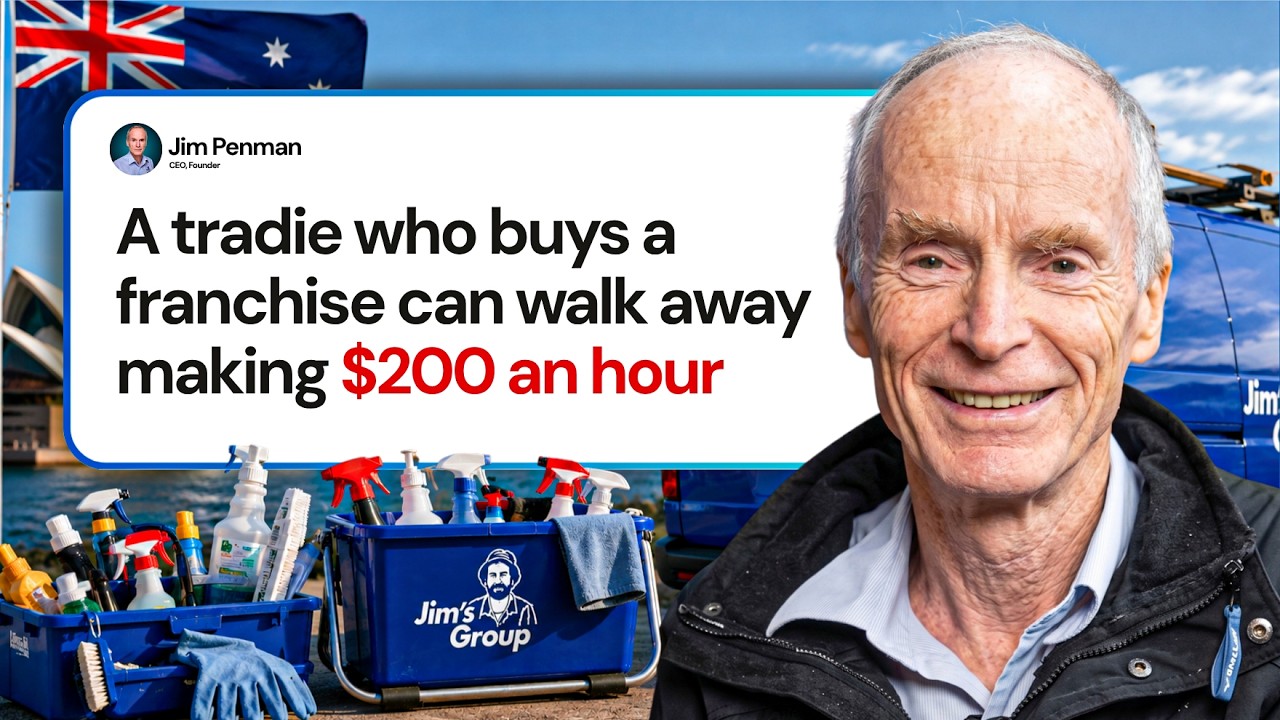
Jim Penman argues you can make $200 an hour with no degree by starting a service business. He critiques Australia's housing regulations, warns that negative gearing kills entrepreneurship, and claims Alexander the Great owed his success mainly to his father Philip's military innovations, not personal genius.
Chapters
If you are donating money to the Salvation Army, yeah, great, get a tax deduction. But if you're donating money to the opera or to the museums, which you know the elite will go to, or you're donating money to the wealthy public schools building funds, why on earth are you getting a tax deduction? What, what is the point of that? Why would you, why would you take money from people who need it to pump to do things that are interests of the wealthy? Frankly, I'm concerned about the anti-immigrant thing. Look, in Jim's group we've got so many fantastic entrepreneurs, really brilliant men and women. I just love them, they are so fantastic. And we need them. Now I worked public service for 6 months back in 1970. I used to do a job which took me literally half an hour a week. They used to tell us when anybody come round, the big boots come round, look busy. Pretend you got something on, just get there and type, do something even though you know you haven't got enough work to do. How insane is that?
So welcome back to the Conversations with Jim's podcast, and we've got his, um, June 2026 newsletter, which has got a bit of stuff in it. Let's get straight into it. So the first thing you're calling out for is Birthrate Crisis, um, test readers. So do you want to tell us about that?
Yes. Well, this book that we've completed, which is about the birthrate crisis, what's causing it, and how we can cure it, you know, a very novel solution. We intend to release it in October, and we're now looking for test readers to actually give us some ideas on how we can present it better.
So it's pretty simple, like, if they can get a copy of the PDF copy, so it's not the real book yet, it's a PDF, it's like a PDF Word copy. They can just email ap@andreapearsonbooks.com, we'll put that on the screen, and we'll send you a book, and all we ask in return is that you give us some feedback about improvement with it.
Anything you like, anything you don't like, we should change, yeah.
Now this project's been really pretty much your focus for a long time now, hasn't it? Yeah.
This is a culmination of a great deal of work. It's actually based on another book called BioHistory. This is only a small portion of that, but it's related to particularly what's causing the birth rate crisis and how to fix it. So yes, it's been the culmination of many years of work. And we expect it to do quite well. Estimation is it might sell half a million copies. But the main reason we want to do it is not because of the selling book copies, but because we think it's really important people understand. Because birth rate collapse is a problem across the world. And we think we know why and we think we know how to solve it.
Now it was interesting that The Guardian, there was an article that came out yesterday actually, I had a read of it. So it was quite balanced in what they presented.
Yeah, surprisingly so actually. You'd think it's the sort of thing that would appeal to people only on the right, but I think even some people who are concerned about the environment and social welfare are actually starting to understand that maybe the birth rate crisis is a problem.
Yeah, it was quite an in-depth article. I think it was like pretty in-depth for The Guardian.
And very fair too, very balanced.
So big thank you to them. Next thing here, you had house prices starting to fall. So do you want to talk more about that?
Well, it's good. We are seeing some change in house prices. What did I actually start to talk about in relation to that?
Was it? It was Victoria, New South Wales, and ACT are starting to see a decline in house prices for the first time in a long time.
—other places, instead of here. In Victoria in particular, the government— I cannot give this government any credit for anything else because it's an appallingly bad, inefficient, wasteful government. But they have actually started to release a little bit the stranglehold on zoning, and that is seeming to be having an impact. And you read The Australian, it seems like bad news. To me, it's fantastic news.
Well, it's causing a few issues, the releasing of it, because you have these activity centres, right? So, Victoria, are you familiar with the activity centres? What are your sort of thoughts around those where they're basically approving up to high-density living around train stations, right?
So it's very sensible too. Yeah, that's exactly where you should do it. I mean, the stupid regulations that say you've got to have quarter-acre blocks next to a train station. I mean, why? What if people don't need a car? Oh yeah, but you've got to put a car space in, but I don't want to have a car. That's okay, you've got to pay for it. Why? Why force up the price of the building so we can actually force people to get into cars when they don't need to?
That's the point you've made before, and I heard a developer on the other day say that they have to make buildings with a car spot, right? Whereas they're saying they need to get rid of that. I think the government approved one for the first time where they didn't have to have car spots in an apartment building.
Well, my oldest son, who's got 3 children, having to have a 4th shortly, he doesn't own a car. He just lives close to public transport, doesn't need it, doesn't want it. Why does he have to have it? Why should he have to buy a house with a car spot? He doesn't need it. Next to the train station is perfect. Now, basically it should be anywhere. As far as I'm concerned, if you got rid of zoning, all zoning like they have in Houston, our house prices would be half what they are now. Our rents would go down. What you're basically doing when you're releasing the stranglehold of zoning permits is you're actually taking wealth away from some of the richest people in society with massive properties. Yeah, okay, they're losing. But who's gaining? Young people who want to buy a home and can't afford to, are spending $1 million for a property which should only cost $500,000, and renters, people who need to rent. Who do we have Who's most important? Who's their top priority? The rich become even richer or the battlers who are struggling to actually pay their bills? Now I think at last the government's opened up to the idea that maybe the battlers matter as much as the multi-millionaires.
Now the average person might be going, well, councils are responsible for zoning, not the big—
Yeah, they are in a very detailed sense, but they can't do much about it. The overall state government is where it's controlled, not the federal government, not the councils. The councils have to apply the rules. If the state government got together Basically abolish the bloody local councils, which are completely undemocratic and useless anyway. There should be one council for the entire city. But you get rid of those powers, get rid of the people who can object on the most trivial grounds, and let's have livable, economically viable cities people can afford to live in. Better the environment, less cars, more public transport, lower rents, lower costs, lower mortgages.
So you think get rid of local councils completely?
I would get rid of them all. I'd have one like they have in Queensland. London, London has one council for the—
how many million people?
It's probably 9 million, 10 million. Yeah. Okay, we have a council for what, a few thousand people? It's just ridiculous. And they're basically not accountable because the way you don't know who you're voting for. I have no idea who I'm voting for my local council. You look at the thing, oh, that person looks all right. But you don't know, there's no accountability. If we had city-based councils with city-based newspapers backing them, then we'd have a much more representative democratic system and they could do something to say, well, okay, yes, Let's have a look at the overall city as a whole. What's best? Lots and lots of quarter-acre, let's make the multi-millionaires richer, or let's look after the ordinary people.
I think councils have done some ordinary stuff over the years with people trying to do like, they might put a little granny flat in their backyard, or they might have a block of land and they might approve it for 6, rent it out to people, 6 tiny homes for example. Next thing you know the council's coming in and fining them and trying to get them to move. There's a whole bunch of things over the years.
Some councils are very good actually. I'd say someone like Hume Council out west near the airport, they're a very good council. Great council, right? Not too many like that. If I could put Hume Council in charge of the whole of Melbourne, I'd be very happy.
All right, there you go. But yeah, that's starting to fall, and obviously they're holding steady in other states as well. So it's going to be interesting to see that because it flows in obviously to the budget. Now the budget's been— a lot of social media stuff about the budget. There's been a lot of people getting involved in it, a lot of opinions and comments about it. So what would you sort of say about the budget and sort of the fallout with it actually?
Look, intensely wasteful. Just incredible level of waste, of waste of money at everything. We have too many bureaucrats, we have too many massive schemes, greenwash schemes, all kinds of just awful things going on and just impoverishing all of Australians. I really am pessimistic at the moment about the future of this country. The government is so bad. It just thinks the more featherbedding jobs you have, the more unions you have, the more overpriced buildings you have, somehow people are better off. The more bureaucrats doing nothing useful for the economy, That's what they're doing. We have too little money going to important things. We need to defend ourselves. We're in a dangerous world. We need to do that. We need to get down our debt. We've paid it off once. We can do it again. We need to get out of debt. Debt is for times when you're in national emergency. If you're having a war, you need to borrow. Absolutely, no question at all. In times of peace, we should be paying it down, getting rid of it. We need to get rid of all the useless bureaucracy. We have more bureaucrats per head of population than most of the countries in the world. And we need to have more wealth put into the areas that really help, like health and looking after the truly needy and police and the things that are really important.
With that then, so let's talk about then a couple of the big budget decisions because there's still a bit of media about it, like it's gone, it's pretty full on still. Obviously negative gearing is probably the main one. So the changes to negative gearing?
Okay, look, in principle I wouldn't be against getting rid of negative gearing because it's basically a tax loop for the well-off. The problem is if you do that and you still keep your stranglehold and you say, "Don't build any more houses, builders, we threaten you, we will not let you build any more houses." What happens if you do that and you get rid of negative gearing is rents become impossible. They just go through the roof because negative gearing allows an investor to buy an overpriced house, but because they make a tax loss they can afford to rent it at an affordable rent. Now, if you don't control, get rid of the zoning issues, then you'll simply have rents getting more and more expensive. And then what they'll do, these idiots, they'll come in and say, "Oh, let's have rent controls," which will actually be appalling because what you'll then do is get rid of most of the rental properties on the market and the rents will go up. There'll be less and less places to rent. Just an appalling situation. So yes, in principle, I'd be in favor of it. If you can get rid of zoning, then you don't need negative gearing. Because if you had a house that you can buy for half price, like half a million, you don't need to charge a ridiculous rent to make a return. You can charge a very fair, reasonable rent. Just if you make the house too expensive because of zoning, then you can't afford to.
The other big part of the budget was the CGT, when they removed it to, I think it was 30% or whatever, and there's been a whole bunch of stuff around that. Yeah, that's pretty bad.
Basically, it's, it's, it's— you're attacking the most vibrant, the most important economy. Entrepreneurs have got to have some incentives. I can't say frankly it matters any much to me at all. It really doesn't. I don't intend to sell a business. Capital gains doesn't apply. Yeah, but I do know that entrepreneurs in general are looking at this and saying, wow, who'd invest in this country? Because if you do actually make any money, the government will slaughter you.
I've been absolutely— there's a lot of talk about lifting it. So I think it was 2 million or above. Now I think they're going to increase it to maybe $6 million or above. And that was a—
it's a fundamentally bad tax. There's a lot of taxes that I'm not against, like property tax, for example, land tax, because basically what that does is push property into the hands of those who need it. You can have a congestion tax, which means that in the busiest time of the day, you charge people, so less people travel, you get more public transport, so you get easier flows of traffic. People who do travel, or people go on buses and stuff, can actually get to work a lot faster at home. So there are some taxes that are quite positive, but capital gains tax is a terrible tax because it really will undermine. The trouble which you've got is politicians, particularly on the left side of politics, they've got no idea how businesses work, what they think. They don't know any good entrepreneurs, so they just say, oh well, you know, the rich have got money, so let's take some money off them and that's good, and then we can spend more and more and more and more on these big, huge, massive overpriced projects. We don't have to tax ordinary people so much, so everybody's a winner. But they don't understand that the whole economy is based on these entrepreneurs who are actually investing and straining and taking incredible risks.
Well, yeah, but that's the thing. Do you think the risk part is a big thing? But do you think that the— 'cause I agree with you, how many people these companies employ and they seem to be getting whacked and whacked and whacked and whacked for maybe political PR or whatever it is.
But if you go into business, it's not like you're gonna sit there and get a salary or you could live off the government. That's a steady income. If you're going to go into business, you've got to take risks. You might mortgage your house, you might borrow massively, you pop your whole family into hock because you know that if you succeed, there's a good payday coming. When you take away the payday, why would I take a risk? Why would I invest in anything that's going to help the economy to grow if I'm going to get slaughtered when I'm successful? So I'm not against high taxes as such. I think we need to tax, people need to spend on important things. But that's a very, very bad tax and will have a very bad effect. And our economy does not need more attacks by the government.
Well, the infuriating thing for me is we need to shift from this resource economy which we have, which is dig things out of the ground, and get some more innovation going in this country. And then we bring something like this in. As you said, what does it say to people trying to do a startup or take some risks? Like, don't do it.
Look, I went very lean for many years. People say I'm well off. I am well off now. But for a long time I was living on a shoestring.
Like, I'm reading the book, they can read any book, they can see all that. Absolutely.
I didn't even own a new car until I was 70 years old, for heaven's sake. I mean, and the car I've got is, is, it's a nice car, but it's not a luxury car. It's, it's a small car, it's an okay car. It cost me 70 grand. That's great, okay, but I didn't even get that till I was 70. It's not as though when you, when you build a business, you actually sacrifice a lot. You live very, very lean for a long time. You pour your money, you pour time into it, you work crazy hours, and in the end there's a payday. If you take away the payday, people are just not going to do it. And how's Australia going to prosper? We can't always live off mining, we can't just dig things up forever. We've got to actually produce businesses that can export, that can develop businesses. We were an exporting company, we're actually expanding in New Zealand, um, in Canada, we're aiming for the US. Okay, you've got to actually— to do that kind of thing, which is helpful to Australia, Australian economy, you need to be able to invest. So capital gains tax is one of the worst forms of tax there is.
And I think, um, you know, Lee Kuan Yew from Singapore, what he said about Australia sort of coming back into— I didn't think it was going to happen, it looks like it might happen, you know, becoming this backwater and this, um, all we do is dig things out of the ground and that's it, like what else do we do?
Yeah, and we're just living off the fat of this, but it's not going to go on forever. What happens if coal prices collapse, for example, because of nuclear of other power generation. I mean, we can't just rely on it. What if they work out better ways of doing things so we don't use so much iron ore? Australia is absolutely stuffed.
Do you think this is a—
to be a third world country, we'd be like, like, like, I don't know, like Mexico or Uruguay or somewhere like that.
Do you think that then this is purely just political grandstanding to try and win over voters? Like, what is, what is the logic? Is it because, you know, there's less rich people who own a business than the average party? That's the situation.
You've got it. You've got a government that cannot stop spending. They spend more and more and more at every level. State— Victoria's worse, there's some others— Victorian, even Labor governments in other states aren't as bad as Victoria. So you've got these overspending governments, inefficient, masses of bureaucrats, just greenwash all sorts of terrible ways of wasting money, and they want to do it. I'm not even quite sure the psychology, like, they've never run a business. I never tried to run a government, so I have no idea what they're under, why you want to do. I think partly it's unions too. Because you can get union support by giving these massive overpriced contracts and you can pay them 2, 3, 4, 5 times what they're worth and that money goes to the union and they like that, okay? So I can see benefits for that. But the Australian economy as a whole is just terrible. So what they want to do is they want to spend more and more money, more and more bureaucrats, more and more overpriced projects, but they don't want to tax more than they absolutely need to the ordinary battler in the street. So they say, well, who's got money? Business.
Because the tax brackets haven't shifted in a long time. I think it's been like since 2011 or something like that, right?
So they are taxing ordinary people more too. Yeah, and the ordinary people also paying more in—
well, inflation's going up all the time, right? If your bracket's not moving, like, you're basically—
we're paying twice as much for electricity as we should based on, say, America, which is not exactly the most unregulated economy in the world, but their electricity prices is is twice ours. That's government policy that says, no, we want dear, expensive power. Yes, we know that you're a pensioner struggling to pay your bills and find it hard to heat your house in the wintertime, but we'd like you to pay double what you need to. That's just wrong.
It really is wrong. And, um, the interesting thing I find as well is the government bureaucrats, they just seem to, as we've been saying, they get a future bribe and they know, right, financially they're getting paid well as a career politician, but then they can go and work for BHP or work for these people they're supposed to be making fair policy on. After their career and make a payday that way as well. So they're not going to make the hard decisions that are required.
No, they don't, because they're looking very, very, you know, I just want to win the next election. There is a saying that's been said, politicians, we all know what to do. We just don't know how to get reelected after we've done it.
Well, what would you maybe then have— let's say the budget was in your hands, Jim Penman, right? So obviously federal budget, bit of power. Like, what are some things that you would have suggested to do?
Well, I would cut back on spending dramatically. What would you cut? Well, public service for a start, right? We have got more bureaucrats per head of population.
I'm not talking nurses and teachers or anything.
No, no, I'm talking about bureaucrats, pen pushers, people who regulate things. Two reasons, okay? First of all, because they regulate a lot of things that are harmful, actively harmful. Perfect example is taxis. They spend a lot— taxis— they spend a lot of energy and effort, bureaucrats controlling taxis, all right? Then they actually got stopped doing that What happened when you got Uber and Lyft came in? You get quality improves, service went down. So what we're doing is we're paying government bureaucrats to do things all across the economy which reduce the level of service to the public and increase costs. And the level of red tape strangling business is absolutely insane. It's just worse and worse in every area when it comes to building, when it comes to franchising, when it comes to permits, for example. You know, you want to start a restaurant and you've got to have a permit for a restaurant or a conference center. You can't have a permit for both. Why not? Oh, just government bureaucracy. Why? What's the reason? Oh well, that's just the way things work. That's just the way it's done. The levels of impenetrability— it takes months and months, even years to get permits to do the most basic sensible things. So we have too many government departments doing things that are really slowing things down. Took us years to get to get a health center, like a swimming pool on this place. Years, years, literally, to do something which has absolutely no possible reason. It doesn't destroy the environment. It's good for the economy. It's good for employment. It's not knocking down any rainforest, for heaven's sake. So why does it take years to do that? Oh, because that's the way it works. Yeah, I mean, obvious stupid things like, okay, this building here, it could be damaged, fires 'You could be damaged by fire, so you could take these trees.' 'Oh, but you can't take the trees down because of the environment.' Okay, there's your answer. Take the trees down, but you can't take the trees down. That's the answer. That's two government bureaucracies battling, and you have to go and go and go again and again and again and again to try and fight it out. It's just insane. Franchising is a typical example. You've got this system which is crazily bureaucratic and legalistic. You get you to do a disclosure document. I have, all the time I've been franchising, I know two franchisees who ever read this disclosure document. It's so massive and bureaucratic, most lawyers can't understand it. It's so dense. If you wanted to rip people off, it's fantastic because you just put something in the fine print knowing nobody will ever read it. Oh, but I told you it was in page 115, paragraph C, number 3 in paragraphs that told me I could do that. So it does nothing to protect franchisees. Now, I have said again and again, there's a very simple way of doing the same thing. Basically, you survey every franchisee every year by an independent body, cost the government nothing, which I guess is a disadvantage, no bureaucrats involved, and you publish the results. And then the franchise systems that are lousy get plastered and they have to improve or go out of business. That would achieve everything that you want. More and more and more, but no payment to lawyers, no payments to bureaucrats, no payment to all these financial advisers, all this other garbage. Just a simple system that lets users be protected protected, as they are not now. The government risks— that's franchising. I know about that. This system is a dog's breakfast. I protested about this year after year. I said this will not work, it will not improve things, it doesn't do anything about the rip-offs goes on in the industry, it does not help. Oh no, it doesn't. It's good for lawyers. Yeah.
Now, with— you mentioned regulation, so is there anything else? So you mentioned business innovation, right? And I think, how would you incentivise, or what would you do to get that going here? Because I think that's where Australia, like, the economy needs to shift from digging stuff out of the ground to other industries. Like, what sort of ideas do you have around Get out of my hair.
Just stop interfering. It's just appalling. You have laws that are made up and then every bureaucrat interprets them the way they want, and they never interpret them to make them easier, they always interpret them to make them harder because they've got to make a job. They're going to make it— I respect that, you know, you've got a nice cushy job which you're completely unsackable, you've got it for life, doesn't matter how little you do. I'd protect my job if I had that, if that was my motivation. I wouldn't work the public service. Yeah, but Less regulation, get out of the way. Their incentive— get out of the way, get out of the red tape, look at what's necessary. When you do regulation, look carefully at what the costs are. If you do a regulation that increases tax bill, tax takings by, you know, $500 million, but it costs businesses $5 billion to actually comply with it, which is not untypical of these things, it's a bad regulation. We do need to do things. Governments are essential to do things like protect health, you know, the environment, keep the water clean, keep the air clean. Fantastic, do a great job on that, okay? But let's stop doing the stupid things that have no sense where the cost is so astronomically more than—
because I think they're just really anti-small business from what I'm seeing, because a lot of these changes like Payday Super, um, there's a whole bunch of different things they're bringing in.
I don't think they are. I think they just, they just, they just see that it's, it's popular.
Well, it's adding to the problem.
I could spend more and more money, which is what people want, and not overly tax ordinary people, even though they are taxing them because they take it from them. I just think they'd have no idea. They probably think, oh, that's okay, you know, we charge this extra thing, that'll make everybody safer and healthier. Yeah, but it will maybe, maybe, but what's the cost? And what could you do with the money that you're squandering on this? Maybe you could build more hospitals, maybe you could pay nurses a bit better, maybe you could pay teachers a bit better. Maybe there's a lot of things.
The amount of money they wasted with the Big Four accounting firms like KPMG, or things like billions of dollars have come out about that regarding tax.
The tax system is vastly too complicated. It should be much, much simplified. We have lots of deductions. I mean, I'm not, I'm not in favor of rich people paying no tax. For example, one of the things that really offends me is the way that charitable donations work. Now, if you are donating money to the Salvation Army, yeah, great, get a tax deduction. But if you're donating money to the opera or to the museums, which you know the elite will go to, or you're donating money to the wealthy public schools building funds, why on earth are you getting a tax deduction? What is the point of that? Why would you take money from people who need it to do things that are in the interests of the wealthy? And they get all this status and they have these nice dinners they go to. I haven't even been to one, but I've read about them. You see them on TV and they have these fundraisers and they have all this incredible stuff and you have your oysters and your champagne and everything else going on. 'Oh, but it's all a tax deduction.' It's stupid. It's really unfair and it's wrong. We should be looking at what's in the interest of ordinary Australians.
Now with all this stuff going on, obviously there's a big rise— it's not in your letter, but you mention them here— which is One Nation regarding that, right? So people are seeing that as a viable third party, or some even say now it's the opposition. And obviously people, I think, you know, using it maybe as a protest vote. So what do you think about the rise of One Nation and How do you think they would do if they were in power?
Not much better. I've been approached by them. I don't know if they really nomination, but just somebody said to me, offered me a seat if I was interested in it. And I said, your policies aren't good enough. You are concerned about zoning, about house prices, but you haven't taken the obvious steps, which is to get rid of zoning or at least dramatically reduce it. So I just don't think their policies are good enough. And frankly, I'm concerned about the anti-immigrant thing. Look, there are certain people that should not be coming into this country. There are people from violent, war-torn countries. Oh, we're so sympathetic, we're so sorry for you. Let you come in here. If you don't want to butcher people there, come and butcher people in Australia. And you have machete murders and stuff like that. So there are people that we should not be letting in. These ISIS brides. You've got criminals, for example, who cannot be deported even though they're not even citizens. Stupid laws that protect the wrong people. But my goodness, in Jim's group, we've got so many fantastic entrepreneurs. Really brilliant men and women. I just love them. They are so fantastic, and we need them.
We've got every nation, I reckon, as a franchisee. Even we've even got a fencing franchisee with multiple franchises from Kiribati, which is the first place in the world to bring in the New Year every time. But it's amazing.
We have, we have such brilliant people, you know, of the— and people object to people coming to this country. We did a survey, um, lately. We actually did a sort of a— to try and find out who are the most respected franchisors in Jim Penman's group. So out of the top 4, 3 of them are practicing Muslims. Yeah, they're great people. They are wonderful people. We need people like that. They're good for the economy. They're good for this country. They're just great people. I'm very suspicious of anti-immigrant ideas in general.
Well, let's just say, take out the anti-immigration ideas, but maybe just more, just their rise is just due because how pathetic both of these parties are. Because look, the Liberal vote's tanked. Liberal's not the opposition leader based on all the polls. And the elections that have come up, the by-elections, would indicate One Nation is actually serious. Contender now, that she is the true opposition leader basically in Australia.
Yeah, I don't think that the, um, I don't see any evidence they'll do any better. I honestly don't see— they don't have the people, the quality, the caliber of people in these parties is not, is not the greatest. You look at who they are, they don't even say agree on policies. And what will they actually do? They say they want to reduce bureaucracy, but how? By what? You want to reduce house prices, but what are you going to do? How are you going to do that? Get rid of GST on, on housing? Well, that's ridiculous because then you just, you just taking less tax. Where are you going to get it from? You've got all these promises you're making to spend more and more money on this and this and this. Where's it coming from?
Are you surprised that the main two political parties haven't, um, do you think they're just being complacent or they're not adjusting? Because I don't think they're adjusting what they're doing at all really, because they're not listening to the average person.
The thing is, they've got that— the major parties have got their own constituencies. It's not just a matter of winning elections, it's a matter of getting support from money. I mean, spent Politics is money. So okay, if you're a Labor Party politician, who you're going to satisfy? Unions. Unions fund the Labor Party, and their interests are not the same as the majority population. If we've got a, um, like the Snowy 2, okay, it was supposed to cost $2 billion, it's going to cost $400 billion, okay. Now who benefits from that? Well, unions do because it's very heavily unionized. You've got a construction company on a cost-plus basis, which is crazy. You actually say whatever you spend, we'll give you an extra, what, 15% extra. So the more you spend, the more inefficient you are, the more money you make. That's just idiocy in the extremes. You can do anything you actually are— cost price, that's the cost, okay? If you can't do it with that, well, stuff you, you don't get paid. I mean, that's— so you've got the Labor Party very beholden to the unions, and whenever the Labor Party is strongest, you get union stranglehold, overpriced overdelayed buildings. Terrible. Liberal Party, okay, they're actually in, in hot to the wealthy, and that's why they can't do anything about zoning. Because frankly, the kind of person that actually supports Liberal Party financially is the person who probably got multiple properties, and they see the properties rising and rising and rising in value. And these millionaires and multi-millionaires becoming richer and richer. Now, they're not going to vote for lack of zoning because the value of property is going to go down. If you go to a Liberal Party event or anything like that, you'll see wealthy people funding it. So in a sense, they almost can't get away. Now, in a certain sense, there's a prospect for a third party, but the—
Well, I sort of think that it's been accidental, right? I don't think— they've always been there, right? But I think with Hanson's like a Farage, right? They've got a brand, like people know who they are, right? So the average person might not know anything about— probably can't even name who Angus Taylor is, but they've seen her around for 20 years or 30 years on mainstream TV like they did Farage, for example. And because there's so much discontent with the main parties, they're like, I know her, why not give it? She's not a politician, doesn't sound like one to me. I'll give her a go.
I have a lot of respect for Pauline Hanson. You know, one of the things they used to sneer, ah, fish and chip shop owner, you scum.
I remember how much fun they used to make of her back in the day. I remember, yeah.
I totally respect that she's actually had a small business. Good on her. From that point of view, I'm impressed.
At least she says what she thinks as well. Yeah, she's refreshing in interviews. Like, she actually says what she thinks.
She said the same thing for the last, what, 15, 20 years?
Probably more than that, 30 years.
It's been the same thing. She never changes. At least you know what she stands for, and she believes in it. It's a bit like what happened to Winston Churchill. I'm not going to compare the two really. During the 1930s, this was a guy who was considered to be an utter nutter. He's going rabbiting on about the Nazis. Ah, everybody is— ah, don't forget that Hitler's a wonderful guy, he's our friend, he's a terrific guy, look how helping Germany. And Hitler's— and Churchill says, no, no, he's a real problem, he's a danger. Now you idiot. They told him— they thought he was insane, they thought he was completely off balance. And then suddenly war breaks out and suddenly the country moves and suddenly he's the savior, which he was. Did a brilliant job. I mean, but, but so, I mean, Hanson's in a way the same thing. She's actually said the same thing again and again until the people start to look around and they say, we're tired of this. But I don't agree with the anti-immigrant thing. And they talk about anti-immigrant, immigration, immigrants being the reason for the rise in in rents and house prices. No, they're not. Zoning is the reason. You have cities like Houston and San Francisco in America— same immigration. More immigrants go to Houston by far than they go to San Francisco, but San Francisco prices are 4 times what they are in Houston, and rents are high in proportion too. It's not immigration. The trouble is the government says, let's have 500,000 people coming into the country and let's do everything we can to stop anybody building enough houses to put them in. What could possibly go wrong?
That's your problem. Yeah, it's been severe restriction of supply of the—
Good immigrants. It's a great strength to our country. Some people who work for me, some of my franchisees, my wife is an immigrant. I mean, we need good people in this country, not just anybody who says, "Oh, I'm so poor, let me come in," but good entrepreneurial educated people. We need them, and I worry about what Hanson would do.
Yeah, but I do think it's time for those parties to wake up. But I'll give you an example, Jim. Like, it doesn't matter much to the budget and stuff like that. But I think 12 Labor politicians going to the World Cup, right? Why do 12 Labor politicians need to go to the World Cup, right? Well, why do they need to fly business class or first class? Whereas a lot of politicians in other countries know that's bad for optics, so they'll fly economy. Whereas in Australia, politicians, they all fly business class, you know, up first class. For example, Christopher Pyne was famous for actually used to getting 2 seats. He used to get one for himself and his plus one who never come in first class on the taxpayer dime. And I think the people are getting sick of just the optics about politicians, how they seem to be at this level where the average punter's down here.
You know how many times I've actually flown business class in my life? Once. When was that? I was taking a red-eye back from Perth and I did an upgrade. It cost me about $100. Yes, right, right. Otherwise I do not justify the cost of playing business. I might if I was going long distance, which I don't.
But I think it's getting worse and worse. I think people, a lot of the spinning that the politicians are doing is, even though it's, look, it's not much in the drop of the ocean compared to the debt, but I just, from an optics point of view, I think it just shows a lack of care and that's what people are living But mind you, the waste in government is far worse now.
The other thing I didn't mention when I was talking about bureaucracy is the inefficiency. Now, I worked for public service for 6 months back in 1970, and I've got no reason to think people are any better now, but I know the jobs I had took me half my time. Half. And I wasn't even particularly knowledgeable or hardworking. I just didn't have enough to do half the time. I actually protested to the powers that be. I said, look, I haven't even got enough to do. Can you— Oh no, you can't do that. No, no. And then I had one job which took me one day a week helping the guy who did the publications. And they said, okay, this guy's going to be promoted and he's going to be worthy now of a full-time assistant. That's you. So we're going to take your other jobs off you. I said, you've got to be joking. I have got enough work to last barely half my time and you want to take away most of that so you can give this guy promotion so you can pay him more. How insane is that? That's my by direct personal experience. I also know a guy who had the job before me. I used to do a job which took me literally half an hour a week. He got to the stage where he did nothing but that job. He did it for 18 months and then resigned to actually do some work. Okay, they used to tell us when anybody come around, the big goods come down, look busy, pretend you got something on, just get there and type, do something, even though you know you haven't got enough work to do. How insane is The cost of the public service is doubled. They're unsackable. There's no incentive for efficiency. You could cut the cost of the public service down by at least half by being more efficient and by two-thirds if you actually stopped them doing the things that are damaging.
Asking to compare it to other countries I think is nuts. I know you've talked about before compared to maybe Japan or other places as well, just how many bureaucrats we have per head of population is quite sad. We're one of the worst.
I think there's only two countries in the OECD that are worse than us. One's France and what's the other one?
Was it New Zealand or Germany? New Zealand. New Zealand.
Germany's Germany is way better.
They're efficient, the Germans, so they're not really efficient.
Their cost is only just over half of ours in bureaucrats per head of population, which is nuts, and they're paid extremely well. The US is better, UK is better. We're one of the absolute most top-heavy, most over-regulated, most overly bureaucratic countries in the world. Why? Exactly why?
What do we get for it? I think people don't mind paying tax. It's just a matter of where you spend the money. I think You know, if you spend the money wisely, happy to— you know, you're—
Government do a lot of great things. One thing great about Victoria is the police. We've got a magnificent police force and they should be fully supported.
Fireys and those teachers especially. Yeah, yeah.
Um, nurses. Nurses. Yeah. People who give basic health. Yeah, we should be supporting the people who give basic service. We shouldn't be wasting money. Money is precious. You take it from somewhere. You overspend here, you waste it over here, you can't spend it there. I think nurses are ridiculously underpaid for the work they do.
They are. They put up with a lot of crap. My wife puts up with a lot of crap in the ED ward. It makes you lose a bit of faith in people, actually, to be honest, hearing some of the stories and what happens there.
It's a very demanding job, very crucial job. School teachers, another thing too. I think there should be a lot more benefit to being a great teacher. It should be a job that attracts the best and the brightest. It's so important. I'd much rather have a lot more the best brains in the country becoming teachers than becoming lawyers or tax accountants, all those kind of things, which are basically financiers, which are basically parasites on the body corporate.
For it. Nice way to put it. Now the other one here you had is why go to uni? So you've done a bit of a table here. We've put this online as well. Yeah, you obviously went to uni, you had PhD, so you know about uni.
I know all about it. And I spent 10 years at university, end up as a lawn mowing contractor, which is my trade. Okay, so I know all about that kind of stuff. What annoys me is when people talk about the value of a university education, that graduates tend to make more. Well, yes they do, But one reason for that is because the smartest and the most hardworking people are pushed into tertiary education. So naturally there's a selection effect. Now, but interesting thing is you look at university not versus somebody who's got no skills, but somebody who's got a trade, and it becomes very, very mixed. Unless you're in something like engineering or medicine or dentistry, those kinds of things, you'll actually, you tend to make more in a trade than you will for most university graduates make, especially if you do something like an arts degree. Yeah. So why do we put so much billions of government money into tertiary courses? If we're going to do anything, we should be subsidizing things like, you know, carpenters and electricians and plumbers and— well, not lawmen, we don't need to be qualified. But there are people that do incredibly useful jobs. The thing that actually said, if you look at the statistics on this, is the difference is not so much Making money is not so much a matter of what you study, it's a matter of whether you're in your own business. At every level, if you're in your own business, you'll make money. So if you're a lawyer and you're just working for a salary, you don't make a lot of money. But if you become a partner in a law firm, then you actually do make a lot of money. And the same thing, you're going to work as a carpenter working for a building firm, okay, your income's not too bad, it's probably comparable to your basic graduate, but you go into your own business, like you buy a Jim's franchise, for example.
Give an example. I spoke to a franchisee today. Most of the Jim's Bathrooms franchisees are exactly this. So they go from being carpenters working for someone else, they go to Jim's. Most of them will turn over a million dollars plus in their bathrooms businesses.
Yeah, profit would be several hundred thousand dollars per month, and they're doing very, very well. They're very happy. People who are doing things like scratch and dent, which is fixing up things with cars. Now these people come from workshops and they're paid okay. They're paid well, yeah. They're paid like most university graduates because it's a skilled trade. But you bring them in, put them in their own business and suddenly they're making 3 times the income.
They definitely do, from interviews.
And then what happens is that you go back to— they go back to the people they were working with and say, listen, why are you working for this, you know, $80 an hour when you can make $200 an hour? Yes, that's exactly what they do. And they come— that's how it grows. It's mostly they hear the income and they can't believe it. So this is the big thing about it. First of all, tertiary education, unless you are going to be a doctor, a dentist, something of that nature, engineer, highly specialized, highly complex, tertiary education is very doubtful. Trade education is fantastic. The other thing about it too, because you do a trade, you're getting paid. If you do a degree, you're actually going into debt. So you do a trade 4 years, you end up qualified You've got hopefully a deposit for a house. You go into a tertiary degree, you end up with a debt, you're going to be paying it off for however long time. Yeah, so the difference is being in positive and being in a negative, and your earning potential is probably pretty similar. So why don't more people take trades?
And the amount of AI coming in now, that thing you're learning is probably redundant in a few years as well, and that's, that's the concern. But I think the actual— the problem with universities is they're such a big business now, you know, billions and billions of dollars. You've got, you know, Vice-Chancellors on $900 grand, $1 million. It's in their best interest to funnel people from these schools, right? And they're sort of in with those.
The pressure is crazy. I just never comprehended it. Do you think it needs a cultural change then?
Because I remember at uni, I'm only, I'm 30, I'm a bit old, I'm 38 now, but I remember back in uni, back in school, you were pushed to go to uni. Everything was VCE score, ATAR score, everything was that. And you were deemed a loser you know, if you didn't get 90+ or whatever, you were a loser and you were hopeless and a failure. You had a thing called VCAL, which was for if you weren't going to go and do VC, you go do VCAL, which is with plumber, plasterer, etc. Then you had nothing about business ownership. There's like a business management course, but there's nothing about small business ownership or that was even potential. It was basically be in the dumb class and do a trade, and you weren't even told about the potential there. Or you have to get 90+ on your ENTAS score. If you don't, you're rubbish. Yeah, that seems to be the way it still is.
It is too. It's a stupid policy. It's like because you work with your hands, you do something physical, you're a lesser human being. Which is not true. It's just not true. It's— a trade is useful, is necessary. It's extremely unlikely ever to be tossed out by AI unless you get to the stage where robots can do everything that we can, in which case the whole human race is absolutely stuffed. Less likely to be redundant. You'll always have a job. There'll always be people lining up to want to employ you. And best of all, you've got the opportunity to go into your own business.
I think now I'm seeing a lot more younger franchisees come in training and they consume a lot of content. They hear people like Skagen, who's a 23-year-old window franchisor, who was doing a law degree, quit that to do a window cleaning and pressure business, right? And his friends said he's crazy. Now he's making far, far more money than them, and they're all in debt still, and he's got a massive business.
We have a lot of people who actually haven't got degrees.
We do, a lot of them.
But they actually make their real fortune, their money, by doing things like cleaning and gardening and Fencing, window washing, cleaning, washing windows, all these sorts of things. We had 200,000 unserviced leads in the last year. We actually push our franchisees like anything. We say at least $70 an hour. Don't even think about charging less than that. Once you're experienced, if you're not making that, we'll show you how to make it. Some people make $100, $200 an hour. Nothing wrong with that at all. There is such good money to be made. And not only is it good money, but it's your own business with your own hours, your flexibility. Your kid, you know, is off school, take off the day. There's no boss over you. You want to work flexible hours? Sure, it's your own business.
Well, that's the thing because people say doing your own business is risky, right? Whereas they think you've got a job for life now, which obviously you know is not the case. You can be made redundant at any minute, you can get sacked at any minute, etc. So I think almost the safer place to be is in your own business because at least you've got some control.
That's right. I'm 74. I would not like to be looking for a job. You definitely would not. They'd say, "Ah, you old fogey, you're obviously useless." Come on.
They definitely would not want to be doing that.
The interesting thing is there's a book that I mention later about the Buffett CEO, talking about the people who run his businesses, wholly owned businesses, subsidiaries. And now everybody knows that anybody over 65 is a complete has-been and useless and shouldn't be employed. But somebody never forgot to tell Buffett that because actually most of his top managers are well over retirement age. And I remember one of his absolute best was over 100. He doesn't care how old they are, he just cares about the job they can do.
And that book was The Warren Buffett CEO by Robert Miles.
Yeah, it's a wonderful book actually, it really is. I love this book. I mean, I had it, I had it, the older version some while ago, and I lent it to somebody, which always happens, and I lost it. Yeah. And I couldn't find it. And then did an upgraded version. These people are great people, often well over retirement age, but they just love their business, they work obsessively. They're not based on money and they're not motivated. They just want to run a great business that gives great service to customers and growing and great, looks after the employees and stuff. And they're just really good people. They speak about Buffett. He speaks of them in the most admiring positive sense. They speak about him. They love him. They think he's just an incredible mentor, incredible human being. Just total integrity. Just hearing that sort of praise go back and forth, it's really heartwarming. It's just great. There's a book called Good to Great. Yes, Jim Collins. Jim Collins. He talks about the people who run these enduring great businesses and they have that attitude. They're not high standards, you know, always looking at the stock price. In fact, one of the reasons these people love being part of Berkshire Hathaway is that there's no stock. They don't have to go for these short-term thinking. They can think long-term. What's in the best interests of the company? What's in the interest of my staff?
Yeah, not quite. How can I make the best business long-term?
The way that I think. I don't have any shareholders. Nobody's going to tell me, oh, you have to cut costs here and cut costs there. Yeah, stuff you. I'll spend what I want to. I'll spend millions of dollars, millions and millions of dollars on our new software, for example. Why? Because it's bloody well my money, and I know in the long term that's going to help my franchisees. And my business to be more successful. So I'll invest for years to get what I want because I don't have people peering over my shoulder.
Which is a massively important thing that people need to consider when buying a franchise, is, is that company actually publicly owned or got private equity? Because they're about returns, right? It's a big thing people need to consider.
People are so short-term thinking and they look for the immediate return. Like Nvidia is a good example of that. I just finished a book about Jensen Huang. Yeah, Jensen Huang. Um, there was a stage where people were saying to him, oh no, you better start— stop, you know, stop wasting so much money on research and just start giving some more, you know, get your profits up and start giving things. Quarterly earnings, get it up. Yeah, so your stock price will go up and so you'll be better off. And he said, no, I'm not going to do that. And fortunately he had enough control that he could, you know, give them the finger, so to speak. And then it was not too long after that that they actually made the breakthrough because originally it was a graphics chip company and then they actually found it worked. And suddenly here's a company that's worth 10, 20, 100 times whatever what it was worth because, because Jensen Wong had the sense to look for the long-term future of his company instead of the short-term interests of the people who just wanted to see the stock price go up.
What amazing success.
You need more of that kind of thinking.
And then the other one, well, maybe you haven't got it here, but I want to ask you about it. Elon Musk is now the world's first trillionaire, which is quite, quite— I think it's $1,000 billion or something like that. It's an insane figure, obviously, with the SpaceX IPO that's come out. And he's obviously been copping it in the media since this announcement's come out. And people are basically saying, you know, the wealth tax, all that sort of stuff with him.
Look, I don't like everything that Elon Musk does, of course. I think some of the political stuff is a little bit out there, but he is an absolutely brilliant technologist. What he's done with spaceflight is incredible. He's reduced the cost of launches by, what, 90%? They reckon eventually it'll be 99%, only 1% of what it was. He has made it possible for us to go into space. He's launched these satellite systems which give connectivity all over the world. He's an amazing guy, he really is. I love SpaceX. I think it's a good— I wouldn't buy shares in it. I think it's overvalued pretty much.
Yeah, it's interesting. It's just too much. Lost $5 billion last year or something like that.
But I love what he's doing. I do approve of the vision that we should be a multi-planetary species. I've been reading science fiction since I was a kid. And I've always loved it, and I love his thing, and I think he also has enough sense to know the birth rate crisis is a problem too. So in a lot of ways, I do admire the guy.
Well, he's been attacked a lot in the media, as you can imagine, you know, people calling him a Bond villain and all these sorts of things, and he should give his money away to cure this and that. I sort of think the politicians attacking him, it's a bit ironic, whereas if they didn't waste the money, they could be sorting all the problems.
I have a deep respect for someone like Bill Gates who's used his wealth so well. I have enormous respect for him. I think he's one of the most greatest men on the planet. Um, personal life's a little bit different.
Yeah, that's like him a bit, unfortunately.
But as a philanthropist, he's probably saved millions of lives, and I think that's fantastic what he's done. But Musk has a different vision. Musk isn't a charity. Musk says human race needs to grow and to expand. I think that's a great vision, it really is. And, and I'd support him. And if he's going to use his wealth to make that happen, then good luck to him.
Do you think he's the best builder of companies in the modern age? I don't think there's anyone being better at building a company.
Well, in terms of size, obviously not. I think there's a lot of great people around, right? I like, like Dyson, for example.
James Dyson. Yeah, James Dyson.
He's a fantastic guy. He's a book called, um, Entrepreneur or something like that. I love this guy. So there's a lot of, there's a lot of people I admire in business, obviously. People like, um, Charlie Munger, Warren Buffett. I, I, I, I, they're my heroes. I really, really admire them. But in his own field, in technology, he is spectacularly brilliant. And I mean, he's like a Henry Ford of the modern age. And Henry Ford was a great character who made cars affordable by his efficiencies and so forth. He was amazing. And he was a nasty man. He was a very nasty anti-Semite.
Yes, he was very nasty.
He was a great inspiration for his good mate Adolf Hitler in Germany. So there's a lot of negatives about him, you could say, a lot worse than anything you say about Elon Musk. Yeah. At the same time, what he did as a technologist has immensely improved the welfare of the human race.
I think with Musk though as well, how he manages to run all these things and stay on top of them is quite a good lesson for anyone building a business, because he doesn't— he's straight to the shop floor, right? There's no bureaucracies in his organization.
Yeah, it's very flat. Yeah. And he's very, very— I mean, the description of some of his old biographies about, about— he goes on the assembly line. Why don't they tell me Why are you doing this? Why are you using this particular part?
He told you to do this. Yes, this—
I told you that. Yeah, what if you cut this back? What if you cut it back? What do you cut? We'll cut it back until it fails, and then you know you've cut back too far. Just keep on trying different things. I, I love what he does. I, I do admire him in so many ways. I think sometimes you've got to look at a person's strengths and overlook their weaknesses.
Yeah, well, it's amazing. I never thought we'd see a trillionaire, but now we have, so goes. It's, it's just, it's insane.
This guy isn't going to spend a trillion dollars on his own comforts and stuff. He's not that driven that way. He lives pretty well. He sold all his houses.
He doesn't live actually that well. He lives at a— I think he lives on SpaceX in like a little 40, um, 40-square-foot sort of SpaceX box type thing.
I think if you have a lot of money to actually make human beings— making us an multi-planetary species, because the world's a pretty dangerous place. You've got biological warfare, AI, all kinds of threats threats, plus the one that we're talking about with the decline of civilization that's going on.
Bunkers have gone through the roof. I remember I watched the thing about, um, this bunker maker in the States, and his business is going like this. You know, you've got Zuckerberg, all these people spending a fortune on bunkers.
It's a, it's a very big problem. It's a dangerous world. I think the idea of going into space is a very good idea. I think that's the destiny we should be trying for, for the human race. And I think he's the guy that can give us the universe. So I admire him, even though I don't always agree with everything he does. I think he made a terrible mess of Doge though. That was disappointing. I thought somebody as smart as you, surely you can do better than just randomly fire thousands of people. True.
Even though the intention was good, but it was just—
even though tens of thousands need, urgently need firing.
Yeah, the intention was good, but it's just definitely not—
he did not do it very well.
And the last one here, because you are— people don't know, Jim's got a PhD in history, and your favorite time is the Greek period. But this is Alexander the Not-So-Great by Edmund Richardson.
Yeah, look, I suppose I've read many books about Alexander, interesting character, but it's certainly one of the most vivid portraits I've ever seen of any historical figure. It's just fascinating. He's, I mean, he was a really awful man. He honestly was. The estimates he would have killed 1% of the Australian, of the sort of the world population at that time. Geez. He was—
All before he was 30. What, when did he do so? Before he was 30? Young man.
Yeah, yeah, basically started before he was about 30. I think he died at 32. Yeah, but what I mean, what he did was horrific. I, I don't really admire the guy very much, I must say. I think his father Philip was a much greater man in terms of what he was the one that built the Macedonian state.
So then how did he get this myth of being the great?
Well, because he, he conquered Persia, for heaven's sake. That's basically what it was. But the interesting thing about Alexander is this: first of all, Greek soldiers were much better than their opponents, and that was visible from, from decades back. They couldn't even conquer Greece in the early 5th century when Xerxes tried with a huge army, because the Greeks were very good at fighting. They fought in very disciplined, close order. So they were better soldiers. The Macedonian phalanx was a particularly powerful thing that was developed by Philip, not by Alexander. So they were better soldiers. But the thing that's most striking about this is that it basically only took 3 great battles. That's all it took. Now, in that sense, you had superior soldiers fighting against usually larger armies. Okay? But still, how much greater a general do you need to be? The difference was that between Alexander and earlier periods is that Alexander, his father had united Greece. So he had a whole lot of Greek mercenaries as well as his phalanx and so forth. And they had this very powerful effect. Effective army. So I don't think he was that great a commander. He wasn't that much of an innovator. It was his father that did the innovation. But he was also a real arse of a man. He was disgusting. He would do things like, like in India where he was just rampaging around, there'd be a whole lot of refugees taking refuge, men, women, and children on this place, and he'd just storm it and he'd butcher them. There was no money, there was no benefit. He just seemed to enjoy killing He killed so many of his own supporters, often in really disgusting ways, like with lengthy torture. He'd get suspicious of people. He was, he was an absolute animal. I must say, I was reading about him dying of typhus, I thought, yes!
So this was something where you say his dad basically set it all up for him and he just inherited. So do you think the way he was maybe raised was the problem? He saw his dad being this powerful man and his dad didn't raise him that well, or what was it about it?
Well, you know, Lord Acton said, when people inherit stuff, they don't get handed— all power corrupts, absolute power corrupts absolutely. And I think he just had so much success and he was so young, it went to his head and he just became mad with power.
His dad didn't keep him in check, or he didn't have that sort of—
no, it was a pretty rough environment. I don't know whether you— I mean, he was—
I think maybe like rich kids, right? Rich kids, they have a powerful father or whoever, and they, you know, you have the, the young kids who are handed everything and they don't have to earn anything and they take over these empires.
When you look at Roman emperors Actually, there's one pattern is you have some pretty good emperors, like Octavian Augustus was pretty competent, Tiberius, you have Vespasian, you have people like the Antonine emperors, like Trajan and Hadrian and Antoninus Pius and Marcus Aurelius. Now what they all had in common is they didn't grow up in the purple. They came from the outside, from a much tougher environment. But you look at the problems Emperors like Caligula, like Nero, like Domitian, like those kinds of guys, um, Commodus. Commodus, yes. They're the people that grew up in with wealth and luxury, and it was very, very corrupting to them. So yes, the greatest thing some of the emperors did, they didn't have children. A whole stack of emperors had no children at all, so they adopted a competent person as their heir. That's where the great emperors of the Antonine dynasty came. They wouldn't be a dynasty, but they were adopted Yeah, how bad was that?
A light read, the Alexander the Not So Great one? Was it a quite—
it was unputdownable. I was, I was listening to it rather than reading it, and I just kept on wanting to do it rather than do anything else. They get back to your work, put the book down! And it was just fascinating, very, very vivid. Talks about archaeological discoveries and just, it just made you feel like you were there and how extraordinary the whole thing was and what the people thought and the attitudes. He's just a very, very vivid writer. He makes history enthralling. It's one of the most fascinating history books I've ever read.
Yeah, but that's a big wrap, big wrap for Edmund Richardson who wrote Alexander Nosferatu. Actually, that's a pretty good term.
Like, I got it from The Economist. They just write about the same way. This guy is so vivid. Yeah, Economist is good for book references.
Oh, there you go. Well, Jim Penman, thank you very much for your time today as well. If you do like what you hear, leave us a comment, make sure you subscribe, and obviously sign up to the Birthrate Crisis book list when that comes out. Looking for test readers as well, um, check the details in the comments for that, and hopefully we have you as a test reader for the book. But thanks, Jim Penman, for your time.
More from Jim


Rising mental illness and falling birth rates have the same cause, it is this.....








