Jim Penman: The Man Who Built The Biggest Franchise In The Southern Hemisphere
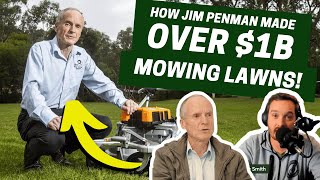
Jim Penman built Jim's Group from a single mowing business into 5,000 franchises across the Southern Hemisphere by obsessing over customer service and franchisee support. He changed the fee structure to lead fees, which transformed the business, and measures everything: client surveys, franchisee income, complaints. The franchise model gave ordinary people flexible hours and better family lives.
Questions this video answers
About 5,020 (he says 'we've just passed 5,000. We're about 5,020 last time I checked').
9% (Jim: 'the more important figure that I would say is 9% and 9% is proportion of my franchises reporting poor income in the last survey').
About 52% (Jim: 'So about 52% was good, 9% poor. The rest is okay').
No-call rate dropped from 25% (fixed-fee franchises) to 3% (lead-fee franchises) (Jim: 'With the franchises on lead fees, 3% said they had no call... those on fixed fees, 25% of the clients said they had no call').
Lead-fee franchises converted about 3/4 of leads into jobs; fixed-fee franchises converted less than half (Jim: 'With the franchises on lead fees, it was about 3/4. With those on fixed fees, less than half').
Chapters
All right, welcome to today's episode of the Australian Lawn and Garden Podcast. We have a very special guest, a face that everybody recognizes, at least in its form in the 1980s. We have Jim Penman, one of the biggest franchises. It's the biggest franchise in the country, isn't it? The Jim's group?
Yes. Biggest in the southern hemisphere, if you like to say that way.
Whoa, wait. Biggest in terms of people, Right.
Numbers of franchisees, not in terms of turnover. McDonald's would compare with. McDonald's would be a tiddler. But yeah, numbers. We've just passed 5,000. We're about 5,020 last time I checked.
Gee, how does that feel like 5,000? I remember when I got to my 10th employee and I felt like I was doing pretty good. You know what I mean?
5,000.
Or is this is the number just meaningless now because it's been like that for so long?
It's a nice milestone, but I mean, the more important figure that I would say is 9% and 9% is proportion of my franchises reporting poor income in the last survey. So about 52% was good, 9% poor. The rest is okay. That figure is actually more important than anything because it tells you how good a job we're doing. Also, things like complaint levels, for example, which has dropped dramatically. So we measured those directly. So those are far more important metrics. If you get those metrics right, great customer service, happy franchisees. Numbers will tend to take care of themselves.
Well, I want to talk about that in a minute, but before we get into anything else, I did some research in you last night, and I found out something that shocked me. It's not going to shock you, but I realized that technically speaking, your entire empire is based on technically, a lie. Your name is actually David. It's not Jim. I was like, what the hell?
Sort of. My name is David James, actually, if you want to be technical about it. So it is my middle name.
It is.
But I looked him up.
I was, I, I, I've always known you as Jim, and I've known a lot of stuff about it because obviously that's what it's called. And I was like, how do you. David, what the heck, everybody?
What happened, Luke? When I left school, I went to work on a farm for a while, for a few months. And there was a young guy there about my age called David. So I said, right, call me Jim.
Right? Does, do your family call you Jim now as well? Or is it, is it like.
Well, my parents, my elderly relatives still call me David.
So apart from that is it a bit.
Everybody, everybody knows me, my wife, everybody else, I'm always been Jim. I've been Jim since I was about 20. So it's.
Right. Okay. I just thought that was funny. Like, you know, if someone was to ask like is Jim from Jim's mowing called David? No one would say that unless I researched it. But anyways, I just thought was hilarious. When you came over to my story, I want to touch briefly on this because you weren't ever planning or wasn't really your idea to do a lawn mowing franchise in the first place. Right. You were an academic guy and I mean this is a gardening podcast. But it's so relevant to the story because I find it fascinating that you start off doing a study on, you know, for those who are unaware is like how civilizations rise and fall.
Right?
That's what you were. And then you end up getting into mowing lawns and becoming the largest franchise in the southern hemisphere. How does that happen?
They're directly related because I intended to be an academic. I developed this theory of social change which had quite serious implications in terms of. And I got to the end of it and I had no potential income career as an academic. It was just too wildly radical what I was doing. Also the implications of my theory to be tested were in terms of physiology, in terms of laboratory. We didn't have any training, so Lawnmine was my part time student job. So we ended up with a complete dead end, no possible academic career. What I knew I had to do was to create a business that would give me enough income to run my own research institute. So I just started mowing lawns, which is my part time student job. Made it full time and it grew from there.
And so did you ever really, because I know a lot of people, they start off in the mowing business just because that's the, that's such an easy side hustle to have, you know, as part time thing. And then they never really have any passion for it, you know, and they, they. Did you start with a passion for the garden stuff or did, did that grow on you or was it more that you're gardening?
I love being outside even today, actually go off to my farm and spend a couple of days digging potatoes and planting nuts and stuff. I just always loved that kind of thing. So I enjoyed it. See when I was studying, studying is very academic, it's very guest bound. So yes, if I wanted a break for that, I wanted something completely different. I don't want to be sitting at a desk I want to be outdoors, working, physically in touch with nature. That was, I enjoyed it. I've always loved gardening.
So there wasn't necessarily. It wasn't like you had to make it work because it was the only option, but you actually did enjoy it wasn't like you, you, or was it the case that you left your academic stuff and that was what you really wanted and then you sort of stumbled into gyms and thought, well, I guess I should make the best of this opportunity. Or was there always really a passion there for the industry?
Anyway, I never thought of being a career. I thought I was going to be an academic. It was never any thought. Even when I started working full time, I only thought of this as a short term thing until I found something real that I could make money out of it. I didn't really occurred to me it had the potential. But for a long time, even after I started the franchise, when I first started off, somebody asked me how many franchisees I might have and I said, look, if it goes well, maybe a hundred. I really didn't have any, I didn't have any notion of what it could do. So. And I kept on thinking, trying. I tried a mower shop and a computer shop. Holiday resort was a terrible disaster. I just tried a whole stack of different things and the mowing thing just kept on puddling along and gradually growing and this is starting to work. All right, so.
So you made, it sounds like you made the most of an opportunity that you had, but there was always a passion there for the gardening side of it. So when you talk about a hundred. Right, so let's take you right back. So you've gone from university to you've got this opportunity, you've taken it with both hands. Right. Was, was it ever? Because I know for me I don't get stimulated working solo, you know, like, I love gardening, but as a career I need to push myself and challenge myself and try something that's more risky and, and that has, you know, a certain level of excitement to it, you know, was that sort of what was going on in your head? Because, yeah, mowing is good, but let me try something else. Or was it more natural that people were coming to you going, I like what you're doing, I'd love to join up. What can we do?
Well, first of all, I'm a fairly, I'm an extreme introvert. So for me, mowing lawns by myself, gardening is very satisfactory. So I didn't, from that point of view, I was fine with it the way I did It, Luke is not so much there was any great mind blowing idea or break. Whenever I do something, I always try and do it better. No matter what I'm doing, if I'm, if I'm putting the dishes away from the dishwasher, I have a way of doing it that minimizes the actual amount of effort involved. If I'm washing up, if I'm sweeping the floor, if I'm doing anything at all, mowing the lawn, gardening, anything, I'll always look for the most cost efficient method. I have this kind of obsessional drive. Cut down your time, be more efficient. So it was that kind of process. I just kept on working. How can I mow a lawn better? How can I do it quicker? How can I do a gardening job? In a way the client's going to love it. It's very fast. And I got very happy clients very easily because I was obsessional about service. And then I started to get too much work so I started putting on subcontractors. And then I started building up and selling off lawn mowing rounds. And then when I was faced with a competitor which was franchising, I basically franchised in self defense. But the idea behind it was it was more the culture of the idea. I had some very strong obsessions. One of them is customer service. I feel very strongly even today. I personally handle all complaints that come in. I look at all the surveys, all the bad surveys and I mark them and I do things with them. I do it today still. We've got 5,000 plus franchisees. I still do it because I'm passionate about customer service. But also when I started franchising, I had one idea and one idea only. I once wanted to make a great system that you'd have to be mad not to join. That was kind of the idea. I just thought, okay, these are my customers and they are my customers. They don't work for me, I work for them. What can I do to make my franchisees really, really, really happy? And I was focused on that. And the same way I worked out a better way to mow a lawn or dig a garden bed, I kept on trying to work out better ways to look after franchisees and make them happier. So working out things like for example, how important meetings are, how often you have meals, about every six weeks is ideal. What kind of contact is best? We tried doing half day, you know, business reviews. We tell it didn't work. So then we started ringing them every month. We just got this idea and we people were trying, it would try different things. And then we discovered it was even better to ring them weekly. But even short phone calls, so short frequent interactions, and then you, then you start putting food in with the meals and then you start looking at different ways of doing it, rewarding people and, you know, incentivizement. It's thousands and thousands of little things with this whole idea, how can I make my customers happy and my franchisees and deraving fans. That's all. That's it.
Is there anything that you've done? Because you're talking really about 1 percenters, right? Like just keeping on incrementally improving these little one things and. But is there a moment where you did one of those little things and it just absolutely shocked you how beneficial it was?
Okay, let me give you an example. Fees seems pretty mundane now. Most franchise sisters like McDonald's look at a percentage. Most service franchises in Australia and New Zealand work on a fixed rate fee. It's the same income because you don't know what a franchise is actually making and they don't want to report pickups and stuff. So it's a fixed rate fee. We did that, but then I tried. What I was finding was that some of my franchisees were not following up clients very well. So I said, okay, let's change the system. So what's the new franchise? Instead of a fixed rate fee, we had a lower fixed rate fee and a small fee for every lead provided. So we just tweaked the way that we charge the fees the same average level of fee. That's important to recognize. And then what we did is we did this for a while and then we rang up a whole lot of customers and asked them what happened when the franchisees, the franchisees that were on fixed fees, 25% of the clients said they had no call. Those that were on where the franchise were on lead fees, 3% said they had no call. And then when we looked at the conversion rate, how many leads turned into jobs? With the franchises on lead fees, it was about 3/4. With those on fixed fees, less than half. So that was just a tweak, just a try. Could this work? Could it be better? And I was blown away. And you can be sure that as soon as we saw those figures, immediately we went on to lead fees.
So when you're talking about this, like maybe some people are a little bit lost, but what I'm understanding is you're saying that people would call up clients would call up wanting work.
Yes.
And you were charging whatever it was, let's say $100 for a nice round number, $100 a week. You were charging for old leads as a general sort of overstating, overarching cost. And then when you went per lead, I guess people were. They were taking for granted that they were paying for those leads. It doesn't really matter if I lose a couple here or there, but as soon as they're actually paying for each one individually, a little psychological trick, because they're probably paying roughly the same on average. Right. But the psychological trick was that Now I'm losing $20 or whatever it is if I don't call this person. And it is really costing me that. And so you've gone from your 25% of people are not even being called to 3%. That's a lot of people on your scale.
Right.
A lot of people.
Actual jobs done and more money made for the same volume of leads. So if you could work out a way of increasing your advertising by 50%.
Yes.
By nothing. That's what you really want to do.
Yeah, 100%.
Yeah. That's basically the idea. Look, another thing, too, about our system, it's important to recognize we actually ask our franchises what jobs they want because most of them are fairly busy most of the time. So we might have 20 franchisees covering an area, and there's only one or two that can handle it, but we know who they are. So a franchisee gets too busy because they don't want to pay excess lead fares. They'll ring up the office or they go into gyms online and they'll turn themselves off work so they don't get the lead, and then it goes to the next guy who wants to work. So it's an incentive not only to follow up the lead when you get it, but it's incentive not to take a lead you don't really want.
Yeah. How long were you out in the field doing the work yourself before you stepped completely off the tools, obviously. That was part one.
I had no contract for 15 years. I had a gardening business for many years. In fact, I've had gardening business basically since I was eight years old.
Right. Or just for neighbors or family members or something. Yeah, I. I started.
Yeah, I used to do the. You know, eight years old. I did it for neighbors. I did it all the time for most of my life. I've actually had a gardening business or some kind of other. I just like to like being outside. I'm just that kind of person. So. Yeah.
Do you. Do you still mow your own little now, or do you get One of.
The gyms, I'm not that crazy, but I've got something to run over it with a ride on, actually, because it's. It's a huge. I live on five acres, but I prefer the actual gardening. I'm actually looking at a way to try. And I'm planting nuts on my farm, hazelnuts, and I find the rats are digging them up. So I've been trying all kinds of methods to stop them doing it. So one of the things I've done last week I actually put a whole lot of different kinds of like scents and aromas on to see if that'll discourage the ruts. And I've just been in the bunnings just now and I bought some black plastic pipe. I'm going to try that still so I can stick the nut into the pipe, cut it off, prune the ground to stop the bloody rats. That's fun. That's really good stuff.
Yeah, I see that. That's the scientific side of you doing an experiment in your own backyard.
Right?
That's. The academic is still in your blood.
That sort of things. So the great thing is experimenting. When you're in business, you've got to try new things all the time. Most of the things you try don't work out. But some things work out surprisingly well.
I was just thinking like, because you'd say before that you were this. You love improving what you're doing. And so when were out in the field, it's like, how can I do this better? How can I make this better? And I. And I resonate a lot with that. And when you have employees or franchisees, it really grinds my gears way more than it should. Right. When somebody doesn't do something the way I would do it. Do you know what I mean? It's like, it's just the direction of the mower. It's like. I really shouldn't be annoyed at that, should calm down about that one. It's like someone's. No, I'd go up to front on that.
And.
And sometimes I see people like just. Oh, man.
It's like.
It probably would have saved them 15 seconds if they had done it my way, which in the scheme of things probably doesn't matter, but those things really grind my gears. And I could imagine if you're like that as well and somebody is doing your lawn for you, it can be like, it's just easier to do it yourself sometimes.
I remember stopping by, the guy was mowing a lawn, one of my guys bowing lawn down the street. And he was doing the edges, and he didn't cut all the grass for the edges. There was bits of grass coming over. Can't you see that? I got. I tried to be nice to him after. He's my customer, but it frustrated me. Look like you have some beautiful model with a big red. How could you not. How can you not see that? How can you not check to it every blade of brass edges. Yeah. This is the classic thing about lawnmowing. Not too difficult to get the grass done. Neat mowing, straight lawns, bones pick it up, the grass up, you know, this kind of stuff. But edges, it's got to be done perfectly.
Yeah, I mean, I get like that. I'm the sort of guy that I'll mow the lawn, and then I'll get in the car, pack everything up, start driving, look at the lawn, realize that I've missed a weed or something like that. And you. You have to stop because it's got to, you know, like, who are you if you don't? You got to stop, get out of the car, get the Whipper Snipper, back off again, and just touch that one little bit up, and then you can drive off. And I just can't. I can't handle. Not that.
Interesting thing about this, Luke, is the people who actually care about the job for the sake of the job tend to make more money and do better than those who care about the job for the sake of the money. You care about the job first. It's like with franchisees. My biggest concern is my franchisees being successful. And that's actually emotionally a lot more important to me than the bottom line. Even though.
Oh, I thought you meant. I thought you didn't want them to be successful. But you're like, I'm concerned if they are successful.
But.
No, you're saying you're concerned with them becoming successful.
Yeah, and it's frustrating sometimes. We have a system called pay for work guarantee, where if you don't make a certain amount of money, anything from a thousand to $25 per week, you can do free work and the franchisor pays. Because if you do that, you'll tend to pick up referrals and upsells and all kinds of things. You build your business very fast. So I had a letter today from a franchisee writing back to me after I write him a letter after one month to say, how you going? And he said, oh, system's not. We're not getting enough lead. I said, what about pay for work guarantee? What are you doing? How Many free services done. If you're not doing it, why not? Why aren't you making $2,500 a week? And then I still got all the reasons why you should do it. And I copied his franchisor and I spoke to his franchisor and said, you got to get on this guy and make him, encourage him. He said, yes, I've been trying to persuade him to do it. That's very frustrating because here's a guy saying the system doesn't work, but he's not doing the system. He's not following it. That's unusual. Most people do it really well. One guy actually wrote back to me and said, I'm doing all this. I said, good crash. Well done. That's fantastic.
Well, you get some people, they just don't understand, like the 1 percenters you were just talking about then and how valuable they are. It's a different mindset from a small business because when you're an employee, it's like, just get me out of here, you know, give me my paycheck. Not everybody's like that, but it is quite common to have that as a mindset. When you take on responsibility as a business owner, it's your business now. And so those 1 percenters and caring about those little things and sometimes like, yeah, doing the free work or whatever, going above and beyond all those little things, if you don't get it, you just, you almost can't teach that. I think you do learn that. I've learned that the older I've gotten. But I guess it would be difficult for you because you'd find a lot of people and I've been here as well. Like, you hire somebody and they looked great on paper, and then three weeks in, things start to change because they were on their best behavior. And now you realized, ah, right. This isn't, this isn't what I thought. You would have had that so many times with 5,000 franchisees.
Right. Look, we try very hard not to make mistakes in hiring. There's certain people that just you shouldn't take on. For example, a young man in his 20s, mother buying a business. That's the kind of thing where, you know.
Yeah, yeah, for sure.
Put them out in a trialing day, see how they go. How do they operate? Are they good to get on with? I also actually ask during training, I asked the staff at the conference center, is anybody troubling anybody being difficult? So we, we try and pick good people, but we also do another thing. We, we what we call it being gymnified and that means there's a fairly strong process of indoctrination. The first when they get up Monday morning, they got me for nearly two hours talking about customer service in a very passionate.
So, yeah, it's.
And then they get more of that kind of stuff and I speak to them about. And we talk about these things. So by the end of three days, hopefully people in the beginning have got a fairly good sense of customer service. But by the time they spent a few days with us and then the franchisor rings them and talks them about it and there's feedback from surveys and complaints and things, there's a lot of. Bit like cult, bit like a cult in a way. But this cult is. Is to do with. With customer service and caring about customers and caring about each other, these kinds of values. Probably more than that about money as such.
Well, I think a lot of people, they hear the word cult and they think, oh my goodness. But I've actually been listening to business books, like for years, years and years and years. And I remember actually hearing one of the business books that most successful large businesses have a. Literally what they said was a cult, like core group of people. And it's not cultish in the sense of like, let's get the Kool Aid out and you know, or, you know, abuse or things like that, because that's what, you know, that's the negative side of it. But it's like we all believe the same thing and we're all on the same page and we all are heading in the same direction and that's how. And it's like a. What would you call it, a strong fanaticism or something like that in a set of core beliefs. That's what they're talking about, the cultish behavior. I remember them talking about Apple, Jim.
Collins, a good to great book, classic studies the books. And one of the things that they talk about is one thing that united great businesses long term. I'm not saying Jim's a great business because we're very small by comparison with, say, Hewlett Packard, but they had a strong value system which was widely shared from the CEO to the mailroom. And people that came in tended to either adopt this sort of attitude or they get spat out. Either they quit or they get fired. So we're a bit like that culturally. Jim's is very distinct. We had a guy, Brian Duckett, come from the UK some years back to a franchise or conference, and he'd been involved with dozens of franchise systems over the years. And he said he'd Never seen anything like Jim's. Because this whole attitude, franchisees, first service, franchise, look after franchisees. It was very consistent. And I'm not saying every franchisor does it, but on the whole people tend to buy into this value system. I've also got a book that I, that I. We give everybody new trainee, which it talks about history and all this stuff. So there's a lot of. It's, it's more, it's choosing good people in the first place, but also helping them to think the way that we think, which, which works because we know, for example, that if you've got, if you're in the top quarter in terms of customer service, your chance of getting 40 poor income is only a fraction of what it is if you're in the bottom quarter.
Yes.
We also know that if you poor rating, you're far more likely to leave the system, you know, so in the first year, like our average franchisee rate these days is 4.7, 4.8 out of 5. The average franchisee who leaves tends to write about 4.2.
Oh, right.
Customer service is very helpful to the group as a whole, but it's hugely important to the individual success.
How do you get those ratings?
Well, we survey clients. Ten days after a job comes out, we send a simple survey to a client saying, how do you rate the service? B good, which is five stars. Sorry, G good, five stars. B bad, which we translate as one star, P for price, which is not counted. Stop. Just that kind of stuff. It's a very simple thing. And then we ask them for an explanation and based on that, we actually give them an overall rating. So if somebody's got like a 4.8, 4.9 rating, that's a sign of a very, very good operator, or even 5.0 these days. On the other hand, if you like 4.4 or 4.3, even though you're looking after 80% of your clients pretty well, you're not looking after all of them.
No. So that's fascinating because we do the same thing, not in exactly the same way, but we have a lady named Karen of all names, which is quite funny. And her entire job, she just does part time, is to call up every client after their first service and then regular clients maybe two, three, four times a year and just say, how's everything going? Is there anything we can improve on all that sort of stuff? And can you give us a rating out of 10? And do you. You would have read how. I think it's how to win friends and influence people yeah, yeah, classic book. And, and I think it's, I think it's that author, Dale Carnegie, who was, who was talking about a, one of the rich steel guys, moguls back in the late. What was that?
He was a steel guy, the Scots guy.
Yeah, yeah, yeah. So he. Yeah, yeah, that's it. So he was doing a. He went to one of his meals and they were underperforming and he chatted with the guy who was leading the meal and doing all that sort of stuff and was assessing the problem and got to the end of his meeting and said how many tons or whatever it was, units of measurement has this crew gotten in their 12 hour shift? Because there was a night crew and a day crew and they said eight. And so he got a piece of chalk.
So he marked it on chalk on the floor.
Yeah. And he says a big eight. And I don't know the exact numbers, but the story is they're like, what? The new crew comes in and they say, what's this big eight?
So they put their own number down.
And so they got the competition, which was a 10. I came back to a 10. And then the morning crew came back again and saw that they'd been beaten and then they did 11. And that on its own turned the entire business or the entire facility around. And I took that little clue and I was like, oh, interesting. So we took our ratings numbers and in our warehouse we've got a TV with a screensaver. And the screensaver is the last week's ratings and the average rating of each gardener over the, you know, since they started with us. And it creates this healthy form of competition where instead of trying to cut corners, you know, you get found out if you're not doing very well, you know, and most of, if not all of our bad ratings are miscommunications, not people cutting corners, trying to get away with, with, you know, something that's subpar. It's like, you know, I remember we had a, we had a 4 out of 10 once and it was a, it was a miscommunication with somebody who was deaf and it was about the height of whether or not the hedge was going to be cut or not. But it allows you to ask that question before any problems become serious and you allowed to fix it before bad press or word of mouth or whatever gets out. And the people who work for, you know, and yeah, Jim's as well, they know that that question is going to be asked. So there's, it's not, it's not a form micromanagement but it's a form of keeping people honest. So, yeah, you must have found that it's very powerful.
Luke, since we've done that, the. The volume of leads has risen dramatically. We. Last year, we. We clocked up, almost one third of our leads were in service. And that's with franchisees to be busy. In some cases, we've given back advertising money to the franchise because we can't spend it. So it has an enormous effect. I would much rather improve customers.
Yes, advertising, 100%. The return. Like, how much does it cost you to get a single client compared to how much it costs you to get the same amount of work from somebody you already have? Just ask them if they need more help or anything. How many? How many, you say one third, but that's going to be a lot because you got 5,000. I mean, that would be, what, hundreds of thousands, wouldn't it?
People knocked back. Yeah, that's absolutely right.
That's crazy. How many people are calling you a day? I'm running the front, obviously. You've got Jim's mowing and cleaning and all that sort of stuff. Do you know, like, how many calls or emails you get a day?
It'd be the best part of a million million people booking a year. So, you know, figure it out.
That's crazy. That's a lot of invoices. That's a lot of admin. That's what I'm doing.
No, no, we don't do it, though. The franchisees do it. Think about your system is you have a much higher margin than us. Our gross fees probably amount to about 6% of a typical franchisee's turnover.
Right.
Of which comes advertising and call center costs and everything else. So even though we're turning over probably not best part of a billion dollars a year, not an enormous amount of that goes into my pocket.
Yeah, well, we're definitely less than a billion dollars a year. All right, so.
Well, I know the BW wanted to put me down for the rich list based on turnover. I said, you got to be joking. It should be based on profit, and.
We don't make it 100%. Yeah, but people get caught on those vanity numbers all the time, right? Because it doesn't strike me like. I mean, 5,000 is. Is an amazing milestone, but it doesn't strike me from this part of the conversation that you actually really care about those numbers. If you care more about whether or not your franchisees are satisfied and whether your customers are satisfied, that's what I'm hearing from you. At least. Right.
I mean we like to grow, of course, and we do keep an eye on the bottom line, but emotionally it's not much of a driver. It never has been. I think the thing that makes me happier is, is just a message for a franchisee who's happy. And the thing that makes me upset is hearing a franchisee not doing well. I mean those are the. Just, that's just how I'm working. Somebody talking about mowing a lawn. You know, you're not really thinking about how much money am I making today. You're thinking of how amazing as that job. That's the greatest look. Clients would come to me, would say I never knew my law could look that good. That's something that you don't forget.
Is there a person who's worked for you either in the office or as a franchisee or anybody? I mean you probably have a lot. But I think one of the best things about running a business and having people working for you is there are these moments where you can see somebody who has grown and who has become. Things have progressed and life has gotten better and you get this massive sense of pride to be involved. Like is there a person who, every time you see them you just feel this great sense of achievement for them and pride in yourself for like. Yeah, I was, I was a small part of that.
Right? Yeah. Oh, look this, this. I've got a number of wonderful stuff that people who started on the basic level are now making treble what they made when they started. Just, just fantastic people. We do tend to hide from within. Our top people very often come up through the system in some way and that's, it's very satisfying. It's a wonderful job. It's a very meaningful kind of job what I do. Because you're contributing for success. I mean look, we probably created more millionaires than any company in the country, I would say. But you know the stories that actually rank the most is like when I was ringing one of my 10 year veterans. I try and ring people on anniversaries if I can get through them. And he told me, I asked how he got into the business and he said he was working for a, he was a manager, a supermarket. But he was very long hours. He would leave early and come back late. And one day he was just about to leave and his little four year old son said to me, daddy, I wish you could have breakfast with us. Just that one statement. He said he drove to work and the tears were streaming down his face. And then he sold, quit his Job, bought a lawn mowing franchise. And he's seen his son, he's always been out there, breakfast with his son, ever so. And he's seen that little boy grow up into a 14 year old. I said, you ever thank him for that? He said every day. Yeah. To me in a way that's probably a lot more meaningful than somebody who's turning over a million dollars a year because there's no, there's no. What can you buy? You can't buy that. Senior children and fathers are often so busy these days. And also you have mothers who got children and it's difficult and you want something cleaning or a dog wash business where you can be with your child when they're sick or you can pick them up from school. Those kinds of lifestyle things to me is actually probably more meaningful than simply wealth creation. We love the people who make a lot of money. They're great stories and they're great speakers and they're very inspiring.
Yeah.
But in reality it's the, there's a saying that goes, no other success can compensate for value in the home. And that to me is probably the most meaningful thing of all.
Yeah. And I think that's what is the main attraction to becoming independent or franchise lawnmower and contractor. The. It's, yeah, you can earn pretty good money that the more business minded you are and the more you take it seriously, the more you learn. Right. But I think most people, they're like the fact, like I had it yesterday because it's, you know, cold and wet here at the moment. Like it probably is over in Victoria too. Yeah. I had maybe three or four hours worth of actual gardening jobs I needed to do. And so I'm not starting in the morning when it's cold. And I've got a family here, you know, and the kids didn't have any. My kids are very young, so I didn't, they're not at school age yet. So you can just spend a little bit of family time and then, you know, I'd much prefer to be working and this is how I work. And I think a lot of small business owners like this have your moments when the kids are around. Don't go to work then. And I'd prefer to after dinner after they've gone back to bed to work from 7 till 10 at night, you know, if I have to. But have 7am till 10am free to hang out with the kids or to spend time and that flexibility, you can't, you can't put a value on that for money.
No. You know, you're spot on. I've got a 13 year old son, my youngest of my 10 children still with us.
You have 10 children? 10 children. Wow.
That.
I had a classmate who had. Who was one of 10 and that's the only other person and classmate from.
Well, I, I've got 10. Wonderful. All wonderful. But the thing of it is that I actually drive him to school and pick him up pretty well every day. And, and that's like three hours a week I'm chatting with Aaron and, and that time is precious now. As you say, I might work peculiar hours. I can work in the evening, I can do all kinds of things. I can be doing seminars, the weekends. But I've got time for my kids and I always have had and you can't. Yeah. I don't think people exaggerate how much material success matters. And I actually, I have it. I have a mission in my research project which is really important to me and I need the money. But in personal terms, you know, I bought my first ever new car last year because I went electric. But the car I had before is worth $10,000. My, my clothes, my, my boots here, that's from Kmart. I don't even wear K. My wife cuts my hair because otherwise I just look too shabby and I won't go to a barber. So I'm, I'm very. I don't believe in, in spending money on, on stuff. People have this idea that if you have more money, you'll be happier, but it's actually, it's actually not really true. Yeah, there's a saying that goes that social comparison is a thief of joy. 100%. All your efforts in trying to impress people by having a bigger house or a fancier car or, you know, splash of clothing. You. You're competing all the time and there's always somebody who's more successful than you. That's a lousy way to live a life. And it doesn't make you happy.
The I 100% because I, my business is 10 years old. And when I was about three years into business, I had the free time and this before I had any kids. My wife and I started volunteering at a drug rehab here in Perth. And we. It was a very strict, very intense place. She ended up working there full time. And I would volunteer Tuesday evenings into the night and then Saturday afternoons. And I had a very small role. And that role was I'm a guy who doesn't really drink. I've never had any drugs or anything like that. It just isn't my, that's not my pitfall. I got others, right? I got other problems in my life. So I just wanted to be a at the time in my 20s, go hang out with the other guys in their 20s and be a friend to people who've never had a friend who wasn't a drug addict. And through that we got the opportunity to hire people and give them an opportunity. And we had lots of people come and work who had already gone through the program. Because I'm not a drug rehab. That is some of the most satisfying times of my life. One last week, one of the guys who used to work for us, we still mow his mum's lawn. And I went to go, I had that job on for my list of the day and I got to the end of the day, he's my second last job and I pull up and he's there, he's at his mom's house and he grabs the equipment, helps me mow his mum's lawn just for old times sake. And he's telling me about another guy who they both graduated the program, both spent two, three years in this program and how he's doing so well. And this guy was the most accident prone person and just an absolute nightmare business wise. Lovely guy, like super nice, went to his wedding. Somebody who I really appreciate as a person, but as a business owner, it was painful. He probably broke, I'm not exaggerating, maybe three or four thousand dollars worth of stuff just from being careless, right? He broke fifteen hundred dollars worth of stuff in one hit accidentally, but. So it was a painful ride. But the satisfaction of hearing this guy say, hey man, that guy, he's doing really well. It's been like almost two years since he worked for us and he's having a kid in like two weeks and all that sort of stuff. And at the time I was a solo. When I first started doing the, the rehab or work volunteering this rehab, I was just a solo guy, but I had the time and because I didn't have any kids, that's what I did. I free, I volunteered two afternoons a week. That's some of the best stuff I've ever done. And I didn't get paid and nothing ever came of it financially for me. But there is no way going back then I would say I'd be better off working an extra four hours a week or whatever it was, or five hours a week or whatever time it took me each week I was volunteering. It's just there's no comparison and we did that for five years until we had kids. So it's like. And, yeah, that was some of the best times of our life. And those are the things that. That you. And, you know, these types of businesses can free people up to do, which is just. It's got nothing to do with money.
One of my. One of my friends in Adelaide, I was talking to one of the things he likes to do, he likes to work with the homeless.
Yeah.
And he's got a business. He's a mowing guy. He works like three days a week. He makes enough money for himself and he spends his time working at the home. He says nobody talks to them, nobody listens to what they want. Just direct personal interaction. That's his mission, which is amazing. And to me, that's at least impressive as a person turning over a million dollars a year, in its own way. I think he's wonderful. We actually like these stories. We try and get people to tell us stories. We actually have little bonuses for them, like these Accord cards and stuff, if they can give us a story. That's the kind of thing we love to hear.
Yeah, maybe. I mean, you'd be running around in. I mean, maybe you are, maybe you aren't, but, like, there'll be a lot of what my experiences are for very wealthy people. And I do know a few people who, you know, have quite a bit of wealth. Not much. Right. But just being in business gets you in these sorts of circles over time. And I remember I went and had lunch with the guy whose role is to buy and sell mining business, small mining businesses, and sell them, to build them up and sell them to big companies. So he's. He's rolling some money.
We got.
We have lunch in this very wealthy area in Perth and we're just talking about business and we leave and we're walking out and he goes, I just want to walk this little detour. Do you mind? It's like, no worries. So we walked this little detour and he walks past his homeless guy and he just starts chatting with him. He's like, I can't remember his name. I should. I. You know, it shows how good I am at this. But this was a routine that this really wealthy guy did. And he just bought him a coffee and it was like that was his.
More from Jim


Rising mental illness and falling birth rates have the same cause, it is this.....








