Jim's Book series - chapters 5 & 6 with Jim Penman and Joel Kleber
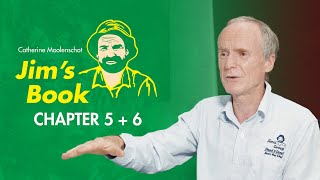
Jim Penman built Jim's into a multi-division franchise by learning from early failures. His cleaning division now has 800+ employees, and he expanded into fencing, dog wash, and handyman by keeping the Jim's brand name and staying close to franchisees. He uses divisional franchisors, a call centre, and a move-fast-and-fix approach to keep the system working.
Questions this video answers
1992
Over 800
Eight weeks; approximately $8,000
At least $60 per hour
Initially 80% (early), later typically 50% of proceeds (plus half of ongoing fees)
Chapters
Hi, everyone.
Welcome to another episode of the Jim's Cast. I'm going to cut this up into some nice short and sharp segments for you. So just before we begin, you will notice that we're obviously in Victoria with Jim is wearing a mask as well. So for the purpose of the interview, I think we should take it off. Take it off. But it has been worn in the office. Don't worry about that. And Jim's been very following up with people who don't do it, and I.
Come down hard on anybody who doesn't.
Absolutely.
For sure.
So people know now right now, but.
The law says that even in Victoria, you don't have to wear a mask when you're doing broadcasting.
That's actually absolutely correct. And we're taking all precautions necessary. So let's get straight into it. So chapter six was the Jim's Brand expands. Now, this is a good chapter because I delved right into it and picked out some of the really, really interesting things. So in 1992, you actually approached to do a book, and your first edition of what everyone knows now is the Every Customer a fan book came out, which was the cutting edge. So maybe tell us about that. Writing your first book and what did you actually think about anyone even asking you to write a book?
At the time, I thought it was crazy. Never really came up with it. It was, you know. Yeah, but I thought it was a good idea because there was a certain amount of interest. I had this weird experience of becoming sort of a small kind of household name and people were recognized in which I didn't expect. So when this publisher came to me with this idea of a book, I thought, yeah, why not? Let's go for it.
Well, they recognizing you back then just because you would have had the beard, I presume maybe back then.
Yeah, I had the beard.
Yeah. So you would have been looking like a lot more like the trailer back in that time.
Well, it was 1992.
Yeah, 1992.
Yeah. Yeah. I still had the beard, for sure. Yeah.
And that book over time is also changed as well, hasn't it? You've changed the title, you've added to it, and you write it yourself now. Don't you update it?
Yes, I do. Personally. They sort of. Yeah. I did interviews in the beginning and it sort of came out as rather vapid philosophizing. So I took a part in the whole thing, even from the beginning, and just started. What I like is stories. If I want to read about somebody's business, I want to know what they did. And how they did it and why they did it, not their ideas about how. So it became a very concrete book. So what I do every few years, I just go back in, put all the recent stuff in and do a bit of editing just to take out old parts that are less interesting and keep it up to date.
That's a pretty good approach. Yes. Everyone who downloads the copy of your audio of your book, which is for free on the site, Jim has. Jim writes it. And that's what's important for people to know. It's not ghost written or anything. You actually write it, you do it and you change it. Update it every couple of years as well. So always download it.
If anybody wanted to look at the real history of Jim's, they could get ahold of each copy of the book and they'd find how things had changed with time. But basically the philosophy, the idea is the same.
It's a good read too. It's not as long as you think it's not that probably that thick. So it's very direct and straight to the point. Lots of great stories as well. So around that time as well, 1994, you were approached by a guy called John Marney as well, to use the brand for cleaning now. And can you maybe tell people why? You. Obviously we know it's a massive juggernaut now with Haydar Hussein in it, but why did you not think it was going to work?
Well, we'd actually tried cleaning in the past and it was. My concept was this image here with the guy with the beard and the hat looks like a gardener. Because that's what I used to look like when I was mowing lawns. And I thought that obviously applies to mowing. But cleaning is totally different. It's an inside job. You don't think of a guy with a beard and a hat doing it often. It's women for a start. So we actually, when we tried cleaning first, we did it with a. We got a different logo. We thought the franchising contracts and stuff would be great, but let's change the logo. So I developed this thing called Sunlight S U N L I T Little sprays and stuff. And I sold a couple of franchises and we started advertising for work and just didn't go anywhere. I just couldn't find the work. And eventually I went back to these people and said, look, sorry, I'll give you your money back. I repaid them completely and gave up. And then this guy came to me, John, and he said, what about Jim's Cleaning? And I said, no, That's a mowing gardening image. It won't work. And he said, well, I think it will. And I said, no, it won't. And he said, look, I'm so convinced it'll work, I'll give it a try myself. And so they did. I said, okay, not my cost, you know, we'll take a share of the royalties. Which, though I didn't know it, was the first stage towards what we do these days when people start divisions, which is actually they do it themselves and we just helping to support them. But he had a go at it and it worked. And he described somebody going into a real estate agent and said, we're from Jim's Cleaning. And they go, oh, Jim's clean. Like the mowing. Oh, yeah. And their interest sparked up. It had that credibility. So we began it. Unfortunately, that didn't go very well. One of the reasons is in those days every franchisor had their own call center because of the way the technology was back in the early 90s and they set up a call centre and there they had more staff to look after six franchisees than I did to look after several hundred. So they wildly over inflated in terms of their costs and they went busted. I took it back in house eventually.
And we know what happened with Jim's cleaning group now. It's obviously a massive juggernaut. The second largest division in Jims and.
Yeah, well, all the cleaning together, which Haydar runs is over 800 and it's massive and it's growing faster than moeing. And Haydar's always telling me it's going to be bigger than mowing one day, which unless Moan picks up its boots, it will.
Yeah, but it's definitely. It's on track for a thousand, isn't it? It's obviously. And it's got all the subdivisions, like he's took the cleaning, but slubbed them off with the window pressure.
Cleaning windows pressure and car. Yeah, they're all part of that division.
Yeah, that's it. Blind cleaning, repairs and everything as well. So what's your actual opinion on. Let's call. So more of a business thing. More brand stretch. So people will refer to it as brand stretch. You take a brand and because it's worked in one thing, you stretch it to this, this and this. A lot of people say you shouldn't do it or I know maybe in the early days it made a lot of the mowing guys maybe a bit angry that you're not focusing on mowing. You're stretching the brand out. So what Are your thoughts on that?
I don't remember guys getting angry about it. I don't remember anybody saying anything negative at all. To my mind, it works great for us because every time somebody drives down the road with a carpet cleaning van, for example, people say it's gyms. And that means, as far as we can tell, they're more likely to use the mowing brand. We certainly know when mowing is established, other divisions come up very readily, but we think they reinforce each other. If the Jim's brand quite. Look, Richard Branson's a perfect example of that. This is a Virgin, is basically a record store originally and it's now it's airlines and it's cola and it's just about anything you'd like to name and it travels very well. And Jim's. I don't know what does Jim signify to me, I suppose to most clients it signifies service, but it's also kind of the Aussie battler thing, I think that image of the ordinary guy, which I certainly was, I probably still am. I'm just a bit more successful than I used to be. But it's that I think people like it, they like the brand.
We ran some competitions online a while back and we said name four words to describe gyms and there was always Australian. Iconic, Hard working Australian was one that always came up. Reliable and trustworthy were the sort of five common themes. This was from younger people too. This wasn't from older people, this was on Instagram. So it was younger people.
We have our best demographic actually in people who are too young to use our services. The kids love us.
We do. They do, they do. It's going to be. Well, they're the next franchisees and that's if they think that's the way to go and that's what they associate the brand. That's awesome. So during the next couple of years as well, you also started branching into other things, which is trees, dog wash and fencing, which was presented to you from Andrew McIntosh at the time, which you didn't think would work. And obviously because there wasn't a much demand for it or you wouldn't think there was back then.
No, Andrew. Andrew, actually he was one of my first franchisees. Andrew bought a lawn mowing ground off me about a year before I. I really liked the guy. She was just this young, very energetic, you know, just likeable bloke and I didn't even have an established a business to sell him. But I actually cobbled together some clients from all over and founded Run for Him and I kept in contact and he used to take my guys out and train them so that when I wanted the franchise, he was one of the people that I approached because I wanted people to come in, my best of my people who bought lawn mowing rounds off me and be sort of lead franchisees and train and encourage the others. So he did that. He came in immediately. He was very successful, became a franchisor within a couple of years when I split up my Melbourne region. And then he came to me, what's with fencing? And he said, you know, what about start Jim's Fencing? And I said, well, I don't think it's going to work very well. I just don't see that as a brand, something we can go into. By this time, we'd done a number of divisions like Dog Wash and Handyman, but they're all in house. They weren't franchised out. So he made the same offer in a way as John Marnie. He simply said, look, I'll do it myself and I'll just, you know, pay your royalties on the brand. So I said, go ahead. And it turned out to be extraordinary. The level of demand was exceptional. And one of the things we found about fencing is gyms works well when there's what I call a high fear factor. In other words, if you get something done, like having your lawns mowed or a cleaning job done, certainly you don't want somebody robbing your house and so forth, and there's comfort there. But there's a big difference between doing a bad lawn mowing job and building a bad fence. Because if you do a bad lawn mowing job, somebody comes back in two weeks and does it again and does it well. If you build a bad fence and then five years down the track it's falling over, then who do you go to? Well, if it's Jim's, you can always come back to us. And people know that. So what we found is that actually works extremely well for services like fencing. And the demand has been huge. In fact, the biggest problem with fencing has always been we just can't find enough franchisees to keep up with the work. And they do charge more. We actually really hit them. You've got to charge more than the opposition. Put at least 10% on top compared.
With anybody else, and they still flat out like, you know, 60%, 50% unservice.
Work, huge unservice problem. If we could get fencing, we could have double the franchisees and we'd have no trouble keeping them busy. And it's a great business.
It is a great business. What they can make perfect perfence. Absolutely.
What they make is great. And the fact that you can put workers on easily. To me it's probably the best division for putting on teams of workers and building a major business simply because of the volume of work and the fact that the jobs are so large. You can go out, quote the job, put a team on, check that the job is right at the end, move to the next property which is often next door. It's a brilliant business. I'm actually quite astonished that we don't have more offences. It's such a good business, I think.
Yeah, it's an interesting one, isn't it? Maybe I don't know what it is but it's great money for anyone who's watching or thinking about it as Jim just gave the best testimony you can for it.
Which is easy to find out too because if you're interested in a franchise you just ring the people who are in the division and ask them what it's like, is there enough work? And they'll sort of say oh yeah there is.
And the training though, the thing as well, it's not just, you know, two days or three days of training, it's an eight week course.
It's eight week course. And we actually found that we don't allow any other division to do fencing work because when we've done that we found six so many problems. But defensing course when they've done that eight weeks they are so thoroughly trained and it's a high cost. It's like an $8,000 cost. It's most of any division I think apart from test and tag in terms of the cost of doing it. But it's very, very good training. So we can give a person a really skilled trade with stacks of work in eight weeks. It's a fantastic deal.
It's a great business for anyone who actually can make fantastic money. I remember a good story we've had is a guy called Polozoy. I think Stavrak sat in the west and he watched around 10 ass gyms and you kept saying, he kept asking which franchise should I buy? And he kept saying fencing, fencing, fencing. So he bought a fencing franchise, jumps on, ask Jim and he says, he goes, we go, how you going? Polo's doing. He says I can't complain, I've taken 62 leads in two weeks.
It's okay, you better watch it. Poker.
Yeah, exactly. Because you got to turn them off.
But got to Turn them off.
62 leads in two weeks for fencing. So anyone's thinking about it. So during that time as well, around 1999, you developed the concept, I think with another guy for one of the divisions, this concept of divisional franchisor. Before then you didn't have that. I think it was for antennas maybe. And the divisional was a franchisor concept. Can you just talk about how you developed that or how that came to be?
Well, that was basically a way of trying to expand jobs outside the initial state. So you have a franchisor in place who's doing well and you want to expand into different areas. The point is, we don't understand the technicalities, especially of a division like antennas or fencing, very well. So what we did is we went to some of our more successful franchisors, often the founders of course, of the division, and we tell them how, how about you play a role in establishing it. So you actually go out and you find a buyer from a regional franchise. We take which and you get 50%. Actually in the beginning it was 80%, but normally 50% of the proceeds and the sale can be quite valuable. It can be, you know, anything up to $100,000 or more. And then you take half the ongoing fees as well. And then what you do is you support the franchisor like a franchisor supports franchisees. And then you look at the website and you look at the training system and the technology behind it and common conferences and divisional conferences, that kind of thing too. So that's worked particularly well. We've got some, most of our most successful franchises. If you look at the most successful divisions, it's basically the ones that got the best divisionals. People like Haydar and Ali in cleaning and Sharon in dogwash. And Paul and Brett. Paul in building inspections. Building inspections, yeah. And Brett in Pulkhair. So we've got some really, really great divisionals out there who've grown their business. And it's a great concept if you've got the right person.
And now let's talk about also during that time, which I think is quite interesting because this comes up quite a bit. Everyone says, why don't you expand in the US and all that sort of stuff. So Anthony Silverman was one of your longest term franchisees and he's still a franchise also. G' day Anthony, if you're watching. But he was the one who you wanted to go launch it over in Dallas.
He and other guy went to Dallas, Texas to try and get off the ground. Because we thought why not? Why not the states and we went to Texas because the regulations about franchising are fairly modest over there, unlike, say, California, which is more like what Australia is now. And it was a complete failure. We actually found it was extremely easy to get work. And in fact, the hourly rates that you could earn were significantly higher than in Australia, so the demand was huge. But our concept of individual going out is very. It suits the Australian psyche. We're very egalitarian over there, much more. They look down on manual work to a certain extent, which Australians don't, nor do New Zealanders.
That's an interesting cause. Let's talk about that for a second, because we do get that sometimes when people inquire for a franchise, they want to. Can I inquire and just put people on to work it for me? What's your thoughts on that all?
Well, they can and we want you to do it too. But what you've got to start off doing it yourself and learning your trade, just like I did. I mean, I haven't actually mowed a lawn professionally for more than 30 years now, but I did it for 15 years. So I know that industry from the inside out, and that's a very important thing. So you go out, you do it yourself, you learn your trade, then you put a worker on and you work with that and you try a few different people to get the right person. Then you got the right person, you train them up and you put them in charge of your trailer, a second trailer, and then you get somebody else now down the track of it. Once you've done it for a while, if you've got decent management skills, then you can get to the stage where you've got people going out and your teams are going out working and all you're doing is supervising, looking after them. But it's got to start from inside knowledge. Too many people. There's a story in my book about, in every customer fan, about how I was approached by people from Schweppes who were really struggling with soft drink delivery. They just couldn't get it right. And there was this other company, very small local company in Melbourne which was doing brilliantly, and they said, how do we succeed? So I suppose it's a bit funny that they ask somebody to help them, the big multinational giant against the small guy. But I just asked him a question. I said, how much time have you spent doing this? No, no, we don't deliver soft drinks. We are management. And I said, if you really want to be successful, take off your suits and ties and put on overalls and Go out and deliver soft drinks for six months, then you'll understand the business. That's basically the way the gyms works. The people who are successful, like Haydar is a person who's been a cleaner. He was a cleaner when he came to us, he was actually cleaning and he came in as a cleaner and now he's got this incredible business. And yeah, he's a multimillionaire. I'm really proud and happy about that. But the same thing with Sharon Connell. I mean, Sharon's one of our best people. She's never been a dog wash person, but she actually cleaned. She became a cleaner, a cleaning franchisee, learned the business from the ground up, how to run it, and cleaning and dog wash are very similar. Became a franchisor, was hugely successful, offered her the division and now she's doing incredibly well. So I think people have got to get away from this stupid prejudice against working with your hands. I'm very proud of the fact that I've got callitans on my hands. I get from farm work these days, but I had it from gardening in the old days. And I think this idea that we're all going to be tech workers sitting in front of computers is a real. It's a really bad thing. It's a poison in the country because there's so much work at good rates, very good hourly rates, and fortunes to be made in the areas of service once we get away from being snobs.
About being paid to do the work over younger people. If you're watching or listening, heard it from Jim yourself, give it a go. There's a lot of work and it's probably a lot better hourly rate than what you'll do in an office.
We won't look at any franchise that doesn't make at least 60 bucks an hour. And in general, we think our franchisees, the vast majority, would make well over the average wage. We don't know because we don't ask them, but that's my impression, plus the lifestyle as well. I was talking with a guy this morning actually, who rang me up and he said he had real financial struggles. He was in such financial strife. This only signed up just the end of last year. And he said, this is absolutely brilliant. I'm so happy I got into it. He said, my minimum I make is 2,000 a week. I make up to 4,000 a week and it's just great. The funny thing is he actually rang me because he. He has. He's got a 5.0. He had about 51 surveys and 49 were five star and one was four stars, so 5.0. But he got his first ever price survey where somebody objected to the price and he was upset about this. Well, you know, your biggest problem is you're not charging enough because you should have had a lot more than one person complaining about the price. So I actually set him a pretty strong challenge. And I also spoke to Shane, his franchisor, and I said, when spring comes, you've got to put up your prices by at least 10%. Every new job 10% up, because he's not taking much work outside territory. Every new job is going to be up 10% and you've got to go to existing clients and you got to put them up 10% because you're a fantastic operator. And you will find that virtually nobody will knock you back and immediately you've got next to 20,000, $30,000 a year or whatever income.
Fantastic, isn't it? Glad to see he's doing well. And around the. And in the chapter, just to finish that chapter off, it says in around 2000 you had a centralized call center, whereas it never used to be that way, which was quite interesting.
Well, it's all to do with technology in the beginning, but there was really no way we could think of to answer phones. So every franchisor was taking their own calls. And because otherwise you couldn't see what works being given out to the franchisees. And then this technology came in, we were probably a bit slow adopters, as a matter of fact, where we could take all the calls ourselves. And what happened is that the existing franchisors tended to consolidate interstate based on even interstate divisions, and eventually took back all the call centres. So we run our Strafe, Australia, New Zealand, which works a lot better because it's a very technical, complex thing to take, take the calls and Jill and her team do a fantastic job.
It's a great culture. Now, we're gonna move on to chapter seven now as well. So chapter seven was called the Gym Way, which was appropriately named and it was quite. It was quite interesting going back and reading it myself just to learn a few things. And originally people probably should know, but you had used to have all Victoria, but then you started selling off regions more to help support franchisees better. Obviously there was a cash summit as well. But you wanted to give them away so they could get better support from regional franchisors.
Yes. Well, the first two regions I sold from my region was actually because I had my divorce settlement, I had to find money for that in A hurry. And that was unfortunate. But what I actually found was that the people who were running it, one of whom was Anthony Silverman, actually did a better job than I'd done. They were more. Because they had fewer franchisees and because they weren't concerned about interstate and so forth, they were less distracted. So they tended to talk to their people more often, ring them more often, spend more time with them, understand them, meet them personally, all this kind of stuff. So when I saw that happening and I saw it was best for my franchisees, I decided to do the same thing to split up the rest of the state. And that was actually, in fact, a very bold thing to do because it was most of my income. The interstate stuff wasn't bringing in much money in those days, and other divisions weren't bringing in much either. So it was. It was quite scary. But I just looked at it and said, what's my first priority? My first priority is my franchisees. And so splitting it up seemed reasonable. And what we found was that as we did that growth really shot up. We actually found, for example, we only had about three franchisees in the west when we first franchised. When we first at that time in the Mountain Division and Whimsy put a couple of guys over there, it sort of went up dramatically fast. And then later on there was, you know, outside of Melbourne, like in the Western District and stuff, we had about two or three, and then we put somebody in there and then we started to grow their regions. So in actual fact, strangely enough, we ended up. I ended up making more income from the whole thing because we. Because our number of franchises was so much greater, because the service was so much better.
I was going to say that that scary decision back then, as you said, looking back on it now, is probably a great thing to happen for you. That's where all the growth is to going come from in doing that.
It's one example of so many times if you look at principles first, the Stephen Covey idea, then everything else becomes clear. You put principles first and you put money second, and the money tends to come.
There's a principle of looking after the franchisees first, even though financially wasn't at the time probably the best thing. But as you said, now look what it's done for you and where the growth of the group.
We know the difference too, because in. And I'm not knocking what's happened in Sydney, but Sydney's been basically run by a single franchisor, unlike most states which were split up. And it's actually had the Slowest growth, it's got the lowest penetration of any state and they're great people there. But it's simply difficult to look after hundreds of franchisees in the same way you can look after 40 or 50.
That makes a lot of sense now during the time as well. There was some good comments though from Anthony because Anthony was interviewed for the book and he made some comments about the concept of a working franchisor and a full time franchisor. Now what are your thoughts on that? Because we've got, we've got a lot of people who work in franchisors and full time ones. What's your preference or what do you think about that whole notion?
I like the principle that somebody shouldn't have to be in the field if they don't wish to be. Which is one reason we say that a franchisor, ideally, we wouldn't normally sell a regional franchise unless we can see the potential for 20 franchisees, because 20 franchisees will give you a decent six figure income and without doing anything else. Now, having said that, it's a bit mixed actually. Sometimes it's very good for a franchisor to keep their eye on the game. If they spend a couple of weeks out there doing the job, they get familiar with what's going on, they keep in touch with the guy, perhaps a bit better. At the same time, there can be a problem. We've got franchisors who actually spend so much of their time and attention on the job, like the mowing lawns or whatever, that they don't really focus on their regional franchise business. That's an opposite problem. And in that case it really doesn't work very well at all. The problem is this, that somebody can be out there and they're usually very good operators and let's just say they're making 150 bucks an hour or whatever.
Which is not brilliant.
Well, these kind of guys, they're the best of the best because obviously that's why they're franchisors in the first place. So you can look at it. And he said, well, I've got a job coming up that I could do which is going to get me four hours work, maybe 600 bucks, let's just say. On the other hand, I've also got a franchise inquiry which could potentially down the track a bit, earn me, you know, thousands of dollars because of the sale and everything else. But it's not a sure thing. And this 600 bucks is a sure thing. So what tends to happen is that they focus on the job where they can make the immediate money and the. And the prospect tends to get, you know, rather slack. Call later, maybe the next day and then no follow up because they're not thinking about it, they're thinking about their business. So it's kind of. It doesn't hurt to keep your hand in. But if you're a franchisor, certainly after you've got a few franchisees on the ground, you've really got to put your major mental focus on growing the franchise. And if not, you're better off being a franchisee. I know actually in some cases you've got franchisors who want to be a franchisor so that they can stop putting too many franchisees on because otherwise they compete with them for work and they're making so much money as a. Like they're making a quarter million dollars a year as a franchisee. They don't want franchisees who are going to take more work from their region, which is.
Well, we know that more things in the area means more work anyway. So it's a very. It's not a true thought, is it?
People are very surprised sometimes they think the franchisors are the ones that make the most money, but it's often the best earning people in gyms are. Actually most of them are franchisees.
Very, very true. Now, lots of people were back in that chapter as well, commenting back in the day how hands on you were in the office, you know, your CEO, but you'd have a roster on for doing the dishes and things like that. And they made that very surprising comment that traditional CEO would not do that. They'd come in a suit, but you would go in there, make sure there's a roster for doing the dishes and all that. And you're very hands on. Even still, you're very hands on if something needs done. Do you think that's something just about your personality or that's reflective in the business, or has it just always been like that?
Jim? My values are very egalitarian. I dislike hierarchy, I suppose, which is strange. I like because I'm the boss, but I don't like differences in status. Ms. Cardinal, phone this morning was saying I should call you Mr. Penman. I said, no, call me Jim. And they said, well, do you mind? No, I said I wouldn't mind if you call Mr. Penman. I dislike hierarchy at all. And I do think too I'm very aware of when in the office, if you're going to get a drink, I would rather get a visitor a drink. Myself than a cup of coffee, than get niece or someone to do it. Because it's just, I don't like we've all got different jobs, but they're all crucial jobs, they're all important jobs. I dislike hierarchy, so I used to. It's been very useful too because I used to pick up the phones a lot in the early days because everything was in the office together and if the phone was ringing, I'd grab the phone. One of the things I noticed after a time is that I was taking maybe 3% of the phone calls and getting 10% of the complaints. And I realized from that that the staff weren't recording complaints properly. So I set up a new policy, what you treat as a complaint, because I knew it from inside what would happen. And when we did that and we started checking on that, we actually found the level of real complaints dropped dramatically and the level of leads started going up. So even today, every day I go through and look at, I look at every low ranked survey, every zero ranked survey, I check it every day, usually multiple times a day I go through them and look at them. And it's an odd thing for a CEO to do. Both people would say, but in actual fact, it keeps me really close to what's going on and why we're getting complaints. So when we're developing the Jim's Job software, for example, it's based on my understanding of why complaints are happening and why franchisees do certain things and not other certain things. And I also get to communicate with franchisees and then sometimes they have problems with the way that I'm dealing with the company complaints too. And then they say this is wrong. So for example, we had a system that came in just recently whereby the thing that struck me about a complaint is it's sort of a black mark, but it's not really improving the experience for that customer. So what I started saying is if you fix the problem with the customer and the customer is really happy, gives you five stars or says they're happy, then I'll delete the complaint. Now what that's actually done, it does reduce the number of complaints on the system. But what it means the franchisee going back to the customer, the customer having a great experience and the franchisee learning from that, how to do it properly. So this thing come out of franchisee feedback and it wouldn't happen if I get the job to somebody else because I wouldn't have thought about it.
Yeah, because it's quite often a comment where people surprise you still and they Say, why do you get bought? They think it's a small thing. Why do you do complaints all the time? You should be doing high level stuff or other stuff. But you just said the answer then, didn't you? It's just about, you wouldn't have found it out if there was someone, customer service representative, let's say, handling all your complaints. And probably the standards would go like this, I would reckon.
Look, it's the same principle as a franchisor who starts in the field and works as a franchisee. You understand things from the bottom up, from the ground up. And the more you know that. And I answered, I mowed lawns for years. I used to answer calls in the call center for years. And the process we went through and all that. So. And the same thing with complaints and the same thing with looking after franchisees, in fact, that every franchisee has my phone number. It's the same idea. It's actually incredibly useful for me to know what people are thinking. I don't really know what a CEO is supposed to do, quite frankly, but what I like to do is to keep in touch with what's going on. Like I walk around the office and talk to people and what are you doing and how's that working and what problems have you got and stuff. And they probably get sick of the sight of me. But that's just always how I do things, is to get right involved with the nitty gritty of everything that's going on, trying to understand as much as possible so then I can look at how can we improve it, what are the problems?
And a comment was made about you in that time as well from someone who worked in the office, I think was they said that when you see something, you fix it. Even though it can cause a massive uproar. However, in the long run, it's usually better for franchisees. I'm thinking that really rung true for me when the coronavirus first happened, about the cross divisional notifications and stuff like that, where you went, I need to fix this thing really quickly. You put a change in, which was for the betterment of everyone.
It was actually supposed to be for the betterment. Yes. What actually happened is we told every franchisee was down for work, here's all the unserviced leads in your area. And they got flooded with these calls and they sorry, I had to drop that on about three or four hours after I heard. So we just tried different things. And then we tried changing the program to give them only the ones they wanted. And this kind of stuff too. So it was, yeah, I do tend to. It's what Zuckerberg says, you know, move fast and break things. I tend to do that kind of stuff. I do something and then get the objections and then, then change it and then change it until I get something that people can live with.
And the comment was from that person. I think in the long run though, it's usually better for franchisees or the intention was usually something for the better of the franchise.
Well, the intention is good and in the long run it does tend to work out better because in actual fact, during the COVID crisis, the cross division of work was great. I know a lot of franchisees, they saved that. They had a division like test and tag which wasn't going very well. And they did handyman or mowing book and stuff unserviced from other divisions. They couldn't handle them and they kept their income high during that very difficult phase.
Do you think that's a unique trait? Well, maybe you have. Why you've been so successful is that you just move very quickly and then if you need to fix something, you'll fix it.
I think being involved with the grassroots is very important. I mean, I also deal with clients directly too. So if a customer rings the second time and the plate hasn't fixed the first time, it comes to me automatically. All the girls in the call center know that. And then I deal with it and I get back to them and I can fix it very fast because I have a process. It's just all done by email. But then anybody who deals with it understands what they need to do next time. So I think it encourages them to do it right the first time.
And do customers believe it's you when you email them because you don't have. Because you don't have the fanciest of emailing, just. So did they actually believe it's you or. I think it's a generic email or.
Well, I think sometimes they figure it out, but I don't actually say. If you look down at the bottom of my email, you can see the, you know, find more about Jim here and they can, they can click through and see. So I think they started to find it a bit difficult. It's fun, it's not hard. I did an anniversary call to a franchisee, like 10 year franchisee the other night and he flatly refused to believe it was me. He said, who is this really? He would not believe it was me.
It's quite common. Yeah. They get starstruck. Some people, I think as well when they meet you as well, which is quite. I know.
He actually said I've spoken to Jim and you're not him.
Oh, really? How long has he been in the game for? 20 years. Or was it.
He had a bit of an accent so I think possibly he was.
He spoke to you and he says it wasn't you.
I spoke to him. It's not you. Who are you really?
Yeah. What'd you do to convince him? Or just keep saying that's mate?
I didn't, I didn't. I said that's all right, mate, have a good day. What else can I say? I'm not going to try and convince him over 10 more calls to make.
That's very, very true. So we'll leave that there guys, and thanks for watching on listening. Make sure you subscribe to the pod and lever rating as well.
More from Jim


Rising mental illness and falling birth rates have the same cause, it is this.....








