Jim's Group CEO, Jim Penman on how he applies Faith in his business? Interview with Joel Kleber
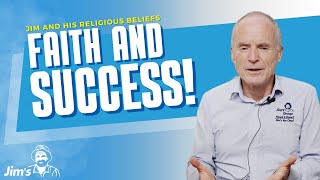
Jim Penman, CEO of Jim's Group, describes his Christian conversion at 28 and how faith shapes his franchise model, citing Jesus washing feet as the image of service. He runs a research program in epigenetics to address drug addiction and obesity, and tithes his wealth to fund it.
Chapters
So, Jim, we'll cut straight to the chase. We get a lot of questions and feedback from all your posts online. So what I've done is I've collated a bunch of those questions here on three, probably three core subjects which we're going to talk about today, which is your faith, which is something we don't, we've spoken about a couple of times, but not in depth. The other one is about retirement because that seems to be very popular at the moment and people like your attitude, but some people don't as well. And tall Poppy syndrome in regards to success of franchisees and just how people just can't believe it and then they try and shoot it down. So let's start off with first with your faith. So maybe you want to tell everyone what do you believe in? What's your faith and how have you come to that?
I'm a follower of the Carpenter, I guess. Follower of Jesus, Christian. It's a commitment thing, it's a loyalty thing. You make a decision that you're going to. He's going to be my guru and I just follow him. I particularly loved the Jesus of the Gospels. The man who walked and talked was fully human.
Now you're an atheist. You're on. You're a. You made the right decision, in my opinion at the start, but now you've gone the other way. So do you want to talk about how did you go from being, because you're very well educated, science person. So how did you go from that to.
Well, of course the idea that being well educated means that you're not Christian is actually not necessarily true. People who are more educated and smarter actually are more likely to be Christian than those who aren't. This is what statistics show, so it doesn't prove anything. But I think I felt a certain interest, a certain emotional attraction to the idea of God, the idea of being a Christian. And I just happened to get to know some Christians at university when I was 28 years old and I got to like them and I went around a retreat and then I had this very strong sense that God spoke to me and I changed. I just made that commitment and it changed my life. And it's been a wonderful decision. I always say the two greatest encounters of my life were with God at the age of 28 and with my wife Lee at the age of 48.
Well, how is, how has it changed your life? Because I'm not a man of faith. So how does it change your Life from before 28 to after 28? What things were you doing differently.
It gives me a clear sense of how to behave. I suppose there's an absolute basis behind. I mean the Bible says a lot of different things, but the ethical teachings are very similar. We've got to look after each other, for example, you just don't do the wrong thing. We're all responsible for God, so. Yeah, and being part of a community helps too. It's not just a matter of having everybody believes in being nice to people, it's a principle. But when you go to church every Sunday and you're with other people who believe as you do and you hear inspiring messages because they're great. At our church, the talks are fantastic. It uplifts you and it strengthens you and it's easier to live the right kind of life.
What is the right kind of life to you then?
We have a responsibility to other people as much as anything. I mean, we're not selfish. We use what we have for the good of other people. I suppose. I'm not saying I'm anything like perfect, but we do tithe regularly of course of our income, which is obviously quite considerable. But also most of our actual income goes towards scientific research. I would feel to. To make a lot of money to spend it on, you know, having a luxury yachts and mansions and stuff and expensive cars would be a kind of a. It's not a good use of what God's given. What God's given me.
Let's talk about your, your research then. Because I think this is important that people understand because we get the comment all the time. Jim just gets all franchise fees and doesn't need any more money, all this sort of stuff. So make sure and tell people and educate them. Give a background about your.
I did a PhD basically in history when I was like in my 20s trying to understand the reason for the rise and fall to civilization. And I came to the conclusion that most of what happens in society that affects things like economic growth and a lot of aspects of mental health comes down to biology. And recently it's been clear that that is an epigenetic thing. So the reason that one person is happy, productive, good family member, another person is failure in life, whatever. It comes down to epigenetics. So what we're looking at in my research program, which I launched about 10 years ago on a small basis, we're now spending something like two and a half million dollars a year. We're looking at understanding the epigenetics of social behavior, particularly using food restriction as a model biohistor.
Always where people can learn about it more. But this idea, you've been doing this since, you know, was it when you were in university, wasn't it?
Yeah, yeah. Well, I started thinking about these things when I was 14. I wanted to understand the reason for the rise and fall of civilization. And then when I did my degrees, I came to what I believe is the right conclusion. But it also has a lot of implications. Like, for example, we believe that we can do really effective things to help people overcome problems like drug addiction and alcoholism and those kinds of areas, even obesity, by changing the physiology of the body by going to these epigenetic pathways. So there's a fairly major project looking at all kinds of ways of doing it. It could be pheromones, it could be using rna, it could be direct manipulation of the epigenome, like putting on methyl groups or taking them off. This kind of thing, it could be to do with repurposing existing drugs. There's all different ways of doing it. We're trying multiple approaches to try and find what will work in this. And we'll be able to easily tell. So what will actually come out of it is a medical treatment initially.
Do you want to talk about then? Because obviously we're a big company, people expect us, you know, we should just sponsor this place for 100 grand and this place for 200 grand. Do you want to talk about that philosophy?
What you've got with the person I most admire in the world is Bill Gates. Now Bill Gates was a brilliant businessman, obviously. But what he did was when he built all these billions of dollars, he said, how can I use this money to help the most people? Things like vaccinations of children and clean energy and clean toilet systems and all kinds of amazing, amazing stuff. It's probably saved millions of lives. Now what he's done is he now devotes his full time effort just to working out how he could spend his money most effectively. Now I see exactly the same thing. There are only two ways to spend money for me. One is tithing, because that's a religious obligation, something God asks of us. And the other is looking at my research project because I believe that is the one thing that will do most to help my fellow human beings. So I actually refuse everything else. Even in the supermarket, when they're supposed to give sense of change, I just don't do it. Because to me, the trouble with giving things away is if you don't look at where you're going, you're going to be a lot less effective than if you actually try and work out where's the best way to spend money.
So it's that philosophy that you've had in for a long time.
And people like Warren Buffett does the same thing too. And one of the great things about what Bill Gates did is he inspired others not only just to give, but to give it in the most cost effective way possible. How can I do the most good? That's quite a big business. All the brilliance of this guy building his great company is now built and saying how can he spend the money most effectively? That's what I would intend to do. I'm not Bill Gates, I'm not as great as him, of course, but I.
Was going to say that. But if you do pull it off, maybe don't talk to people about it because obviously people are going, this is a pretty far fetched sort of idea. But if you did pull it off, what would some of the actual real life applications be?
Well, like I said, drug addiction is probably the most obvious one. What we would do if we get this thing going is we would get people to be more long term thinking. The problem with drug addicts and alcoholics and people who overeat and so forth is that they're very focused on the short term, the pleasure of doing it right now, not thinking of what they're going to feel like in a few days time or a week's time or a month's time or whatever. So it's very short term. What this treatment would do is get people to think long term because this.
Is something you do in your own life from knowing you do discipline. Like you'd make more people more disciplined, but your discipline is you don't miss anything Regarding exercise and your weight and stuff. It's pretty remarkable. You're very consistent.
Well, I struggle a little bit with my weight. I'm about 68 kilos. I should be 66, but I do run half hour a day and do lots of other exercise as well and try and eat well. I do 16, 8 fasting which is very helpful. So yeah, I try and live these things. I also try and try and eat the right kinds of food. I love fruits, vegetables is a bit more of a struggle. I love chocolate too.
So that's your one vice. It's not always, but the point of it is your research. If while you're trying to develop the medicine or the technology would make someone that sort of way more would make.
It easier to do what I do, yes. Look, at 70 years old, I'm in remarkably good health. I feel full of beings and energy. My mind is springing forth new ideas. Well, you know what I'm like actually I get talking, I overrun people. I'm just really happy, really effective, really energetic. I really honestly feel just as good as I did when I was 25. Not quite such a strong libido. That's the only major difference I noticed. But everything else, I feel super good and I'd love other people to have this. It would be so great to be able to help people. Other things too, like cold showers. I'm very strong believer in cold showers. Spending time outside, physically exercising outside is really, really good. There's lots of things you can do and also having strong good social relationships. There's a lot of things we can do to be happy and healthy.
Now going back to your faith with gyms itself, do you want to talk about how your faith. Did your faith drive how you developed the franchise system or was it completely independent?
It's, it's integral the way we think about things. If you looked at the core text behind what Jim's does, it's Jesus washing his disciples feet. And in John's gospel he gives a description. Now in those days washing feet was a really gross thing to do. It was something that a very degraded person, like a slave would do. And this is a person not to consider fully human in that society. So that was a really dirty thing to do. Demeaning. Now occasionally a very revered rabbi, which obviously Jesus was, would his disciples wash his feet as a sign of respect? What Jesus did though, he did the opposite. He washed his disciples feet. And actually you can tell Peter was shocked at this. He didn't want to, he didn't want him to do it because it was so extraordinary. But that whole idea is that you serve people rather than control them, rather than boss them is the essence of that story. And the essence that we think of is in gyms, in gyms the core client is actually their franchisee. And the idea that we serve the franchise, that we have a contract that gives franchisees extraordinary rights, including to me, there's about a thousand franchisees that are directly looked after by myself, my own company. And if the franchisees don't like the way I'm looking after them, they can simply easily put in a proposal to have me kicked out of it. Now in practice what would happen is that I would sack the manager very quickly and get somebody better. But the point of it is even for myself, I bound myself to look, I can't do certain things. People often ask me to do something I can't do that. My contracts won't allow me to do that. And then the whole, whole notion, like every franchisee has my phone number and my email address and they can contact me anytime, after hours, weekends, anytime. I'm always available. They'll often contact me because they can't go onto their franchisor. I don't mind. I'm happy to talk to them. That whole thing, my whole life is dedicated in the business sense to serving my franchisees. That's the core idea, and that's a very Christian notion because it helps the whole sense of hierarchy on its head. I'm not the boss. Franchisees call me the boss. I'm not your boss. You're my client. I provide a service for you. And if you don't like the service I offer, you can go off and go independent. We don't make it difficult in chimps.
I was going to say, as time goes on with your faith, have you found yourself reverting in those tough situations where there might be one decision pulling you this way, but your faith will pull you the other way in regards to the business, even if it's a detriment to it?
Well, the really extraordinary thing is that whenever I make a decision based on faith against my own business interests, it always turns out to be a good business decision in the long term, because everything's about reputation. And when you're known for that, I mean, one of the things that people often ask. As you know, one of the most common questions I get asked is what's going to happen to gyms when you're gone? Because people know that I look after my franchisees. I'm fanatical about it. If I wasn't around, what would happen? What I typically say is, well, look, I'm going to be around based on my what Google says from another 20, 25 years, which is probably longer than most of you guys. So I wouldn't worry too much. And then there's a family trust set up and we wouldn't become. But the point of it is, people know I'm dedicated to their welfare and they're not, from the way I've acted over the years. If you act in the short term for your own interests, yes, you'll get an advantage. Like, for example, if we had a franchisor. Now, franchisor businesses can be worth a lot of money. They can be worth millions. So we could have a situation where a franchisor has done the wrong thing and we have the opportunity, we could possibly terminate them and just Walk away and take. We don't do that, we could never do that. But the point about that too, in the individual situation it would be very beneficial for us to do it. But as soon as you do things like that then you lose credibility and people don't value the business as long they're not as committed to them because they know they can be taken away.
I was going to ask you as well with people in training now, I've noticed a few people coming up to you and actually specifically saying, knowing you're a Christian because they would say, oh, you shouldn't make your brand, you shouldn't be saying religion or whatever this way. But I think it's with your founder story, it's well known now that you're, you're a Christian, how does that make you feel when you've got people coming up to you and sort of saying that that's helping them make a decision to come with Jims is because they knew that.
Well, sometimes it could be a negative too. I mean, one thing I'm always aware of is that people of other faiths might look negatively. We have a number of Muslims at last training too which had problems with halal food. So I think they were being, we were very careful to try and give them what we should to be halal. I don't know, lady. I know I haven't often eat with as part of a group. She's a Hindu. I actually respect that. I probably find it's easier. I have more in common with somebody who's a believer in another faith, whether they're Jewish, Muslim, Hindu or whatever, than I do with somebody who's an atheist. We do tend to think in similar ways.
That's what I think I've noticed is that they know you're a man of faith and that doesn't matter what denomination you are. I think that seems to be the.
Way I haven't had a bad reaction. We understand each other. I mean God is the same however you envisage him, wherever your revelation comes from And I, yeah, I mean I probably shouldn't say this but I honestly don't think God minds too much sometimes. I think he minds, he cares that we want to have a relationship with Him. I think he cares that we act in a certain way which is very comparable across all religions. I don't think people are going to be condemned for having the wrong theology in a certain sense.
Well, do you think that Australia is becoming obviously more secular? Do you think it's a positive or a negative or a bit of both?
Well, obviously it's a negative from my point of view and I think it's part of the decay of the civilization. I mean Christian faith is one of the, this is by history, it's one of the building blocks of western civilization in the aspects of faith, especially like fasting, chastity and so forth. Strengthen what we call si, which is this sort of food shortage, change to the physiology. And so as that's lost and isolation declines, so that drops away. So it's a problem. I mean I would have to say if we were successful in what we do, you would find a revival of religious belief because that's all part of the same process. If you increase this thing we call C, which makes you more open to long term thinking, it also make you more open to God. It'd make you more spiritual.
Well, how do you reconcile the Bible? Obviously there's a lot of good things in it. There's a lot of, I would say bad things as well. So how do you reconcile that as a Christian or how should Christians reconcile.
Those things when you define bad things?
Well, there's like in Leviticus and stuff. There's some, especially in the Old Testament. There's a lot of things which people base their worldview on still unfortunately these days. Like I'll give you an example, like with the evolution stuff. We did a post about evolution where you said, you know, you love, you know, like Charles, this book by Charles Darwin, the eight book, whatever. And you had a few Christians who found it hard to believe you believed in evolution. Which to me I find it very. Yeah, I find that very concerning.
But you see, I don't. I think one of the problems people have is they don't understand there's a different worldview in the past than there is right now. Like for example, we, we treat, we tend to treat Genesis 1 and 2 as a scientific account. But it wasn't that and it wasn't even thought of in that way. And one of the ways you can understand it, if you look at Genesis 1 and 2, there are actually two different accounts, one of them in which the order of creation is quite different. Now if this was meant to be a scientific account of the beginning of the world, then why would you put two contradictory accounts together? But you see in the ice the people who put Genesis together. And this was probably done about 600 BC, quite late, based on very old stories. The important point was that God is the creator and God is sovereign. That's what mattered to them. And that mattered because it affected the way they behaved, how the way they treated each other, that was what was important. And in that sense, Genesis 1 and Genesis 2 is completely consistent with each other. And also they're both consistent with the way that I see the world as they haven't been created like 14 billion years ago in the Big Bang. To me, they're all about God is sovereign, God is the Creator. The actual details are far less important, but the real message. Because if you think of God as being the Creator and the person who gives you the best guide to life, then that affects the way you live and how you behave and how you think about other people and how you think about life in general. That's what's important.
Now with your. You've talked about your energy before. I'm known for 11 years and I would say you're definitely more energetic than you were 11 years ago. So maybe you want to give people, you have mentioned a little bit about it, but give people a bit about what's Jim's secret to staying young and getting healthier and as you're more getting older.
Okay, half an hour vigorous exercise a day. I run the treadmill. I actually run about 9 kilometers per hour. 9 kilometers per hour because I find that treadmill very, very simple, very thin. Apart from that, I walk a lot. I probably walk on average at least another 5,6000 paces a day. I walk all the time, actually. I never take escalators. If I can walk, I live next door to the office, which is great, but I'm walking back and forth and around the office. That's quite a few thousand paces a day. If I find a bit of time, listen to a talking book, go for a walk for half an hour, I just keep active. I just keep on doing things. If I go to a doctor or a dentist appointment, rather than sitting down waiting, I actually pace up and down, which I just enjoy, actually. I like being active. Keep physically active is very important. Obviously control your weight. I find it's a bit of a struggle, but I find 16, 8 fasting is very helpful. So I don't normally eat after about 8 o' clock at night, before 1 in the afternoon. Get used to it. You get a little bit hungry at times, but you're very accustomed to it. Spend as much time outside as possible. I think that mental mood is very important. Just have an optimistic attitude towards life. One of the things that as Christians we're constantly taught is to be thankful, to appreciate it. We thank God in all things. You thank God because people look at they've got the whole thing going on in their life and there's something bad and they'll look at that. Oh, that's so bad. That's so bad. But as a Christian and as a Bible believing Christian, I say, well, yes, okay, that's a bit of a problem. But this is good and that's good. And this is good. And this is good. And this is good. And overall, cheap. It's pretty good. And it puts things in perspective.
I was going to say that that influences your business. Definitely. Because you're very optimistic in regards to your business sense.
Yeah, I make a lot of very stupid decisions. I can be very rat. I jump into things that I don't understand. Well, I hope I'm a big.
More from Jim


Rising mental illness and falling birth rates have the same cause, it is this.....








