Jim's Group CEO, Jim Penman speaking at the Franchising Expo 2023 | Day 1 presentation
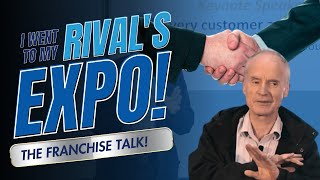
Jim Penman built Jim's Group from a student lawn-mowing job into thousands of franchisees by obsessing over customer service and systematic support. He shares how complaint tracking, territorial leads, and pay-for-work guarantees scaled the business, plus practical advice on choosing franchises and selecting franchisees.
Chapters
Thank you for that introduction. Actually, you flattered me a bit. Where our batch? Last check. We're 4,989. We'll probably hit 5,000 sometime in the next month or so, but we're nearly there. Okay. Which is a long way from where I started. Just met a gentleman before. I used to mow his lawns. Oh, there you are. Four years ago, I was actually mowing this guy's lawns. How's that? I didn't start off expecting anything like what's happened. I actually went to university to do a PhD in history and trying to undercover the reason for the rise and fall of civilization. By the way. Anybody who's interested in what I found out some very radical stuff. We're running a research program right now funded by Jim's Group, that you can order this book from the Jim's Group website. So I had this idea that I was going to become an academic, but as a student I need to make a living. So I used to go out and I used to mow lawns. Actually, the first reason I bought a lawnmower was because I wanted to buy a car because I thought that might impress the girls a bit and I'd go on dates. So I actually. So I bought the car on credit and then I got a lawnmower that helped me to pay for it. I used to charge most lawns five bucks back in those days. And when I got to the stage of finishing my PhD, I actually failed it initially and then I got it at a later go. I had no career, I had no academic career, which I'm in for. I wanted to run a research institute to finish off my theory, but I had no money. I was actually $35,000 in debt and all I had was my experience mowing laws as a student and a very crappy old mower and brush cutter. So I started off working, just working full time. I actually made things even more difficult. I was newly married, my wife was a student, she didn't have any income. So I was trying to pay for my living expenses, my rent, support my wife, pay back these debts. It wasn't in a great situation to start, and yet it somehow worked and the business got bigger and I started building up and selling lawn mowing rounds. And then I put a few subcontractors on. And then in 1988, I went to an expo much like this and I there was a rival, a company called vip, which you've probably heard of, which had actually come from interstate. They had 250 franchisees I actually thought these guys would completely crush me because I had a few subbies, no uniforms, no signage, no logos, no nothing. I didn't know anything about franchising in particular and these guys were so powerful and so effective. I thought, look, just to stop myself being completely crushed by the old franchise, more or less in self defence the way I did it actually I crashed their expo. I went to an expo just like this, which was 1988 and I went up to the stand and I said to the guy, the VIP behind the stand, I want you to tell me about vip. I'm really interested. So he gave me all this information about it and then not because he didn't ask me why I wanted to know because if he had I would have told him I'm not very good at telling lies. And then the state manager came in and said, that's Jim Penman, don't tell him anything else. So they kicked me off the stand. But I found out about the assistant they had and it was, look, it had some benefits I could see, you know, you look after people when they were ill and you know, if you break your leg in your lawn moan contract you lose your business. But if somebody else can step in for you. So I could see benefits. But I thought at the time I could do a better job, I could look after franchisees better. I had natural strategy in those days. What I used to do was I got a list of all my franchisees with their phone numbers and this was way before the code of contact. I used to give it to prospective franchisees because they'd say why should I buy from you rather than competitor? I say look, don't ask me, ask my people. So I give them a list and my franchisees were would say basically it's a good system so they would recommend to other people. That's how I got it started. When I first started franchising somebody asked me how many franchises do you expect to have? And I say, well look, I don't know if it's going to work, but if it really works well I might have 100 one day. That's what I actually said when I launched it. So I had no idea how successful it could have been. But you understand why it happened. Here's a guy myself with no business experience at all, with no capital. So how do you start a lawn mowing business without any money behind you, deeply in debt and build something while I have. There is one very simple key behind everything that I've done is that I focus every day on How I can do a better job. So when I was mowing lawns, I was fanatical about looking after my customers. I was really, really obsessive about making sure every customer. I was one of the first contractors in Australia to have a brush cutter because you can do all the edges properly and cleanly and every bit of grass picked up and it always turned up on time. To me, it's an emotional drive. It wasn't so much business, it was just, I hate the thought of doing less than a perfect job. People would look at what I did and say, I never knew my lawn could look this good. That was what did it. And then because of that, I used to find I could turn one stop customers into regulars and I could build regular clients really simply. And I got referrals and recommendations. So I became very, very successful to the extent that it got. I very quickly got beyond the stage. I could do the work myself, which is why I started putting subbies on. But the standard of service they gave wasn't nearly as good. So another reason franchising is I thought people own their own business with a franchise, they'll give better service to customers. That would work better too. So when I started gyms, the key idea I had was two things. First of all, I want to look after customers really, really, really well. And we measure this based on complaint rate. So for example, in pre franchise day, with my subbies, for every hundred leads that come in, we get approximately 100 complaints. As time went on, as the franchise launched, that dropped dramatically. We started working out better things. We have a system called lead fees, which means we charge for lead, which gives an incentive for franchisees to follow up. Financiers came in and that dropped to about 5%. Now we put different systems and we started registering complaints and automating, sending out automated surveys and then looking at ways to do with them and sending warning letters. And this kind of thing too, puts a lot of pressure on our franchisees. But as time went on, the actual complaint rate dropped to now when it's just. It's a fraction of a percent. In other words, there's more than 99% reduction in complaint levels compared what there was when I was mowing this gentleman's lawns 40 years ago. When I was doing it, there was no complaints, but my salaries were different. So it was that obsessional drive. Now, I have to say this is something that isn't always easy, and Jim's isn't for everybody. A lot of franchises get very upset at me because we push so hard about customer service. If you upset a customer, what you've got to try and do is everything possible to go back and make them happy. Then you do the job over again, you refund their money, anything, because as long as they're happy, in the end, we'll wipe the complaint. But it puts a lot of pressure on them. It's not easy being a Jim's franchisee, but the other side of it is this. The key idea I had behind franchising was that I was going to meet my customers in raving fans, but also even more my franchisees. And we do put a lot of pressure on our franchisees. But one of the benefits of our system is, is that what focus on customer service does has caused a. It's become easier and easier to find work. Now, back in the early days of gyms, this is back in the early 90s when we were starting up the lawn vendors. It was hard to find customers. I had a team of canvases who used to go knocking on doors to find work. You got to ask people, can we lay your lawns? And you pass that to the franchisee. And they pre quoted the stuff that was their system. As time went by, as our customer service improved, which even compared with the early days of gyms, it certainly did, it became easier and easier. We have now got a problem which is really strangely different than what we used to have. We have a massive number of unserviced leads. Up to one third of our leads have actually knocked back these days. In fact, last year we knocked back more than 220,000 jobs. And you might think that's because we're actually spending more advertising. But the interesting thing about this, in each of our contracts, there's a clause that says there's so much per month goes into the advertising budget, usually about 150 bucks per month. For a long while, that was even not even enough. And as franchisors, we'd actually pad it up. In some divisions we still do, but more generally these days we come across an issue. We can't actually spend the money because the franchisees are busy year round. They just, they just packed out, they're knocking back work. We have a system where franchisees just ask for the work they want, where they want it, the kind of services, the areas, the times of day. And so when a job comes in goes to territory holder, first they want it and then it goes to somebody else. Quite often there's just nobody who can handle the work because they're all so busy. So even though we ask a great deal of our franchisees. It's because we ask so much about franchisees, because it's a very high pressure system. It's not easy being a Jeebus franchisee because there's so much pressure for customer service. What we offer at the other end on the whole is lots and lots of work. We have a system whereby we offer a, what we call a pay for work guarantee. Now, this can be anything from $1,000 per week up to two and a half thousand dollars per week. And what that means if somebody's not making that money, then we'll actually let them do free services and then we'll pay them the value. That's up to about 80 bucks usually. Now the interesting thing about it is we find that if people start doing that provided their service is good, which usually it is, without people, they very quickly don't need it. So it sounds like a big, you know, if we sell a franchise with a $2,000 paperwork guarantee, you think we could be up for $100,000. It's extremely rare that any franchisee is not that regularly that doesn't exceed that number within a month or two. So basically we do ask a lot of our franchisees. We offer lot one of the systems too. We do too. What we offer our franchise is something very different from like high pages where you're one of six people. Our big thing is only one person quotes. We only give a job to one person only. And most people who actually come to us actually end up booking a job. That's the conversion rate. It's around about 75% on average. They call us because of reputation and because we tend to get back to them. But the other thing we do too, people have this idea that in business, to succeed, you've got to be cheap, you've got to compete on price. And one thing I say to my franchisees all the time in the talks that I give is I don't want you to compete on price. We are not the cheap, we are not cheapest chips. So in my initial sessions, I talk again and again about charging properly. Just occasionally a franchisee struggling for work and getting back to where you say moderate, your pricing is clear, charging too much at the beginning. But it's far, far more common to go to franchises and say, listen, you're knocking about work, you're hardly taking anything. Do some more jobs, add 10% to your charge, add 20%, doesn't matter to get knocked off in our rating system, being overpriced, knocking back, losing a Job based on price is never, ever a negative. So there are lessons from what we've done to everybody. You look at what I know, and I might seem unusual. I'm a sort of. Kind of a legendary figure these days, which is really bizarre, I have to say. I take my son, I gotta pick up my son from a birthday party, and he desperately texts me, dad, don't get out of the car, because, you know, I'll jump on you. Go to the gym. So it's a really weird thing, but the funny thing about it is I'm not even that special. I'm not particularly smart, I'm not particularly skilled at business. I have good people who are very good at doing things, like Joel's back there, who's just social media. And I've got Rocky, who basically he runs most of the practical things in Jim's group. And I've got people in finance and a lawyer. There's not a lot that I'm actually good at. But one thing I do have is an absolute obsession with looking at my business every day of my life. And I include weekends, I include holidays, I include Christmas Day and say, how can I do this better? And I would say, if you're going into business of any kind, whether it's a franchise or whether it's your own business, what you can achieve is fundamentally without limits. That's one of the great things, working for yourself, isn't it? There's no upper limit. There's nobody telling you, hey, you're not good enough to be the CEO because you're the CEO, you'll promote yourself as much as you possibly can. We've had stacks of people who come to us who bought a business with great fear and trepidation. $25,000, and they're now multi millionaires. That's possible because if you go in and you go in and you say, I want to do my job so well, I want to amaze and delight my customers. I want to do everything I can to get them into raving fans. And when that happens, you find you can charge more. And then I'm going to expand. I'm going to learn how to do it. There's so much stuff around. There's so many great books around, there's so many podcasts, there's so many things. There's so many different ways you can learn. One of the things I do, too, is I actually read and listen to a lot of books. I'll probably, on average, read or listen to two to three books a week. So whenever I'm exercising, which I do rigorously. Whenever I'm working on my farm, whenever I'm driving anywhere, I'm always listening to something. I'm always finding out how can I do this better? What ideas have I got? There's one simple rule that plumber people often read my advice. Actually, when somebody wants to buy a franchise and they're not sure which kind, they actually prefer it to me. And I usually give them a call and talk them through it. But there's one question I would ask anybody. What do you like doing now? I love being outside. I love gardening, I love the open air. I love nature. One of my main hobbies now is gardening. I was up at my farm yesterday and I was actually planting nuts with a mattock and digging them into the ground so I can grow nut trees on my farm. That is to me fun. So I'm a natural lawn mowing contractor, a gardener. Now. If you like dogs, for example, dog wash is a fantastic business to go into. But you have to be an animal lover. You can't be in dog wash if you don't love dogs. If you love dogs, it's a great business. It's not like work at all. If you love cars, car cleaning is very popular. If you like the electronics and digital antennas guys are terrific. If you've got a background in building, you've been a builder and you enjoy that sort of thing, but don't want to be on the physical work and building inspections is good. You have something like pest control, which might sound prosaic, but it's very interesting job. It's very varied. Test and tag is all based on safety and fire and so forth. So the key thing is what do you want to do? What do you love doing? Because if you love what you do, it's not much of it. It's not a job. Because I like playing with woods. I still enjoy gardening and that's one of the reasons I was good at it. On the other hand, I have to say I don't want to same thing about carpet cleaners, but I tried my hand at carpet cleaning once and I hated it. I actually bought a truck mount machine and it was just really, really, really bad for me. And yet the carpet cleaning people say it's a fantastic job. You're working indoors, the hour lead is good. There's a lot of satisfaction. They think it's fantastic. Why would you want to go out and get rained on then? It's a great job to me. Terrible one. It's a bit. I've got 40. But it's kind of misleading. We don't consider a franchise successful until you've got at least say, 30 franchisees. So there'd be probably about 25 of those. They're the ones that really count. Having a franchise only one franchise is just an embarrassment, to be quite honest. One of the things we're always looking for too is new divisions. It's remarkably easy to start a new division. We had a guy called Bill Cobanoglobal who came to me two years ago actually, in March 2021. And so I wanted to start up Jim's Laundry. So we've done that. I think the cost to get in was almost trivial. It's about the same cost as a franchise. He's now got 70 plus franchisees in Jim's Laundry, which has been brilliant. So this, it's actually what makes a new division work, we found, is not so much the kind of business it is, but the person driving it. If you've got the right person driving a division, that's great. Like, we had a guy, Andrew, who was actually working for Mr. Antennas, and he was giving them more than half his income. He had what's called a franchise. Our franchise fees on average are about 6% of turnover. He was paying more than half to Mr. Antennas. He thought, this blow this for a joke, came to us, started gyms. Antennas sold out down the track a bit for $2.8 million. He's now bought back Mr. Antennas and a whole lot of other businesses too. The money that he's made, so what's the difference? Here's a guy with just a lot of entrepreneur energy, stuck in a system, working with somebody else, didn't have the opportunity to go anywhere, so he came to us. We actually promote from within. We have franchisors, or what we call divisional franchisors. They're all usually gyms. People like, there's a lady who's studying gyms, remedial massage. It's a new division we're setting up. She's actually a franchisee in the laundry division. She's done the franchisor training. She's now about to launch that one, which you think got good potential. Basically the female origin franchise. Actually, some of them have got Laundromats, but most of them are just independent operators. Most even are moving from home. They go and pick up the laundry, take it back, put it through their washer and dryer and then deliver it again. But they charge about 70 bucks a bank like that. So it's a good division. Well, actually, he's in charge. Bill's in charge, but he has. He has staff do it too, because he's already a franchisor in another division in cleaning. So he's the mind behind it. He's the director. He actually does a lot of the sales. But the actual support. We have a system of supporting gyms which is quite demanding on franchisors. Franchisors have to run regular meetings, eight meetings a year. They also have to respond very quickly to franchisees who've got problems. Not getting back within 24 hours is like a breachable offence. And they have to ring franchisees regularly, at least monthly and ideally weekly, just to keep in touch with them. So being a franchisor is quite demanding, but there's many different roles. But then you've got to sell new franchises too. We found that most people who come to us are capable of running a successful franchise with our help. We need to look at. We try and do a process of selection because there are certain people who shouldn't be in business. I won particular case of an undiscovered by accident that this young man was going to buy a franchise, but he was in his early 20s and he was paid for by his mother. And when I asked him why she was buying, because he can't find a job, and I said, we will not sell your son a franchise. This is outrageous that the franchisor can even suggest such a thing, because that is a recipe for failure. She got quite upset. She said, I wish I hadn't called you. And I said, well, that's a good thing you did. She said, what does he do? I said, well, I'll tell you what, I know some franchisees in his area who are really, really overloaded with work. What if I arranged him to go out on the road and see if he can work for them? Went out and tried to work for them and he was hopeless. He was completely incapable of doing it. So you've got to have the level of emotional strength and maturity to be willing to run a business properly. It can be discouraging. Being your own boss is very, very good. It's a great thing. It's flexible. There's no upper limit to it. But it can be discouraging at times. And that's one of the reasons because found, I think, like meetings and talking to franchisors regularly is so, so important. We actually found in the beginning, before we started having regular meetings in certain areas, most franchisees actually failed. We didn't keep in contact with them. These days we do much, much better. If you're looking at a franchise, there's one thing that you should do above everything else that I'm, I'm absolutely flabbergasted at how many people fail to do this simple thing. You must, must, must get hold of a list of all the franchisees on that franchisor and ring them and ask them directly. Do not rely on what your franchisor says. And I would have said it's a place just as much the gyms division because we've got 40 plus divisions, we've got 200 franchisors. Even within gyms there's a variety. Mostly our franchisors are pretty, but they have to be and we'll get looped out very quick. But not all of them as good as others. So you do your research. If you spend like two hours actually talking to franchisees and saying what's it like? What's the support like? Is the system fair and they keep their promises, I can tell you everybody, there'll be a lot more, lot less mistakes made. Because in my position I hear some terrible stories. One of the things we're about, we're just launching right now is Jim's Legal, which is a legal service actually that's run by us. We've got in house lawyers and one of the things we like to do is to represent franchisees against rip off franchisors and frankly there are some terrible ones around. So it's up to you to do your research. Usually they come to us. My email address is very easy to find. It's jimmychips.net and you can get it from the website. Mostly new division start because somebody emails me me and says Jim got an idea for a new division and I say, what is it? First of all I want to know can you make at least 60 bucks an hour as an operator? If we can't make 60 bucks an hour, it's not worth doing. And then what do you know about the division? What's your experience, what's your background? And so we look at that. Now if you've got somebody impresses us and I have to say only about 1 in 40 people who might approach me might actually start up a new division. But that's what we look to. So it's quite astonishing. You know, when Sully approached me about Test and Tag, I didn't even know Test and Tag was a division. I thought Sparky did it. But there was a guy who did it and he was flat out just working all we Wodonga. And I thought, well, jeepers, if you could put one person flat out, all we. Wodonga, you could put like a hundred across the country, we've actually got five people working, or Weebi Dunga. And there's now like 230 franchisees in that division that are still growing. So. But I didn't even know. He just came to me, he said, this is what I do, this is how it works, this is what I charge for it. And by the way, we charge more than any of our competitors in doing this particular job. And it's been very, very successful. Same thing with building inspections, same thing with laundry. Same thing with about 90% of our divisions actually started by somebody coming to me with the idea. There's a few who started ourselves by Dog Wash, but most of them, so many came to us. Could be somebody sitting here now. Or as I say to any of my franchisees in training, I give them all my direct phone number and my email address. I say, you've got any ideas, you contact me. And they do. So we get new divisions out of that too. New division, by the way, costs about, probably about 25 grand to get going. It's very similar to a franchise, but it's a lot more demanding. Go do the website, go do the manuals, set up the training system. We do generic training, but they've got to do their specific divisional training and design everything. We get the contracts put in together. It's all sort of seamless process, but quite demanding. So if you've got an idea for a new franchise division, come and talk to me. It has to be found. Doesn't compete with anything else, but their franchises have territory rights. So, for example, if you're a lawn mowing contractor, you have territory rights to all jobs, from mowing, gardening, those kind of things, landscaping. So we can't start a division that overlaps with that because we've reached territory. But apart from that.
More from Jim


Rising mental illness and falling birth rates have the same cause, it is this.....








