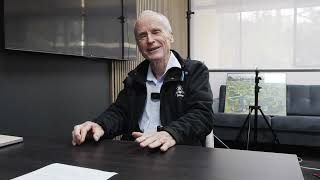
In this exclusive video for his newsletter subscribers, Jim Penman discusses a range of topics. He opens with the current petrol crisis, emphasizing the geopolitical risks of oil dependence and urging a shift to electric vehicles, citing his own three‑year experience with an electric car and the steep fuel costs his family and dairy‑farmer relatives face. He then advocates for basic food security, explaining how a year’s supply can be stored cheaply using Mylar bags and oxygen absorbers, and stresses the importance of gardening for self‑sufficiency. Penman introduces “Digital Jim,” an AI avatar that has attracted media attention, and explains the upcoming askjim.au platform that aggregates his advice; he shares a personal anecdote of using Digital Jim for marital advice. The conversation moves to his personal Lent fast, noting spiritual clarity and motivation from abstaining from sweets. He recommends two audiobooks: The Good Life, which highlights relationships as the core of happiness, and Love Machines, which explores AI companions and the future of digital avatars. Penman speculates on how such avatars could serve as lasting personal legacies and health coaches, and encourages viewers to subscribe to his Substack newsletter for ongoing updates.
Chapters
Okay, so exclusive video for Jim's newsletter subscribers for March 2026, and the first topic in there was the petrol crisis. Go electric. Do you want to talk about petrol crisis and going electric?
Well, I tell you what, I, I love battery-powered stuff. I do everything battery-powered. My car is battery-powered for more than 3 years. First time I ever bought a new car for myself in my life, I wanted to go electric. And there's reasons of economy, but one big reason is it's just come up because of the Straits of Hormuz thing, is that we rely on petrol on one of the most unstable, dangerous places in the the world. Everybody, everybody should go electric as much as they can because you can shut down the supply of oil from the Middle East, but you can't shut out the sun.
I was quite chuffed seeing the petrol. I never looked at the price and then hearing all my cousins complain. Well, it's actually been a big problem for farmers. I've got a lot of cousins who are dairy farmers and they're paying an extra $40,000 for fuel, diesel, when they weren't last time. So it's a big—
I had to fill up my wife's car last Christmas. I haven't driven a petrol car for a while. Wow, what's this? Half a tank, $90? You've got to be joking.
It's a— it's such a shock. It's surprising, isn't it? And the next one here you've got is be prepared, which is about matter of food. So year's supply.
It's the same thing. People have this exaggerated idea the world is always going to be prosperous, always going to be safe. Everybody should have at least a year's supply of food stored away, and you can do it very easily. It's just the case of you can get these Mylar bags with oxygen eaters, you order them online, put them in a plastic bucket, you put it there, bang bang. You can do these things in in like 10 minutes. You iron them shut. And that's what I've done for my family. Everybody should have a year's supply of food because it's a trivial amount of money and it really doesn't cost you anything much in the end because you gradually eat it. You store it away and then you gradually go through it, the stuff. But if something goes wrong, your family might die if you don't have food. So you're covered. Absolutely.
And yeah, it's obviously a big thing in America. It's probably not as big as here, isn't it? So does that surprise you a little bit with people over here, or?
Well, I'm a proud prepper. I also do a lot of gardening too, grow my own food as well. Just that sort of thing. If you've got space for that, have a garden. It's good, it's healthy, it's fun, it's nice. It tastes better, but it's also security. People want to worry about that. I think people are crazy. Look, you're worried about your house burning down, so you get fire insurance. Obviously you're going to, aren't you, because it burns down. But let's face it, if your house burned down and you had no fire insurance, then you're in a bit of a pickle, aren't you? You might have to, you know, you might have to borrow some money and scratch around a bit. But if the world, if society breaks down and you've got no food, you and your family are dead. That's the difference. If you insure your house against a financial problem, why wouldn't you insure your family against a far worse danger?
And then the next one is Digital Jim. So that's actually been in the media a bit. Journalists have having fun with it and using it and then taking screenshots and running stories and had one with— Digital Jim has his opinion on Albo and there's another one with Jim Chalmers and there's another story about Ram, all these sort of stuff.
Yeah, I think it's great. I've been asking myself questions and I get pretty good advice even though I can't work out where it comes from.
It infers that it does a really good job based on all your previous discussions and stuff, yeah.
Yes. Well, I went in and acted as a cheating husband and said, "What should I do?" And then Digital Jim gave me advice. He said, be honest with your wife, you've got to reveal it, and then you work on your marriage, okay? Now I'm an expert on being married happily because I've been divorced 3 times, so I know all the things you shouldn't do. But Digital Gym is really, really fun. It's great advice. Somebody actually approached me and they said, I want to have a 3-minute chat with you. And I said, I can do far better than that. You've got Digital Gym, you can talk for hours.
That's right, and so we've got askjim.au, which is going to be live by the time you're seeing this, and obviously Jim's website as well where you can obtain that. But I find it funny how the media just keeps using it for stories and Every 2 weeks now, that seems to be a story based on what something—
It's very accurate too.
It is very good.
I give my true opinions.
And then the next one you've got here is fasting, so Lent. So obviously Lent, you're—
Yeah, I'm keeping Lent up until the 2nd of February. I'm having no sweet— I don't normally eat sweet drinks anyway, but I'm having no desserts. And I like desserts, I like chocolate and stuff, ice creams and things, so I'm not having any of those. And it's good, it's actually good. It's not difficult 'cause I'm not gonna break Lent. It's a promise to God in a sense. And my mind is clear, I seem to have more motivation, I feel more spiritual, I feel more moved in church, for example. I think it's good. I wish I could do it all year round, but I do like my—
A bit of a sweet tooth occasionally, yes. And then the next thing you've got here is a couple of audiobook suggestions. So the first one was The Good Life by Robert Waldinger and Mark Schulz, which is about how to live a happy and healthy life.
Yeah, this is based on a study that started in 1938 amongst Harvard students, and also there was some inner city people from Boston. And they've studied people for more than almost a century now, including their children. And they found some really interesting things about what makes people happy and successful. And the key thing is that relationships. That's the one thing they go at again and again. People with good relationships tend to be happier and live longer, and they live longer and healthier. And one interesting thing that they mentioned too was that comparison is really bad. If you're comparing yourself with other people, you tend to be unhappy, even if your comparisons are in your favour. So it's good. There's a lot of great books on that. If anybody goes to jimpenman.com.au, they'll see my list of recommended books in there.
Absolutely. So comparison is the thief of joy and good relationships. Now, is that family or is that business or is it just relationships all around or?
Well, relationships are relationships whether they're involved in business or family or friends, so it doesn't matter what they are. You can have good— I get good relationships in my business too. I have a wonderful marriage, I love my wife, and I've got some great kids, and I have my church involvement and so forth. So I've got good relationships. I'm a pretty introverted sort of person. I don't have thousands of friends, but they're important to me.
And the last one you've got here is Love Machines by James Muldoon, which is about AI companions.
Yes, it's really interesting, the progress they're making. You know, the Turing test used to be if you couldn't tell the— If it was a computer, well, we're way past that now. These things are great. So you have people giving advice and they give counseling and they become your friends and stuff. And there's some weird things that go on. They do tend to get— they tend to be a bit— ah, they go along with people. They agree with them and they can get them to go down some very strange alleys by doing that. But it's really interesting. I like the idea of the— what do you call it— the thing that survives death. So that after somebody's gone, you've actually got a record of what they're like and what they think. Yeah, well, I'm going to have a phenomenal one. We've got, what, 1.5 million words?
Yeah, we'll have more, way more as we keep going.
Yeah, it grows every week that goes by. We're adding more stuff to that. So by the time I'm actually dead, probably about 20 years' time, it won't matter because you'll be able to run Jim's group. Pretty much.
But also the thing is, your AI could be a companion for people as well. So if you want Jim But I think what you said is the key. Everyone, I think, in the future will have their own digital avatar so their kids' kids will know what they're like, and they've got all this material.
I think actually if you were interested in becoming healthy and losing weight, you could do better than have digital gym and track, 'cause I know when I have— I had a couple of friends for a couple of years I was meeting with regularly. We used to have a meal together, and they actually, they all lost weight. Right. Because just 'cause of influence. Yeah. So actually, I reckon having, having Digital Jim as a counselor might make a lot of sense.
Absolutely. It's only going to keep better. Like, this newsletter goes into it. All the things we do online, all the Ask Jims, all that advice you provide, which is unique, goes into it. So it's going to give a really good sense of everything moving forward in the future. So this newsletter— this video is for newsletter subscribers. So make sure you subscribe to Jim's newsletter on Substack, and we'll keep doing this every month. Thank you for your time, Jim.