#1 BEST Home Workout Plan for Women's Fat Loss Over 40 💪
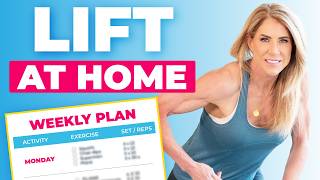
JJ Virgin walks through a four-part resistance routine for women over 40: hip/thigh hinging, upper-body pushing, upper-body pulling, and power-core. She uses supersets to maximize fat loss, recommends 15-20 working sets per area in the 8-15 rep range, and emphasizes leaving 1-2 reps in the tank on each set.
Chapters
Do you want to know the exact home workout plan I use for weight loss and toning? And by the way, that is code for fat loss and building muscle, because muscle is what gives you that toned, lean look you're going for. Well, here's the great news. I'm here in my home gym and I'm going to show you exactly what I do so you can get those amazing results with your home workout. I'm going to give you every detail of my routine and you can copy it and implement it and you don't ever have to go to the gym. So we're gonna go through 4 areas. We're going to go through hip and thigh hinging. Those are the things that work your quads and your glutes. We're gonna go through upper body pushing so that we get your chest and the back of your arms and your shoulders. We're gonna go through upper body pulling to get those biceps and lats, and we're gonna go through power core. Now to build muscle, and this is not for the beginner, If you're watching this, I'm assuming that you are already an intermediate style resistance training worker outer. And if not, then check out the link for where you can go to get started on exercise routine. But for you, the intermediate person, what I want you to think about doing is 15 to 20 working sets for each of those 4 body parts I just talked about. That is going to be best for building muscle or hypertrophy as it's called. And what we are going to focus on are compound compound movements. Compound movements cross multiple joints. So the difference would be that we are going to do a row rather than a bicep curl. Both work the bicep, but the row also pulls in your core, pulls in your lats, pulls in the back of your shoulder. So it's a lot more metabolically costly and it's going to involve your core as well. In this workout, I'm gonna incorporate in supersets. For a couple reasons. Number one, because we get a lot more done in less time. Because what happens when you do a superset, you work opposing muscle groups, and when you would be resting one, you're doing the other. And that's also going to be more of a metabolic hit as well. So we're not going to do the rest breaks that I would typically do if I'm just focusing on one exercise at a time, where I'm going to break for 1 to 2 minutes. Instead, what we're going to do, I'm going to teach you how to do these exercises, and you're going to go back and forth and back and forth and then take a break between the actual sets. I'll explain as we go. Don't worry. What I want you to make sure that you're doing before you want to do a warm-up set, and then you're going to do 2 to 3 sets of each exercise. But before you actually start, you're going to want to do a global warm-up, right? So what could that be? That could be going up and down the stairs for a couple minutes, could be jumping jacks, it could be getting on the treadmill, whatever it is to get your core body temperature up. Takes about 3 to 5 minutes to do this. Super important. The other things that you're going to need here is you're going to want to have some exercise bands or a TRX machine, but I'm going to show you how to do this using exercise bands, using, um, dumbbells. So whatever dumbbells you need that will make this heavy for you. And what you really want to think of when you're doing this is doing an exercise so that when you get to, say, the 10th or 12th rep, you feel like you might have one or two more in the tank, but not more than that. So you want to lift the heaviest weight that you can in good form. Now I'm just going to tell you, I'm not lifting the heaviest weight I can here for demonstration purposes. I'm using a moderate weight for me, and I just say that because people will ping me and go, I can't believe you were lifting that light weight. Well, I'm not lifting my heaviest weight I can handle here because I'm really focusing on performing everything perfectly. And what you don't know behind the scenes is I may have already done 10 sets to get to this perfect one to show you. So I'm not lifting the heaviest. Just want to get that clear. So what we're going to do once you get through this is global warmup. Each exercise, you'll do a light one first, an easy one, might even be body weight, and then you will do the heaviest weight that you can handle for 2 to 3 sets in good form. Form is always your limiter. We are going to hit all the major muscle groups when we do this. And I'm gonna walk you through each of these and then you can go back and we'll have the printout for you as well so that you can just check it off and think of each exercise block as something that you do continuously, no rest, and then take a rest between the blocks. So the first one that I'm gonna teach you is a dumbbell squat alternated with a pushup. When we finish the pushup, what we're gonna do at the end of the pushup is we're gonna hold a plank. And I want you to hold a plank for 30 to 60 seconds, and that's just going to pull in that power core. So when you think of a dumbbell squat, that is that hip and thigh hinging where we're really working the glutes. We also pulling in the back muscles and the quads. And then of course in the push-up, we're working the chest, we're working the triceps, we're working the front of the shoulders. And then when we got the plank, we're working in the power core. So that's the first thing is I'm going to demonstrate is how to do a dumbbell squat. Up, and then how to do a push-up with a holding plank in it. Okay, so first thing is the push-up. Now I've got my dumbbell squats. There's an option here with the dumbbell squats. You can also do something called a goblet squat, so I'm going to show you that as well. Now your warm-up set for your dumbbell squats may be done with no weights whatsoever. It might just be a bodyweight one, right? But what you want to make sure of when you're doing a dumbbell squat is you're sitting back while keeping your chest up. And what you can do as well is you can always do this with a bench behind you and come down and tap the bench and come back up. But I'm making sure my knees are going over my toes, I'm looking up, I'm keeping my chest elevated, and I'm sitting back. So I'm driving into my heels as I do this. And again, the body parts worked here. This is a hip and thigh hinging. I've got my glutes and my quads and my erector spinae, my back extensor muscles are the ones working. So that is a dumbbell squat. That is going to get alternated immediately with a push-up. Again, opposite muscle groups. And you are doing a push-up. And when I'm doing a push-up, I'm coming down and trying to get my nose as close to the ground as possible. I actually just even tapped it right there. Now, important thing on a push-up, you can always do this from your knees or you can do it off of a bench, so you can modify the intensity. And you want to make sure that you've got your belly button pulled to your spine so that it is a core movement. The final one, what you're going to do is come up and hold a plank. And the important thing with the plank is I'm not sagging I've got my belly button pulled into my spine, my shoulders over my hands, and I've got my glutes pulled in, belly button pulled in, no sagging, hips slightly lifted, and you're holding. And again, this is a isometric Power Core move. So what you're going to do is you're going to alternate dumbbell squat, push-up, hold the last one as a plank. Dumbbell squat, push-up, hold the last one as a plank. You did a warm-up set of each and then 2 to 3 sets more of each, and you're working in a hypertrophy range, which again is broad. You could do 6 to 30 reps, but I'm going to recommend here you do somewhere in the 8 to 15 repetition range. One variation that you could do— remember, with the push-ups, you can always go down to your knees, or you could do them against a bench, um, and you can do a plank on your knees. One variation on the squat is to do something called a goblet squat, where you hold a dumbbell here. So this is the other way you could do it. And remember, when you're doing a warm-up, you could actually do your squats body weight only. And when you're doing a warm-up for the push-up, it may be something you start just on your hands and knees. You're just warming your body up before you get ready for the work. Okay, next thing I'm going to do is a lunge. And a lunge, what you want to make sure of as you do this dumbbell lunge is that you're not swinging the dumbbells, right? So you don't see me swinging them. I'm holding them static. And that I'm stepping out and my back leg is more of a right angle. I'm going to show you what this looks like. So as you can see, my back leg is more of a right angle down. So this again is glutes, it's quads, and it requires a little bit of power on the push-off. As well, and some balance. And if you want to challenge your balance, you can always take the last two and hold. So that's another way that you can add in some fun, is just the very end, just hold, come back and do the other one and hold. And it's both a balance and a quad and glute one. Okay, so that is your dumbbell lunge. Again, think about something— you do 10 of each side. And then in between that, you are going to do a band pull apart. This is going to use your lats, the back of your shoulders. It's not going to work your biceps because you don't really have any pulling. So I've got my belly button pulled to my spine, and I'm pulling my arms apart, keeping my elbows slightly flexed, focusing on my lats. Those are what are really doing the work. So I'm going to show you what this looks like and then show you from behind. And you want to make sure when you're doing this that you're controlling, you're not boinging on the way up, right? You're slow on the way up, pull fat down, pull faster, slow on the way up. Lat band pull apart. And again, if you have these bands, you just continue to use heavier and heavier bands on this. The next one is going to be a 3Z. So I just showed you 2 supersets where we did, um, we rotated between basically a leg, upper body pushing, and hip and thigh hinging. And then it was upper body pulling and hip and thigh hinging. Now we are going to do our upper body pulling, upper body pushing, and we are going to do a power core move. So the first thing we're going to do is a bent over row. Bent over rows. I think these are one of the greatest exercises because they're so functional. What we're going to do is you want to think of like being in shortstop position. Let your hands come just over your knees and then twist and pull up. And the important thing here is that my back is extended, my belly button's pulled towards my spine. So I'm using my core and then I'm really focusing on pulling my elbows back and up and bringing my palms so they face my chest. Notice nothing's swinging. It's very controlled. My head's extended, my back is extended, so I'm having to use my core and my glutes and quads, but the focus is really on my lats, back of my shoulders, and my biceps. And this is called a bent-over row. So that's the first one. What we're going to alternate that with is a standing overhead press. Now, I do these a little differently, and there's a reason for it, because it's safer for your shoulder girdle and your AC joint. So I want you to do this standing. Bring your thumbs to your shoulders, and then you're going to push up. And when you do, your hands should be facing each other, your palms facing each other, and you should be able to see the weights in your periphery so they're not behind you. So see where this is? This is an overhead press. We're loading the spine, great for your bones. You've got your belly button pulled in tight, your knees are a little bit bent. And you are using the back of your arms, your triceps. You're using the front of your shoulders. You're using your upper neck muscles, your traps. Great functional exercise. Again, think of pushing stuff into the overhead compartment on the airplane. That is a dumbbell overhead press. The third thing we're going to do here is a crunch. Feet are off the floor. And what I want you to think of is that you have a grapefruit between your chin and your chest. Your head's resting back in your hands. You can put the tongue to your roof of your mouth to help support your neck, and you're lifting from both ends. So you're lifting your shoulder blades up and you're lifting your tailbone up. A crunch, but you're not thinking of knees to nose. You're thinking that you're reaching a point with both of them somewhere up here. So you're really lifting your shoulder blades and lifting your tailbone. So this is a power core exercise, really focusing on your rectus abdominis and also your deep internal abs that are lifting up your tailbone. And you're exhaling as you raise. All right, so that's your crunch. So again, bent over row, you move into overhead press, you come down and do a crunch, you come up again. All right, you always start with a warm-up set and then 2 to 3 hard sets. All right, now let's go to the next one, which is a Romanian deadlift alternated with a dip. So a Romanian deadlift is a little bit of a variation on something, on a move called a deadlift. And the reason that I like this one better, it's also called a stiff leg deadlift, is because it pulls your hamstrings in more. And one of the things that's hard to work out at home because we don't have a leg curl machine at home are your hamstrings. And you really emphasize them when you do this. So when you do a Romanian deadlift, what's really important is that you're going to keep your knees just slightly bent and they're stiff. Again, this is why I've always called it a stiff leg deadlift. And then you draw your hands down your knees only to the place where you can keep your back extended. If your back curls, you stop. So wherever you can keep your back extended, again, your legs stay stiff and then you slide down again and you should really feel the stretch and contraction in your hamstrings and your glutes, but really emphasizing those hamstrings. And remember, as you're working out, it's important to know the muscles you're working out and really pay attention to them. Pay attention to recruiting those muscle fibers, cuz if you don't feel it there, something's wrong with your form, right? And form is always the most important. So again, this is a Romanian deadlift. We are working your hamstrings and your glutes are the biggest movers here. Also your erector spine, I have to work hard too, but the big focus is on your glutes and your hamstrings. So we're going to alternate this one with a dip. What you'll need for a dip is you'll need some kind of a bench to do this off of or a chair to do this off of. I'm going to show you two variations of this dip because remember, you're doing the heaviest that you can do, the hardest you can do in good form. And so what you want to think of with a dip is that you're always pulling your tailbone back towards the bench and you're skimming the bench and coming down to a right angle. At your elbows. Now, if this is too hard in this position, then you just walk your feet in. What you never do is take your body weight away like this. You always just make sure you're skimming your back along the bench. If this gets easier, you can put your feet up on another bench or an exercise ball, or you can put a weight on your upper thighs. So there's always ways to make these things harder. Okay, so that's a dip. So we're going to do Romanian deadlift, sit back, do a dip, Romanian deadlift, sit back, do a dip, right? And you're going to do a warm-up set and then 2 to 3 hard sets. Last two things. So we have done two hip and thigh hinging, and then we also did a Romanian deadlift that really focuses on getting your hamstrings. Now we're going to do an upright row and something called soccer sit-ups. So an upright row works your shoulders, your upper back, and your biceps. And what you want to make sure of with this form— again, knees slightly bent, belly button pulled to the spine, standing up tall— you can think of lifting your thumbs up towards your chin and bring your elbows up to just under shoulder level. I always make sure I do my warm-up sets for the first couple exercises once my body's like, okay, we got it. All right, the other thing you're doing here is alternating it with a soccer sit-up. Soccer sit-ups, I'm going to give you a couple variations because this can be pretty darn hard. The hardest is hands behind your head If that's too much for you, then this gets a little easier. And this gets a little, a lot easier. So just see what it is you need to do to get the stress. But these are full range moves. And what you want to avoid is trying to throw too much. As you get fatigued, as you can see what I'm doing, you start to try to throw. And remember, you never sacrifice form for that extra rep, right? So super important. Now you know how to do it in good form, and you'll do the warm-up, then you'll do the warm-up set, and then just alternate. Take a break in between the exercise blocks so that you have a little bit of time to recover, but not a big long break like, you know, 2 minutes or so. Have a little bit of water, or what I love to do, my essential amino acids with some creatine and electrolytes, and then get back at it. All right, now you know the saying that abs are made in the kitchen, and guess what? Abs are made in the kitchen, arms are made in the kitchen. It's true. Now after all the work you've done here, you got to make sure you're eating right to be able to burn fat and of course support your ability to grow and show off your muscle So watch this next video where I'm going to walk you through the top foods you should be eating every day for more effective fat loss.








