5 Simple Tips to Increase Your Metabolism Over 50
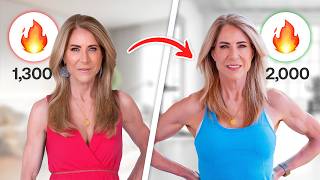
JJ Virgin breaks metabolism into three components and shares five strategies for people over 50: eat 0.7 to 1 gram of protein per pound of target body weight, drink water and green tea with EGCG, use spices like capsaicin and ginger, and aim for 8,000 steps plus resistance training to build muscle and raise your resting metabolic rate.
Chapters
You've probably heard that your metabolism doesn't really start to drop until maybe 60 or beyond, but yet you're in your 40s and 50s and things just aren't working like they used to. So what's up? Well, there are some things that start to make your metabolism slow down as you hit this age. It's called perimenopause and muscle loss. And I've got 5 simple tips that are going to help kick your metabolism into high gear and help you feel better than ever. So let's go. First up, what is metabolism? This is the work your body does to take food and drink and turn them into energy. Now, there's a couple different things that are going to impact your metabolism. Number one, your resting metabolic rate. This accounts for about 60 to 70% of the calories you burn throughout the day, and this is if you just hung out all day long, sat on the couch. And I'm going to talk about how you can impact this specifically. The next one is activity. And activity has two different parts to it: exercise, which accounts for maybe 5% of the calories you expend throughout the day, and then something called non-exercise activity thermogenesis. So it's everything but exercise. That can be somewhere between 15 and 20%. This is where we actually have a huge opportunity. And then the thermic effect of food, that can account for about 15%. So your resting metabolic rate, what impacts that? First of all, your age and your sex and your genetics. But the big thing that you can shift is your body composition. You got more muscle on your body, you're going to have a better resting metabolic rate. Let's talk about what you can do to get that metabolic rate kicking. One of the fastest ways to change things is to change what's at the end of your fork. So when we think about eating, we think about eating 3 different things, right? You're going to eat protein, you're going to eat carbohydrates, you're going to eat fat. Turns out that if you take some calories from carbs or fat and move them over to protein, that alone is going to give you a better metabolic effect. Here's why. It takes basically no calories for fat to be digested and metabolized. Fat is very easily digested and metabolized. Like 0.3% of the calories from fat are used in the digestion of it. For carbohydrates, it's somewhere in the 5 to 10% range of the calories from carbohydrates are used— in the metabolism, digestion and metabolism of carbohydrates. Protein is the winner here. It takes somewhere between 20% and 30% of the calories from protein are used in the digestion and assimilation of protein, probably because your body has to take those amino acids from the protein to build muscle. It's a very expensive process. So if all you did was take some of the calories from carbohydrates and fat and shift them over to protein, you are going to have a boost in your metabolic rate. You're gonna have a better thermic effect of food. Remember I talked about that was one of the things that impacted your overall metabolism. This is why I tell people to eat protein first, and I have you eat 0.7 to 1 gram per pound of target body weight in protein each day. And I have an Eat Protein First Challenge that you can do for free at jjvirgin.com/7day. That's the number 7 day. Next one is water, is hydration. This is wild when you start to look at this one. Water can increase energy expenditure because of the process of thermogenesis, and this is where the body uses energy to heat water up to body temperature. Now, another thing that water can do is increase fat oxidation. Water has been shown to influence substrate oxidation rates, promoting the use of of fats as an energy source. I will tell you what's interesting with this. The converse is true as well, and this is wild. I learned this from Dr. Rick Johnson. I did a podcast with him on this. Even mild dehydration can make your body better at storing fat. When you're mildly dehydrated, it turns out your liver takes glycogen that's stored in the liver— that's carbohydrates that we store as glycogen in the liver— and liberates them, they get converted from glycogen to glucose to fructose and then stored as fat so that your body has fat. Because if you're dehydrated, you can burn fat to free up water. Increased water intake, independent of your diet and exercise levels, right, has been associated with weight loss in overweight women as well. It helps reduce fasting insulin levels and improve lipid profile. So, so much good stuff about hydration besides the fact it can help with satiety, it can help with detoxification. Next step, My favorite food group. Coffee and tea can help support a good metabolic rate. Caffeine boosts your metabolic rate. It increases energy expenditure by stimulating the central nervous system, which leads to an increase in the body's metabolic rate for several hours after consumption. Plus, I like to have coffee before I go to the gym. Coffee has been shown to promote fat burning, particularly after meals. Coffee has amazing polyphenols. I mean, tea does too, but there's some polyphenols in coffee, chlorogenic acid specifically, that contribute to the metabolic effects. These compounds have been shown to help with fat utilization and improve energy metabolism, which means less body fat accumulation. However, here is the caveat: do not make a good thing bad. Don't take that coffee and then load it with like some garbage creamer or something like that. What you can do if you don't just like having black coffee or tea is you can take that coffee and use a little coconut milk or a little allulose. Shout out to my buddies over at RxSugar if you need it sweetened up. Allulose for the win, because allulose can help improve insulin sensitivity and raise GLP-1 as well. So you get a double hit there. Now, speaking of tea, my favorite tea of all is green tea, and I literally take a big jug to the gym when I go— 64-ounce jug of green tea— and I put in there my creatine and my essential amino acids and my electrolytes. So that's how I do it. But the reason I love green tea is because the catechins in green tea, especially one called EGCG, can help with fat burning. Green tea has been found to elevate resting energy expenditure by boosting thermogenesis— that's your body's heat production— and improving fat oxidation. So it increases the number of calories burned throughout the day. And there are great synergistic effects with exercise where green tea has been shown to improve endurance and fat burning during exercise. So it's a great supplement if you are looking to improve your metabolic rate through physical activity. Remember, with all of these things, you want to make them part of your daily routine. So the big question to ask yourself is, how do I put this into my routine so it's just something that I do all the time? Spices are another one like that. There was a 2006 study that was published in Physiology and Behavior that found that eating spice foods or drinking herbal beverages can increase your body's heat production. That's again that thermogenesis, which means that you're burning more calories, and it can also make you feel fuller. Plus, there are ingredients like capsaicin that's found in chili peppers, black pepper, ginger, mixed spices, green tea, black tea, and caffeine are all very effective as thermogenic aids that can also help you feel fuller and can also impact your metabolism beyond just the satiety and the thermogenesis. They can also promote fat burning. So I'll give you one that I really love. I found this drink called Suja Lemon Love. Now, of course, you could make this easily too at home, but I'm a little lazy. It's lemon juice, spring water, a little stevia, and then some cayenne pepper. How easy! Finally, activity. So you're going to be surprised to learn that exercise is not the biggest shifter here, although I do want you to exercise. And specifically, I want you to do resistance training because resistance training is going to build more muscle, and more muscle is going to improve your resting metabolic rate. But I want you to think, and when you're doing exercise, of doing things that are either high-intensity interval training or resistance training that are going to create a big cost to your body. So your body has to have a higher metabolism post-exercise to recover, but that's actually not where you're going to get the biggest initial metabolic hit. Remember, you're gonna get a long-term metabolic effect by putting more muscle on your body. That also improves your insulin sensitivity and that more muscle boosts your metabolism. But throughout the day, when you really looked at how to modify your metabolism, and I said 60 to 70% was your resting metabolic rate. This is where we want to push because you can actually make a big difference by just how much you move. In fact, there's been some interesting research that shows when you take a normal weight person and you underfeed them, they tend to move less. So their NEAT goes down to conserve energy. And when you overfeed them, their NEAT goes up to expend more energy. So the first thing I always look at is, are you getting your bare minimum? This is your floor, that 8,000 steps a day. And you start to look for opportunities wherever you can to get more steps in. Once you've got that 8,000 steps in, how do you make it harder? Where can you take the stairs? Where can you sprint up the stairs? Where could I add an exercise snack or two in? Can I add a rucking vest? Could I put a walking treadmill under my desk so that I can get some steps in when I'm on a meeting? When can I walk or stand rather than sit? All of this is going to expend more calories, so it's going to make that 15 to 20% of your metabolic rate. It's going to take even more of it now and, and start to spend more calories throughout the day. I have a girlfriend, we used to go for coffee, now we go for a walk. We get coffees and we drive home with our coffees, right? So what are the situations where you can stand instead of sit, walk instead of stand, weight your walk instead of just walk normally? And again, still want you doing the exercise, especially that resistance training to add on that muscle, and that high-intensity interval training for the metabolic costs afterward. Now, hopefully these tips have got you revved up, right, about revving up your metabolism. So make sure you watch this next video for 5 delicious foods to boost your metabolism naturally. I'm going to be sharing all of my favorites with you.








