6 Things I STOPPED Doing Once I Turned 50 for Better Longevity
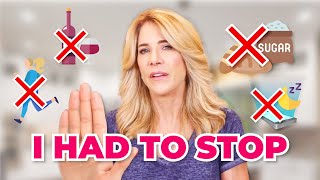
JJ Virgin, now 60, shares six changes she made after 50 for better health: prioritizing sleep with trackers, adding meditation, strengthening relationships, cutting back on alcohol, eating more protein with timing, and switching to progressive strength training with power moves and HIIT.
Chapters
Once you hit 50, it's kind of like there's a switch that flips into this like zero Fs given mode. You know what I'm talking about? You finally start putting yourself first and you let go of a lot of the BS around you. So now that I'm 60, I'm sharing all the things that I stopped doing over the last decade that's made me feel and look better than I ever have. So here's the first one I stopped stealing from. Sleep. Sleep is mission critical as we age. And no, you don't need less as you age. No, you don't. Because this is what you do for growth hormone and repair and what you measure and monitor, you can improve. So I'm big on using trackers. I love the Oura ring for sleep. Now I got to say a little caveat on that. If you wake up and it said you had a bad night's sleep and you feel great, ignore, right? But use it to really learn something about what's working for you. Here's where I love to use it. When I'm time zone adjusting, or let's say that I'm going somewhere, it's just going to be a later night. What I make sure that I do in those situations is that I make sure I have time to sleep in. I make sure that I have time to adjust to that time zone. I don't try to be super women here. I always travel with an eye mask and earplugs. You just never know. And sleep candy and magnesium and also phosphatidylserine. That's another thing I'll use to help my self time zone adjust the second one. And holy smokes, I wish I'd done this in my 20s. I was not taking care of my nervous system. I was really kind of bashing it and taking it for granted. But during the pandemic, I decided to finally get into meditation and I went to a Dr. Joe Dispenza meditation retreat. Week long. Like when I go in, I go way in. Now this is important because I'd actually had my telomeres tested, I'd had my physiological age tested. And what I saw was I was not where I needed to be. Why? Because of stress. I've been under enormous stress throughout my life and especially in the last 11 years with my son who had a traumatic brain injury and who's been still healing from that. And as we know, stress is super aging and also super catabolic. So I've done all the other things I need to Do. I did the supplements, I was working on the sleep and I was doing high intensity interval training. But I hadn't done the one thing that was the big thing that really helps here and that is some kind of thing, some kind of mindfulness practice that helps reset your nervous system. So I went into this meditation retreat and I was super excited. And by the end of the first week I was super frustrated because I wasn't really getting anywhere and everybody around me was like making all these improvements. And I just thought, you know what? I'm going to take my nervous system and put it in the same type of workout I would my body. I'm going to give it six months to make this shift. And it took that long, by the way. But I was commenting to my husband the other day, the difference now of having this meditation practice on board is everything in terms of my nervous system. So that is one that if I could rewind the clock, I would have started that not just before 50, I would have started that probably in high school. Two other things that I've been doing here is not blowing off relationships. So I like had so much work to do and so many things to do that I would blow off having time with friends and I would prioritize work over friends, which is under what I call underfunding, right, Overworking, underfunding. So I started to make sure that I had time with friends, but I also started to make sure that I was planning fun things. We live in Tampa, we have great activities going on all the time here. So I make sure that I plan fun things like concerts and trips, etc and things especially that are non refundable. So you can't back out now. The next thing that I should have done sooner is to stop drinking wine every single night. When I met my husband Tim, I'm gonna blame him because he's not here. When I met him, we got into a little bit of a rut just where we would like end the day. We'd start cooking dinner together, we'd pop open a bottle. It was dry farm wines of course, but every night. And you know what happens when you do that? It's gonna impact your sleep a little bit. You have a little bit higher body fat twist. You're drinking the wine in the night, you're not getting anything accomplished. You're just like, you know, vegged out on the couch. And the deal with alcohol is if you're drinking alcohol with dinner, your body's got to metabolize the alcohol before it handles anything else. So you're not burning fat, you're metabolizing alcohol. And so what we finally decided to do, I don't even know how we came to this conclusion, but we just knocked it off. We just said, you know, we can do this, you know, on a weekend, we can do it when we go out. But this, no more like every night thing, it wasn't that big of a deal after all. The next one is under eating protein. Now, I've always been one of those people that feels best eating more protein. And given the option between like a chocolate cake or a steak, I will take the steak every single time. Love protein. And I usually eat about 150 grams a day, sometimes more. But I wasn't tracking it before. And so I wasn't always hitting the amount I needed. And especially I wasn't always hitting the amount I needed. And in the morning. Now, this is really important as we age 40 plus, because as we age, we get something called anabolic resistance, where our body cannot utilize, cannot take that protein and help us do muscle protein synthesis as well. So we actually need more. And so I put together a protein calculator. You'll see it down below that you can link into. So you'll find exactly what you need based on your age, your sex, what all you're into, if you are working out, if you're recovering from surgery, et cetera. But the big important thing here is not only do you need the right amount of overall, you also especially need the right amount in your bumper meals when you break your fast in the morning and the last meal before you go to bed three to four hours later. And the calculator will help you figure that stuff out. The next one. Coasting with my same old routine at the gym. Holy smokes. I was going into the gym doing my same old thing. The only thing that saved me from myself was the fact that I traveled so much that I couldn't totally do the same old thing because I was in different places with different equipment. But I still wasn't really pushing myself. I was doing my 8 to 12 reps. Could I have gone further? Oh, totally. And I wasn't incorporating any power moves. Now, here's why that matters. As we age, we've got two types of fibers, Type one and type two and type two fibers. Those are the ones that really help us with these quick, explosive movements, really moving stuff, gripping stuff, pushing stuff. Those are the ones we tend to lose as we age. Starting around age 40, some people say it's around age 35, we can lose up to 1% of our muscle size a year. But that's not the scary part. We can lose up to 2 to 4% of our strength and 6% of our power. So when you really look at what we need to do with our exercise routine, if we're doing the same old thing, as we're aging, we are slowly declining. And what you want to make sure of is that you're, you're trying to keep as much or build as much as you possibly can so that when you do start to decline, you've created a really good base. So I just went, you know what? This is it. I'm in a really, really push it. I'm going to lay on as much muscles I can get, as strong and as powerful as I possibly can. So what did I do in order to get myself out of the rut? I went to a local high intensity interval training class. And I always know I'm in the right place. If I walk into the class and my husband and I walk in and they're like, you sure you want to do this? We were the oldest people in the room. Everybody in there is like sprinting on the treadmills to get warmed up and they are about 20, 25. And we're like, yeah, we want to do this. Game on. And what happened during that hit class? It was a hour class and they had us sprinting on self propelled treadmills and doing burpees and plyometrics and stuff that I used to do. But it hurts, you know, so I kind of had stopped doing it and the minute I did that, I went, all right, I'm back. And I started incorporating all of these things back in. And I say this because it is very easy for all of us to get into a workout rut and stop pushing ourselves. But exercise has to be progressive. You have to continue to overload the system in order to continue to progress. If you're not, as we age, we're not staying the same. We're going to. So get a trainer, have them push you. Go to a class. There's so many different options out there of how you can do this, right? But push yourself past what you think you're capable of. Now if you're new to working out, I know it can be intimidating to walk into a gym alone and to figure out how to put together a routine all on your own. So to make it easy for you, I walk you through a beginner strength training routine. In this next video, you'll get a look at the exercises I recommend how often to do them. My recommendations for setting up your home gym and you'll get a free download to keep track of your workouts every week. Watch the next video here and get inspired.








